
EPISODE · Apr 23, 2026 · 5 MIN
USFK commander against withdrawing troops, expects Opcon transfer by early 2029
from Korea JoongAng Daily - Daily News from Korea · host KIM HYOUNG-GU, MICHAEL LEE
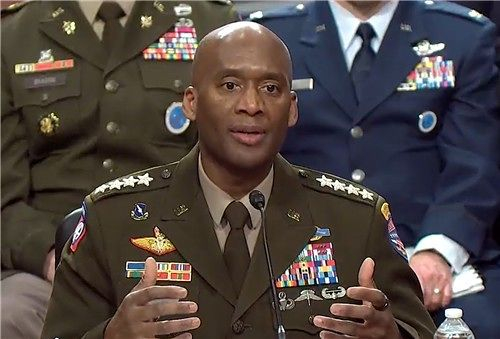
This article is by Kim Hyoung-gu, Michael Lee and read by an artificial voice. U.S. Forces Korea (USFK) Commander Gen. Xavier Brunson told U.S. lawmakers that he is against withdrawing U.S. troops from the peninsula during a congressional testimony in Washington on Wednesday. He also said that Seoul and Washington aim to meet the conditions for transferring wartime operational control (Opcon) by early 2029, but he emphasized that the handover will not be rushed until conditions are met. Speaking before the U.S. House Committee on Armed Services, Brunson said that the allies have submitted a road map to the Pentagon to meet the required conditions "not later than the second quarter of fiscal year 2029." The U.S. fiscal year 2029 runs from Oct. 1, 2028, to Sept. 30, 2029, placing the second quarter between January and March 2029. Brunson's remarks point to a de facto target of early 2029 for fulfilling the conditions needed to transfer wartime control of South Korean forces from Washington to Seoul — a goal that President Lee Jae Myung has pledged to achieve within his five-year term, which ends in June 2030. But the timing of the Opcon transfer forecast by the USFK commander overlaps with the end of the current U.S. presidential term and the start of the next administration, raising the possibility that final certification could fall to the successor of current U.S. President Donald Trump. Brunson repeatedly stressed that the transition remains strictly "conditions-based," pushing back against any suggestion of an accelerated timeline driven by political considerations. "Accelerated COTP is not time-based," he said, referring to the conditions-based Opcon transition plan. "As the bilaterally agreed-to framework dictates, the [South Korean] military must possess specific capabilities to meet conditions for COTP." Under the current framework, South Korea must demonstrate that it has the military capabilities needed to lead combined defense operations before regaining wartime control — a process that has already been delayed multiple times over the past decade. Brunson said that the allies plan to review Seoul's progress in fulfilling Opcon transfer conditions at upcoming high-level meetings, including the South Korea-U.S. Integrated Defense Dialogue and the annual Security Consultative Meeting in Washington later this year. He also struck a cautiously optimistic note on readiness, pointing to South Korea's expanding defense budget and growing military capabilities. "I think that right now, where we stand based on the continued investments by the Republic of Korea [...] really an uplift of about 8.5 percent in their defense spending over the next three fiscal years, I think that we're in a good position," he said, referring to South Korea by its official name. "But there's still more work to be done." Brunson noted that South Korea is pursuing "conventionally armed, nuclear-powered submarines" and that Washington "will work closely" with Seoul "to advance the requirements for that project, including avenues to source fuel." He added that these commitments and South Korea's broader investment in security underscore its status as a "model ally." At the same time, Brunson offered his clearest public pushback yet against speculation over a potential drawdown of U.S. forces on the peninsula. Asked whether there could come a point where it would be reasonable for allied forces to separate or for U.S. troops to leave South Korea, he said he "would not provide that as [his] best military advice." Instead, Brunson suggested the transition would coincide with a broader shift in the role of USFK, as Washington looks beyond the peninsula to the wider Indo-Pacific region. He said that U.S. forces would continue to provide "essential but more limited" support for North Korea-related missions once the Opcon transfer takes place and expand their strategic focus within the region. In his prepared testimony, Brunson described the Korean Penins...
Embed this episode
NOW PLAYING
USFK commander against withdrawing troops, expects Opcon transfer by early 2029
No transcript for this episode yet
Similar Episodes
No similar episodes found.
Similar Podcasts
No similar podcasts found.