
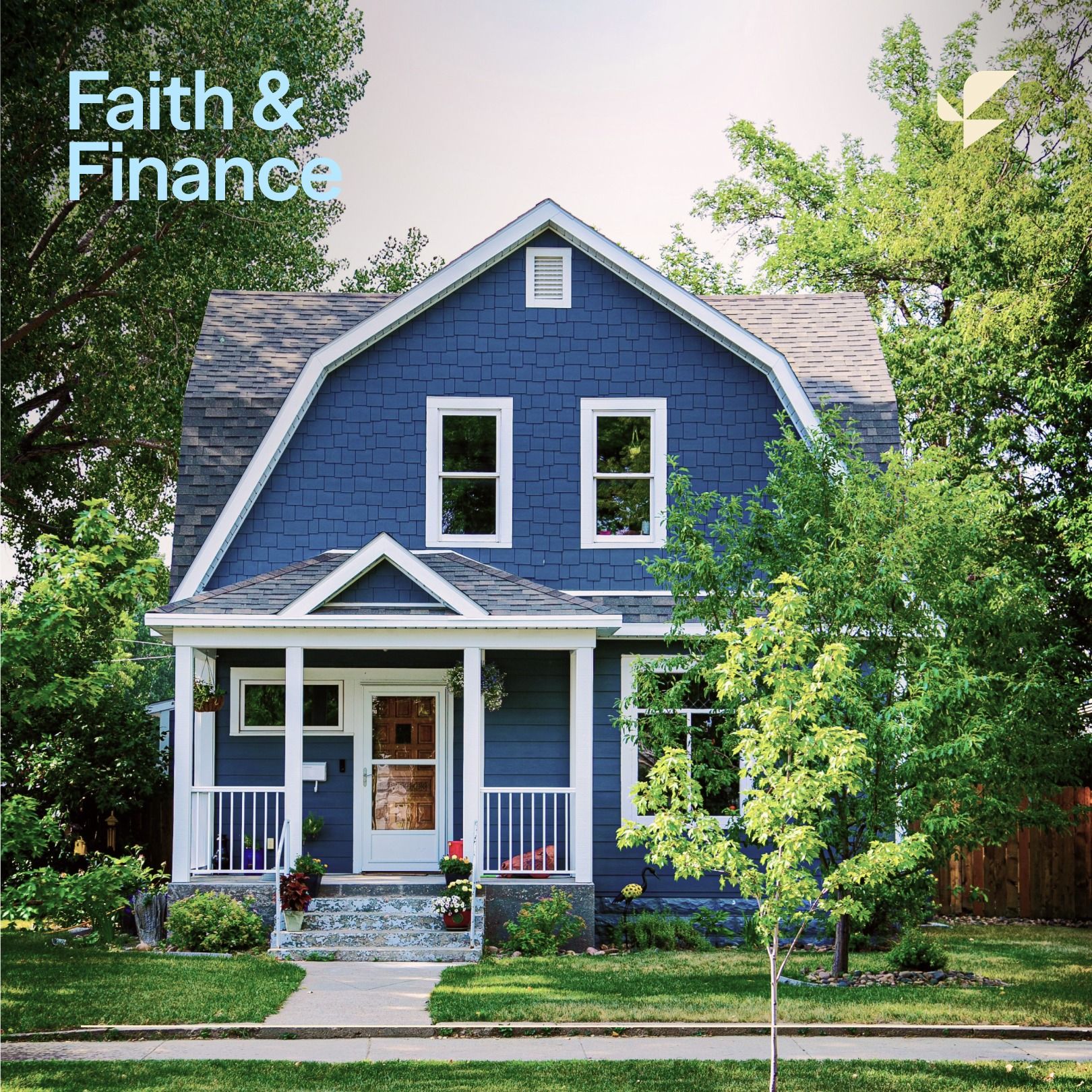
EPISODE · Jul 30, 2026 · 24 MIN
Using Home Equity to Reduce Taxes in Retirement with Harlan Accola
from Faith & Finance · host FaithFi
Your home may be more than a place to live in retirement. For some homeowners, it can also become a strategic financial resource—one that may help manage taxable income, protect investments during market downturns, and create greater flexibility around retirement withdrawals. Harlan Accola, who leads the reverse mortgage team at Movement Mortgage, joined the show today to explain how a reverse mortgage—specifically a Home Equity Conversion Mortgage, or HECM—can fit into a thoughtful retirement income strategy. A reverse mortgage is not right for everyone. But when used carefully as part of a broader financial plan, home equity may provide retirees with options they would not otherwise have. Why Reverse Mortgage Proceeds Are Different From Income One of the most common misconceptions about reverse mortgages is that homeowners sell or give up ownership of their homes. That is not the case. A reverse mortgage is a loan secured by the home, and the homeowner retains title as long as the requirements of the loan are met. Because the money received through a reverse mortgage is generally considered loan proceeds rather than earned or investment income, it is not typically included as taxable income on a federal income tax return. That distinction can be significant in retirement. Many retirees rely on a combination of Social Security, pensions, traditional IRAs, and 401(k)s. Withdrawals from tax-deferred retirement accounts generally increase taxable income, potentially affecting tax brackets and other income-based thresholds. Home equity can provide another source of cash. Instead of withdrawing every needed dollar from a traditional IRA or 401(k), a retiree may be able to strategically use home equity for a portion of living expenses. That could reduce the amount that must be withdrawn from taxable retirement accounts in a given year. The goal is not simply to avoid taxes. It is to thoughtfully manage when and how taxable income is recognized. Managing Retirement Withdrawals More Strategically Taxes in retirement are often about timing. Withdraw too much from a traditional retirement account in one year, and you may move into a higher tax bracket or cross other important income thresholds. Later in retirement, required minimum distributions can further limit how much control retirees have over taxable withdrawals. Social Security also adds another consideration. Depending on a retiree’s income, up to 85% of Social Security benefits may be subject to federal income tax. That makes coordinating income sources especially important. For some retirees, access to home equity may allow them to take smaller taxable distributions during certain years while drawing on a reverse mortgage for additional cash needs. Meanwhile, money that remains invested has more opportunity to continue growing. That does not mean borrowing against a home is always preferable to withdrawing from investments. Reverse mortgages have costs, interest accrues on the loan balance, and using home equity reduces the equity that may otherwise remain available later. The question is whether strategically combining these resources could produce a better overall retirement outcome. Creating Flexibility for Roth Conversions Home equity may also play a role in Roth conversion planning. A Roth conversion involves moving money from a traditional IRA or other eligible tax-deferred retirement account into a Roth IRA. The amount converted is generally taxable in the year of the conversion, but qualified Roth withdrawals in retirement are tax-free. For some retirees, converting portions of traditional retirement accounts during lower-income years can make sense. The challenge is paying the resulting tax bill. Suppose someone converts a significant amount from a traditional IRA and then withdraws even more from that IRA to pay the taxes. That additional withdrawal can create additional taxable income, potentially making the strategy less efficient. A reverse mortgage may provide another option. Home equity could potentially be used to cover living expenses or the tax liability associated with a Roth conversion, allowing the retiree to better control how much is withdrawn from taxable retirement accounts. Over time, carefully planned conversions can also reduce the amount remaining in traditional accounts that may eventually be subject to required minimum distributions. Roth conversions involve many variables—including current and future tax rates, income needs, Medicare considerations, estate goals, and the retiree’s overall financial picture—so they should be evaluated with qualified tax and financial professionals. Protecting Investments During Market Downturns Another potential use of a reverse mortgage is addressing what financial planners call sequence-of-returns risk. Sequence risk refers to the danger of experiencing significant investment losses early in retirement while simultaneously withdrawing money from the portfolio. Imagine that the market falls sharply and a retiree must sell investments to pay living expenses. Those shares are sold at depressed prices and are no longer invested when markets eventually recover. That combination of losses and withdrawals can make it much harder for a portfolio to recover. For retirees with sufficient home equity, a reverse mortgage line of credit may serve as what some planners call a buffer asset. Instead of selling investments during a severe market decline, a retiree might temporarily draw from home equity. When markets recover, withdrawals could shift back to the investment portfolio. Depending on the loan and financial circumstances, homeowners may also choose to repay some of what they borrowed, preserving greater home equity for future use. The broader principle is diversification—not merely among investments, but among the resources available to fund retirement. Home Equity Is a Tool, Not the Goal For many Americans, their home represents one of their largest financial assets. Yet traditional retirement planning often treats that wealth as untouchable until the home is sold or passed to heirs. A reverse mortgage can provide another option. That does not mean every retiree should borrow against a home. The costs, interest, estate implications, housing plans, and long-term needs all matter. Homeowners must also continue meeting loan requirements, including paying property taxes, homeowners insurance, and maintaining the property. But for the right household, home equity may become one piece of a coordinated retirement strategy—helping manage taxable withdrawals, create flexibility for Roth conversions, or avoid selling investments at an unfavorable time. As stewards, the goal is not simply to preserve every dollar of home equity or maximize every investment account. It is to wisely consider all the resources God has entrusted to us and use them with purpose. A home is first a place to live. But in retirement, it may also be a financial resource worth thoughtfully considering as part of the bigger picture. To learn more about reverse mortgages and Movement Mortgage, visit FaithFi.com/Movement. On Today’s Program, Rob Answers Listener Questions: My daughter turns 20 in December and recently earned her nail technician license, but she isn’t working yet. How can I help her start building credit and develop good saving habits? My husband and I are considering a reverse mortgage. Would we still own our home, and could we eventually sell it to a family member if we want to keep it in the family? I live on Social Security, have a paid-off home, a four-month emergency fund, and $75,000 in a CD. I received an offer to buy $5 gold pieces for $469 each, with a minimum purchase of five. Would buying gold like this be a wise move for me? My husband passed away, I used up my savings, and now I’m overwhelmed by debt. I enrolled in a debt-relief program that promised to lower my interest rates, but I’m not seeing much progress. What should I do next? Resources Mentioned: Faithful Steward: FaithFi’s Quarterly Magazine (Become a FaithFi Partner) Christian Credit Counselors Movement Mortgage Capital One Savor Rewards Card for Students Bankrate | NerdWallet Open Hands Finance FaithFi Field Guide: How Much Money is Enough? Our Ultimate Treasure: A 21-Day Journey to Faithful Stewardship by Rob West Wisdom Over Wealth: 12 Lessons from Ecclesiastes on Money Look At The Sparrows: A 21-Day Devotional on Financial Fear and Anxiety Rich Toward God: A Study on the Parable of the Rich Fool Find a Certified Kingdom Advisor® (CKA) FaithFi App Remember, you can call in to ask your questions every weekday at (800) 525-7000. Faith & Finance is also available on Moody Radio Network and American Family Radio. You can also visit FaithFi.com to connect with our online community and partner with us as we help more people live as faithful stewards of God’s resources. Hosted by Simplecast, an AdsWizz company. See pcm.adswizz.com for information about our collection and use of personal data for advertising.
Embed this episode
What this episode covers
Your home may be more than a place to live in retirement. For some homeowners, it can also become a strategic financial resource—one that may help manage taxable income, protect investments during market downturns, and create greater flexibility around retirement withdrawals. Harlan Accola, who leads the reverse mortgage team at Movement Mortgage, joined the show today to explain how a reverse mortgage—specifically a Home Equity Conversion Mortgage, or HECM—can fit into a thoughtful retirement income strategy. A reverse mortgage is not right for everyone. But when used carefully as part of a broader financial plan, home equity may provide retirees with options they would not otherwise have.
Ready to play
Using Home Equity to Reduce Taxes in Retirement with Harlan Accola
No transcript for this episode yet
Similar Episodes
No similar episodes found.