
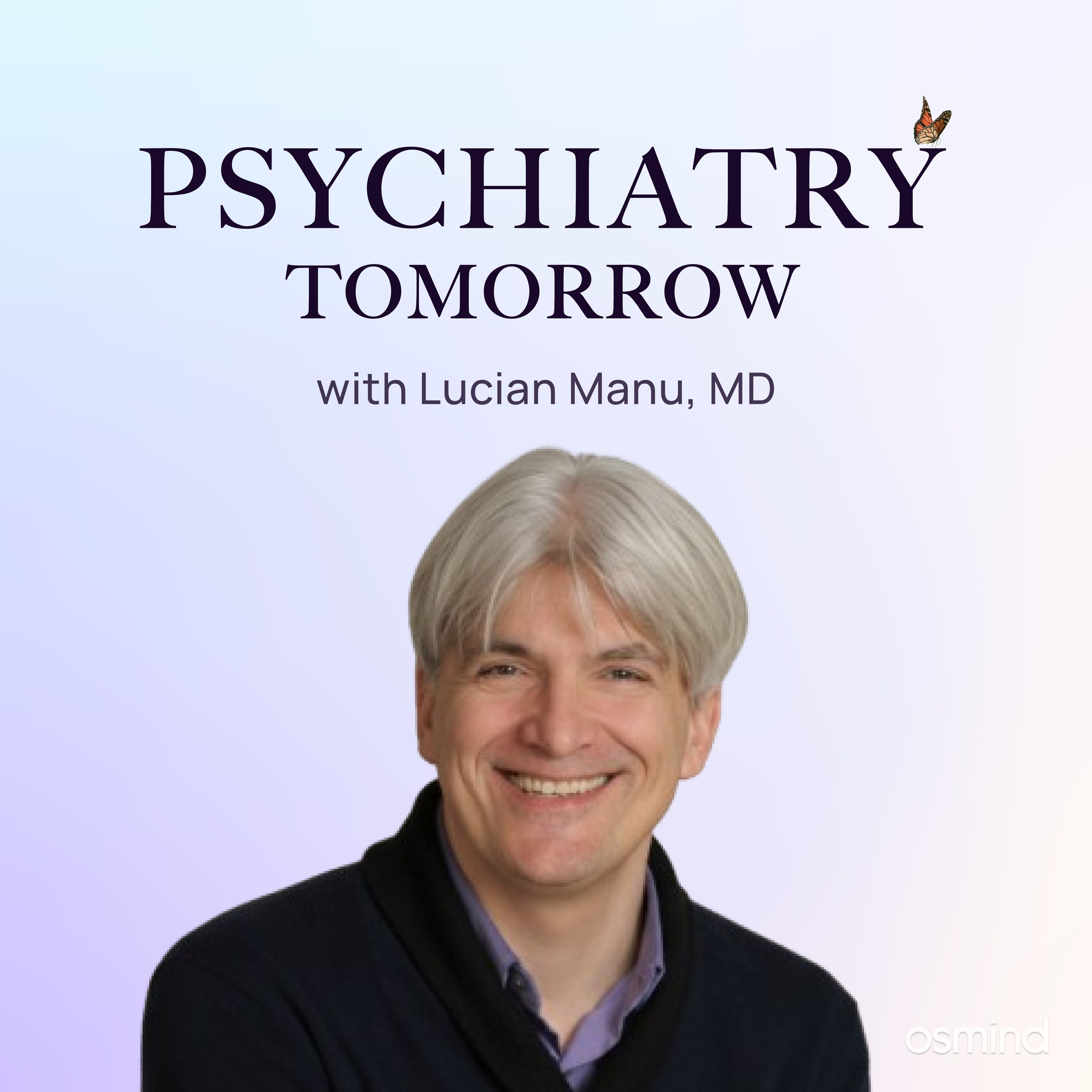
EPISODE · Nov 5, 2025 · 46 MIN
Vagal Nerve Stimulation for Depression with Lucian Manu, MD
from Psychiatry Tomorrow · host lucian manu, Carlene MacMillan
What if one of psychiatry's most effective treatments for treatment-resistant depression emerged from watching childbirth breathing techniques?Around 30-48% of depression patients become treatment-resistant after failing two or more antidepressants. For those who've exhausted every option—medication after medication, therapy combinations, even ECT—psychiatrists face a clinical impasse. But vagal nerve stimulation (VNS) offers something unprecedented: patients don't just maintain improvement—they keep getting better, month after month, year after year.At Stony Brook University, Dr. Lucian Manu has helped over 20 patients access VNS, many of whom have reduced their reliance on weekly ketamine infusions to monthly or less while maintaining stability.What You'll LearnWhy VNS emerged from an accidental observation during Lamaze classes and what that tells us about vagal modulationHow VNS creates a clinical "floor" that prevents patients from reaching their lowest depressive episodesThe Medicare coverage breakthrough after 15 years of insurance denials—and the cost-effectiveness argument that workedPatient selection criteria, practical implementation details, and managing the insurance appeals processWhy functional improvements often precede symptom score changes Timestamped Show Notes[00:00:00] Introduction: VNS as a treatment discovered by accident[00:01:00] Dr. Will Sauvé joins as new co-host[00:02:00] Why VNS is gaining momentum now[00:03:00] Dr. Manu's journey into VNS starting in 2016[00:05:00] The vagus nerve: anatomy and function—80% afferent, pathway to locus coeruleus[00:08:00] Jake Zabara's serendipitous discovery at Lamaze class[00:11:00] From stopping dog seizures to human epilepsy treatment[00:13:00] PET scans reveal VNS targets same brain regions as TMS; patients report feeling better than ever[00:16:00] The two unique features that convinced the FDA: improvement over time, low relapse[00:19:00] Why insurance companies refused coverage 2005-2020: not "class one evidence"[00:22:00] The RECOVER trial and Medicare breakthrough—cost-effectiveness argument[00:27:00] Getting single-case agreements through appeals: "war of attrition"[00:31:00] Patient selection criteria: 4+ failed treatments, bell curve age distribution, no ceiling on failures[00:34:00] Comparing VNS to ECT: "less extreme, more natural—dialing up existing function"[00:35:00] Bipolar depression often underdiagnosed in "treatment-resistant" populations[00:38:00] How VNS reduces ketamine treatment frequency: creating the floor while ketamine provides acute relief[00:42:00] The surgical procedure: outpatient, comparable to pacemaker, 21 patients with zero explantation requests[00:46:00] Quality of life improvements precede symptom scores; using MADRS and CGI to counter self-report bias[00:50:00] Transcutaneous auricular VNS: the non-invasive future, respiratory-gated stimulation research[00:53:00] VNS-assisted psychotherapy: priming the brain to learn by activating locus coeruleus attention systems[00:56:00] Trauma surgery ICU delirium study with ta-VNS—cross-disciplinary collaboration Brought to you by: Osmind.org, the #1 All-in-one Billing Solution + EHR for the modern private psychiatry practice
Embed this episode
What this episode covers
Vagal nerve stimulation (VNS) treats treatment-resistant depression with unique benefits: effects improve over 12-24 months, low relapse rates, and reduces ketamine frequency. Learn patient selection criteria, Medicare RECOVER trial access at 80+ sites, insurance appeals process, and how VNS creates a clinical "floor" preventing deepest episodes. Expert insights from Dr. Lucian Manu, Stony Brook University.
Ready to play
Vagal Nerve Stimulation for Depression with Lucian Manu, MD
No transcript for this episode yet
Similar Episodes
Similar Podcasts
No similar podcasts found.