Veteran news editors on how the media covered the election episode artwork

EPISODE · Nov 29, 2024 · 1H 28M

Veteran news editors on how the media covered the election

from Berkeley Talks

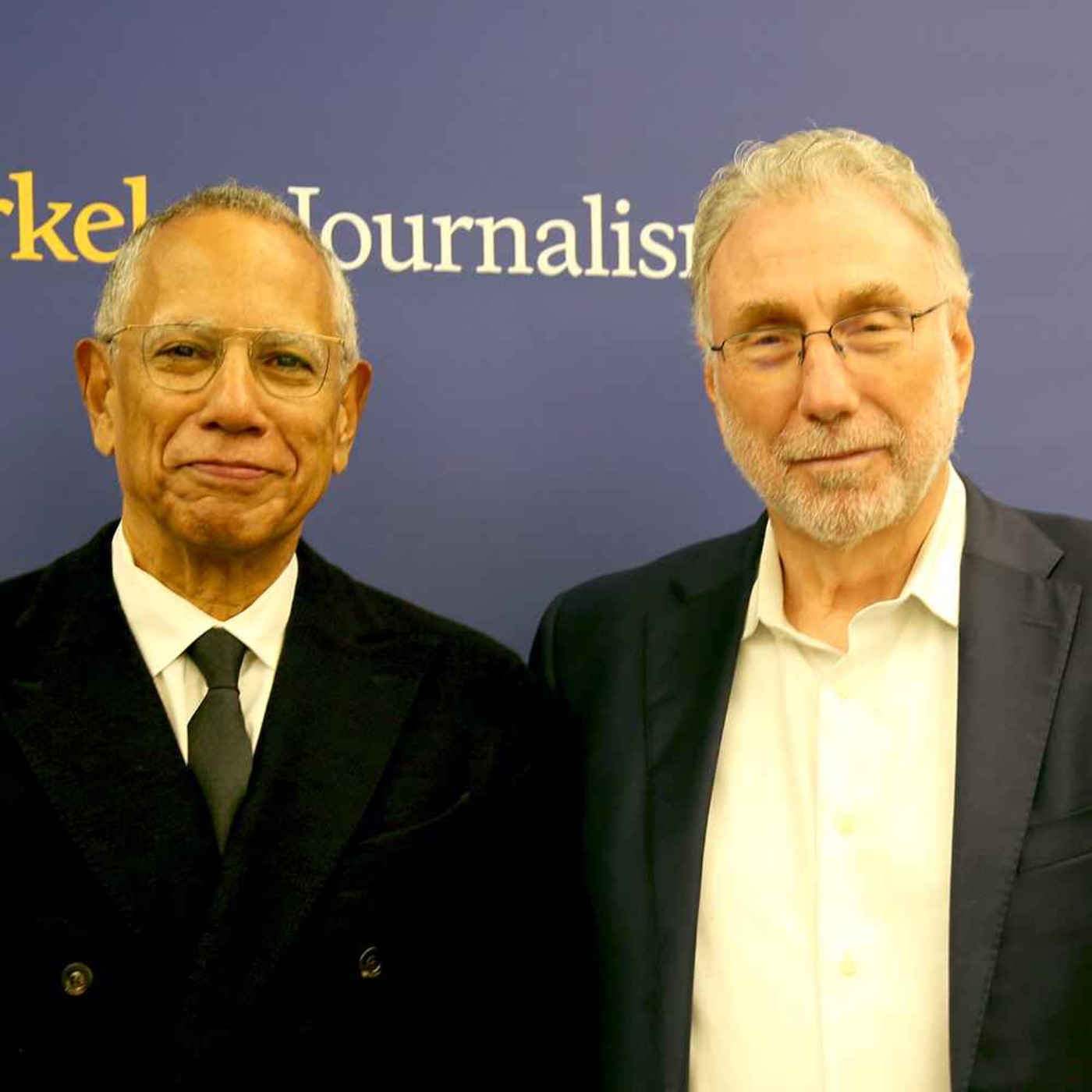
In Berkeley Talks episode 214, former editors of the New York Times and the Washington Post, Dean Baquet and Marty Baron, evaluate how the media covered the 2024 U.S. presidential election and share thoughts on how journalists should effectively cover Donald Trump’s second term.  In 2016, the New York Times was shocked that Trump won, because they didn’t understand that the country was “ready to elect a Donald Trump,” said Baquet at a UC Berkeley Journalism event on Nov. 13. But, he said, he thinks the coverage of the most recent election was much better.  “My argument would be that, and people have trouble accepting this, but all of the stuff you know about Donald Trump — his abuse of the tax structure that David Fahrenthold wrote about, his taxes and his tax dodges that the New York Times, including David Barstow, wrote about, the allegations of women, all of the things that became controversies about Donald Trump — were written about in the American press, and the American people voted Donald Trump in anyway. So I actually think the press did a much better job. How do you think the press performed this election?”“Well, I think there was a lot of good work,” responded Baron. “I would say this: When people asked me, ‘How did we do?’ in 2016, I said that our problem predated 2016. Our problem is that we did not understand America well enough to understand that this country would produce a candidate like Donald Trump.“We did not understand the level of rancor and grievance against elites, including, and maybe particularly, the press, to understand that they didn’t want Jeb Bush, who was called the front-runner at one point. They wanted exactly the opposite of Jeb Bush. They wanted somebody who was not part of governing the ruling elites, the political families. They wanted somebody who was going to go to Washington, basically be an arsonist, burn everything down, punch people in the face. And that’s what they elected. And we didn’t capture that. We didn’t understand the country well enough. I do think that we suffered from the same problem this time.”“But this time, people knew that there was a good chance he’d win,” said Baquet. “There was a good chance he would win, but I don’t think people anticipated that he would win as decisively as he has,” said Baron. “And they didn’t understand that he would win in the voting segments that he won, to the degree that he did, among Black Americans, among Latinos, among even women, among you name it. To win all of the swing states, I don’t think that that was anticipated at all.“And so, I don’t think we detected that level of desire for a change. And to me, that is, I think we need to work harder at really understanding the country.”Listen to the episode and read the transcript on UC Berkeley News (news.berkeley.edu/podcasts).Music by Blue Dot Sessions.UC Berkeley photo by Marlena Telvick. Hosted on Acast. See acast.com/privacy for more information.

In Berkeley Talks episode 214, former editors of the New York Times and the Washington Post, Dean Baquet and Marty Baron, evaluate how the media covered the 2024 U.S. presidential election and share thoughts on how journalists should effectively cover Donald Trump’s second term.  In 2016, the New York Times was shocked that Trump won, because they didn’t understand that the country was “ready to elect a Donald Trump,” said Baquet at a UC Berkeley Journalism event on Nov. 13. But, he said, he thinks the coverage of the most recent election was much better.  “My argument would be that, and people have trouble accepting this, but all of the stuff you know about Donald Trump — his abuse of the tax structure that David Fahrenthold wrote about, his taxes and his tax dodges that the New York Times, including David Barstow, wrote about, the allegations of women, all of the things that became controversies about Donald Trump — were written about in the American press, and the American people voted Donald Trump in anyway. So I actually think the press did a much better job. How do you think the press performed this election?”“Well, I think there was a lot of good work,” responded Baron. “I would say this: When people asked me, ‘How did we do?’ in 2016, I said that our problem predated 2016. Our problem is that we did not understand America well enough to understand that this country would produce a candidate like Donald Trump.“We did not understand the level of rancor and grievance against elites, including, and maybe particularly, the press, to understand that they didn’t want Jeb Bush, who was called the front-runner at one point. They wanted exactly the opposite of Jeb Bush. They wanted somebody who was not part of governing the ruling elites, the political families. They wanted somebody who was going to go to Washington, basically be an arsonist, burn everything down, punch people in the face. And that’s what they elected. And we didn’t capture that. We didn’t understand the country well enough. I do think that we suffered from the same problem this time.”“But this time, people knew that there was a good chance he’d win,” said Baquet. “There was a good chance he would win, but I don’t think people anticipated that he would win as decisively as he has,” said Baron. “And they didn’t understand that he would win in the voting segments that he won, to the degree that he did, among Black Americans, among Latinos, among even women, among you name it. To win all of the swing states, I don’t think that that was anticipated at all.“And so, I don’t think we detected that level of desire for a change. And to me, that is, I think we need to work harder at really understanding the country.”Listen to the episode and read the transcript on UC Berkeley News (news.berkeley.edu/podcasts).Music by Blue Dot Sessions.UC Berkeley photo by Marlena Telvick. Hosted on Acast. See acast.com/privacy for more information.

NOW PLAYING

Veteran news editors on how the media covered the election

0:00 1:28:38

No transcript for this episode yet

We transcribe on demand. Request one and we'll notify you when it's ready — usually under 10 minutes.

Carnivores Don't Get Sunburn - Carnivore Diet Talks Carnivores Don't Get Sunburn - Carnivore Diet Talks Welcome to “Carnivores Don’t Get Sunburn,” where we have fun and explore the carnivore diet and its transformative power. Join us as we uncover real stories from individuals who have thrived on this diet, defying convention and embracing optimal health. Plus, stay tuned for our upcoming documentary featuring diverse carnivores overcoming health challenges. Learn more at www.carnivoredietdocumentary.com.Excitingly, we’re working on an upcoming documentary where we’ll feature carnivores from various walks of life, conquering diverse health challenges. Join us on this journey and learn more at www.carnivoredietdocumentary.com.Join us in uncovering the power of the carnivore diet. Prepare to be inspired, informed, and empowered to embrace optimal health and well-being.Welcome to “Carnivores Don’t Get Sunburn: Unveiling Real Stories of the Carnivore Diet.” Stay tuned for our upcoming documentary. Discover how this lifestyle can transform lives. Learn more at www.carnivoredietdocumentary.com IT IS WHAT IT IS with SHALLZ - SHALLY ZOMORODI Shally Zomorodi What?  "It is what it is" with ShallZ – Shally ZomorodiWhen? WeeklyHow long? 35 minutesEvery week, Mother of 4, wife, morning TV news anchor and ultimate hostess, Shally Zomorodi talks about life - its up's and downs and how to stay on track in her weekly podcast, ‘It is what it is.’  Known for her high energy, infectious smile and ability to see the cup as half full Shally talks about all things in life and how to work through its challenges. From parenting, marriage, friendships, current events to how to smile when it just seems impossible ‘It is what it is’ is the perfect podcast to help inspire you to dance through the rain. Tracking Nuclear Weapons Programs Center for Strategic and International Studies The CSIS Proliferation Prevention Program talks to experts about transparency and nuclear weapons. Cover Stories with Chess Life US Chess Chess Life Editor John Hartmann talks to the authors of each month's Chess Life cover story.

Frequently Asked Questions

How long is this episode of Berkeley Talks?

This episode is 1 hour and 28 minutes long.

When was this Berkeley Talks episode published?

This episode was published on November 29, 2024.

What is this episode about?

In Berkeley Talks episode 214, former editors of the New York Times and the Washington Post, Dean Baquet and Marty Baron, evaluate how the media covered the 2024 U.S. presidential election and share thoughts on how journalists should effectively...

Can I download this Berkeley Talks episode?

Yes, you can download this episode by clicking the download button on the episode player, or subscribe to the podcast in your preferred podcast app for automatic downloads.
URL copied to clipboard!