
EPISODE · Jan 28, 2026 · 19 MIN
Visualizing Urticaria Worldwide
from All Things Urticaria – Learning about urticaria with Prof. Dr. Torsten Zuberbier · host UCARE, the Global Allergy and Asthma Excellence Network for Urticaria
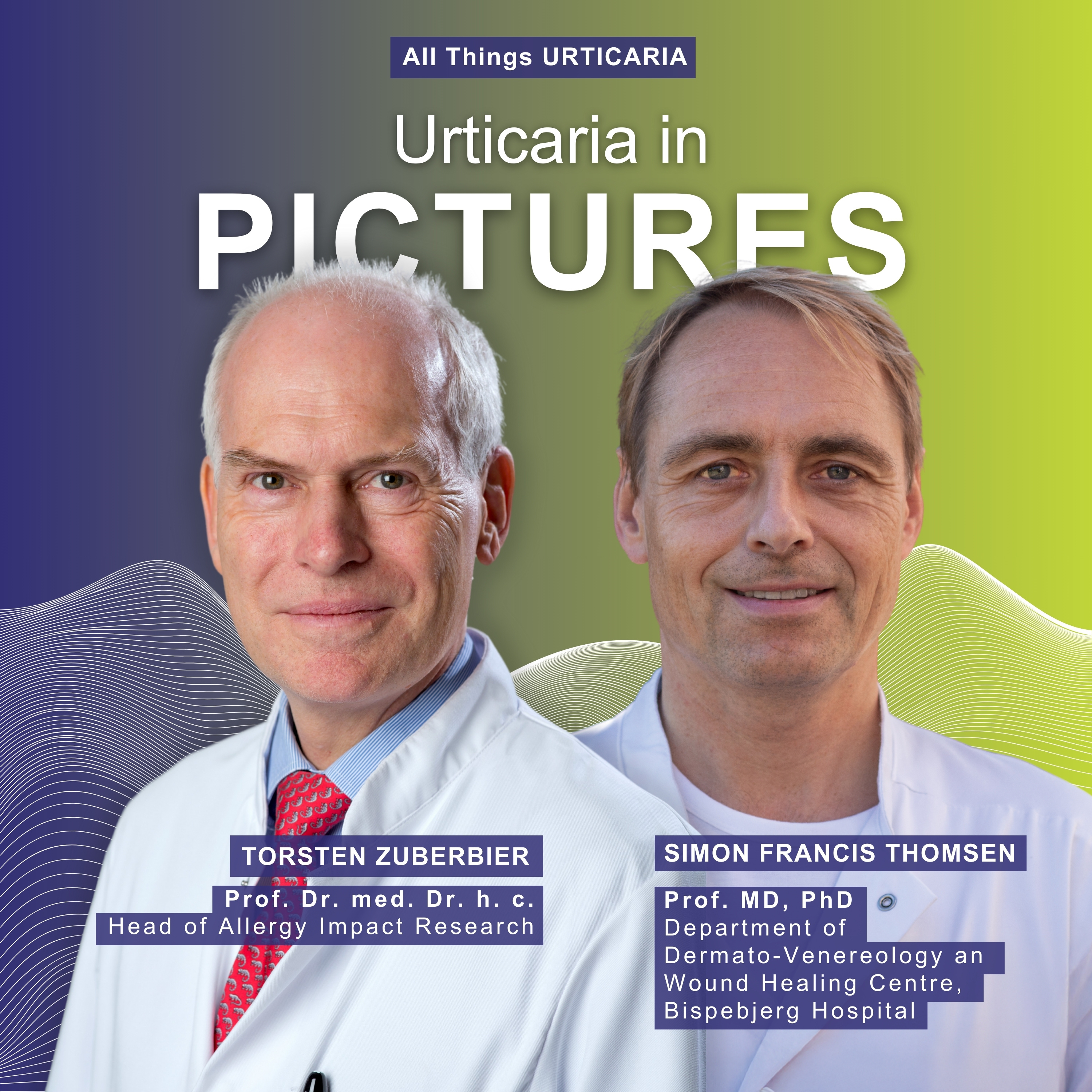
In this episode of the GA²LEN Urticaria Podcast, Professor Torsten Zuberbier is joined by Professor Simon Francis Thomsen from Denmark to introduce an exciting new global initiative within the UCARE network: WOW – Wheals and Angioedema of the World. The WOW project aims to create a worldwide, representative online image repository of urticaria and angioedema across all skin types, ethnicities, and continents. The initiative addresses a major challenge in everyday clinical practice: most patients do not present with visible wheals during clinic visits, despite experiencing severe symptoms at other times of the day. They discuss: 🔹 Why are patient-taken images crucial in urticaria care? 🔹 How can photographs improve diagnosis, monitoring, and treatment decisions? 🔹 What can we learn from the shape, size, duration, and evolution of wheals? 🔹 How could images, registries, biobanks, and digital tools be combined in the future? The discussion highlights how smartphones have already changed patient behavior, with most patients documenting their symptoms themselves. Looking ahead, the episode explores how artificial intelligence, digital imaging, patient-reported outcomes, and environmental data could be integrated to better understand disease trajectories and personalize treatment. WOW represents a key step toward a more visual, data-driven, and patient-centered future in urticaria research and care. Key Learnings from the Episode:Urticaria and angioedema are rarely visible during clinic visits despite severe patient burden. Most patients already take high-quality images of their wheals using smartphones. The WOW project will create a global, diverse image atlas of urticaria and angioedema. Existing online images are often non-representative of different skin types and populations. Sequential photos help assess wheal duration, evolution, and treatment response. Wheal morphology may provide clues about underlying mechanisms and therapy response. Digital images could be combined with registries, biobanks, and patient-reported outcomes. Artificial intelligence may help identify patterns and predict disease course in the future. Taking photos in consistent lighting and angles improves clinical usefulness. Visual documentation strengthens communication between patients and physicians. Chapters:00:00 Introduction to Urticaria and Angioedema03:47 The WOW Project: A Global Initiative06:48 Patient Involvement: Capturing Images of Urticaria09:49 Practical Tips for Patients on Taking Pictures12:48 Integrating Data for Better Patient Outcomes15:25 Future of Urticaria Research and Closing ThoughtsDo you have suggestions for future episodes? Please provide feedback and offer your suggestions for future topics and expert selection here. Feedback form: ATU: https://forms.office.com/e/m6a2uEdsUH
Embed this episode
NOW PLAYING
Visualizing Urticaria Worldwide
No transcript for this episode yet
Similar Episodes
No similar episodes found.
Similar Podcasts
No similar podcasts found.