Want Exotic Melodies? Use These Notes...
from Ray Harmony Hosted by Hack Music Theory
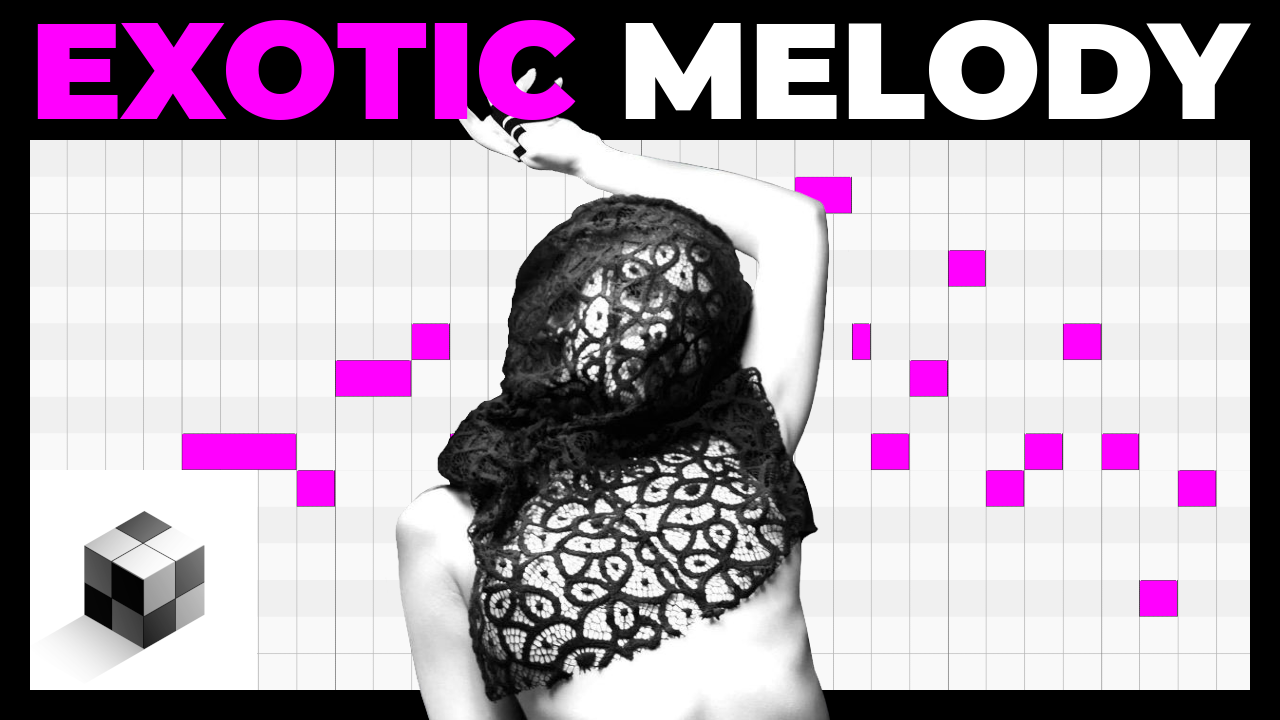
Most popular music is made using the two most common western scales: the major, and the natural minor. So the best way to make your melodies stand out is to use a non-western scale (like the one we’ll reveal in this lesson). But first… tea! DOWNLOAD PDF + WAV + MIDI FROM THIS VIDEO Hello revolutionary music makers, we are Kate Harmony and Ray Harmony (AKA Revolution Harmony), and welcome to Hack Music Theory. We help you make great music that stands out, so you can move and grow your audience! If that sounds useful to you, then subscribe to our YouTube channel and hit that bell to get notified every Thursday, when we publish our new video. Alright, let’s jump in... THEORY Italian-Iranian crossover group NAVA just dropped their new Persian-inspired electronic track “Ritual”. This song jumps out at you from the hundreds of new releases, because those were made using the major or minor scale, whereas this song was made using a non-western scale. This scale is common in the traditional music of many non-western countries, like Iran and India, but it’s exceptionally rare in the West. When we do use this scale though, we call it the Phrygian dominant (or Phrygian major), but it has many non-Western names that predate these. Now, there’s a couple characteristics that make this scale sound exotic (which we’ll get to in a minute), but the main characteristic is the combination of the ♭2 and the 3. For example, in C Phrygian dominant, to get that exotic sound, you need to play the ♭2 (D♭), the 3 (E), and obviously the root (C). On the other hand, if you want a melody that stands out but does not sound too exotic, then change the chord under the D♭ in your melody to a B♭m, for example. This results in your listeners not hearing the D♭ as a dissonant ♭2, but instead as a beautiful ♭3 in the context of that B♭m chord. This is actually the method we used in our Grime Bass lesson, so check out that PDF if you wanna learn how to use the Phrygian dominant in a Western style. You’ll love how versatile this scale is! SETUP Alright, now you’re gonna learn how to use this theory to make your own version, and what you see below is our version that we made earlier. So, start by setting up two bars of 4/4, with your grid set to 1/16 notes, and your tempo set to 120 BPM. NAVA uses C Phrygian dominant, so we’ll use it too. STEP 1. THE SCALE So, what notes are in this exotic scale? Well, in C Phrygian dominant, the notes are: C D♭ E F G A♭ B♭. Now as we mentioned earlier, there’s a couple reasons this scale sounds exotic to Western ears. Firstly, there’s a super rare three-semitone interval between adjacent degrees of the scale (D♭ and E), whereas in the standard Western scales and modes, there’s usually one or two semitones between the degrees. Having said that though, there is one relatively standard Western scale that does contain a three-semitone interval between adjacent degrees, but, you hardly ever hear it outside of classical music (and metal), so it’s super rare in popular music. The scale we’re talking about is the harmonic minor*, and we love it, cos it’s another great way to make your music stand out. In fact, we teach you how to make standout music using the harmonic minor scale (and its cousin, the melodic minor) in our online course Apprenticeship #1, where you’ll also learn how to write new sections for existing sections, how to transition between sections in different keys, and a bunch more! Now, the second reason Phrygian dominant sounds exotic to Western ears, is that it has a ♭2, which only occurs twice in the Western modes (in Phrygian and Locrian), so that’s already rare. But, that’s only half the story. Both Phrygian and Locrian are minor (i.e. they contain a ♭3), whereas Phrygian dominant is major (i.e. it contains a 3), and as you now know, that magic combination of ♭2 and 3 is exactly what makes this scale sound so exotic. *The West actually came across the Phrygian dominant by starting on the 5th degree of the harmonic minor scale. Therefore, these two scales are related, which means they share the exact same notes, but have a different root. For more on relative scales, read Hack 5 in our free ebook. STEP 2. THE MELODY Right, now that you’re familiar with this exotic scale, it’s time to use it to write your melody. So, start your first phrase by playing the root note (C) to establish the home, then play around with all those beautiful semitone steps that naturally occur in this scale, in other words: C to D♭, E to F, and G to A♭. And for your melody’s second phrase, start on the root note again, but an octave higher this time (for variation, and to extend your melody’s range). Then, cascade down through the scale, perhaps ending with that exotic combo of ♭2 and 3. And for the rhythm of your melody, use a wide variety of note values to keep it fresh, and don’t be scared to throw in a 1/32 note for some extra spice. And if you need more help writing melodies, then use the Melody Checklist in our Songwriting & Producing PDF (click & scroll down), it’s the ultimate list of dos and don’ts for writing great melodies! Lastly, for maximum exoticness, we’re playing our melody over a bass line that’s inspired by a drone, which is when you play one note continuously. However, we added some other notes to our bass line, for extra interest (see MIDI file). WANT MORE? Right, now that you’ve got one section down, how do you write more sections for it, and then, how do you transition between those sections, and turn 'em into a song? Great questions, and if this is something you need help with, then check out our cutting-edge online apprenticeship course, where you’ll literally learn every step of the music making process, and most importantly, you’ll learn how to finish your songs! You’ll also gain access to our private network, which is a safe online space (i.e. social media platform) exclusively for our 600+ apprentices from 50+ countries. Our Network is a super supportive place for you to ask theory questions, share your music, get feedback, meet like-minded music makers, and collaborate! If all this sounds useful to you, then head on over to our Online Apprenticeship page now. Kate & Ray Harmony (AKA Revolution Harmony) Music Teachers & Producers in Vancouver BC, Canada LEVELS Level 1 - Read our free book (below) & watch our YouTube videos Level 2 - Read our "Part 1" book & "Songwriting & Producing" PDF Level 3 - Practice making music using our lessons (PDF+MIDI+WAV) Level 4 - Learn our secret art of song-whispering & finish your music ABOUT Hack Music Theory is a pioneering DAW method for making great music that stands out, so you can move and grow your audience! Taught by award-winning music lecturer Ray Harmony, and his protégé wife Kate Harmony, from their studio in Vancouver BC, Canada. Ray is the author of critically-acclaimed book series "Hack Music Theory", and has made music with Serj Tankian (System of a Down), Tom Morello (Rage Against the Machine), Steven Wilson (Porcupine Tree), Devin Townsend (Strapping Young Lad), Ihsahn (Emperor), Kool Keith (Ultramagnetic MCs), Madchild (Swollen Members), and many more! Kate has the highest grade distinction in Popular Music Theory from the London College of Music, and is the only person on the planet who's been trained by Ray to teach his method. On that note, the "Hack Music Theory" YouTube channel teaches relevant and instantly-usable music theory for producers, DAW users, and all other music makers (songwriters, singers, guitarists, bassists, drummers, etc.) in all genres, from EDM to R&B, pop to hip-hop, reggae to rock, electronic to metal (and yes, we djefinitely djent!). COPYRIGHT © 2019 Revolution Harmony Revolution Harmony is Ray Harmony & Kate Harmony All content (script & music) in video by Revolution Harmony NAVA photo courtesy of Rolling Stone (Italy) Wooohooo!!! You’re a mere 30 minutes away from being even smarter than you already are. Just head on over to your inbox now for your free download. There was an error submitting your subscription. Please try again. “The most brilliant, fast, easy & fun music theory book I’ve ever seen!” DEREK SIVERS, CD Baby founder We use this field to detect spam bots. If you fill this in, you will be marked as a spammer. DOWNLOAD FREE BOOK /* Layout */ .ck_form { /* divider image */ background: #EAE9EA url(data:image/gif;base64,R0lGODlhAQADAIABAMzMzP///yH/C1hNUCBEYXRhWE1QPD94cGFja2V0IGJlZ2luPSLvu78iIGlkPSJXNU0wTXBDZWhpSHpyZVN6TlRjemtjOWQiPz4gPHg6eG1wbWV0YSB4bWxuczp4PSJhZG9iZTpuczptZXRhLyIgeDp4bXB0az0iQWRvYmUgWE1QIENvcmUgNS41LWMwMTQgNzkuMTUxNDgxLCAyMDEzLzAzLzEzLTEyOjA5OjE1ICAgICAgICAiPiA8cmRmOlJERiB4bWxuczpyZGY9Imh0dHA6Ly93d3cudzMub3JnLzE5OTkvMDIvMjItcmRmLXN5bnRheC1ucyMiPiA8cmRmOkRlc2NyaXB0aW9uIHJkZjphYm91dD0iIiB4bWxuczp4bXA9Imh0dHA6Ly9ucy5hZG9iZS5jb20veGFwLzEuMC8iIHhtbG5zOnhtcE1NPSJodHRwOi8vbnMuYWRvYmUuY29tL3hhcC8xLjAvbW0vIiB4bWxuczpzdFJlZj0iaHR0cDovL25zLmFkb2JlLmNvbS94YXAvMS4wL3NUeXBlL1Jlc291cmNlUmVmIyIgeG1wOkNyZWF0b3JUb29sPSJBZG9iZSBQaG90b3Nob3AgQ0MgKE1hY2ludG9zaCkiIHhtcE1NOkluc3RhbmNlSUQ9InhtcC5paWQ6MUQ5NjM5RjgxQUVEMTFFNEJBQTdGNTQwMjc5MTZDOTciIHhtcE1NOkRvY3VtZW50SUQ9InhtcC5kaWQ6MUQ5NjM5RjkxQUVEMTFFNEJBQTdGNTQwMjc5MTZDOTciPiA8eG1wTU06RGVyaXZlZEZyb20gc3RSZWY6aW5zdGFuY2VJRD0ieG1wLmlpZDoxRDk2MzlGNjFBRUQxMUU0QkFBN0Y1NDAyNzkxNkM5NyIgc3RSZWY6ZG9jdW1lbnRJRD0ieG1wLmRpZDoxRDk2MzlGNzFBRUQxMUU0QkFBN0Y1NDAyNzkxNkM5NyIvPiA8L3JkZjpEZXNjcmlwdGlvbj4gPC9yZGY6UkRGPiA8L3g6eG1wbWV0YT4gPD94cGFja2V0IGVuZD0iciI/PgH//v38+/r5+Pf29fTz8vHw7+7t7Ovq6ejn5uXk4+Lh4N/e3dzb2tnY19bV1NPS0dDPzs3My8rJyMfGxcTDwsHAv769vLu6ubi3trW0s7KxsK+urayrqqmop6alpKOioaCfnp2cm5qZmJeWlZSTkpGQj46NjIuKiYiHhoWEg4KBgH9+fXx7enl4d3Z1dHNycXBvbm1sa2ppaGdmZWRjYmFgX15dXFtaWVhXVlVUU1JRUE9OTUxLSklIR0ZFRENCQUA/Pj08Ozo5ODc2NTQzMjEwLy4tLCsqKSgnJiUkIyIhIB8eHRwbGhkYFxYVFBMSERAPDg0MCwoJCAcGBQQDAgEAACH5BAEAAAEALAAAAAABAAMAAAICRFIAOw==) repeat-y center top; font-family: 'Montserrat'; line-height: 1.5em; overflow: hidden; color: #000000; font-size: 16px; border-top: none; border-top-color: #666666; border-bottom: none; border-bottom-color: #3d3d3d; -webkit-box-shadow: none; -moz-box-shadow: none; box-shadow: none; clear: both; margin: 0px 0px; } .ck_form, .ck_form * { -webkit-box-sizing: border-box; -moz-box-sizing: border-box; box-sizing: border-box; } #ck_subscribe_form { clear: both; } /* Element Queries — uses JS */ .ck_form_content, .ck_form_fields { width: 50%; float: left; padding: 5%; } .ck_form.ck_horizontal { } .ck_form_content { border-bottom: none; } .ck_form.ck_vertical { background: #fff; } .ck_vertical .ck_form_content, .ck_vertical .ck_form_fields { padding: 10%; width: 100%; float: none; } .ck_vertical .ck_form_content { border-bottom: 1px dotted #aaa; overflow: hidden; } /* Trigger the vertical layout with media queries as well */ @media all and (max-width: 499px) { .ck_form { background: #fff; } .ck_form_content, .ck_form_fields { padding: 10%; width: 100%; float: none; } .ck_form_content { border-bottom: 1px dotted #aaa; } } /* Content */ .ck_form_content h3 { margin: 0px 0px 0px; font-size: 0px; padding: 0px; } .ck_form_content p { font-size: 14px; } .ck_image { float: left; margin-right: 5px; } /* Form fields */ .ck_errorArea { display: none; } #ck_success_msg { padding: 10px 10px 0px; border: solid 1px #ddd; background: #eee; } .ck_label { font-size: 14px; font-weight: bold; } .ck_form input[type="text"] { font-size: 16px; text-align: center; margin-top: 20px; margin-bottom: 0px; padding: 8px 8px; width: 100%; border: 1px solid #d6d6d6; /* stroke */ -moz-border-radius: 4px; -webkit-border-radius: 4px; border-radius: 30px; /* border radius */ background-color: #fff; /* layer fill content */ height: auto; } .ck_form input[type="email"] { font-size: 16px; text-align: center; margin-top: 0px; margin-bottom: 15px; padding: 8px 8px; width: 100%; border: 1px solid #d6d6d6; /* stroke */ -moz-border-radius: 4px; -webkit-border-radius: 4px; border-radius: 30px; /* border radius */ background-color: #fff; /* layer fill content */ height: auto; } .ck_form input[type="text"]:focus, .ck_form input[type="email"]:focus { outline: none; border-color: #aaa; } .ck_checkbox { padding: 10px 0px 10px 20px; display: block; clear: both; } .ck_checkbox input.optIn { margin-left: -20px; margin-top: 0; } .ck_form .ck_opt_in_prompt { margin-left: 4px; } .ck_form .ck_opt_in_prompt p { display: inline; } .ck_form .ck_subscribe_button { width: 100%; color: #fff; margin: 0px 0px 0px; padding: 8px 8px; font-size: 18px; background: #d74128; -moz-border-radius: 4px; -webkit-border-radius: 4px; border-radius: 30px; /* border radius */ cursor: pointer; border: none; text-shadow: none; } .ck_form .ck_guarantee { color: #626262; font-size: 12px; text-align: center; padding: 5px 0px; display: block; } .ck_form .ck_powered_by { display: block; color: #aaa; } .ck_form .ck_powered_by:hover { display: block; color: #444; } .ck_converted_content { display: none; padding: 5%; background: #fff; } /* v6 */ .ck_form_v6 #ck_success_msg { padding: 0px 10px; } @media all and (max-width: 403px) { .ck_form_v6.ck_modal .ck_close_link { top: 30px; } } @media all and (min-width: 404px) and (max-width: 499px) { .ck_form_v6.ck_modal .ck_close_link { top: 57px; } }
Embed this episode
No transcript yet.