
EPISODE · Dec 12, 2024 · 27 MIN
Warrior Rock Soundwalk Part 1
from Soundwalk · host Chad Crouch
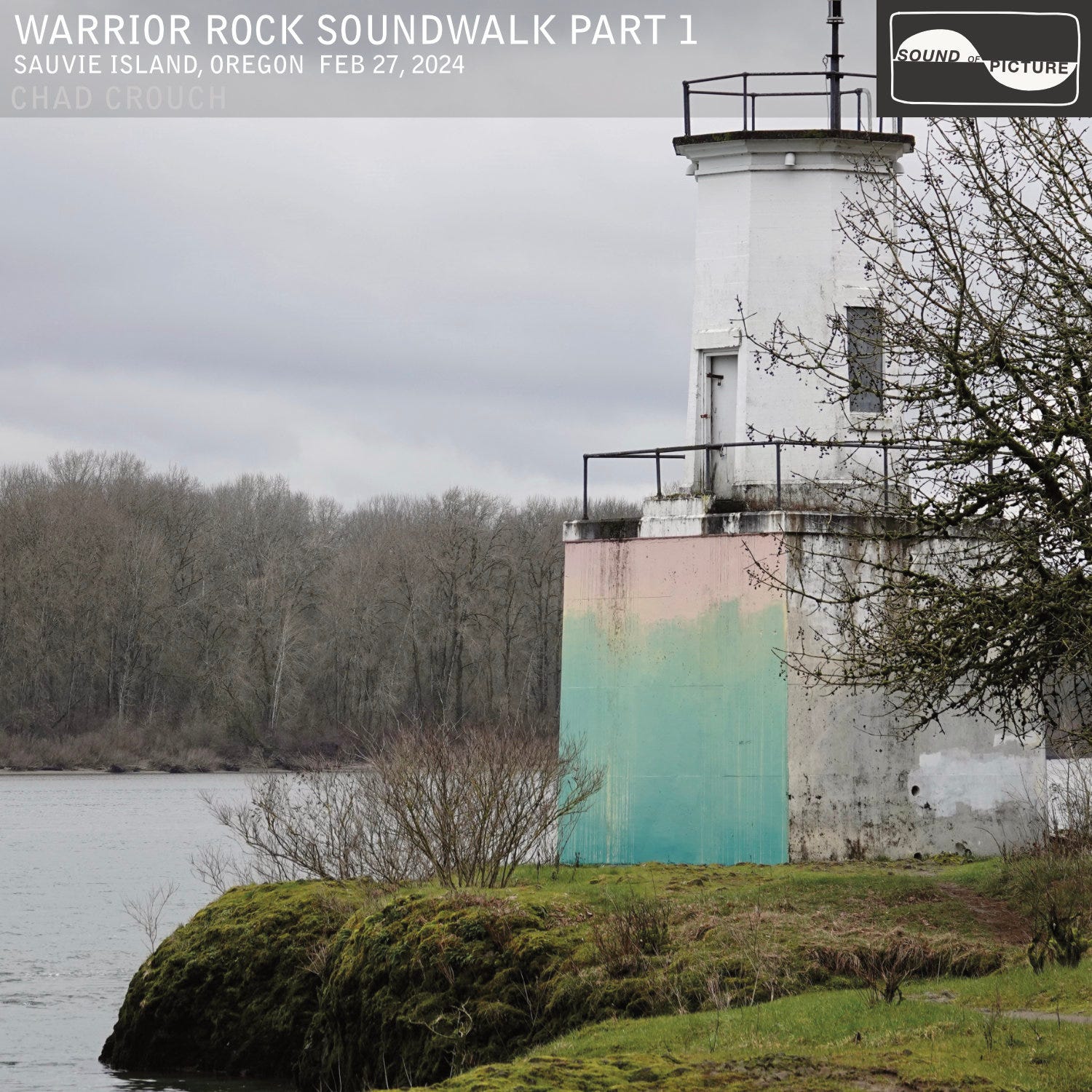
The Warrior Point Trail is a 7 mile out-and-back stroll on a dirt lane along the bank of the Columbia River among cottonwood forests, grassy meadows, and several lakes. The lakes are never really in clear view, but in the winter you are aware of them, being the preferred locales of sometimes raucous Tundra Swans. I started off walking along the water, joining the proper trail the better part of a mile north. The light, fine rain sounded like tiny pin pricks on my hat and coat. The wake of a passing barge was still settling, even as it passed out of sight. I saw a cloud of Canadian Geese coalesce in the sky downriver and disappear as soon as they had come. The river was wide and serene. A crow winged by with a fish in its mouth. I zoomed in on the destination downriver, Warrior Rock Lighthouse. The smallest lighthouse in Oregon. Why is it called Warrior Rock, you might ask? Well, like so many things around here the words were chosen from the perspective of the explorer and put on a map, and it stuck. The tale of the encounter that inspired that name, most likely with the Cathlapotle band of Chinooks, goes like this:On October 28, 1792, a British exploration party paddling up the Columbia in the ship’s launch and cutter boats encountered twenty-three canoes with about two hundred Chinookans aboard, most of them wearing armored vests and holding weapons. Lt. William Broughton, captain of the HMS Chatham, the tender vessel for George Vancouver’s HMS Discovery, led the British force. Seeing his men clearly outnumbered, Broughton ordered the launch’s swivel gun loaded and primed for discharge. He loaded his own musket and fired a ball in the water to forewarn and frighten the Chinook. While the only violence during the encounter came from the British mariners, the place-name Broughton affixed to the place—Point Warrior—represents his characterization of the Native canoe men. (oregonencyclopedia.org)The denouement was described by the ship’s clerk, “[seeing] that our intentions were as peacable, as their own, they took off all their War Garments, and every man seem’d eager to dispose of his Bows and Arrows for old Buttons, Beads, etc.”The rock formation the lighthouse was built on is the reason Sauvie Island exists. During the last ice age, several cataclysmic flash flood events scoured out the Columbia Basin, originating from ice dam breaches in the area of modern day Missoula, MT. Looking up on the hillsides of that Montana college town one can still make out the terraced waterline pattern of a vast glacial lake. When all that water coursed through this section of river, it uncovered the Warrior Rock formation in the basin. The resistant grey basalt formation acted like a dam, holding back sediment deposits along its southwest axis. Thus, Sauvie Island is only about 10,000 years young, give or take a couple thousand years. Along the way I stopped to watch a family of Pileated Woodpeckers. Bald Eagles abound here.I completed this instrumental score fairly recently, so the discerning listener may note the sound palette bearing a resemblance to the recently launched Listening Spot series: instrument voices that function like string arrangements but were created from pedal steel guitar, dobro, and mellotron are used for the first time here. It strikes me that these are like sedimentary layers of sound deposited against the backbone of (mostly) Pianet electric piano.I tend to be quite slow on my walks, especially when there are so many interesting things to see and hear. As a result I came away with several hours of source audio. I decided to cut that down to just shy of an hour, and subsequently split that in two because I kept falling asleep when listening to the mixes at night. On the whole it’s quite reflective. A good end-of-year listen, I think. So I’m keeping the entirety of Part 1 unrestricted, for all who may want to listen to it on this platform, or via their podcast app. Part two will be released next week. Warrior Rock Soundwalk Part 1 is available on all streaming platforms (Spotify, Apple, Tidal, Amazon, YouTube…) tomorrow, Friday, December 13th. This is a public episode. If you'd like to discuss this with other subscribers or get access to bonus episodes, visit chadcrouch.substack.com/subscribe
NOW PLAYING
Warrior Rock Soundwalk Part 1
No transcript for this episode yet
Similar Episodes
Mar 27, 2026 ·46m
Nov 28, 2025 ·25m
Nov 28, 2025 ·20m
Nov 28, 2025 ·23m
Nov 28, 2025 ·22m
Sep 9, 2025 ·28m