
EPISODE · Jan 28, 2026 · 7 MIN
We Can Be Accidentally Toxic...and We Can Not
from Humane Work Podcast · host Jim Benson
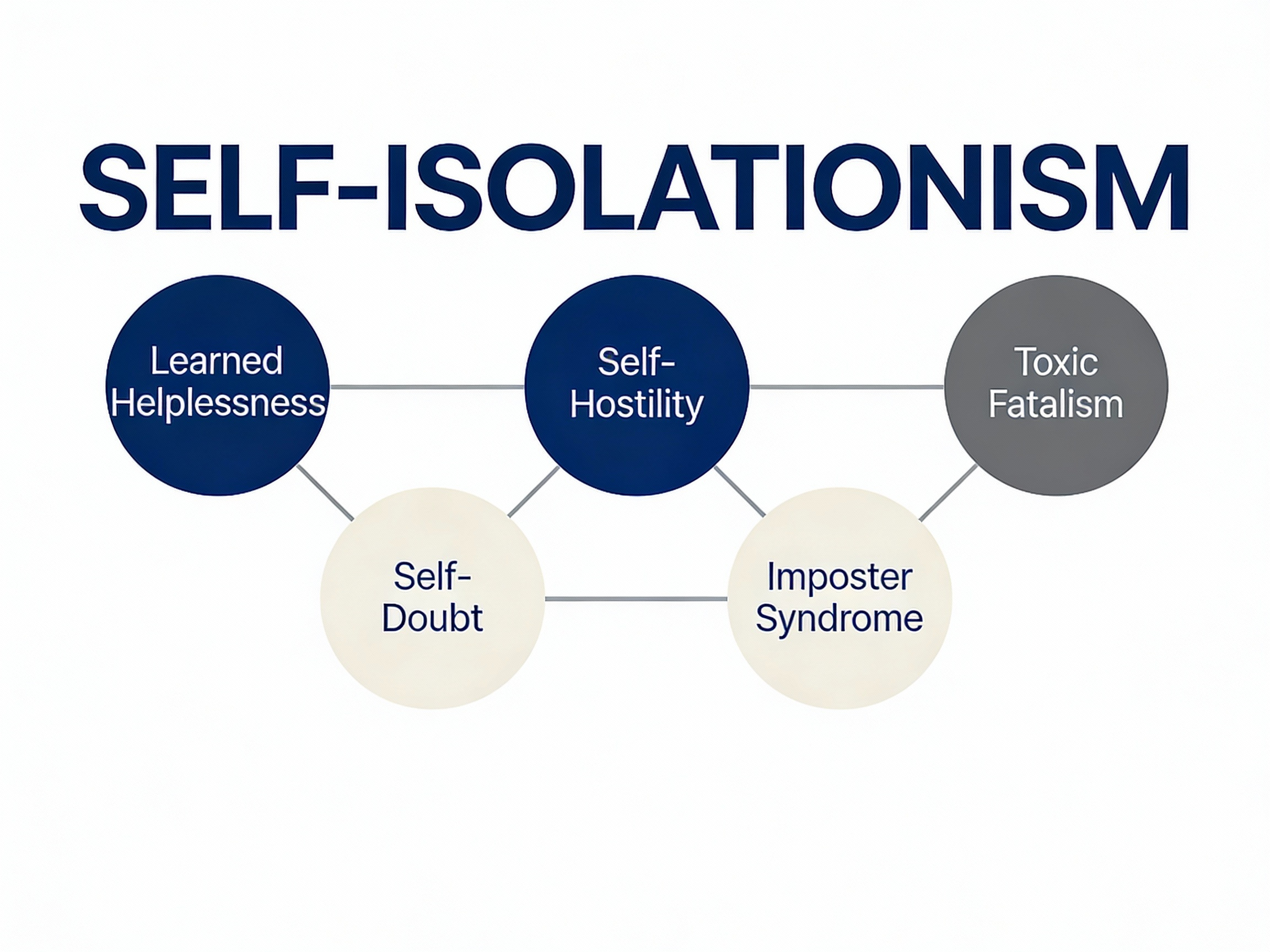
For a few years, we’ve had the toxic waste class at Modus Institute. It’s been an amazing experience, every month we have a call where people from around the world talk about the way work is impacting them and their teams and we, together, work on ways to remove those bottlenecks.We’ve created a lot of models of different types of toxicity, but one that always surprises us is Self-Isolationism. It’s when we do things that actively work against our own best interests and, in turn, make the team work less effectively. This is what we call a constellation. A group of actions that, alone or combined, create dysfunction, even when we have the best of intentions.This one you’ve seen a million times. The brilliant engineer who won’t ask for help. The dedicated manager who takes on everyone’s work rather than delegate. The talented professional who retreats into perfectionism instead of collaboration.They’re not toxic people. They’re people trapped in self-isolationism. A toxic pattern where well-intentioned professionals inadvertently poison their organizations by walling themselves off.We think this is about the person overloading themselves, but isolation doesn’t just hurt the isolated person. It spreads like a contagion through your entire organization.The Five Toxic Wastes of Self-IsolationismThis constellation comprises five interconnected toxins:* Learned helplessness – Feeling powerless to change your situation, leading to inaction that isolates you from support networks* Self-hostility – Invalidating your own worth, competence, and contributions* Self-doubt – Pervasive lack of confidence that breeds paralysis and hesitancy to seek help* Imposter syndrome – The persistent belief that your accomplishments are inadequate, fostering anxiety that disrupts focus* Toxic fatalism – Losing the ability to envision or pursue alternatives, internalizing toxicity as inevitableEach feeds the others. Each compounds the damage.The Toxicokinetics of Self-IsolationismReally quickly… toxicokinetics is how a toxin flows through your body. So, if you think of office toxicity like a poison moving through a team or company, we can start to track it and work with it. Self-isolationism has a predictable progression:Entry: Self-doubt and insecurity—that inner critic questioning your worth—create the entry point.Metabolism: Those toxic thoughts breed learned helplessness. You compensate by taking on excessive work to prove your value. Confidence erodes under mounting responsibilities.Distribution: Now isolated and overloaded, you lose vital context. You’re blindly assigned disconnected tasks without understanding broader goals. Communication breaks down because self-doubt prevents you from asking clarifying questions. Unproductive silos form.Peak Toxicity: Lack of transparency becomes institutionalized. Professionals drift into dysfunctional silos, cut off from the shared leadership and knowledge flows needed for true teamwork.The Antidote: Visual Management and the ObeyaHere’s what we’ve learned after decades of working with teams drowning in toxicity: You cannot fix what you cannot see.Toxicity spreads quickly in darkness. It hides in:* Invisible workloads that overwhelm people* Information silos that starve teams of context* Unstated expectations that breed misalignment* Hidden information or decision-making bottlenecks that create panic and firefightingVisual management, particularly through an Obeya, is how you expose and eliminate self-isolationism.What Is An Obeya?An Obeya (Japanese for “big room”) is a physical or virtual space where all the information a team needs to act with confidence lives. It’s not just a project room with sticky notes. It’s a beating heart that pumps clarity, context, and connection through your entire organization.When self-isolationism takes root, the Obeya becomes your immune system:It Makes Overload VisibleWhen someone’s Personal Kanban shows 8 items in their DOING column instead of 3, it’s not a personal failing…it’s a systemic signal. It’s a trigger for help can be offered before burnout happens.It Eliminates Information StarvationInstead of people making decisions in the dark, the Obeya shows strategy, current work, blockers, and progress in real-time. Context isn’t hoarded…it’s radiating. It’s actively working for you.It Destroys Silos Through CollaborationWhen work is visible to everyone, collaboration happens naturally. You see where colleagues are stuck. You offer help. You ask for help without shame.It Celebrates Learning Over ExpertiseColumns that specifically show “Success,” “The Unexpected,” and “Lessons Learned” combat the imposter syndrome beliefs that drive people into isolated overwork.Why This Matters NowWorkplace toxicity costs American employers $917 billion annually. Self-isolationism is one of the primary drivers:* 26% of workers actively dread going to work* Employees in toxic environments are 3x more likely to report mental health challenges* Presenteeism costs $4,300-$7,200 per employee annuallyYou can’t fix this with HR mandates or two-day workshops. You fix it by building humane systems of work where:* Information flows freely* Overload is visible and addressed* Collaboration is expected, not optional* People act with confidence because they have clarityLearn to Build These SystemsIf you’re a team leader, project manager, agile coach, or operations professional struggling with scattered information, unclear priorities, or siloed teams—visual management through Obeya is your path forward.Join us for the Guided Obeya Fundamentals Certification📅 February 16, 2026 | 10am-4pm ET🎓 Accredited by the Obeya Association👥 Taught by Obeya Senseis Jim Benson & Tonianne DeMariaWhat You’ll Master:* The 11 essential Obeya principles that separate high-performing teams from chaos* How to design physical and virtual Obeya spaces that teams actually use* Visual management techniques that make self-isolationism impossible to hide* Creating psychological safety through transparent information-sharing* Meeting rhythms that drive action instead of just talkOfficial Certification Included:✅ Obeya Fundamentals Certificate from the global Obeya Association✅ Digital badge for LinkedIn✅ One-year free membership to the Obeya Association Community (€75 value)✅ Pathway to advanced certificationsInvestment: $888 introductory price (regularly €1,500+ in Europe)Limited to 20 participantsThis isn’t theory. This is decades of work with Fortune 500 companies, government agencies, and startups across six continents—helping teams transform toxicity into clarity.👉 Register now at https://luma.com/1dscf3cvSelf-isolationism doesn’t have to define your team’s culture. You can see it. You can address it. You can build better.Let’s get to work.Jim Benson & Tonianne DeMariaModus Institute | Creators of Personal Kanban | Obeya SenseisP.S. Don’t see a date that works for you? Reach out to us and we’ll do our best to accommodate your availability. This is a public episode. If you'd like to discuss this with other subscribers or get access to bonus episodes, visit humanework.substack.com/subscribe
Embed this episode
NOW PLAYING
We Can Be Accidentally Toxic...and We Can Not
No transcript for this episode yet
Similar Episodes
No similar episodes found.
Similar Podcasts
No similar podcasts found.