
EPISODE · Apr 10, 2026 · 1H 5M
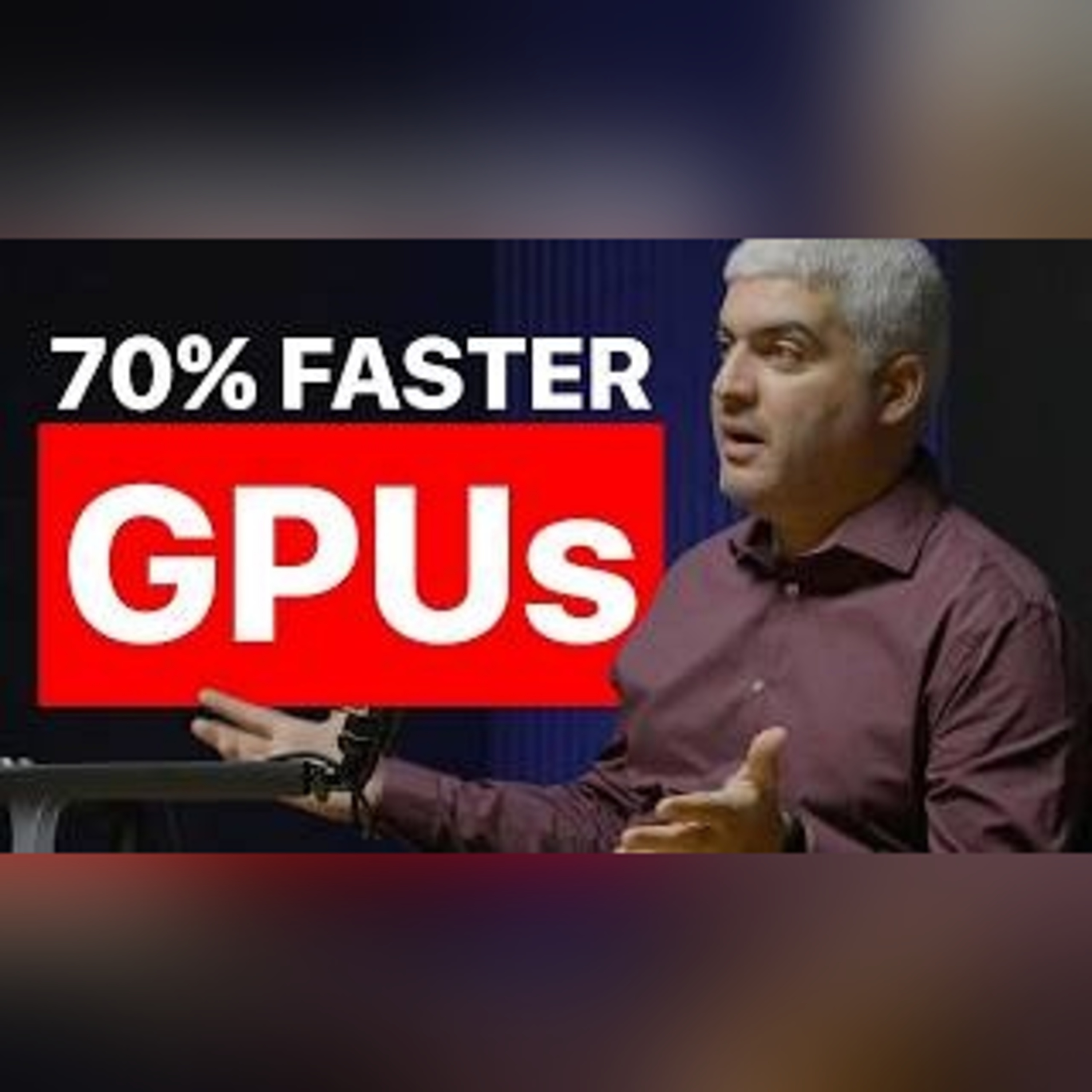
We Cut LLM Latency by 70% in Production
from MLOps.community · host Demetrios
Maher Hanafi is an engineering leader who went from zero AI experience to self-hosting LLMs at enterprise scale — managing GPU costs, optimizing inference with TensorRT LLM, and building an AI platform for HR tech. In this conversation, he breaks down exactly how his team cut latency by 70%, reduced GPU spend through counterintuitive scaling strategies, and navigated the messy reality of taking AI from proof-of-concept to production.How We Cut LLM Latency 70% With TensorRT in Production // MLOps Podcast #369 with Maher Hanafi, SVP of Engineering at Betterworks Key topics covered:The AI Iceberg — Why the invisible work behind AI (performance, latency, throughput, cost, accuracy) is harder than building the features themselvesGPU Cost Optimization — How upgrading to more expensive GPUs actually saved money by reducing total runtime hoursTensorRT LLM Deep Dive — Rewiring neural networks to match GPU architecture for 50-70% latency reductionCold Start Solutions — Using AWS FSx, baking models into container images, and cutting minutes off spin-up timesKV Cache & In-Flight Batching — Why using one model per GPU with maximum KV cache beats cramming multiple models togetherScheduled & Dynamic Scaling — Pattern-based scaling for HR tech workloads (nights, weekends, end-of-quarter spikes)Verticalized AI Platform — Building horizontal AI infrastructure that serves multiple HR product verticalsAI Engineering Lab — How junior vs. senior engineers adopted AI coding tools differently, and the cultural shift that followedAgentic Coding in Practice — Navigating AI coding agent costs, quality control, and redefining the SDLCChinese Models & Compliance — Why enterprise customers block DeepSeek/Qwen and the geopolitics of model training dataThis episode is for engineering leaders building AI in production, MLOps engineers optimizing GPU infrastructure, and anyone navigating the gap between AI demos and enterprise-scale deployment.Links & Resources:TensorRT LLM: https://github.com/NVIDIA/TensorRT-LLMNVIDIA Run: ai Model Streamer (cold start optimization): https://developer.nvidia.com/blog/reducing-cold-start-latency-for-llm-inference-with-nvidia-runai-model-streamer/vLLM vs TensorRT-LLM comparison: https://northflank.com/blog/vllm-vs-tensorrt-llm-and-how-to-run-themTimestamps: [00:00] Optimizing GPU Usage and Latency[00:21] Learning AI as Leadership[04:34] AI Cost Centers[13:56] Throughput and Infrastructure Efficiency[18:10] Scaling and Unit Economics[24:14] Championing AI ROI[36:11] Queue to Value Engine[41:30] Failed Product Features[46:12] Agentic Engineering Costs[58:49] AI Self-Hosting in Engineering[1:04:40] Wrap up
Embed this episode
Ready to play
We Cut LLM Latency by 70% in Production
No transcript for this episode yet
Similar Episodes
No similar episodes found.
Similar Podcasts
No similar podcasts found.