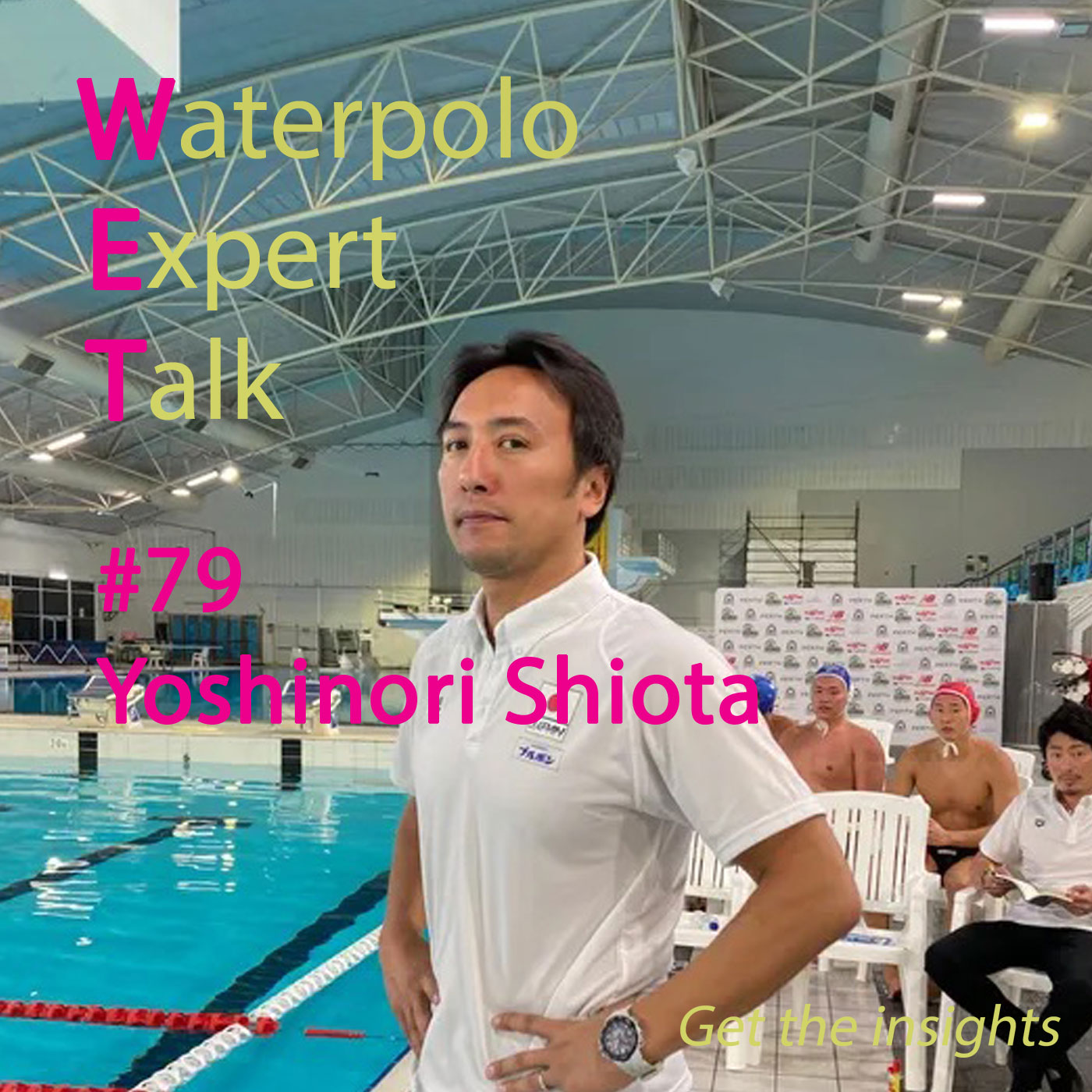
“We don’t have a professional league here in Japan” – Yoshinori Shiota on Player Development & Japan’’s Waterpolo Future episode artwork

EPISODE · Mar 25, 2023 · 20 MIN

“We don’t have a professional league here in Japan” – Yoshinori Shiota on Player Development & Japan’’s Waterpolo Future

from Waterpolo Expert Talk · host Andreas Schulze-Kopp

In this episode of the Waterpolo Expert Talk, Yoshinori Shiota, head coach of the Japanese men’s national water polo team, offers rare and insightful perspectives on the unique challenges of developing elite water polo players in a country without a professional domestic league. Yoshinori begins by introducing his background and international experience. Before becoming Japan’s head coach after the Tokyo Olympic Games, he spent several years in Germany, playing for Spandau and later Hannover between 2006 and 2011. Winning the Bundesliga title twice remains one of his strongest memories from that time, alongside lifelong friendships with former teammates such as Moritz Zurkowski and Tobias Preuss, who even attended his wedding in Japan. The conversation quickly turns to Yoshinori’s current role and the demanding international calendar. Japan recently competed in the Water Polo World Cup Division 1 in Croatia, facing top teams such as Croatia, Italy, Hungary, the USA and France. Despite limited preparation time, the tournament proved extremely valuable for gaining high-level match experience. A central challenge, Yoshinori explains, is that Japan does not have a professional water polo league. The domestic system is largely based on high school and university teams, similar to the structure in the United States. Once players graduate from university, there are very limited opportunities to continue playing at a high level inside Japan. As a result, ambitious players must move abroad – mainly to Europe or Australia – to continue their development. Yoshinori strongly emphasizes how essential it is for Japanese national team players to compete overseas. At the moment, several players are active in Europe and Greece, while others play in Australia. Even if they are not part of top Champions League teams, the daily training environment, physicality and tactical exposure are crucial for bridging the gap to the world’s best nations. These players, Yoshinori explains, also serve as role models for younger athletes in Japan. Seeing national team players succeed abroad creates motivation and belief that an international career is possible, even without a domestic professional league. The episode also explores the limited popularity of water polo in Japan. With an estimated 4,000 to 5,000 active players nationwide, the sport remains small compared to baseball and football, which dominate the sporting landscape. Although swimming is part of the school curriculum, water polo is not formally introduced at younger ages. Yoshinori believes that accessibility is one of the biggest barriers. Traditional water polo is too difficult for beginners, especially children who cannot yet use the eggbeater kick. He suggests modifying rules at entry level – such as allowing players to stand in shallow water – to make the sport more fun and inclusive. Lowering the entry barrier, he argues, is essential for long-term growth. Another key topic is Olympic visibility. After failing to qualify for the Olympic Games for 32 years, Japan’s participation in Tokyo 2021 was a major milestone. Yoshinori firmly believes that continued Olympic qualification – and eventually winning a medal – is the most effective way to increase the sport’s popularity, attract young athletes and secure broader public attention in Japan. Toward the end of the episode, Yoshinori addresses Japan’s distinct playing style, which many opponents describe as uncomfortable and difficult to face. He credits former head coach Yoji Omoto for establishing a fast, flexible and tactically unique system that allows Japan to compete against physically stronger teams through movement, speed and structure. This episode provides a fascinating international perspective on how water polo can be developed outside traditional strongholds – and why creativity, openness and global experience are essential for success. 🎧 More about the podcast: https://www.schulzekopp.de

In this episode of the Waterpolo Expert Talk, Yoshinori Shiota, head coach of the Japanese men’s national water polo team, offers rare and insightful perspectives on the unique challenges of developing elite water polo players in a country without a professional domestic league. Yoshinori begins by introducing his background and international experience. Before becoming Japan’s head coach after the Tokyo Olympic Games, he spent several years in Germany, playing for Spandau and later Hannover between 2006 and 2011. Winning the Bundesliga title twice remains one of his strongest memories from that time, alongside lifelong friendships with former teammates such as Moritz Zurkowski and Tobias Preuss, who even attended his wedding in Japan. The conversation quickly turns to Yoshinori’s current role and the demanding international calendar. Japan recently competed in the Water Polo World Cup Division 1 in Croatia, facing top teams such as Croatia, Italy, Hungary, the USA and France. Despite limited preparation time, the tournament proved extremely valuable for gaining high-level match experience. A central challenge, Yoshinori explains, is that Japan does not have a professional water polo league. The domestic system is largely based on high school and university teams, similar to the structure in the United States. Once players graduate from university, there are very limited opportunities to continue playing at a high level inside Japan. As a result, ambitious players must move abroad – mainly to Europe or Australia – to continue their development. Yoshinori strongly emphasizes how essential it is for Japanese national team players to compete overseas. At the moment, several players are active in Europe and Greece, while others play in Australia. Even if they are not part of top Champions League teams, the daily training environment, physicality and tactical exposure are crucial for bridging the gap to the world’s best nations. These players, Yoshinori explains, also serve as role models for younger athletes in Japan. Seeing national team players succeed abroad creates motivation and belief that an international career is possible, even without a domestic professional league. The episode also explores the limited popularity of water polo in Japan. With an estimated 4,000 to 5,000 active players nationwide, the sport remains small compared to baseball and football, which dominate the sporting landscape. Although swimming is part of the school curriculum, water polo is not formally introduced at younger ages. Yoshinori believes that accessibility is one of the biggest barriers. Traditional water polo is too difficult for beginners, especially children who cannot yet use the eggbeater kick. He suggests modifying rules at entry level – such as allowing players to stand in shallow water – to make the sport more fun and inclusive. Lowering the entry barrier, he argues, is essential for long-term growth. Another key topic is Olympic visibility. After failing to qualify for the Olympic Games for 32 years, Japan’s participation in Tokyo 2021 was a major milestone. Yoshinori firmly believes that continued Olympic qualification – and eventually winning a medal – is the most effective way to increase the sport’s popularity, attract young athletes and secure broader public attention in Japan. Toward the end of the episode, Yoshinori addresses Japan’s distinct playing style, which many opponents describe as uncomfortable and difficult to face. He credits former head coach Yoji Omoto for establishing a fast, flexible and tactically unique system that allows Japan to compete against physically stronger teams through movement, speed and structure. This episode provides a fascinating international perspective on how water polo can be developed outside traditional strongholds – and why creativity, openness and global experience are essential for success. 🎧 More about the podcast: https://www.schulzekopp.de

NOW PLAYING

“We don’t have a professional league here in Japan” – Yoshinori Shiota on Player Development & Japan’’s Waterpolo Future

0:00 20:05

No transcript for this episode yet

We transcribe on demand. Request one and we'll notify you when it's ready — usually under 10 minutes.

Flottengeflüster ALD Automotive Österreich | LeasePlan Beim Flottengeflüster powered by ALD Automotive | LeasePlan präsentieren Jörg Janik und Peter Gutenbrunner alle zwei Wochen spannende Informationen rund um das Thema nachhaltige Mobilität. Beide beschäftigen sich schon lange mit der Thematik und bringen umfangreiches Fachwissen mit. Sollten sie aber doch einmal nicht weiter wissen, werden unsere Expert*innen hinzugezogen, die ihnen gerne mit Rat und Tat zur Seite stehen. Humanizing Change Tremendousness Join us each episode as we talk with innovators in their respective fields about their unique journeys and how they humanize change in their own work, right here, on Humanizing Change. AI Erik's Podcast Audio Erik Conn The AI News Podcast where we talk AI. NEWMORROW SESSIONS - A PodCast Series on the Future of Hospitality Mario C. Bauer, Florian Schneider, Axel Weber & Dr. Tillman Bardt The Newmorrow PodCast is more than a podcast — it's a platform for open dialog on the future of our business, a platform for those building what doesn’t exist yet. Here, we share and embrace our passion for the hospitality industry, but we won’t romanticize the journey. We ask the tough questions, confront uncomfortable truths, and prepare for a future that resists easy answers. We believe that the tougher and wilder times become, the more openly, honestly and humanely people need to talk to each other and act together. We believe, openness, togetherness, and truthfulness should also be cornerstones of a professional community to develop our utopian idea of „open source“. This is a space where visionaries don’t just imagine the future — they wrestle with the paradoxes that shape it: success vs. happiness, data vs. instinct, stability vs. reinvention. Join leaders, entrepreneurs, and thinkers as they share not what made them — but what’s actively shaping them, now and next. So tune in

Frequently Asked Questions

How long is this episode of Waterpolo Expert Talk?

This episode is 20 minutes long.

When was this Waterpolo Expert Talk episode published?

This episode was published on March 25, 2023.

What is this episode about?

In this episode of the Waterpolo Expert Talk, Yoshinori Shiota, head coach of the Japanese men’s national water polo team, offers rare and insightful perspectives on the unique challenges of developing elite water polo players in a country without a...

Can I download this Waterpolo Expert Talk episode?

Yes, you can download this episode by clicking the download button on the episode player, or subscribe to the podcast in your preferred podcast app for automatic downloads.
URL copied to clipboard!