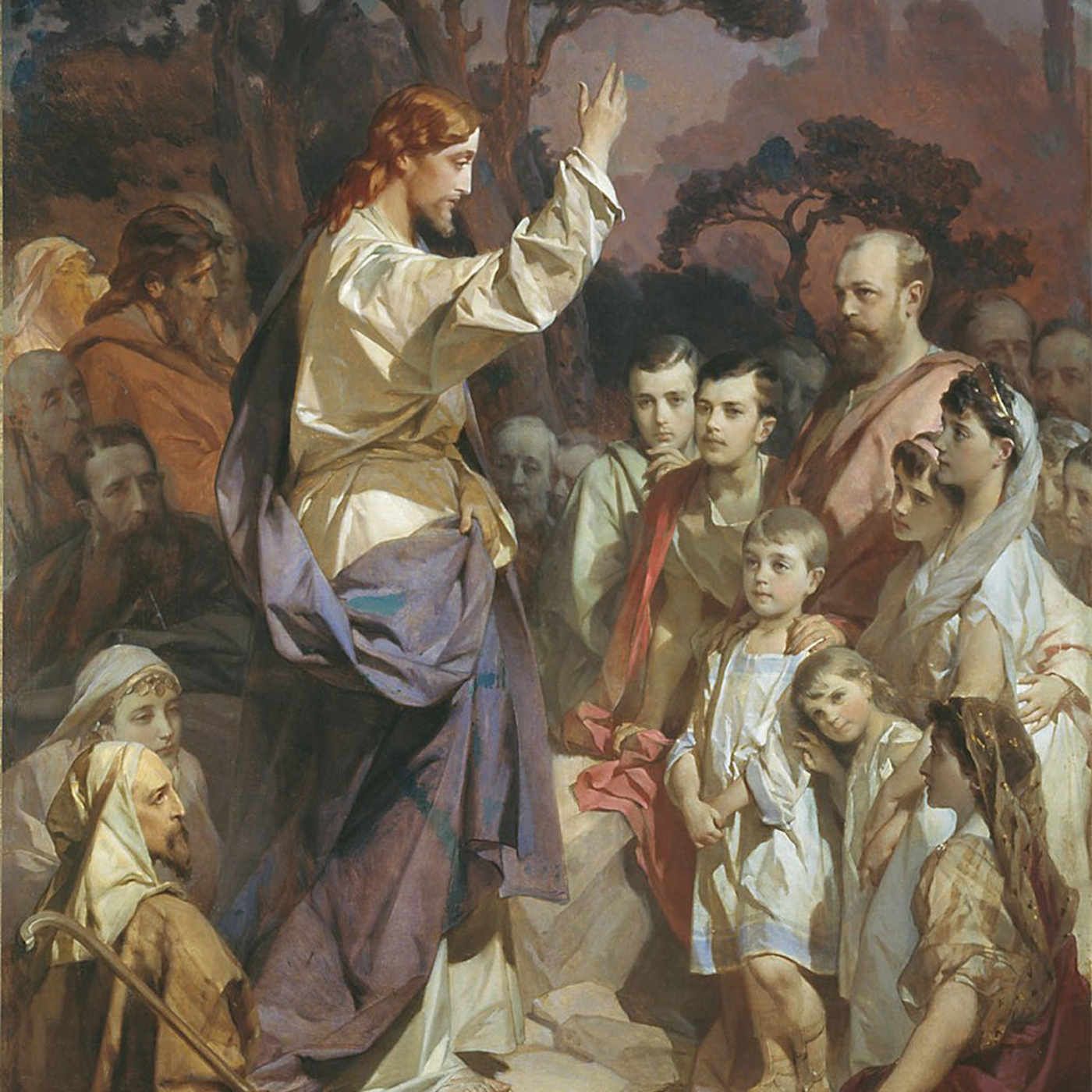
Wednesday of the Eleventh Week in Ordinary Time - Authentic Righteousness episode artwork

EPISODE · Jun 16, 2026 · 7 MIN

Wednesday of the Eleventh Week in Ordinary Time - Authentic Righteousness

from Catholic Daily Reflections · host My Catholic Life!

Read OnlineJesus said to his disciples: “Take care not to perform righteous deeds in order that people may see them; otherwise, you will have no recompense from your heavenly Father.” Matthew 6:1Authenticity draws others in. A person who lives with genuine humility and virtue naturally inspires trust. In contrast, hypocrisy—an outward display of righteousness without interior virtue, done for human approval rather than for God—breeds distrust and repels others. In today’s Gospel, Jesus calls His disciples not to seek human recognition, but the quiet approval of the Father. True holiness is not performed for others to see but lived in the hidden presence of God, who sees and rewards what is done in secret.In His Sermon on the Mount, Jesus highlights three essential religious practices—almsgiving, prayer, and fasting—to contrast authentic righteousness with hypocrisy. The “hypocrites” He addresses—the scribes, Pharisees, and other religious leaders—had transformed these sacred acts into performances, prioritizing human recognition over devotion to God.When the hypocrites gave alms, they would “blow a trumpet” before them, symbolically announcing their generosity. While it is unlikely that the Pharisees literally sounded a trumpet when giving alms, Jesus uses this metaphor to expose their interior disposition—one focused on self-glorification rather than genuine charity. Just as a herald’s trumpet blast announces an important decree, these leaders ensured their charitable acts drew maximum attention.In contrast, Jesus teaches the proper way to give alms: “But when you give alms, do not let your left hand know what your right is doing, so that your almsgiving may be secret. And your Father who sees in secret will repay you” (Matthew 6:3–4). Jesus employs exaggerated language to drive home His point. The phrase “do not let your left hand know what your right is doing” is a striking metaphor for absolute humility in charity. Almsgiving should be done with such purity of heart that it seeks neither public recognition nor bolsters personal pride, but is done solely for the glory of God.Similarly, when the hypocrites prayed, they loved to position themselves “in the synagogues and on street corners so that others may see them.” Their concern was not communion with God but public recognition. Such a display is more an act of self-exhibition than true prayer. In contrast, Jesus teaches that authentic prayer takes place in “your inner room” where one prays to the Father in secret. This metaphor underscores the true purpose of prayer: not to be seen by others but to enter into genuine, intimate communion with God (cf. Matthew 6:5–6).Finally, Jesus points out that when hypocrites fast, they deliberately “look gloomy” and “neglect their appearance” to ensure that others take notice. Their fasting is not a sacrifice to God but a display for human admiration. In contrast, true fasting should be hidden, undertaken in a spirit of self-denial—not to impress others, but to curb disordered appetites and offer a humble sacrifice to the Father.Jesus emphasizes that the hypocrites’ approach to these three practices produces only fleeting rewards: “Amen, I say to you, they have received their reward.” Their “reward” is hollow and passing—the admiration of others impressed by their outward display—and bears no merit before God. Only humble and authentic almsgiving, prayer, and fasting bear eternal fruit, drawing us deeper into God’s grace and securing a reward that endures in His Kingdom.Reflect today on the authenticity of your spiritual practices. Are you content with God alone seeing your good deeds? While we ought not hide our devotion out of fear or embarrassment, we must ensure our motives remain pure—seeking only God’s glory and others’ good. Strive to be humble, authentic, and sincere in all you do, and your Father will see your goodness and bless you with His eternal rewards. Most glorious Lord, You alone are worthy of all glory, honor, and praise. I am but Your humble servant, blessed to share in Your life and mission. Purify my intentions and grant me the grace to act always with sincerity and pure devotion. Jesus, I trust in You.Image: Sermon on the Mount By Ivan MakarovSource: Free RSS feed from catholic-daily-reflections.com — Copyright © 2026 My Catholic Life! Inc. All rights reserved. This content is provided solely for personal, non-commercial use. Redistribution, republication, or commercial use — including use within apps with advertising — is strictly prohibited without written permission.

Read OnlineJesus said to his disciples: “Take care not to perform righteous deeds in order that people may see them; otherwise, you will have no recompense from your heavenly Father.” Matthew 6:1Authenticity draws others in. A person who lives with genuine humility and virtue naturally inspires trust. In contrast, hypocrisy—an outward display of righteousness without interior virtue, done for human approval rather than for God—breeds distrust and repels others. In today’s Gospel, Jesus calls His disciples not to seek human recognition, but the quiet approval of the Father. True holiness is not performed for others to see but lived in the hidden presence of God, who sees and rewards what is done in secret.In His Sermon on the Mount, Jesus highlights three essential religious practices—almsgiving, prayer, and fasting—to contrast authentic righteousness with hypocrisy. The “hypocrites” He addresses—the scribes, Pharisees, and other religious leaders—had transformed these sacred acts into performances, prioritizing human recognition over devotion to God.When the hypocrites gave alms, they would “blow a trumpet” before them, symbolically announcing their generosity. While it is unlikely that the Pharisees literally sounded a trumpet when giving alms, Jesus uses this metaphor to expose their interior disposition—one focused on self-glorification rather than genuine charity. Just as a herald’s trumpet blast announces an important decree, these leaders ensured their charitable acts drew maximum attention.In contrast, Jesus teaches the proper way to give alms: “But when you give alms, do not let your left hand know what your right is doing, so that your almsgiving may be secret. And your Father who sees in secret will repay you” (Matthew 6:3–4). Jesus employs exaggerated language to drive home His point. The phrase “do not let your left hand know what your right is doing” is a striking metaphor for absolute humility in charity. Almsgiving should be done with such purity of heart that it seeks neither public recognition nor bolsters personal pride, but is done solely for the glory of God.Similarly, when the hypocrites prayed, they loved to position themselves “in the synagogues and on street corners so that others may see them.” Their concern was not communion with God but public recognition. Such a display is more an act of self-exhibition than true prayer. In contrast, Jesus teaches that authentic prayer takes place in “your inner room” where one prays to the Father in secret. This metaphor underscores the true purpose of prayer: not to be seen by others but to enter into genuine, intimate communion with God (cf. Matthew 6:5–6).Finally, Jesus points out that when hypocrites fast, they deliberately “look gloomy” and “neglect their appearance” to ensure that others take notice. Their fasting is not a sacrifice to God but a display for human admiration. In contrast, true fasting should be hidden, undertaken in a spirit of self-denial—not to impress others, but to curb disordered appetites and offer a humble sacrifice to the Father.Jesus emphasizes that the hypocrites’ approach to these three practices produces only fleeting rewards: “Amen, I say to you, they have received their reward.” Their “reward” is hollow and passing—the admiration of others impressed by their outward display—and bears no merit before God. Only humble and authentic almsgiving, prayer, and fasting bear eternal fruit, drawing us deeper into God’s grace and securing a reward that endures in His Kingdom.Reflect today on the authenticity of your spiritual practices. Are you content with God alone seeing your good deeds? While we ought not hide our devotion out of fear or embarrassment, we must ensure our motives remain pure—seeking...

NOW PLAYING

Wednesday of the Eleventh Week in Ordinary Time - Authentic Righteousness

0:00 7:06

No transcript for this episode yet

We transcribe on demand. Request one and we'll notify you when it's ready — usually under 10 minutes.

Christadelphian Encouragements CE.captivate.fm Christadelphian Encouragements provides sermons, exhortations, bible studies, memorials, and daily readings from around the world. Please visit ChristadelphianEncouragements.Com and our content creators websites for more information and Christian audio content. LE HAWKESBURY SOCIAL ’BACK TO LIFE’ ADAM STACEY Welcome to the ‘Le Hawkesbury Social’, 'Back to Life’ a space where we celebrate life in all its colors: happiness, joy, love, connection, and even the moments of sadness that make us human. A space where we celebrate life in all its colors: happiness, joy, love, connection, and even the moments of sadness that make us human. Hosted by a passionate mental health advocate, this show dives deep into the topics that truly matter to today’s culture and community. Each episode offers honest conversations, thoughtful reflections, and real stories that bring people together. Whether you’re here for mental health discussions, community connections, or just looking to feel seen and heard in a fast-paced world, you’re in the right place. Adam believes in building a diverse and inclusive community where voices from every background can come together, share, and support one another. That’s why every Wellness Podcast, we open the mic to local community partners, support services, and inspiring voi Westenberg Joan Westenberg The Westenberg Podcast offers ideas, explainers, book notes, and reflections on technology, philosophy, and the human experience. Hosted by Joan Westenberg, each episode unpacks complex topics with clarity and depth, blending personal insights with thought-provoking analysis. It’s a space for exploring big questions and fresh perspectives in an accessible format. Gooday Gaming Guests FFF Gaming Emporium These are my Daily Messages in a Bottle sent over the internet Ocean for anyone to find. Listen to a Quick 20-minute Journey into my Life's Passions Work a Few Times a Day. I am 57. I Grew Up on All Gaming and Computing. I am a Seller of Gaming Parts on eBay and Etsy. In the past 8 years, I have learned about every system ever made. I am also an Enthusiast, Collector and Hobbyist of all Vintage Computing from the Very Beginning. In the last Few Years, I have been sharing my knowledge with others on YouTube, TikTok and Now this Pod Cast.See where all the Magic Happens:FFF Gaming Emporium | eBay Storeshttps://www.youtube.com/channel/UCDrdCmDQ52AsCWTWAhE7JEQ/<a target="_blank" rel="noopener noreferrer nofollow" href="https://www

Frequently Asked Questions

How long is this episode of Catholic Daily Reflections?

This episode is 7 minutes long.

When was this Catholic Daily Reflections episode published?

This episode was published on June 16, 2026.

What is this episode about?

Read OnlineJesus said to his disciples: “Take care not to perform righteous deeds in order that people may see them; otherwise, you will have no recompense from your heavenly Father.” Matthew 6:1Authenticity draws others in. A person who lives with...

Can I download this Catholic Daily Reflections episode?

Yes, you can download this episode by clicking the download button on the episode player, or subscribe to the podcast in your preferred podcast app for automatic downloads.
URL copied to clipboard!