
EPISODE · Aug 11, 2025 · 29 MIN
WELL BEING TRUST
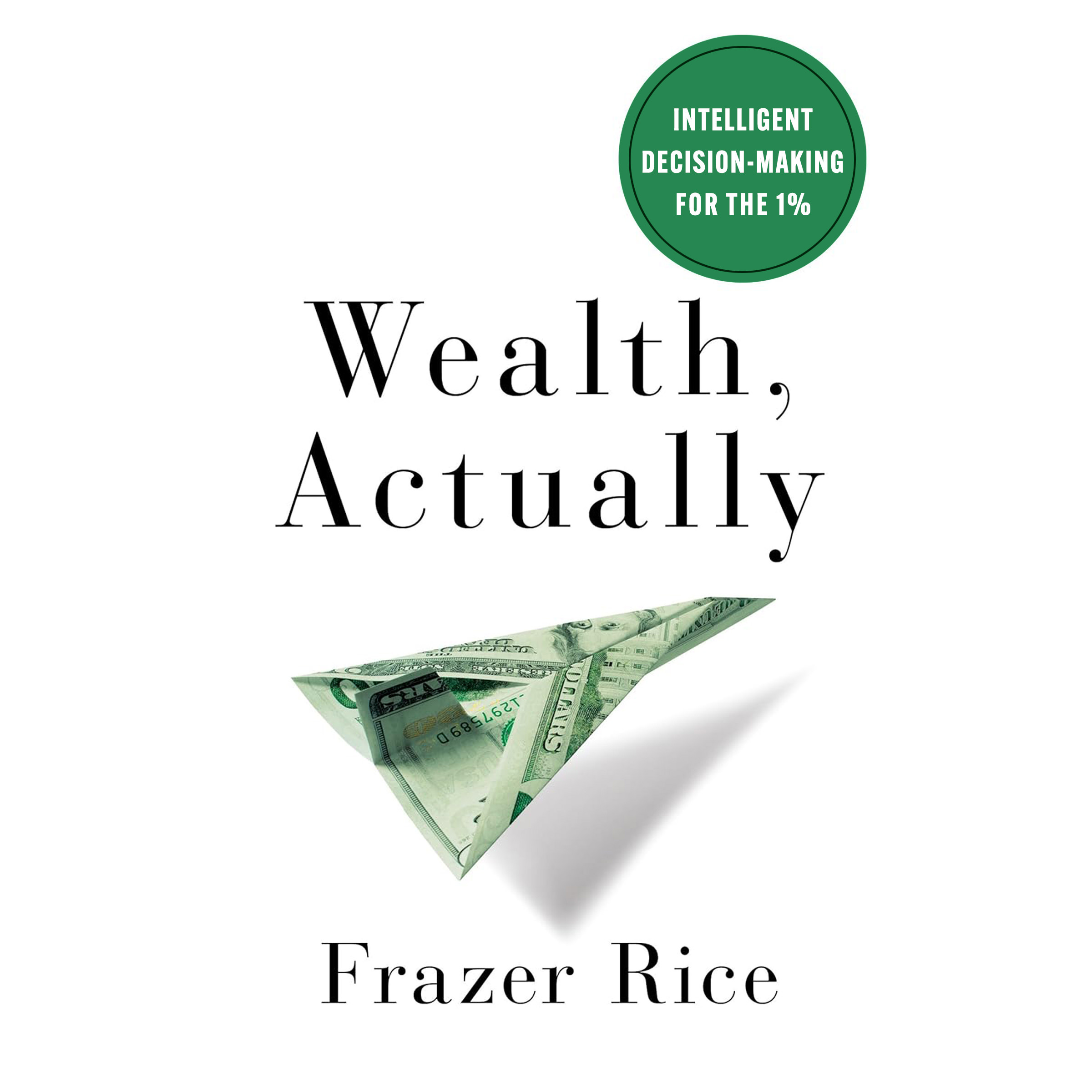
from Wealth Actually · host Frazer Rice
In this conversation, Frazer Rice and PAUL HOOD delve into the evolving role of trustees, particularly in the context of Delaware's new Well-Being Trust Statute. They discuss the broader responsibilities of trustees beyond mere asset management, emphasizing the importance of understanding beneficiaries' needs and the implications of well-being provisions. The dialogue highlights the challenges trustees face in balancing the interests of multiple beneficiaries, the potential liabilities associated with well-being services, and the necessity of having clear processes in place. The conversation concludes with reflections on the complexities of trust management and the importance of careful drafting in trust documents. https://youtu.be/9LFt6HsjpWM https://open.spotify.com/episode/4uqhoeXtfaIIWLbKhd62ej?si=nDTf-09bRSWjT0O_YKX49g Takeaways Trustees have a broader role than just managing assets. The well-being statute in Delaware is an opt-in provision. Balancing the needs of multiple beneficiaries is challenging. A clear process is essential for trustees to navigate their duties. Well-being provisions can complicate traditional trust structures. Trustees must be cautious about the liabilities they assume. Decanting trusts can lead to unintended consequences. The intent of the settlor is paramount in trust management. Trustees should document their decision-making processes. Effective communication with beneficiaries is crucial. Sound bites "I would never opt into 3345.""Decanting is not that easy." Well Being Trust Chapters 00:00 Understanding the Role of Trustees04:45 The Concept of Well-Being in Trusts10:33 Balancing Beneficiary Needs17:53 Navigating Well-Being Responsibilities24:30 Challenges and Considerations in Trust Management Well Being Trust Transcript Frazer Rice (00:01.078)Welcome aboard, Pop. Paul Hood (00:02.648)Great to be with you today. Frazer Rice (00:04.598)The Delaware legislature has tried to give us some new tools to give us a holistic approach to planning for trustees and for beneficiaries. Help us sort of think through first from a function perspective what trustees do. I always thought of it as, you know, they held assets for the benefit of beneficiaries and then with that they have to administer them, they have to invest them, and then they have to distribute them. Have we got that about right? Paul Hood (00:35.34)Well, I've always had a broader view of trustees. Jay Hughes, a good friend and fellow pilgrim in this field, he talks about the trustee as a persons with confidence and like a trainer, an elder, and for a lot of beneficiaries, and I believe trustees, especially in discretionary trusts, The trustee needs to be that. There needs to be some attention to the person of the beneficiary, not just the finances. Send us a budget. The distributions committee who's in secret will meet, and we'll decide how much we'll give you. Well, I think a trustee's duty is broader than that. Or let's say this, you can meet the minimum requirements of being a trustee by doing what you said, but I think the very, very best trustees are persons with confidence. Frazer Rice (01:41.17)I agree with that. The problem is identifying the people who mix the temperament and the talent and then paying for them. So to that end, with those different functions, the world of bifurcation came about. Directed trustees where people got to be good at certain things. Maybe you had a good investment person, you had someone who was with the family who understood the dynamics from a distribution standpoint. and then the administrative side making sure the I's are dotted and the T's are crossed as far as the administration's concern. How do you view that in the evolution of the trustee function? Paul Hood (02:17.612)Well, it's interesting because I haven't been in practice. since well the 20th anniversary of Hurricane Katrina is August 29th of this year. My life changed that day. I didn't know it but it did. And I left Louisiana. So I haven't practiced law in 20 years but I remember the directed trust percolating up and it was driven by the investments. People wanted the bank trust or the institutional trustees but they hated their investment performance. So the compromise was, okay, we'll reduce our duties because the bugaboo was always whether it was a proper delegation of investment authority. The trustee could still be held liable for what if the court thought it was an improper delegation, okay, or oversight of the delegation. They started out investing right, but then they got real heavy in crypto and foreign flips. you can go there. So we'll take fewer basis points, but we don't have the liability for that. That liability is not delegated. We have segregated it. But enter the Wellbeing Trust, and this is only true in Delaware in the Wellbeing Trust statute because it's an opt-in. Once you opt-in, you are required, the trustee and all the advisors are required to perform that those well-being, provide those well-being services. Now the question is who is responsible for providing them. Frazer Rice (04:16.891)Let's step back for a second. The well-being provision, which is designed to give the trustee the tool to promote, improve, advance the well-being of the beneficiaries, which I think we can agree is a good thing in concept. What do we think of well-being as being? How is it defined? And what part of the function is it taking from the trustee's perspective? Paul Hood (04:45.228)Well, I'm going to default back to, I think it was Potter Stewart who said he knows pornography when he sees it. I think that's the same with well-being. I think things are either obviously well-being related and are not. And there's a continuum of them. But the whole concept, I think it's just pretty much to promote the betterment, the improvement and the just the the maintenance personal maintenance of a trustee i mean of a a beneficiary Frazer Rice (05:26.269)So how do you think about it from a trustee's perspective when there are multiple beneficiaries and maybe the wellbeing for one is not the wellbeing for another? Very often a trustee has to balance a lot of different equities and I don't mean that from a stock perspective, sort of taking care of one possibly at the expense of the other with the trust's assets. How does the new statute in Delaware address that? Paul Hood (05:54.222)Well, and you raise an excellent point. what you said, you were talking about equities, okay? What it really is, is the trustees duties. And the big one is the duty of impartiality. And arguably, the 3345 statute, and I'll call it that, that's the wellbeing statute. That's the opt-in. They have another one and it is to provide, it's an immediate power. It was added to 3325 as number 32 in the Delaware trust code. And it allows almost the same things. It empowers trustees, now not the advisors. It doesn't say anything about the advisors in that statute. Whereas 3345 includes, and remember in Delaware an advisor is like the trust protector and the administrative trustee, that kind of thing. They call them advisors. I don't favor that language because I believe that they should all be fiduciaries. So I call them trustees because I think in the end they're going to be held, especially if they're professionals, they're going to be held to that standard as it is. But that statute was immediate when the law went into effect. So they're authorized to provide those services now. For me, would provide, I would never opt into that statute. Because why do you want to take on a mandatory duty that's unclear? Frazer Rice (07:30.12)That's it. Frazer Rice (07:34.908)Yeah, it sounds like a Roach Motel where you get in but you can't leave. That's right. That's right. So if you were to encounter one of these trusts in the wild and you've got multiple beneficiaries, but let's say three, one of them needs a lot of help. Another one could use the help and then the other one is completely self-sufficient. How do you… Paul Hood (07:40.35)Eagles Hotel, California. You can check out anytime you like, but you can never leave. Frazer Rice (08:02.693)sort of build a process around that so that you are being impartial but you are invariably taking away from potentially the corpus of the trust in order to effectuate different goals as they develop for these beneficiaries. Paul Hood (08:16.782)Well, it obviously starts with the settlors intent. And it's the settlors intent first as set forth in the instrument. However, because this is not a court case where you're construing, because I I used be an expert witness, know, construing, you know, problematic clauses in operating agreements, trusts, wills, whatever. You, you, you, you construe that including more information you investigate. The trustee, let's look more, because you look at the language and well it would authorize it here, but let me find out a little bit more. If the settlor is still alive, I would at a minimum also talk to the settlor, okay? Also, if he or she is not still alive or sentient, I would investigate. I would talk to other people. I would make that into a process so that when you're questioned down the road, here's my process. Anytime you have a process, you're better off. When all that planning was done in 2012, you know, and we filed more gift tax returns. I was the only guy in the country saying, don't. put your marginal wealth clients into anything big, irrevocable. I said, because I think this is gonna work itself out. And for six hours, I was wrong on January the 1st, 2013, but there were lawsuits. And Jackson versus Colon was one of the cases and poor Colon, the lawyer got sued. because he didn't have a process for evaluating whether his client had put too much or had retained sufficient assets after they did this planning. So it's all about a process in the end....
Embed this episode
Ready to play
WELL BEING TRUST
No transcript for this episode yet
Similar Episodes
No similar episodes found.