
EPISODE · Sep 10, 2020 · 14 MIN
We're About Getting People Free, Period
from Dispatches · host Urban Omnibus
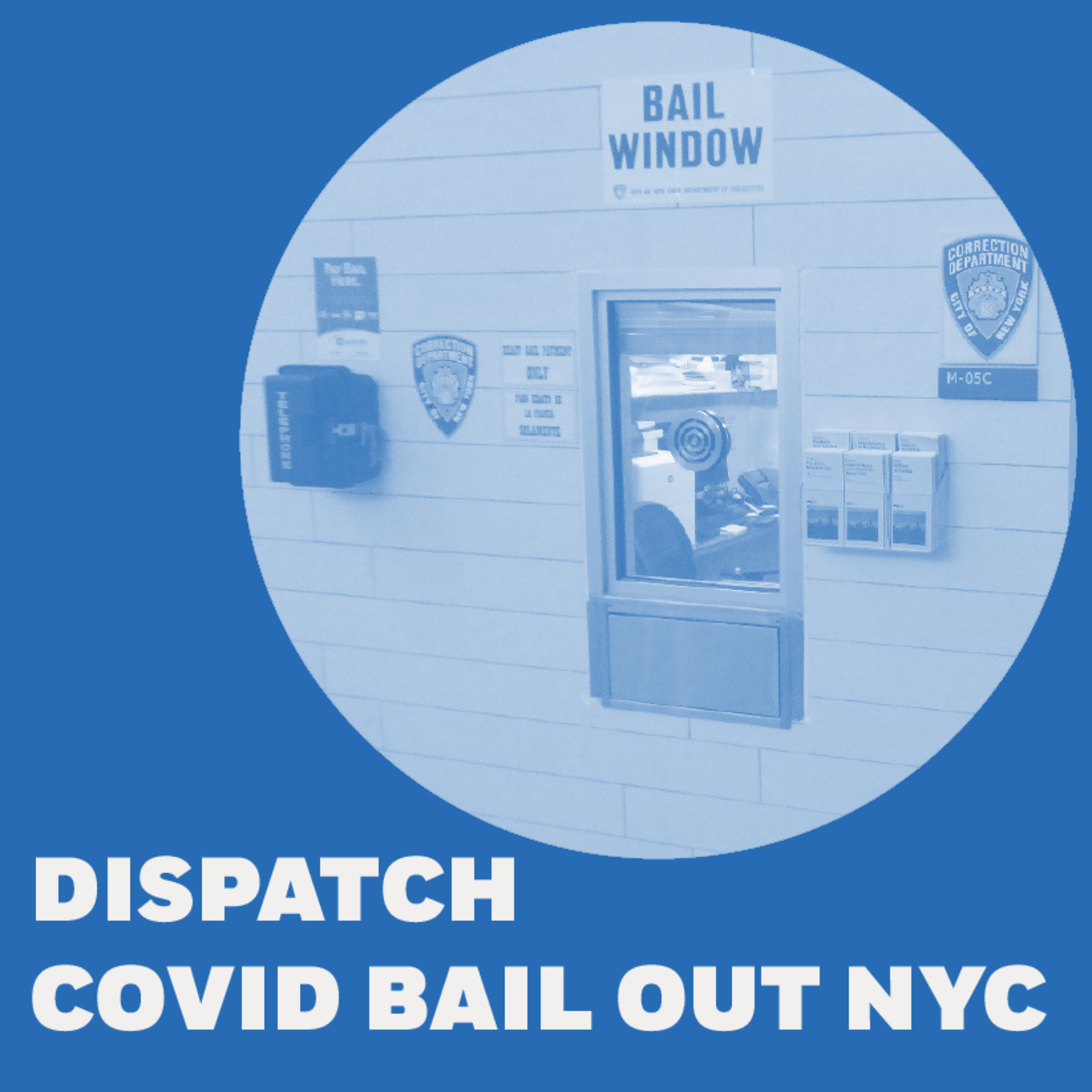
As surely as a public health crisis shakes the foundation of a society, incarceration demolishes the infrastructure of a life. Housing is lost and jobs dry up. The relationships and encounters that formed the basis of an essential network of support are disrupted. The impossible tradeoffs faced by coronavirus-stricken cities — between the long-term damage of a stalled economy and the human costs of “opening up” — also echo. When judges set bail, people awaiting trial and their loved ones must choose whether to purchase freedom at a steep price or face confinement for months, even years. In New York, where bail can reach into the tens and even hundreds of thousands of dollars, this choice is often only nominal for the poor, Black and brown men who largely populate pretrial detention. (A law reforming New York’s cash bail system went into effect in January, but a subsequent amendment in April restricted the reform’s effects.) During the coronavirus pandemic, more than analogy has come to link those touched by “the system” and those outside its grasp. Though incarceration operates through removal and isolation, the virus is undeterred by barbed wire. As the case rate in the rest of New York City has declined, the pandemic churns on inside city jails. Infections cycle between prisoners and guards, who cycle in turn between the jails and the neighborhoods they call home. Meanwhile, as revenue streams dry up, local governments across the US are faced with a stark zero-sum reality that has policymakers and communities clamoring to defund law enforcement on the basis of its balance sheet, let alone its manifold abuses. Rising awareness of these crises-within-a-crisis converges with the raised profile of prison abolitionists and the collectivist energy of the protest movement. The result is a proliferation of bail-out efforts: mutual aid networks that use crowd-sourced funds to put abolitionist principles into literal practice, freeing as many people from pretrial detention as they can. In New York City, the money comes from the pockets of individual donors throughout the US, Canada, Europe, and Australia and is hand-delivered by local volunteers to Department of Correction facilities across the city. The act of paying bail for a stranger is quietly radical, refusing the system’s punitive logic and forging community from cashier’s checks and electronic transfers. But for COVID Bail Out NYC, simply getting people out of prison isn’t enough. With a focus on breaking the medically vulnerable out of jail, this local group extends an abolitionist ethic of “Care Not Cops” to provide not only cash bail, but also housing, food, cell-phones, medical attention, and even job connections to people caught in detention’s net. In July, I shadowed volunteer Brian Lee as he went to pay bail at the Brooklyn Detention Complex, and spoke with organizers M.J. Williams and Gabriella Ferrara about what securing someone else’s freedom really means. https://urbanomnibus.net/2020/09/were-about-getting-people-free-period/
Embed this episode
NOW PLAYING
We're About Getting People Free, Period
No transcript for this episode yet
Similar Episodes
No similar episodes found.