
EPISODE · Mar 14, 2024 · 10 MIN
“What Are Common Signs Of Osteomyelitis & Osteonecrosis of the Maxilla & Mandible?”
from Dr. Gallagher's Podcast · host Brendan Gallagher, DDS
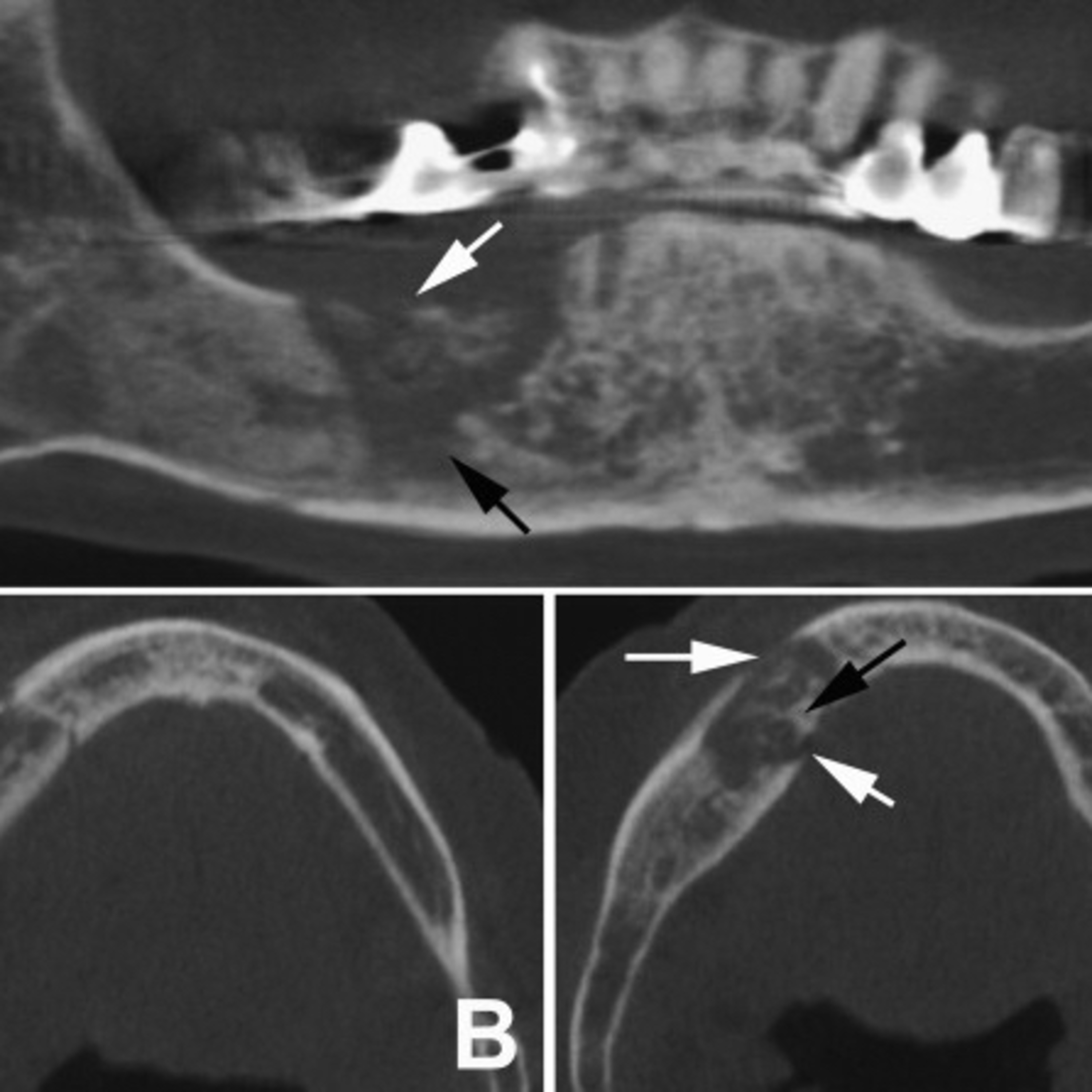
3.14.24 Quick Review #117 - #osteomyelitis #osteonecrosis #MRONJ #pathology #oralpathology #doctorgallagher #oralsurgery #oralsurgeon #dentist #dentistry #dental • Osteomyelitis Osteomyelitis is an infection of the bone that can occur in the jaw, often resulting from a bacterial infection that may spread from a dental infection or after surgery. Common signs and symptoms include: - Pain or tenderness in the affected area - Swelling and warmth in the affected area - Fever or chills - Redness in the overlying skin - Pus drainage from the site - A decreased ability to open the mouth (trismus) - Tooth pain or loosening of teeth In chronic cases, fistulas (abnormal connections) may form in the skin. Certain genetic backgrounds tend to have more prevalence than others. • Osteonecrosis Osteonecrosis of the jaw (ONJ) is a condition in which the bone tissue in the jaw fails to heal after minor trauma such as a tooth extraction, leading to bone exposure and necrosis. This condition is often associated with the use of bisphosphonates, medications used to treat osteoporosis and other bone diseases. Signs and symptoms include: - Exposed bone in the mouth that can be seen or felt - Pain, swelling, and infection of the gums and jaw - Loosening of teeth - Poor healing of the gums - Numbness or a heavy feeling in the jaw - Drainage from the site Both conditions require prompt medical attention to prevent further complications. Diagnosis and treatment should be conducted by healthcare professionals, usually involving antibiotics for osteomyelitis and a combination of medications and surgical interventions for osteonecrosis, depending on the severity and underlying causes. References: 1. Kwon, T.-G., Choi, S.-Y., Ahn, B.-C., & An, C.-H. (2013). Comparison of chronic osteomyelitis versus bisphosphonate-related osteonecrosis of the jaws in female patients without malignant bone disease. Journal of Oral and Maxillofacial Surgery, Medicine, and Pathology, 25(3), 214-220. https://lnkd.in/erjFQDC5 2. Marx, R. E. (2003). Pamidronate (Aredia) and zoledronate (Zometa) induced avascular necrosis of the jaws: a growing epidemic. Journal of Oral and Maxillofacial Surgery, 61(9), 1115-1117. 3. Ruggiero, S. L., Dodson, T. B., Fantasia, J., Goodday, R., Aghaloo, T., Mehrotra, B., & O’Ryan, F. (2014). American Association of Oral and Maxillofacial Surgeons position paper on medication-related osteonecrosis of the jaw—2014 update. Journal of Oral and Maxillofacial Surgery, 72(10), 1938-1956. 4. ChatGPT. 2024.
Embed this episode
Ready to play
“What Are Common Signs Of Osteomyelitis & Osteonecrosis of the Maxilla & Mandible?”
No transcript for this episode yet
Similar Episodes
No similar episodes found.
Similar Podcasts
No similar podcasts found.