
EPISODE · Dec 10, 2023 · 6 MIN
“What are the Pros & Cons of Gillies vs Keen (Intraoral) Approaches to Zygomatic Arch Reduction?”
from Dr. Gallagher's Podcast · host Brendan Gallagher, DDS
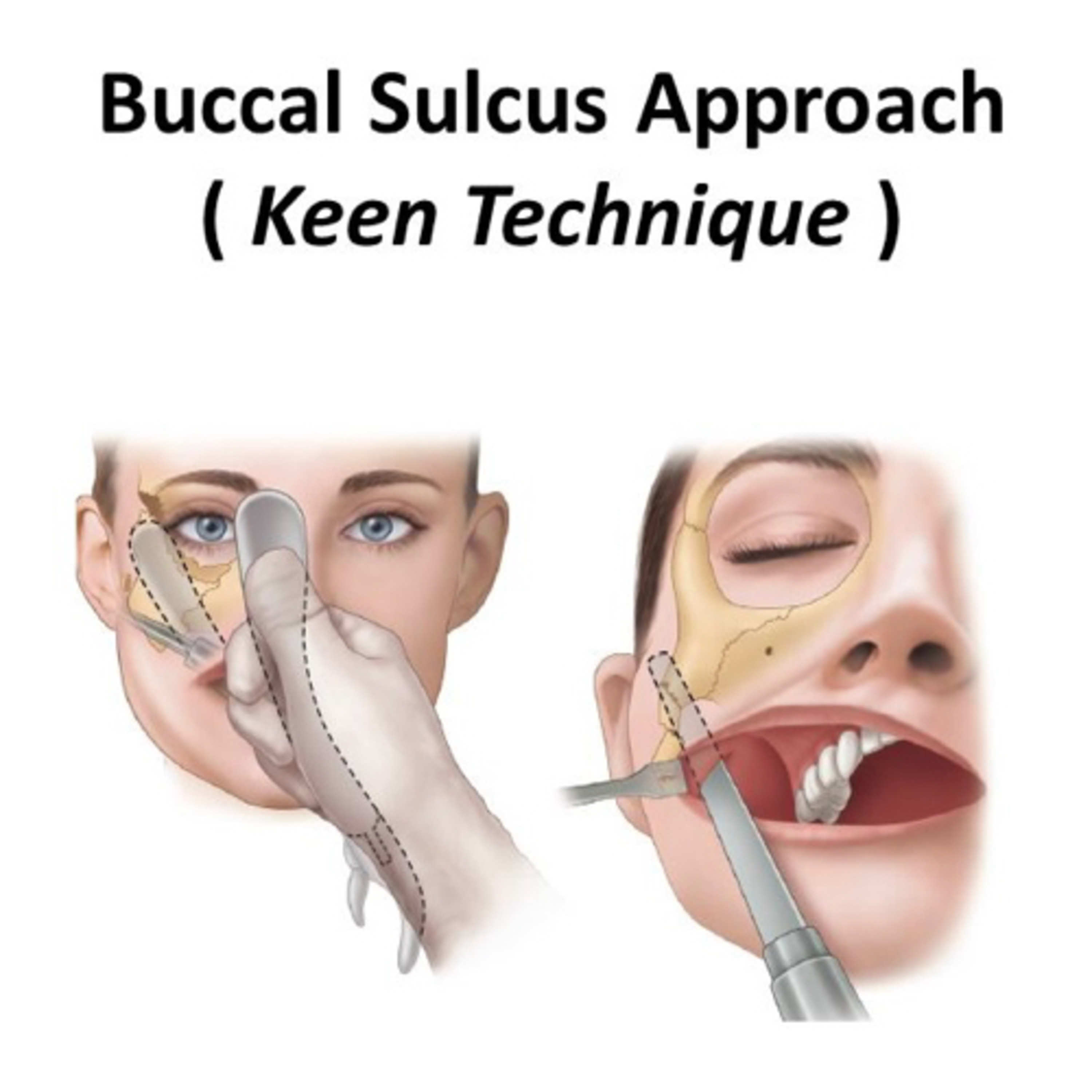
Quick Review #79 - #surgery #doctorgallagher #oralsurgery #oralsurgeon #dentist #dentistry #dental #oralandmaxillofacialsurgery #maxillofacial #maxillofacialsurgery The Gillies and Keen approaches are 2 surgical techniques used for zygomatic arch reduction: Gillies Approach 1. Technique: involves making an incision in the temporal region, usually above the hairline. An elevator is used to indirectly manipulate and reposition the zygomatic arch through a dissection in the temporal area. 2. Pros: •Minimal Scarring: The incision is hidden within the hair, leading to less visible scarring. •Lower Risk of Nerve Damage: As the approach is indirect, it generally has a lower risk of damaging facial nerves. 3. Cons: •Limited Access and Visibility: Offers limited direct access to the zygomatic arch, which can be a drawback in complex cases. •Potential for Inaccurate Repositioning: Due to limited visibility, there’s a higher risk of improper alignment of the arch. Keen (Intraoral/Transoral) Approach 1. Technique: involves making an incision inside the mouth, in the maxillary vestibule, to directly access the zygomatic arch. 2. Pros: •Direct Access and Visibility: Allows for better visualization and manipulation of the zygomatic arch, leading to precise repositioning. •No Visible External Scarring: Since the incision is inside the mouth, there are no visible external scars. 3. Cons: •Risk of Infection: The intraoral approach has a higher risk of infection due to the bacteria present in the oral cavity. •Potential for Nerve Damage: There’s a risk of damaging the infraorbital nerve. Comparison •Indications: The Gillies approach is typically preferred for simpler cases where less extensive manipulation is required. The Keen approach is chosen for more precise and direct repositioning. •Scarring: The Gillies approach results in minimal but potentially visible scarring above the hairline, whereas the Keen approach avoids visible scarring entirely. •Surgical Risks: The Keen approach has a slightly higher risk of infection and nerve damage, while the Gillies approach may have issues with precise positioning due to limited access. •Recovery and Outcomes: Recovery may be different for each approach, with the Keen approach potentially having a longer recovery time due to the risk of oral infection. References: 1. Kim, J., Hwang, W. (2018). Delayed Reduction of Zygomatic Arch Fracture: Effectiveness of the Rowe Zygoma Elevator. Journal of Craniofacial Surgery, 29(7), e639-e640. 2. Ha, S. I., Kim, J. B., Choi, J. K., Ahn, D. K. (1998). A long term follow up of reduced isolated zygomatic arch fracture by Gillies’ approach. e-APS. 3. AO Foundation. (n.d.). Indirect approaches to the zygomatic arch (temporal and transoral approaches). 4. ChatGPT. 2023.
Embed this episode
Ready to play
“What are the Pros & Cons of Gillies vs Keen (Intraoral) Approaches to Zygomatic Arch Reduction?”
No transcript for this episode yet
Similar Episodes
No similar episodes found.
Similar Podcasts
No similar podcasts found.