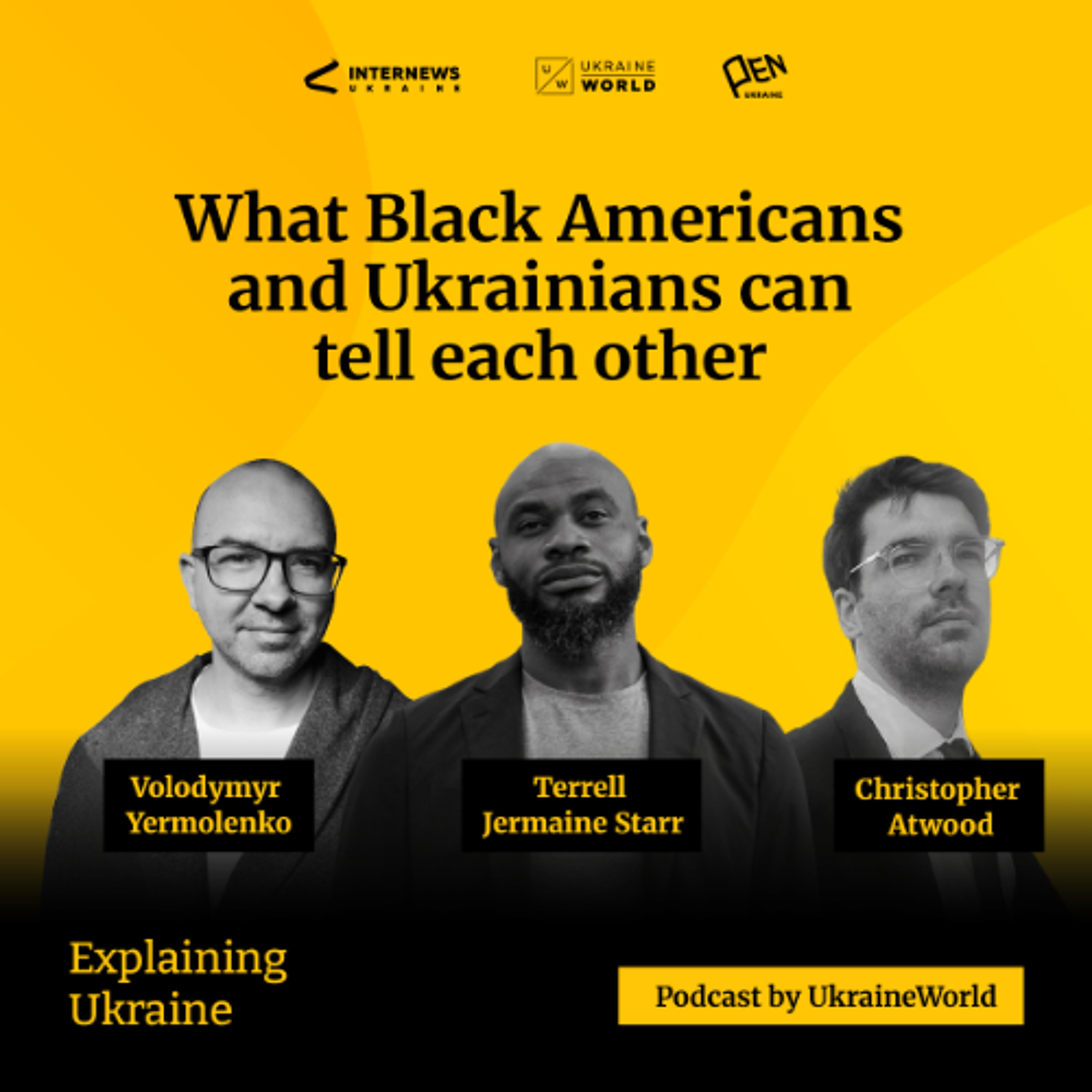
What Black Americans and Ukrainians can tell each other episode artwork

EPISODE · Apr 10, 2026 · 1H 41M

What Black Americans and Ukrainians can tell each other

from Explaining Ukraine · host UkraineWorld

What do Ukrainians and Black Americans share in their historical and cultural experiences? Can we draw comparisons between serfdom and slavery, or find parallels in the colonial traumas and the struggle for human dignity? Furthermore, what role do culture, identity, and language play in overcoming these legacies? In this episode of the Explaining Ukraine podcast, we share a recording of a vital discussion held at PEN Ukraine in Kyiv in October 2025. This conversation explores collective memory, the universal aspiration for freedom, and the growing solidarity between communities that have endured systemic oppression. *** Our Speakers are: - Terrell Jermaine Starr – Independent American journalist and host of Black Diplomats, a documentary news show covering civilian life in Ukraine. Over his 16-year career, he has reported extensively on the U.S. military, nuclear policy, and the Black Lives Matter movement. - Christopher Atwood – Human rights and communications expert, Head of the Ukraïner International, which an international branch of Ukrainer, a popular Ukrainian media. Host: Volodymyr Yermolenko, a Ukrainian philosopher, president of PEN Ukraine and the editor-in-chief of UkraineWorld. *** Listen on various platforms: https://li.sten.to/explaining-ukraine UkraineWorld: https://ukraineworld.org/en *** SUPPORT: You can support our work on https://www.patreon.com/c/ukraineworld Your help is crucial, as we rely heavily on crowdfunding. You can also contribute to our volunteer missions to frontline areas in Ukraine, where we deliver aid to both soldiers and civilians. Donations are welcome via PayPal at: [email protected]. *** CONTENTS: 00:00:00 Guests: American journalist Terrell Jermaine Starr and American civic activist Christopher Atwood. Discussion at PEN Ukraine, October, 2025. 00:04:03 What can Black Americans and Ukrainians tell each other to make their shared struggles better understood by the world? 00:07:34 What are the three profound commonalities between the 2014 Maidan Revolution and the Black Lives Matter movement? 00:18:54 How do the legacies of Frederick Douglass and Taras Shevchenko reveal the universal trauma of being "born into unfreedom"? 00:22:56 How did the exploitative "sharecropping" system in the American South mirror the traps faced by Ukrainian peasants? 00:28:41 What is the historical link between the "slave catchers" of the 19th century and the architecture of modern American policing? 00:30:30 In what ways is the current political divide in America a shadow of the Civil War? 00:32:38 Why does the American democracy only have a "30-year jump" on Ukraine’s independence? 00:33:48 In what ways is "whiteness" weaponized as a tool of convenience by Western powers? 00:35:07 What is the difference between the "colonialism of racism" and the "colonialism of assimilation"? 00:36:18 How does Frantz Fanon’s Black Skin, White Masks explain language as a primary tool of domination? 00:37:15 Why does the Western intellectuals struggle to reject colonialism in practice? 00:42:48 Why is it a dangerous intellectual shortcut to blame systemic issues on "one bad man" like Trump or Putin? 00:53:32 What does the history of the Brooklyn Bridge reveal about the racial hierarchies? 00:57:17 How can Black Americans and Ukrainians build solidarity when they face the same systems of oppression but have "colonizers who look different"? 01:05:40 What are the "multiple layers of whiteness"? 01:12:50 How does Edward Said’s Orientalism help explain why Western scholars often treat Ukrainians as "objects" of study rather than "subjects"? 01:24:10 How did Western academics miss the "seething rage" that signaled Ukrainians would never welcome invaders as liberators? 01:26:56 Why does the American "dominant class" believe democracy is a finished project? 01:33:33 Can a government truly understand the cultural dynamics of another country if it refuses to reflect on the racial dynamics of its own?

What do Ukrainians and Black Americans share in their historical and cultural experiences? Can we draw comparisons between serfdom and slavery, or find parallels in the colonial traumas and the struggle for human dignity? Furthermore, what role do culture, identity, and language play in overcoming these legacies? In this episode of the Explaining Ukraine podcast, we share a recording of a vital discussion held at PEN Ukraine in Kyiv in October 2025. This conversation explores collective memory, the universal aspiration for freedom, and the growing solidarity between communities that have endured systemic oppression. *** Our Speakers are: - Terrell Jermaine Starr – Independent American journalist and host of Black Diplomats, a documentary news show covering civilian life in Ukraine. Over his 16-year career, he has reported extensively on the U.S. military, nuclear policy, and the Black Lives Matter movement. - Christopher Atwood – Human rights and communications expert, Head of the Ukraïner International, which an international branch of Ukrainer, a popular Ukrainian media. Host: Volodymyr Yermolenko, a Ukrainian philosopher, president of PEN Ukraine and the editor-in-chief of UkraineWorld. *** Listen on various platforms: https://li.sten.to/explaining-ukraine UkraineWorld: https://ukraineworld.org/en *** SUPPORT: You can support our work on https://www.patreon.com/c/ukraineworld Your help is crucial, as we rely heavily on crowdfunding. You can also contribute to our volunteer missions to frontline areas in Ukraine, where we deliver aid to both soldiers and civilians. Donations are welcome via PayPal at: [email protected]. *** CONTENTS: 00:00:00 Guests: American journalist Terrell Jermaine Starr and American civic activist Christopher Atwood. Discussion at PEN Ukraine, October, 2025. 00:04:03 What can Black Americans and Ukrainians tell each other to make their shared struggles better understood by the world? 00:07:34 What are the three profound commonalities between the 2014 Maidan Revolution and the Black Lives Matter movement? 00:18:54 How do the legacies of Frederick Douglass and Taras Shevchenko reveal the universal trauma of being "born into unfreedom"? 00:22:56 How did the exploitative "sharecropping" system in the American South mirror the traps faced by Ukrainian peasants? 00:28:41 What is the historical link between the "slave catchers" of the 19th century and the architecture of modern American policing? 00:30:30 In what ways is the current political divide in America a shadow of the Civil War? 00:32:38 Why does the American democracy only have a "30-year jump" on Ukraine’s independence? 00:33:48 In what ways is "whiteness" weaponized as a tool of convenience by Western powers? 00:35:07 What is the difference between the "colonialism of racism" and the "colonialism of assimilation"? 00:36:18 How does Frantz Fanon’s Black Skin, White Masks explain language as a primary tool of domination? 00:37:15 Why does the Western intellectuals struggle to reject colonialism in practice? 00:42:48 Why is it a dangerous intellectual shortcut to blame systemic issues on "one bad man" like Trump or Putin? 00:53:32 What does the history of the Brooklyn Bridge reveal about the racial hierarchies? 00:57:17 How can Black Americans and Ukrainians build solidarity when they face the same systems of oppression but have "colonizers who look different"? 01:05:40 What are the "multiple layers of whiteness"? 01:12:50 How does Edward Said’s Orientalism help explain why Western scholars often treat Ukrainians as "objects" of study rather than "subjects"? 01:24:10 How did Western academics miss the "seething rage" that signaled Ukrainians would never welcome invaders as liberators? 01:26:56 Why does the American "dominant class" believe democracy is a finished project? 01:33:33 Can a government truly understand the cultural dynamics of another country if it refuses to reflect on the racial dynamics of its own?

NOW PLAYING

What Black Americans and Ukrainians can tell each other

0:00 1:41:25

No transcript for this episode yet

We transcribe on demand. Request one and we'll notify you when it's ready — usually under 10 minutes.

The Cleveland Ukraine Podcast The Cleveland Ukraine Podcast Capturing the impactful stories of the Cleveland Ukrainian population at home and abroad. Sikkerhedsudvalget 24syv Siden 1946 har den amerikanske præsident hver dag modtaget den såkaldte PDB ‘The President’s Daily Brief’ om de aktuelle trusler mod verdens og USAs sikkerhed. 24syv giver nu alle lyttere - politikere, beslutningstagere og embedsmænd - et dagligt sikkerhedsbrief. I programmet ‘Sikkehedsudvalget’ vurderes alle aktuelle trusler mod rigets sikkerhed. Vid alt om terrorisme, Ukraine, Mellemøsten, cybertrusler, kritisk infrastrutur - og mød landets mest vidende eksperter og beslutningstagere. The Fight: A podcast on life & war in Ukraine. The Cipher Brief The Cipher Brief team brings you a brand new podcast that examines the war in Ukraine, and the impact it has on the world. Ukraine - History in the Making Emil Juhler When I started the conversation series ”Ukraine - History in the Making” I could have never imagined where this journey would lead me. It all started in March 2023 after I got home from an exchange stay in Chile and felt, that I had to do more for Ukraine, than what I did on my social media accounts and on the streets in the spring and summer of 2022. I think most of us remember that initial period after Ruzzia’s the full-scale invasion of Ukraine. Speaking from a European/Danish point of view it was a time of big fear, desperation and uncertainty, but also a time of high hopes, energy and big solidarity. In the very first conversation of the show with Veronika Netrebenko, she says the following about the feelings of Ukrainians during the Maidan Revolution: ”We understood we gotta fight for it, and it was something totally different, we felt different, we felt that we need to fight for it”. To a certain degree I believe you can say the same about what happened within the hearts and mi

Frequently Asked Questions

How long is this episode of Explaining Ukraine?

This episode is 1 hour and 41 minutes long.

When was this Explaining Ukraine episode published?

This episode was published on April 10, 2026.

What is this episode about?

What do Ukrainians and Black Americans share in their historical and cultural experiences? Can we draw comparisons between serfdom and slavery, or find parallels in the colonial traumas and the struggle for human dignity? Furthermore, what role do...

Can I download this Explaining Ukraine episode?

Yes, you can download this episode by clicking the download button on the episode player, or subscribe to the podcast in your preferred podcast app for automatic downloads.
URL copied to clipboard!