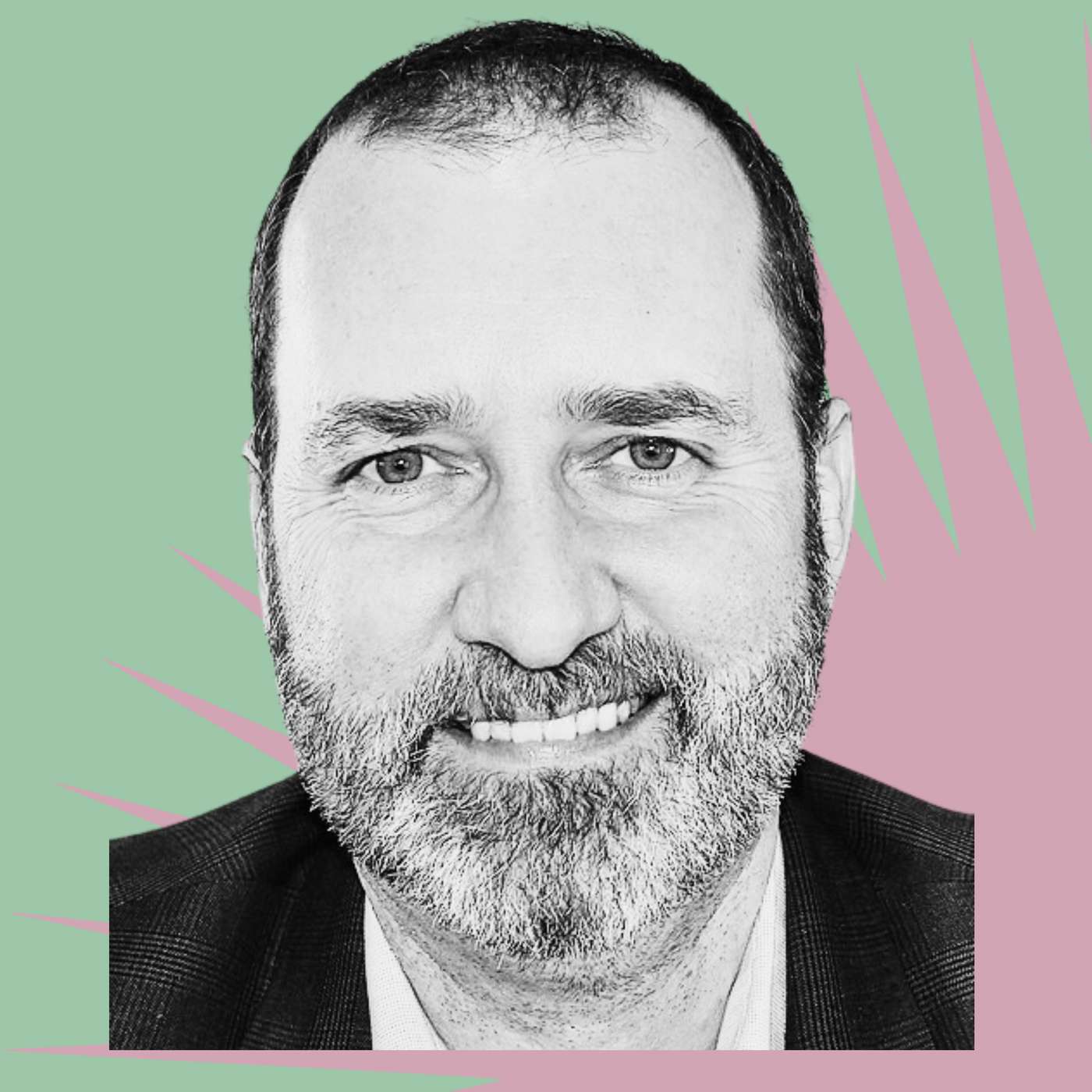
What Came First: Stories or Language? Kevin Ashton on the Story of Stories episode artwork

EPISODE · Mar 19, 2026 · 46 MIN

What Came First: Stories or Language? Kevin Ashton on the Story of Stories

from Keen On America · host Andrew Keen

“Nobody’s reality is more or less real.” — Kevin AshtonIt’s the chicken and egg question. What came first: stories or language? For Kevin Ashton, the answer is stories. In his new book, The Story of Stories, Ashton argues that rather than inventing stories with language, we invented language to tell stories. Stories, for Ashton, predate language. They are what makes us human.300,000 years ago, Ashton argues, humans sat around night fires needing to talk about things they couldn’t point to — the past, the future, the Gods. So they created language. Grunts got grammatical. And the grammar had a structure that hasn’t changed since: character, chronology, consequence. Every sentence in every one of the world’s 7,000 languages is built upon the need to tell stories. Every conversation you’ve ever had contains a narrative. Even this one.I asked Ashton whether this makes reality itself just another narrative and him just another postmodernist. Our brains construct reality, he explained, in the same way a graphic user interface constructs a desktop. Our dog sees a different rainbow to the one we see. But, in contrast with our dog, we tell stories about that rainbow.Ashton is a technologist who first coined the term “Internet of Things”. But on AI, he is surprisingly critical. A large language model is a more complicated toaster, he says. It can produce language that fits the format of a story — character, chronology, consequence — because it’s digested millions of words. But it can’t produce meaning. We humans, in contrast, are made meaningful by our stories. That’s why you are reading this now. Five Takeaways•       We Invented Language to Tell Stories, Not the Other Way Around: Ashton’s central claim is that storytelling preceded and caused the evolution of language. A million years ago, humans around night fires needed to talk about things they couldn’t point to — the past, the future, the gods. Grunts became grammar. The structure hasn’t changed since: character, chronology, consequence. Every sentence in every one of the world’s 7,000 languages is built on this need to narrate.•       Nobody’s Reality Is Real: Our brains construct reality the way a graphic user interface constructs a desktop — useful, not true. Your dog sees a different rainbow than you do. Whose is real? Both. Neither. Ashton isn’t a postmodernist — he’s arguing that our story-shaped brains are the lens through which all experience is filtered, and there is no stepping outside it.•       The Bible Hitched a Ride on Writing: The world’s great religions spread because they were among the first stories to exploit writing as a distribution technology. The Bible is just a word for book. Scripture is a word for writing. Where those texts travelled, those religions still dominate today. Homer is an oral tradition frozen by the alphabet. The oldest surviving story in the world is Noah’s flood, and it comes from Southern Iraq, not Greece.•       A Large Language Model Is a More Complicated Toaster: Ashton is brutally dismissive of AI. A machine can produce something that fits the format of a story because it’s digested millions of them. But it can’t produce meaning. Machines are inherently meaningless. We anthropomorphise them because that’s what our story-shaped brains do — we named our cars, now we’re naming our chatbots.•       We Humans Are Made Meaningful by Our Stories: Ashton’s own life is the proof: a Birmingham DJ who learned Norwegian in nightclubs, fell for Ibsen, marketed lipstick for Procter & Gamble, and accidentally invented the Internet of Things because mascara kept going out of stock. No algorithm would have written that life. No machine could have lived it. That’s why you’re reading this now. About the GuestKevin Ashton is a technologist and author who coined the term “the Internet of Things” and co-founded the Auto-ID Center at MIT. His previous book, How to Fly a Horse, was named Porchlight’s Business Book of the Year. The Story of Stories: The Million-Year History of a Uniquely Human Art is published by Harper. He lives in Austin, Texas.References:•       The Story of Stories by Kevin Ashton (Harper, 2026) — the book under discussion.•       How to Fly a Horse by Kevin Ashton — his previous book on the secret history of invention.•       Episode 2836: Is Elon Human? — the Musk episode, in which we discussed AI, the scientific method as secular religion, and whether machines can think.•       Episode 2839: Have Our iPhones Eaten Our Brains? — Nelson Dellis on memory, AI slop, and cognitive atrophy — a natural companion to today’s conversation.About Keen On AmericaNobody asks more awkward questions than the Anglo-American writer and filmmaker Andrew Keen. In Keen On America, Andrew brings his pointed Transatlantic wit to making sense of the United States — hosting daily interviews about the history and future of this now venerable Republic. With nearly 2,800 episodes since the show launched on TechCrunch in 2010, Keen On America is the most prolific intellectual interview show in the history of podcasting.WebsiteSubstackYouTubeApple PodcastsSpotify Chapters:(00:00) - Introduction: technology tells good stories about itself (01:46) - Language was invented to tell stories, not the other way around (04:47) - If stories are our water, how do you get outside them? (06:40) - Character, chronology, consequence: the Lego brick of narrative (07:07) - Hyper-realism and the graphic user interface of reality (09:05) - Nobody’s reality is real — your dog sees a different rainbow (12:35) - Darwin, Einstein, and science as storytelling (14:32) - True stories, true crime, and the O.J. Simpson test (17:15) - The Bible as storytelling technology (21:49) - Socrates vs. Plato: speech, writing, and the Reformation (23:49) - The Internet of Stories: from campfire to smartphone (25:05) - Were the Greeks really better storytellers? No. (28:49) - Favourite storytellers: Pynchon, McCarthy, Dead Space (30...

“Nobody’s reality is more or less real.” — Kevin AshtonIt’s the chicken and egg question. What came first: stories or language? For Kevin Ashton, the answer is stories. In his new book, The Story of Stories, Ashton argues that rather than inventing stories with language, we invented language to tell stories. Stories, for Ashton, predate language. They are what makes us human.300,000 years ago, Ashton argues, humans sat around night fires needing to talk about things they couldn’t point to — the past, the future, the Gods. So they created language. Grunts got grammatical. And the grammar had a structure that hasn’t changed since: character, chronology, consequence. Every sentence in every one of the world’s 7,000 languages is built upon the need to tell stories. Every conversation you’ve ever had contains a narrative. Even this one.I asked Ashton whether this makes reality itself just another narrative and him just another postmodernist. Our brains construct reality, he explained, in the same way a graphic user interface constructs a desktop. Our dog sees a different rainbow to the one we see. But, in contrast with our dog, we tell stories about that rainbow.Ashton is a technologist who first coined the term “Internet of Things”. But on AI, he is surprisingly critical. A large language model is a more complicated toaster, he says. It can produce language that fits the format of a story — character, chronology, consequence — because it’s digested millions of words. But it can’t produce meaning. We humans, in contrast, are made meaningful by our stories. That’s why you are reading this now. Five Takeaways•       We Invented Language to Tell Stories, Not the Other Way Around: Ashton’s central claim is that storytelling preceded and caused the evolution of language. A million years ago, humans around night fires needed to talk about things they couldn’t point to — the past, the future, the gods. Grunts became grammar. The structure hasn’t changed since: character, chronology, consequence. Every sentence in every one of the world’s 7,000 languages is built on this need to narrate.•       Nobody’s Reality Is Real: Our brains construct reality the way a graphic user interface constructs a desktop — useful, not true. Your dog sees a different rainbow than you do. Whose is real? Both. Neither. Ashton isn’t a postmodernist — he’s arguing that our story-shaped brains are the lens through which all experience is filtered, and there is no stepping outside it.•       The Bible Hitched a Ride on Writing: The world’s great religions spread because they were among the first stories to exploit writing as a distribution technology. The Bible is just a word for book. Scripture is a word for writing. Where those texts travelled, those religions still dominate today. Homer is an oral tradition frozen by the alphabet. The oldest surviving story in the world is Noah’s flood, and it comes from Southern Iraq, not Greece.•       A Large Language Model Is a More Complicated Toaster: Ashton is brutally dismissive of AI. A machine can produce something that fits the format of a story because it’s digested millions of them. But it can’t produce meaning. Machines are inherently meaningless. We anthropomorphise them because that’s what our story-shaped brains do — we named our cars, now we’re naming our chatbots.•       We Humans Are Made Meaningful by Our Stories: Ashton’s own life is the proof: a Birmingham DJ who learned Norwegian in nightclubs, fell for Ibsen, marketed lipstick for Procter & Gamble, and accidentally invented the Internet of Things because mascara kept going out of stock. No algorithm would have written that life. No machine could have lived it. That’s why you’re reading this now. About the GuestKevin Ashton is a technologist and author who coined the term “the Internet of Things” and co-founded the Auto-ID Center at MIT. His previous book, How to Fly a Horse, was named Porchlight’s Business Book of the Year. The Story of Stories: The Million-Year History of a Uniquely Human Art is published by Harper. He lives in Austin, Texas.References:•       The Story of Stories by Kevin Ashton (Harper, 2026) — the book under discussion.•       How to Fly a Horse by Kevin Ashton — his previous book on the secret history of invention.•       Episode 2836: Is Elon Human? — the Musk episode, in which we discussed AI, the scientific method as secular religion, and whether machines can think.•       Episode 2839: Have Our iPhones Eaten Our Brains? — Nelson Dellis on memory, AI slop, and cognitive atrophy — a natural companion to today’s conversation.About Keen On AmericaNobody asks more awkward questions than the Anglo-American writer and filmmaker Andrew Keen. In Keen On America, Andrew brings his pointed Transatlantic wit to making sense of the United States — hosting daily interviews about the history and future of this now venerable Republic. With nearly 2,800 episodes since the show launched on TechCrunch in 2010, Keen On America is the most prolific intellectual interview show in the history of podcasting.WebsiteSubstackYouTubeApple PodcastsSpotify Chapters:(00:00) - Introduction: technology tells good stories about itself (01:46) - Language was invented to tell stories, not the other way around (04:47) - If stories are our water, how do you get outside them? (06:40) - Character, chronology, consequence: the Lego brick of narrative (07:07) - Hyper-realism and the graphic user interface of reality (09:05) - Nobody’s reality is real — your dog sees a different rainbow (12:35) - Darwin, Einstein, and science as storytelling (14:32) - True stories, true crime, and the O.J. Simpson test (17:15) - The Bible as storytelling technology (21:49) - Socrates vs. Plato: speech, writing, and the Reformation (23:49) - The Internet of Stories: from campfire to smartphone (25:05) - Were the Greeks really better storytellers? No. (28:49) - Favourite storytellers: Pynchon, McCarthy, Dead Space (30...

NOW PLAYING

What Came First: Stories or Language? Kevin Ashton on the Story of Stories

0:00 46:13

No transcript for this episode yet

We transcribe on demand. Request one and we'll notify you when it's ready — usually under 10 minutes.

The Small Business Startup School – Business Notes | Financial Literacy | Retail Psychology – For Professionals & Entrepreneurs The Small Business Startup School Inc. Starting or buying a small business? While personal circumstances may vary, business patterns remain timeless. On The Small Business Startup School, we explore strategies, insights, and practical solutions to help entrepreneurs confidently navigate their journey.Hosted by Ola Williams—a retail entrepreneur, fintech founder, and financial coach with over two decades of experience—this podcast marries financial awareness and retail psychology with optimism to deliver actionable takeaways.Join us to learn, grow, and connect as we uncover the keys to business success.Let’s continue to learn together and be encouraged to keep on connecting! PodQuesting Dwight J Randolph- WolfShield Media PodQuesting: -By WolfShield Media and Dwight J RandolphJoin us on an exciting journey to master the world of fiction podcasting! At PodQuesting, we document our quest to improve and innovate, sharing valuable insights, strategies, and behind-the-scenes tips along the way. Whether you're an experienced podcaster or just starting your first show, our podcast is your go-to resource for everything podcasting.Discover practical advice, creative techniques, and lessons from our own experiences as we explore the ever-evolving podcasting landscape. Ready to level up your skills and embark on this adventure with us? Tune in and join the quest!Have questions or feedback? Reach out to us at [email protected] and visit our website:WolfShield.Media LIGHTS, CAMERA, SMILE! Creatives Club Media Lights, Camera, Smile, is a podcast for anyone with a dream to share something with the world, out of the overflow of themselves - be it their mind, their heart, their personalities, and much more. Each of us are alive in this moment in time, with an innate ability to have ideas and create various things to benefit both ourselves and the people around us for a reason, and here, you will find the encouragement, the inspiration, and the motivation to do just that. Hosted by Cicily, founder of Creatives Club, she dives into various topics surrounding creativity and business. Exploring entrepreneurship for creatives in a corporate reality, sharing tips and tricks in a media centered company, answering questions regarding what a creative actually is are just a few of the things discussed on this podcast. Be encouraged to create for yourself as Cicily gets vulnerable by pivoting the camera to herself for the first time.To submit questions for Cicily to answer, or have her address certain t Kaizen Blueprint Aldo Chandra "Kaizen" is a Japanese term for continuous improvement. This podcast provides a blueprint to learn about health, wealth, relationships and everything else in between. Through our podcast, we strive to inspire, educate, and motivate our audience to cultivate a mindset of lifelong learning, productivity, and personal development. By sharing insights, strategies, and practical tips, we aim to guide listeners on their journey towards realizing their fullest potential, fostering success, and creating lasting positive change.

Frequently Asked Questions

How long is this episode of Keen On America?

This episode is 46 minutes long.

When was this Keen On America episode published?

This episode was published on March 19, 2026.

What is this episode about?

“Nobody’s reality is more or less real.” — Kevin AshtonIt’s the chicken and egg question. What came first: stories or language? For Kevin Ashton, the answer is stories. In his new book, The Story of Stories, Ashton argues that rather than inventing...

Is there a transcript available for this episode?

Yes, a full transcript is available for this episode. You can read the complete transcript on the episode page.

Can I download this Keen On America episode?

Yes, you can download this episode by clicking the download button on the episode player, or subscribe to the podcast in your preferred podcast app for automatic downloads.
URL copied to clipboard!