
EPISODE · Aug 24, 2026 · 2H 15M
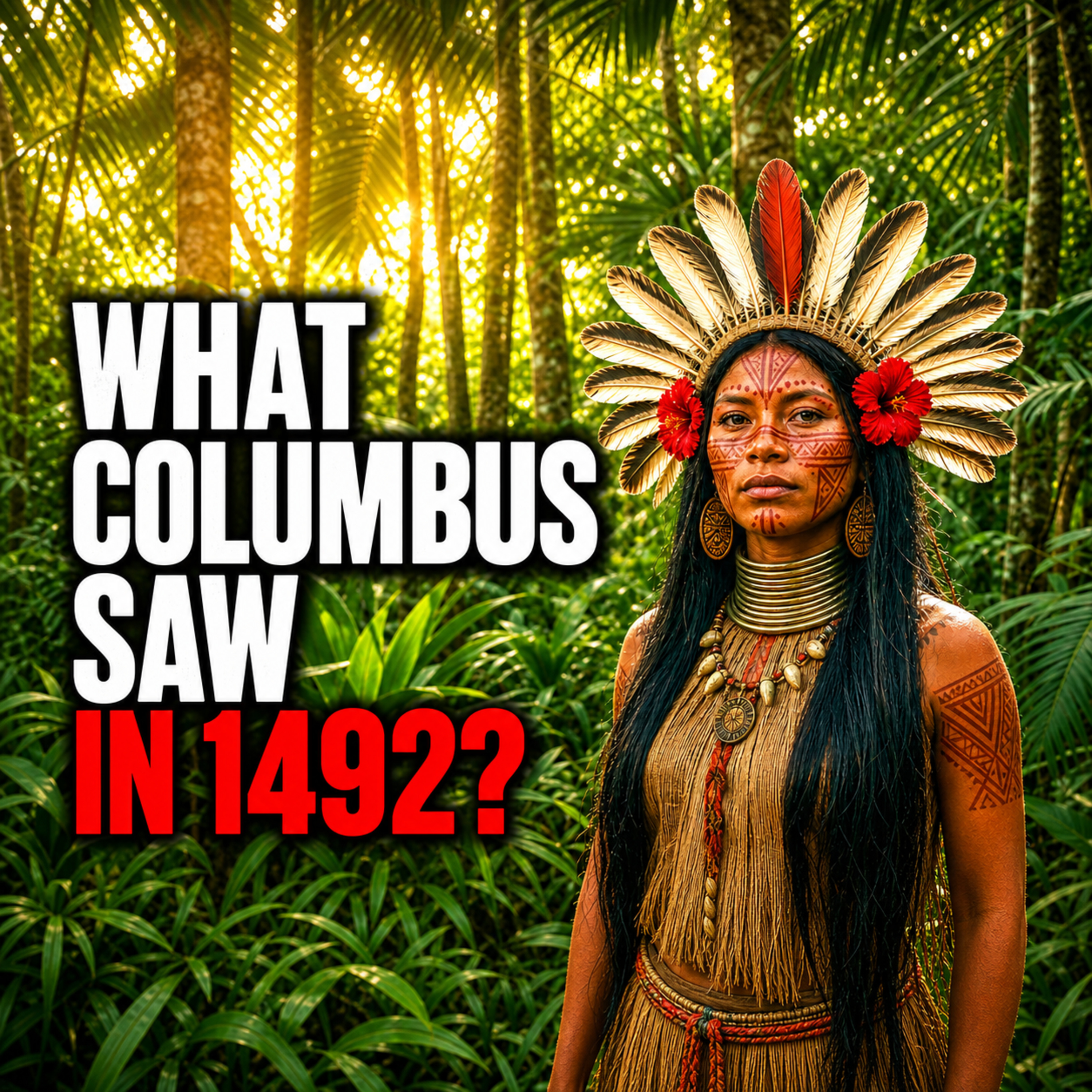
What Columbus Saw in 1492 Was NOT What You Think | History for Sleep
from Boring History for Sleep by Joe's Sleepy History · host Joe's Sleepy History
What if the world Columbus saw in 1492 looked nothing like the picture in your head?This sleep-friendly history video quietly re-examines Columbus’s first voyage through what we actually know: the Atlantic world he left behind, the navigation and dead reckoning that got him across, and the winds, currents, and night skies that shaped his route.We explore what his first landfall in the Caribbean might really have looked like—reefs, mangroves, beaches, and hidden inlets—alongside the rich Taíno societies already living there, far beyond the usual stereotypes.You’ll hear how first contact became a machine for miscommunication, why historians still debate which island he reached, what Columbus noticed first (gold, spices, “signs” of Asia), and how naming, maps, and fragmentary journals distorted the story we think we know.If you like calm, evidence-based history that separates myth from documented reality—and helps you drift off while learning—this episode is for you.Subscribe for more “History for Sleep” deep dives into the past that challenge popular myths, one quiet story at a time.Sources:- The Diario of Christopher Columbus’s First Voyage to America, 1492–1493 (trans. Oliver Dunn and James E. Kelley Jr.)- The Four Voyages of Christopher Columbus: Being His Own Log-Book, Letters and Dispatches (ed. and trans. J. M. Cohen)- Admiral of the Ocean Sea: A Life of Christopher Columbus (Samuel Eliot Morison)- Columbus and the Quest for Jerusalem (Carol Delaney)- Columbus’s Outpost among the Taínos: Spain and America at La Isabela, 1493–1498 (Kathleen A. Deagan and José María Cruxent)00:00 Intro hook: the 1492 scene isn’t the one in your head04:17 Main 1: the atlantic world columbus came from (and carried with him)12:23 Main 2: navigation, dead reckoning, and the problem of distance22:53 Main 3: the ocean itself-currents, winds, weather, and night skies33:47 Main 4: the first landfall question-which island, and why it’s debated44:36 Main 5: what the coast looked like-reefs, mangroves, beaches, and false entrances53:21 Main 6: the living landscape-1492 ecosystems and what might have stood out1:03:12 Main 7: who lived there-taíno worlds beyond the stereotypes1:13:55 Main 8: first contact as a miscommunication engine1:24:16 Main 9: what columbus noticed first-gold, spices, and the search for “signs”1:33:21 Main 10: the ship-to-shore reality-boats, beach landings, and fragile control1:42:07 Main 11: names, maps, and the power to re-label a place1:50:34 Main 12: the journals problem-what we have, what we don’t, and why it matters1:59:54 Main 13: what changed immediately-disease risk, alliances, and the first steps toward colonization2:09:56 Rebuilding the 1492 picture (and why the myth persists)Kindly Note:Every story on this channel is rooted in a deep respect for history. We work as directors and editors, using AI tools to assist with research and drafting the script while we shape the narrative and verify the facts. The narration is delivered by a digital replica of a professional voice actor, and the visuals are individually crafted artistic impressions created with AI. Even with these tools, bringing a story of this depth to life takes many hours of work.Please keep in mind that while the narrative is grounded in thorough historical research, its main purpose is storytelling for entertainment and relaxation. It is not meant to serve as a formal academic or scientific source. Thank you for your trust and support.
Embed this episode
Ready to play
What Columbus Saw in 1492 Was NOT What You Think | History for Sleep
No transcript for this episode yet
Similar Episodes
No similar episodes found.
Similar Podcasts
No similar podcasts found.