
EPISODE · Feb 26, 2024 · 4 MIN
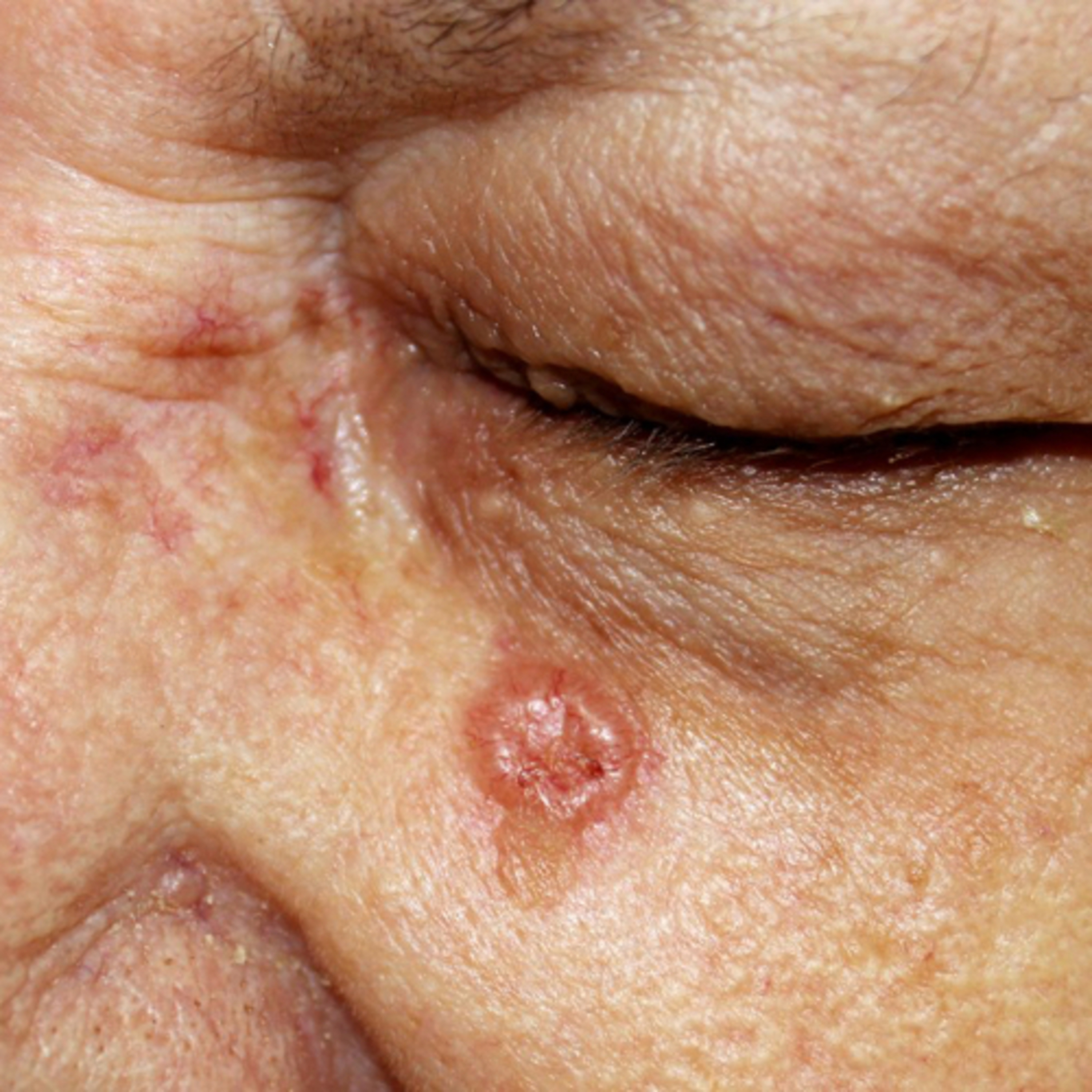
“What Concerning Skin Lesions of the Face & Oral Cavity Must Dentists Be Aware Of?”
from Dr. Gallagher's Podcast · host Brendan Gallagher, DDS
2.26.24 Quick Review #113 - #dermatology #skincare #cancer #pathology #oralpathology #doctorgallagher #oralsurgery #oralsurgeon #dentist #dentistry #dental Dentists play a crucial role in the early detection of cancerous lesions in the oral cavity and on the face. The most common cancerous skin lesions of the face and oral cavity that dentists should be aware of include: 1. Basal Cell Carcinoma (BCC): This is the most common form of skin cancer, often occurring on sun-exposed areas of the skin, such as the face. BCCs are usually slow-growing and characterized by pearly or waxy bumps, flat flesh-colored or brown scar-like lesions. While they are highly treatable and rarely metastasize, early detection and management are important to prevent extensive tissue damage. 2. Squamous Cell Carcinoma (SCC): SCC is the second most common form of skin cancer and can occur on the face, especially in areas frequently exposed to the sun. It can also develop in the oral cavity, presenting as a persistent red patch, open sore, or growth with a central depression. It may also cause a wart-like growth or elevated lesion with a central indentation. Early detection is crucial as SCC has a potential for metastasis, especially lesions in the oral cavity. 3. Melanoma: Although less common, melanoma is the most serious type of skin cancer and can occur on the face. It can develop in an existing mole that changes in size, shape, or color, or as a new, unusual-looking growth. Oral melanomas are rare but can be more aggressive and challenging to treat. They might appear as a pigmented patch or lesion that's asymmetrical and has irregular borders. 4. Oral Squamous Cell Carcinoma: This is the most common type of oral cancer, often related to tobacco use, alcohol consumption, and HPV infection. It typically presents as a non-healing ulcer or a red or white patch inside the mouth, on the tongue, or on the lips. 5. Actinic Keratosis (AK): While not a cancer, AK is considered a precancerous skin lesion that can develop into squamous cell carcinoma if untreated. It appears as dry, scaly patches or spots on the sun-exposed skin of the face, lips, and ears. References: 1. Dermatology Associates of Central New York. (n.d.). Basal Cell Carcinoma. Retrieved from https://www.fazeliderm.com/services/conditions-and-treatments/basil-cell-carcinoma/ 2. Smith, J. A., & Johnson, L. B. (2021). Early Detection of Oral and Facial Skin Cancers: A Guide for Dental Professionals. Journal of Dental Oncology, 37(2), 123-136. 3. Patel, R. K., & Green, T. H. (2019). The Impact of HPV on Oral Squamous Cell Carcinoma: A Review of the Literature. Oral Health and Preventive Dentistry, 45(4), 209-218. 4. Davis, M. P., & Knight, S. J. (2020). Actinic Keratosis: Pathogenesis and Clinical Management. Dermatologic Surgery, 46(3), 337-345. 5. ChatGPT. 2024.
Embed this episode
NOW PLAYING
“What Concerning Skin Lesions of the Face & Oral Cavity Must Dentists Be Aware Of?”
No transcript for this episode yet
Similar Episodes
No similar episodes found.
Similar Podcasts
No similar podcasts found.