
EPISODE · Apr 30, 2026 · 1H 17M
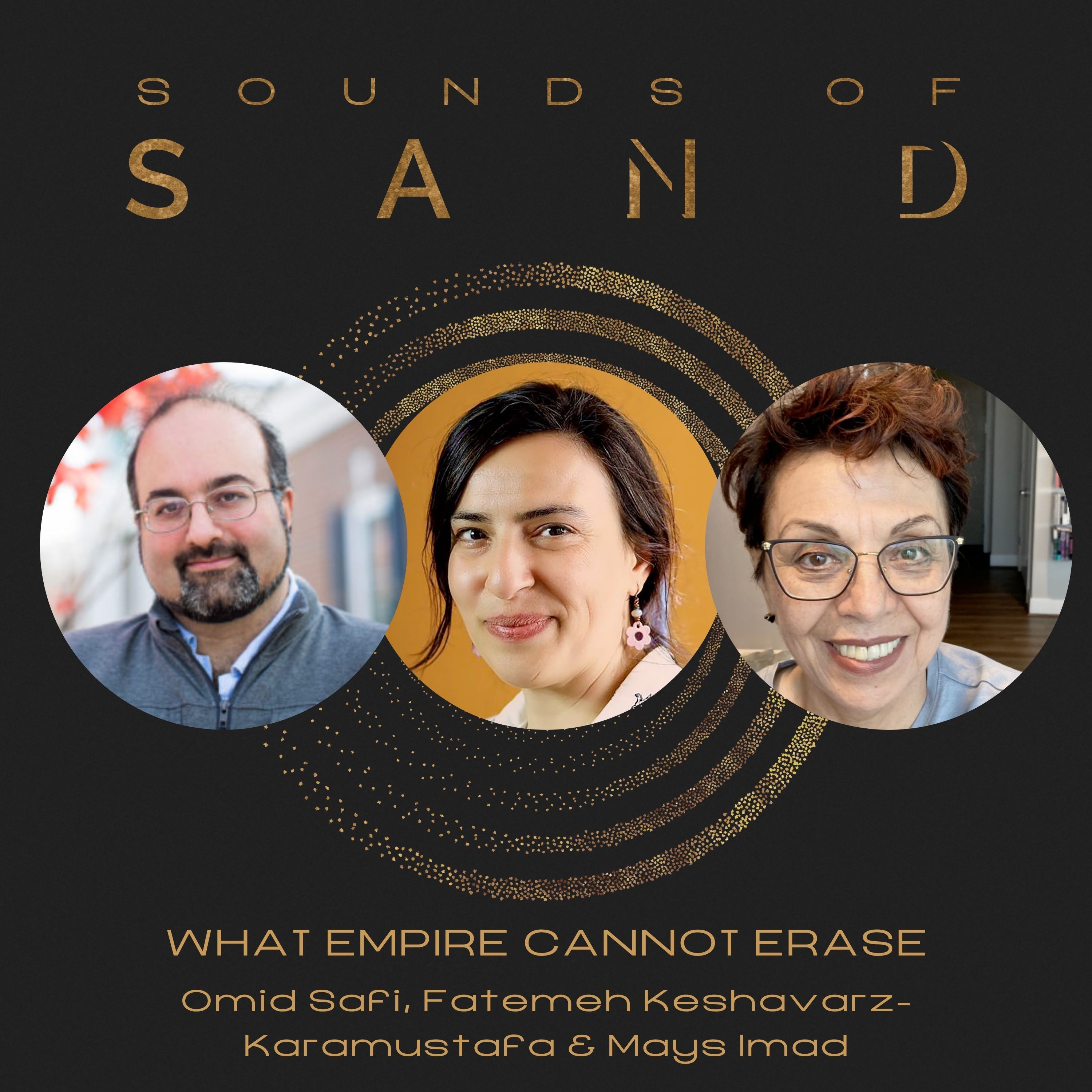
What Empire Cannot Erase: Fatemeh Keshavarz-Karamustafa, Omid Safi & Mays Imad
from Sounds of SAND · host Science and Nonduality
Persian Poetry, Radical Love, and the Soul of Iran“The path to God goes through that most difficult of beings, the human being.” – Omid SafiRecorded live at a SAND Community Gathering (April 2026). Watch the full conversation on the SAND Website. We are watching, once again, what empire does: not only to bodies, but to the long memory of a people; to the libraries and sacred sites; to art, language, and the ruins that hold the oldest threads of human spiritual inquiry. We are thinking of the civilization that gave us Rumi, Hafez, Omar Khayyam, Forough Farrokhzad — mystics and rebels and lovers of paradox who understood something about the human soul that we are still, centuries later, trying to catch up to. This gathering invited us to come together: to read poetry aloud, to hear from Iranian voices, to sit with grief and beauty together rather than alone. We work with political and moral vocabulary shaped by Iranian thinkers such as Ali Shariati, who wrote against domination, spiritual emptiness, and the violence of imposed power. We make space for what doesn’t fit into headlines or talking points—the complexity of empire, the difference between a government and its people, the authoritarian forces at work not only abroad but here at home. We also gather with the political inheritance of those who taught generations to resist domination and spiritual emptiness, including Ali Shariati. Guests Omid Safi is a scholar of the Islamic mystical tradition and professor of Islamic Studies at Duke University. He is the author of Memories of Muhammad and Radical Love: Teachings from the Islamic Mystical Tradition, and teaches online courses on Muslim mysticism. He leads contemplative journeys to Turkey, Morocco, and Mecca/Medina through Illuminated Courses. Fatemeh Keshavarz is the Roshan Institute Chair in Persian Language and Literature and Director of the Roshan Institute Center for Persian Studies at the University of Maryland. A poet in Persian and English, she is the author of Reading Mystical Lyric, Recite in the Name of the Red Rose, Jasmine and Stars: Reading More Than Lolita in Tehran, and Lyrics of Life: Sa'di on Love, Cosmopolitanism and Care of the Self. She has spoken at the UN General Assembly and received the Peabody Award for her NPR program on Rumi. Mays Imad, PhD (facilitator) is a neuroscientist, educator, and associate professor at Connecticut College whose work bridges neuroscience, philosophy, and education. An Iraqi immigrant who lived through wars and displacement, she brings both personal and scholarly depth to the themes of trauma, remembrance, and repair through the embodied nervous system. Timestamps 00:00 — Welcome & framing 00:02 — Mays Imad opens: grief, urgency, and love 00:06 — Introducing Omid Safi & Fatemeh Keshavarz 00:07 — Saadi, Rumi, and the Persian tradition 00:12 — The war on Iran: what is being destroyed 00:21 — Don't bypass grief — the Persian mystics knew this 00:27 — Saadi on truth, power, and interconnection 00:32 — Fatemeh: togetherness, invisibilization, and Iranian resilience 00:38 — Poetry as the Silk Road of imagination 00:52 — War's corruption of language — and poetry as antidote 01:04 — Remembrance as ethical act 01:10 — Intergenerational love & closing Resources & Links Omid Safi Illuminated Courses — books, podcast, courses, tours Duke University faculty page Radical Love: Teachings from the Islamic Mystical Tradition — Yale University Press Memories of Muhammad: Why the Prophet Matters — HarperOne Podcast: Sufi Heart — Be Here Now Network The Heart of Rumi's Poetry — online course Upcoming events: Evening workshop in London, May 5th — "Islamic Spirituality in an Age of Conflict" Contemplative journey to Turkey, June 1–12 Rumi Retreat in Marrakech, November 22–28 Fatemeh Keshavarz Website Jasmine and Stars: Reading More Than Lolita in Tehran Lyrics of Life: Sa'di on Love, Cosmopolitanism and Care of the Self Cowboys and Iranians — poem by Fatemeh Keshavarz (video) Birds Without a Name — poem by Fatemeh Keshavarz, read at ARHU event on Hope & Home (video) Mays Imad Personal website Connecticut College faculty page Music featured Watan (وَطَن — "Homeland") performed by Shaghayegh Amiri, playing the Daf — the ancient Persian frame drum central to Sufi musical tradition Ali Ghamsari — solo on the Kamancheh (Persian bowed string instrument), taught by Hamidreza Afarideh, music teacher in Tehran Poets and texts referenced in depth Rumi (Jalal al-Din Rumi, 1207–1273) — Persian Sufi mystic and poet; his Masnavi opens with pain and grief; central throughout Sa'di Shirazi (1210–1291) — Iranian Sufi poet; his Golestan (Garden of Roses) is where Iranians learn to read and write; complete English translation by Thackston available; Fatemeh's Lyrics of Life goes deeper on Sa'di Hafez (14th century) — Persian lyric poet; Fatemeh discusses his use of the word hush as an example of how poetic language restores meaning Farid ud-Din Attar (born 1150) — author of Mantiq ut-Tayr (The Conference of the Birds / The Parliament of the Fowls) — referenced by Mays in her opening Abu Sa'id (Abu Sa'id Abi'l-Khayr, 967–1049) — Persian Sufi mystic referenced by Omid: "Don't just write down stories — become someone others want to write down what you say" Shams of Tabriz — Rumi's spiritual companion; Fatemeh discusses how Shams urged Rumi to live his knowledge Jamiluddin Aali — Urdu poet whose work was recited in the live chat Historical & contextual references Sharif University of Technology, Tehran — described as "the MIT of the Middle East," bombed during the war Leston Palace, Tehran — UNESCO World Heritage Site, bombed and referenced as a war crime The Iran-Iraq War (1980–1988) — Fatemeh's personal reference point for civilian life under bombardment George Orwell's Animal Farm and 1984 — referenced by Omid in discussion of the corruption of language Next SAND Community Gathering Voices of the Land: Resistance & Solidarity with Lebanon — April 28th Contact SAND [email protected] Support the mission of SAND and the production of this podcast by becoming a SAND Member
Embed this episode
Ready to play
What Empire Cannot Erase: Fatemeh Keshavarz-Karamustafa, Omid Safi & Mays Imad
No transcript for this episode yet
Similar Episodes
No similar episodes found.
Similar Podcasts
No similar podcasts found.