
EPISODE · Aug 16, 2020 · 16 MIN
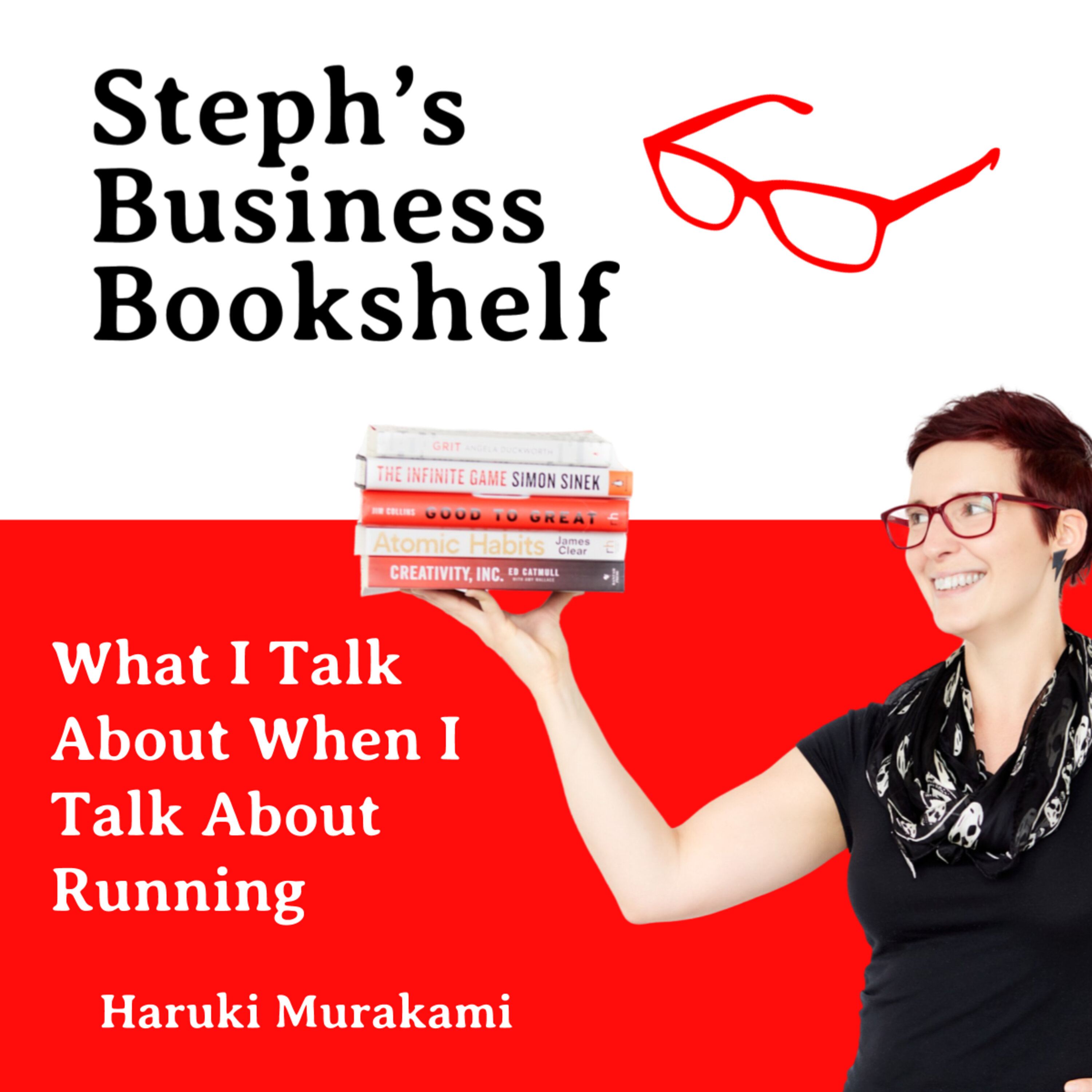
What I talk about when I talk about running by Haruki Murakami: What you can learn about life from running
from Steph's Business Bookshelf Podcast · host Steph Clarke
About the Book An intimate look at writing, running, and the incredible way they intersect, What I Talk About When I Talk About Running is an illuminating glimpse into the solitary passions of one of our greatest artists. While training for the New York City Marathon, Haruki Murakami decided to keep a journal of his progress. The result is a memoir about his intertwined obsessions with running and writing, full of vivid recollections and insights, including the eureka moment when he decided to become a writer. By turns funny and sobering, playful and philosophical, here is a rich and revelatory work that elevates the human need for motion to an art form. Source: amazon.com About the Author Haruki Murakami was born in Kyoto, Japan, in 1949. He grew up in Kobe and then moved to Tokyo, where he attended Waseda University. After college, Murakami opened a small jazz bar, which he and his wife ran for seven years. His first novel, Hear the Wind Sing, won the Gunzou Literature Prize for budding writers in 1979. He followed this success with two sequels, Pinball, 1973 and A Wild Sheep Chase, which all together form “The Trilogy of the Rat.” Murakami is also the author of many novels, three short story collections, an illustrated novella, several works of nonfiction and series of personal essays on running, entitled What I Talk About When I Talk About Running. The most recent of his many international literary honors is the Jerusalem Prize, whose previous recipients include J. M. Coetzee, Milan Kundera, and V. S. Naipaul. Murakami’s work has been translated into more than fifty languages. Source: http://www.harukimurakami.com/author Buy the Book from The Book Depository - https://www.bookdepository.com/What-I-Talk-about-When-I-Talk-about-Running/9780307473394/?a_aid=stephsbookshelf Would you like to take better notes from the books you read? Get your copy of Archley's beautiful book journal, the Book of Books here: https://www.archleys.com/?ref=JamVyS-U4mVR BIG IDEA 1 (4:09) – Process and rhythm. In the book, Murakami says we need to know our priorities to work out where to spend our energy. He applied the same level of thought and dedication to both running and writing – but that was it. He embraced the process and momentum for both activities and designed his life around these pursuits. He applied the methodology of stopping when you feel like you have more to go. Stopping running when you feel like you can keep going and are still having a good time, and stopping writing when you’re in a good flow. He also talks about the idea of rhythm – set your pace and the rest will follow. He focuses on the quality of what he’s doing and meeting his own expectations, not winning awards or races. This gave him the freedom to write and to only associate with the people he wanted to. He said in the book, “No matter what, I keep up my running. Running everyday is a kind of lifeline for me. So I’m not just going to lay off just because I’m busy. If I use being busy as an excuse not to run, I’d never run again.” Something that many of us could learn from, as often our own well-being activities are the first thing to get cut when we’re busy. BIG IDEA 2 (8:17) – It’s never too late to start. Murakami was 33 when he sold his jazz bar and started running and writing seriously. He built his life and maximised doing those things. He talks about how he bought his previous skills as a business owner with him, particularly in his writing career. For example, keeping his customers happy. He thinks of his audience as customers and wants to write in a way they would enjoy. BIG IDEA 3 (10:34) – Reflect and learn. In the book, there’s an impressive level of detail as he talks about the runs he’s completed, all from the journals he kept about them. His journals capture how he prepared for different races, the training plans and how he felt before/during/after both practice runs and official races. He referred to these journals regularly to learn from so he wouldn’t make the same mistakes again. His dedication to his practice and this detail is a testament to his commitment to learning and improving. To meet his own standards of writing and running. The level of dedication, reflection and learning he gave in these pursuits is impressive and something to reflect on and learn from ourselves. Music By: Ryefield Song by Out of Flux Support my book habit: https://www.buymeacoffee.com/stephsbookshelfSee omnystudio.com/listener for privacy information.
Embed this episode
NOW PLAYING
What I talk about when I talk about running by Haruki Murakami: What you can learn about life from running
No transcript for this episode yet
Similar Episodes
No similar episodes found.
Similar Podcasts
No similar podcasts found.