
EPISODE · Feb 11, 2021 · 46 MIN
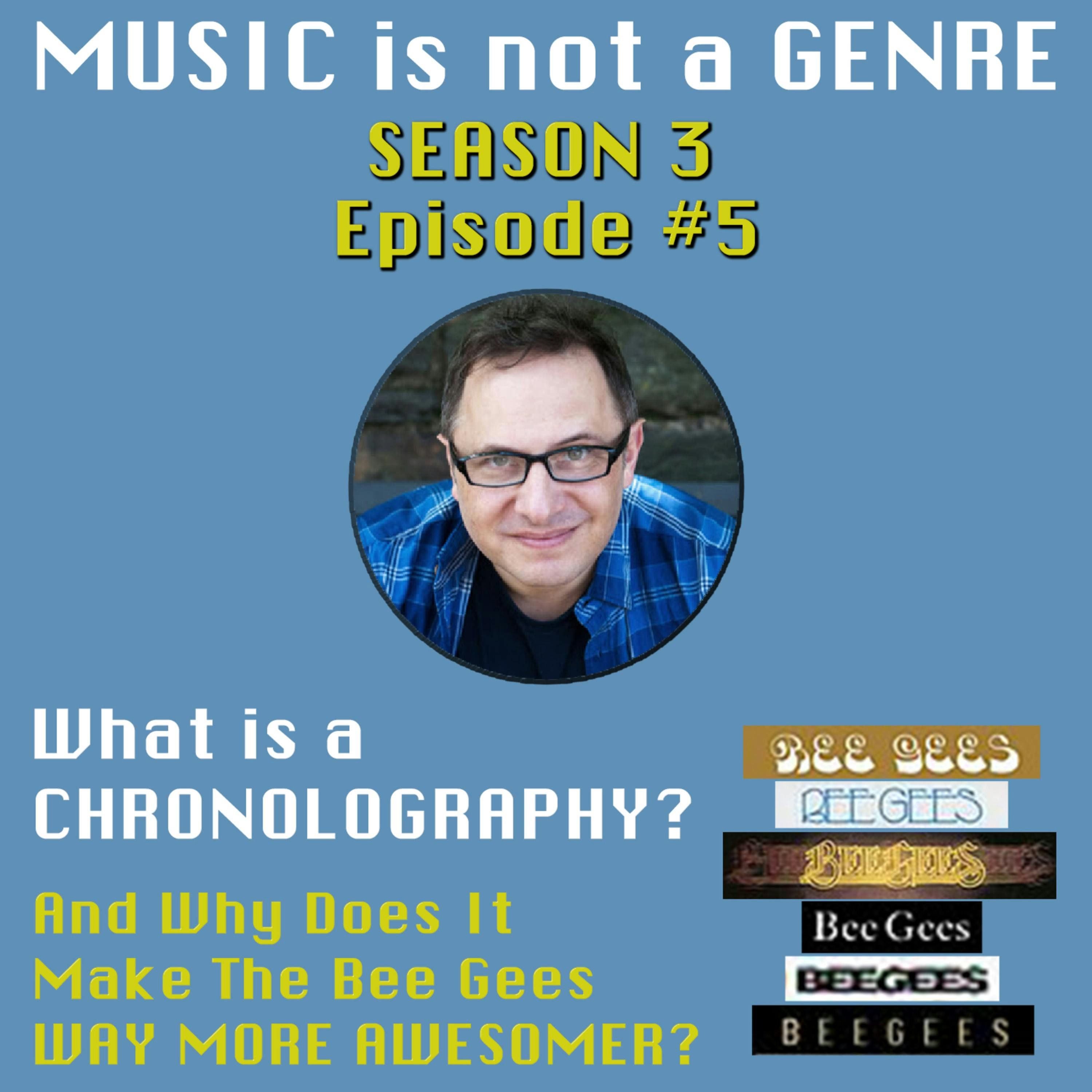
What is a CHRONOLOGRAPHY? - And Why Does It Make The Bee Gees Even More Awesomer? | MUSIC is not a GENRE - Season 3 Episode #5
from MUSIC is not a GENRE · host Nick DeMatteo
SUPPORT ME ON PATREON WATCH MUSIC is not a GENRE VIDEOS and MORE When David Bowie died five years ago, I righted a big wrong. I’d been aware of him since the 1970s, knew some of his hits & ‘80s music & offshoots like Tin Machine. Someone I really respected, but kept at arm’s length. So I fixed that and listened to his entire catalog. I was immediately hooked. Not just on Bowie’s legendary shape-shifting music, but on the whole idea of listening to entire catalogs. So I did it again, and again, and again. I’m still doing it. At last count, I’ve gone through well over 50 artist discographies. Truth be told it’s probably more like 150-1000 if you count all the short-lived bands. I call this a “chronolography”. It’s a mashup of “chronology” and “discography”, and here’s how I do it. I start from the artist’s earliest extant recording, and proceed chronologically from album to album - including any non-album singles. I also include solo records from any prominent band member. I read up on each album as I listen - my version of liner notes - including any career or personal info that might somehow connect to the music. And I don’t stop until I reach the last recording. This can be as few as one or two albums - like with the seminal punk band the Germs, or as many as 50 or more, like if you do the Beatles and then every Beatles’ solo career. There are so many reasons why this is a worthy undertaking. Greater appreciation for the artist’s talent beyond their more popular output. Better understanding of where the artist is coming from and what they’re trying to achieve. Discovery of hidden gems and creative offshoots they may not be known for. A detailed illustration of how the artist developed through the years. Placing the artist’s work in context - both as a part of their own career and as a response to the broader music scene. Oh and it’s fun and immersive and most of the music is incredibly good. Plus it takes a lot less time than bingeing a TV show, and you can do it anywhere. Now here’s where it gets way better. A chronolography tells a story. Not just of that music or that career, but of the times they existed, the people involved both in and out of the band, music development as a whole, how the industry and other external pressures influenced the music (or definitively DIDN’T), and even a chunky slice of society and humanity in general. It’s like history meets documentary mixed with a novel and culminating in a time lapsed work of art. It’s so much more important than just a musical exercise. We all have preconceived notions of pretty much everyone and everything we’ve ever encountered. The judgments that shape those notions are largely based on the least amount of information possible. We might know a few songs or one era when the band was hugely popular. When commerce coincided with creativity in a big way. We decide if the band was good or worth liking just from that. And hey that’s fine if that’s all you want to do, because it’s just music, right? No. Not right. Why? Because for most people, how you approach one thing that matters is very similar to how you approach everything else. If you are content to settle for your own under-informed judgment on something as relatively simple as music, how likely is it you’d dig deeper when it comes to more complex subjects like politics or social or philosophical issues? Or the sum total of a person’s life? ... This episode is sponsored by · Anchor: The easiest way to make a podcast. https://anchor.fm/app Support this podcast: https://anchor.fm/musicisnotagenre/support Hosted by Simplecast, an AdsWizz company. See pcm.adswizz.com for information about our collection and use of personal data for advertising.
Embed this episode
Ready to play
What is a CHRONOLOGRAPHY? - And Why Does It Make The Bee Gees Even More Awesomer? | MUSIC is not a GENRE - Season 3 Episode #5
No transcript for this episode yet
Similar Episodes
Similar Podcasts
No similar podcasts found.