
EPISODE · Aug 18, 2025 · 5 MIN
“What is a Key Cephalometric Metric for Vertical Maxillary Excess?”
from Dr. Gallagher's Podcast · host Brendan Gallagher, DDS
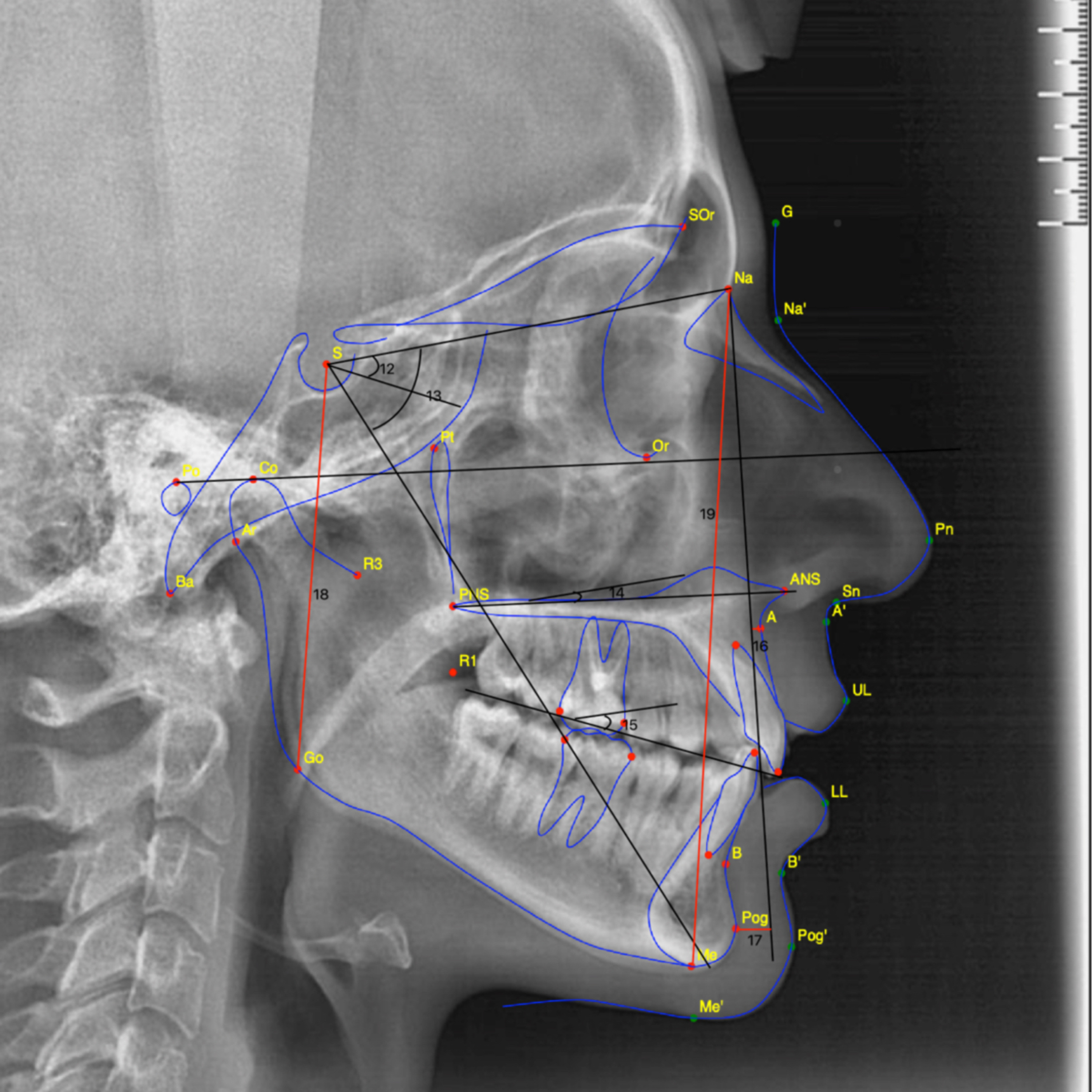
Quick Review #281 - #surgery #surgeon #doctorgallagher #oralsurgery #oralsurgeon #omfs #dentist #dentistry #dental #cephalometric- 8.18.25When evaluating vertical maxillary excess (VME), especially in patients with Class II malocclusion and gummy smile, a critical cephalometric parameter is the upper central incisor to palatal plane (U1–PP) vertical distance. Why this matters: VME presents with excessive gingival display, long lower facial height, and possible open bite tendencies. Surgical correction—most often Le Fort I impaction—shortens the maxilla vertically, improving both esthetics and function. 🔹 Normal Values• Males: ~28 mm (± 2 mm)• Females: ~26 mm (± 2 mm)🔹 What They Indicate1. Normal Range• U1–PP within ~26–28 mm (sex-dependent).• Incisor show at rest = 2–4 mm (esthetic ideal).2. Increased U1–PP (greater than normal)• Suggests Vertical Maxillary Excess (VME).• Clinically: “gummy smile,” excessive incisor show at rest, long lower facial height.• Surgical implication: Requires Le Fort I impaction, the amount determined by the excess.3. Decreased U1–PP (less than normal)• Suggests Vertical Maxillary Deficiency.• Clinically: insufficient incisor show, flat/aged appearance, possible lip incompetence.• Surgical implication: May require maxillary inferior repositioning or restorative solutionsSurgical planning: Ideal incisor display at rest is ~2–4 mm. If preoperative U1–PP measurement and clinical exam show excess, the impaction amount equals the excess display minus the desired show. For example, a patient with 8 mm display would need ~4–6 mm impaction, depending on lip dynamics and smile line.Intraoperative technique: After Le Fort I downfracture, the maxilla is repositioned superiorly using a prefabricated intermediate splint to ensure occlusal accuracy. External reference marks confirm the planned vertical shift. Symmetry is critical—equal bone removal from both sides prevents canting. Final fixation is performed with rigid plates (typically 4-point fixation) to lock in the position.Summary: For VME correction, the U1–PP vertical distance is the definitive cephalometric metric to measure, plan, and execute precise maxillary impaction, ensuring both esthetic and functional success.References:1. Zaheer, R., Shafique, H. Z., ul Hassan, M., & colleagues. (2024).Comparison of semi and fully automated artificial intelligence driven softwares and manual system for cephalometric analysis. BMC Medical Informatics and Decision Making, 24, 271. https://lnkd.in/eBECaHUn2. Miloro, M., Ghali, G.E., Larsen, P.E., & Waite, P. (2022). Peterson’s Principles of Oral and Maxillofacial Surgery (4th ed., pp. 987–991). Springer.3. Abubaker, A.O., Lam, D., & Benson, K. (2016). Oral and Maxillofacial Surgery Secrets (3rd ed., pp. 270–273). Elsevier4. ChatGPT.2025.#podcast #dentalpodcast #doctorgallagherpodcast #doctorgallagherspodcast #doctor #dentist #dentistry #oralsurgery #dental #dentalschool #dentalstudent #doctorlife #dentistlife #oralsurgeon #doctorgallagher
Embed this episode
NOW PLAYING
“What is a Key Cephalometric Metric for Vertical Maxillary Excess?”
No transcript for this episode yet
Similar Episodes
No similar episodes found.
Similar Podcasts
No similar podcasts found.