
EPISODE · Jan 9, 2021 · 26 MIN
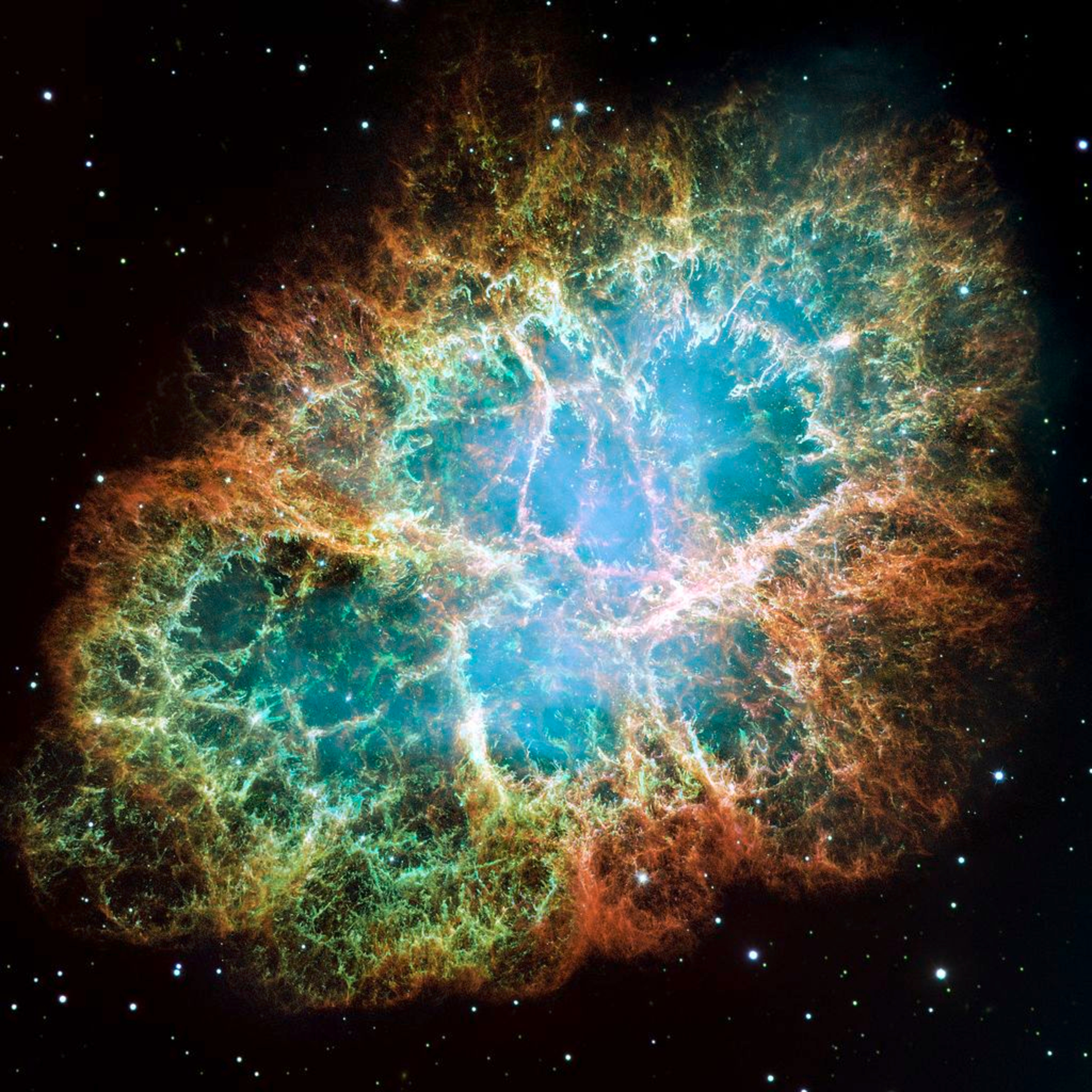
What is a Supernova? How did we get all the Heavier Elements, Like Nitrogen, Phosphorus, Uranium, and Plutonium?
from Learning by William · host William Gottemoller
Yes, ununbiquium does not exist. I made the element up as a satirical node towards the heaviest elements known as of yet- Ununilium, Unununium, Ununbium, Ununtrium, Ununquadium, Ununpentium, Ununhexium, and Ununseptium. The main elements that comprise the human body are carbon, hydrogen, nitrogen, oxygen, phosphorus, and sulfur. These 6 elements form a word that you may have heard in your biology class, CHNOPS. CHNOPS stands for those six elements that comprise the vast majority of one’s mass. The most important, even though all these elements are essential specifically to human life, are four specific elements: these elements are carbon, hydrogen, nitrogen, and oxygen. Hydrogen has an atomic number of 1, carbon an atomic number of 6, nitrogen an atomic number of 7, and oxygen an atomic number of 8. Without even a single one of these elements, we would not exist, at least not in the form we exist in as of now. These elements are essential to our existence itself. Now we all know that all stars originally fuse hydrogen into helium, leaving two abundant, obviously existing elements in the universe. The question is, though, what about nitrogen? What about oxygen and carbon? How is it possible, while all the stars are fusing hydrogen into helium, that we have carbon, nitrogen, oxygen, phosphorus, and sulfur? In this episode, we shall delve into the beautiful science that is supernovae, the most powerful explosions in the universe (yes, including the Big Bang, because the Big Bang was an expansion, not an explosion, contrary to contemporary and popular thought). If you have any questions, comments, concerns, or corrections, please email me using the address provided: [email protected] References How Stars Become Red Giants https://courses.lumenlearning.com/astronomy/chapter/evolution-from-the-main-sequence-to-red-giants/ Is Iron Fusion Possible? http://abyss.uoregon.edu/~js/ast122/lectures/lec18.html How a Supernova Occurs https://spaceplace.nasa.gov/supernova/en/ Supernova Nucleosynthesis https://en.wikipedia.org/wiki/Supernova_nucleosynthesis p-, r-, and s- Processes in Supernova Nucleosynthesis https://www.pnas.org/content/110/43/17241 r-Process in Supernova Nucleosynthesis https://en.wikipedia.org/wiki/R-process s-Process in Supernova Nucleosynthesis https://en.wikipedia.org/wiki/S-process p-Process in Supernova Nucleosynthesis https://en.wikipedia.org/wiki/P-process
Embed this episode
NOW PLAYING
What is a Supernova? How did we get all the Heavier Elements, Like Nitrogen, Phosphorus, Uranium, and Plutonium?
No transcript for this episode yet
Similar Episodes
No similar episodes found.
Similar Podcasts
No similar podcasts found.