What Is Gnosticism?
from Gnostic Reformation, Clear and Simple Hosted by Cyd Ropp
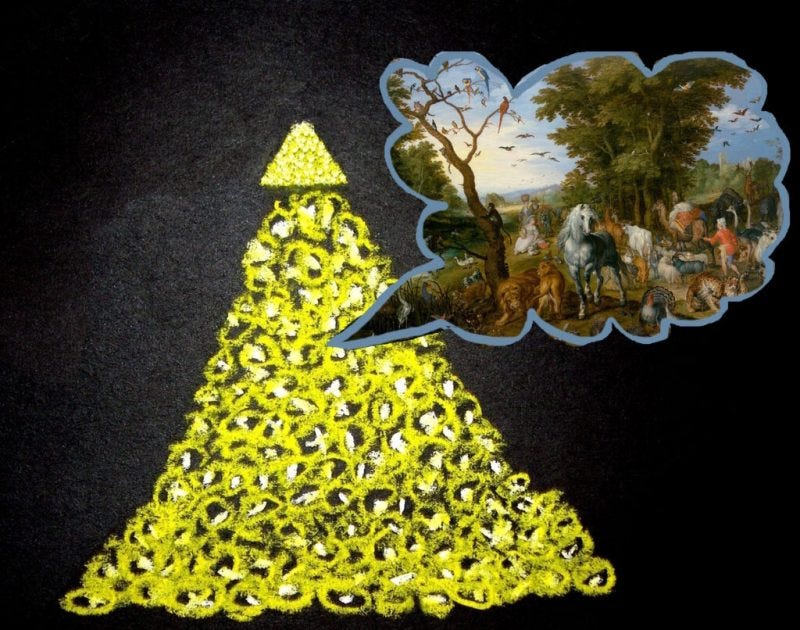
Welcome back to the Gnostic Reformation. Well, the final proof copy of the book is in the mail and on its way to me. I’ll have one more look at it and then I’ll put it up on Amazon for sale. I’d like to personally thank Hathaway, Gabriella, John, Barbara, and Jenny for their very generous support. If anybody else would like to contribute $50 towards this publication cost, actually it’s not the cost of publication as much as it is the cost that will go into promotion, into advertising, because we want this book to go big, don’t we? So thank you so much. If anybody else would still like to have a personally signed copy from me of A Simple Explanation of the Gnostic Gospel, contact me and send me that $50 and I’ll give you a signed copy of the book as well. Also, I’d like to personally thank some people that have written to me to say they can’t afford $50 but they really support the book and really do support this Gnostic Gospel effort that we’re putting out here, and I appreciate you every bit as much. Your prayers, considerations, and good wishes for me are every bit as valuable. So God bless you and thank you so much. And now on to this week’s episode. When I meet people and I start to talk to them about what I write about and what the podcast is about, it’s almost a hopeless task. And I bet you’ve discovered this as well when you try to explain Gnosticism to someone. First off, what does Gnostic mean? Gnostic means to know. It means knowledge, knowing. It’s the opposite of agnostic. Agnostic means I don’t know. An atheist is a person who says no, there’s no such thing as God. They’re an atheist. Theist means godly. A means not. Agnostic means I don’t know, maybe there is a God. Maybe there’s not a God. Whereas a believer is yes, I know there is a God and I believe in God. Now, how is it that we can believe in God? There’s different ways to believe in God. I think that most people that say they believe in God, believe in God theoretically, may even trust that God is looking out for them, but they don’t know God. They are not friends with God. They do not speak to and listen to God, because that would just be weird, right? You know, that’s the believing in something that’s not there, which is how atheists generally regard people who speak to God, that we are simply delusional, that we’re making it up, that it’s fairytale stuff. Gnosis means that you know God and that you believe it is possible to know God. And how can you know God? How do you know that you know God? That’s why Gnosticism is such a difficult and labyrinthian… labyrinthian means, you know, like in a maze. You have to work your way through the maze, picking up a little bit there and trying this way, and then trying that way, and then trying this way. Gnosticism is usually like stumbling around blindly in a maze. And this is why so many young Gnostics or people who seek gnosis dabble in this, and then they dabble in that, and they dabble in something else. They’re just picking up little bits along the way, but it doesn’t necessarily add up to anything. Or you may have a whole bunch of memes that you’ve collected along the way, all these various esoteric religious memes from various Gnostic websites or Gnostic books or Gnostic podcasts, but they’re all just a jumble of memes and you don’t know how to put them together. So the Simple Explanation of the Gnostic Gospel is a framework upon which you can hang these various things you have learned. It’s no longer going to be just a big bag, a jumble of tidbits, but it is going to fit into a framework, a worldview, an ideological worldview, that is a meme bundle of Gnostic thought. This is not easy to convey to people. So this is why my Simple Explanation model is very useful. And this thing I call the Simple Explanation, this was a thought that came to me many years ago by now, 15 or 20 years ago, and I call it a Simple Explanation of Absolutely Everything. That’s the name of my first blog, and it’s still posted, and I still post to it now and then. It’s a non-religious blog, it’s a mathy-sciencey kind of theory. However, it does talk about world religions, and it gives this framework that I have now applied to the Gnostic Gospel. And once you apply the Simple Explanation to this amorphous, labyrinthian thing that is called Gnosticism, now you have a framework upon which to view and to evaluate and to place all of those memes you have collected that are just bumping around in a big sack on your back at the moment. So when people ask me, well, what do you talk about? What do you teach? It’s very difficult standing out there on the lawn just chatting with someone or at the dog park about what I teach or what is Gnosticism. That’s why we’ve got this podcast and the books. My first book on Gnosticism, The Gnostic Gospel Illuminated, is very short, and heavily illustrated. That’s when I came up with all of these diagrams that are in my Gnosticinsights.com website or in my various books. Visual metaphors are important to me. That’s how I help to figure things out for myself. These visual metaphors, like thinking of the pleroma of the Fullness of God as a stack of golden cannonballs. That’s a weird thing to say. So how do I explain that to someone just standing around at the dog park? It doesn’t make any sense at all. The first book, The Gnostic Gospel Illuminated, is very short. It’s only about 50 pages. Very, very simple because I wanted to lay out the Gnostic Gospel as simply as possible. Look at the pictures, read these few words on each page, and I believe that you have that path to Gnosis and it’s all you need to know. Most people go, well, it’s very pretty and it’s kind of poetic, but what? What’s it about? I don’t get it. So that is why I wrote this longer book that I keep talking to you about that’s going to be released any day now. I’ll be sure to let you know. Maybe by next week it’ll be posted. It’ll be out there on Amazon–A Simple Explanation of the Gnostic Gospel. So I’ve applied the Simple Explanation of Absolutely Everything framework, like the structure of a building, the framework, just the support beams on which you can place the Gnostic memes that you have gathered along the way, you see. So my Simple Explanation of the Gnostic Gospel gives you that ideological framework. And then I explain all of the Gnosis that I have gathered directly out of the Nag Hammadi, which were scriptures that were dug up out of the desert in 1945 in Nag Hammadi, Egypt. They’ve been buried for about 2,000 years and have only relatively recently been translated. So I apply those insights to the Simple Explanation framework. That’s basically the way I work. And also I want to mention that we don’t need to go around gathering Gnostic memes or you don’t have to learn the things that are in my books. Because the basic concept in Gnosis is that we are born with this aeonic information inside of us. The same information that gives us consciousness and love and life in the first place. The truth that is channeled down from the Aeons, the Fullness of God, into us at conception we carry along throughout our entire lives. So I’ve often said here at Gnostic Insights that I’m not teaching you. You’re not learning this. What you’re doing is remembering. I’m trying to reawaken your own inherent knowledge of God. If you never heard anything I said and you never went to any Gnostic website or read any Gnostic book, you would still be able to commune directly with the Father and directly with the Son, the Fullness of God, and Christ because they are inside of us. They come in at conception and grow up with us. We forget about them because of the nature of living in a material world—because of the never-ending war, Gnostics would say—the struggle against the material level. The tension between the ethereal and the material. That’s that dual aspect that people often talk about in Gnosticism. So that’s all you really need to know. We come… This is a public episode. If you'd like to discuss this with other subscribers or get access to bonus episodes, visit cydropp.substack.com/subscribe
Embed this episode
No transcript yet.