What is the Trinity?
from Quiet Words of the Wise Hosted by Omar L. Jackson
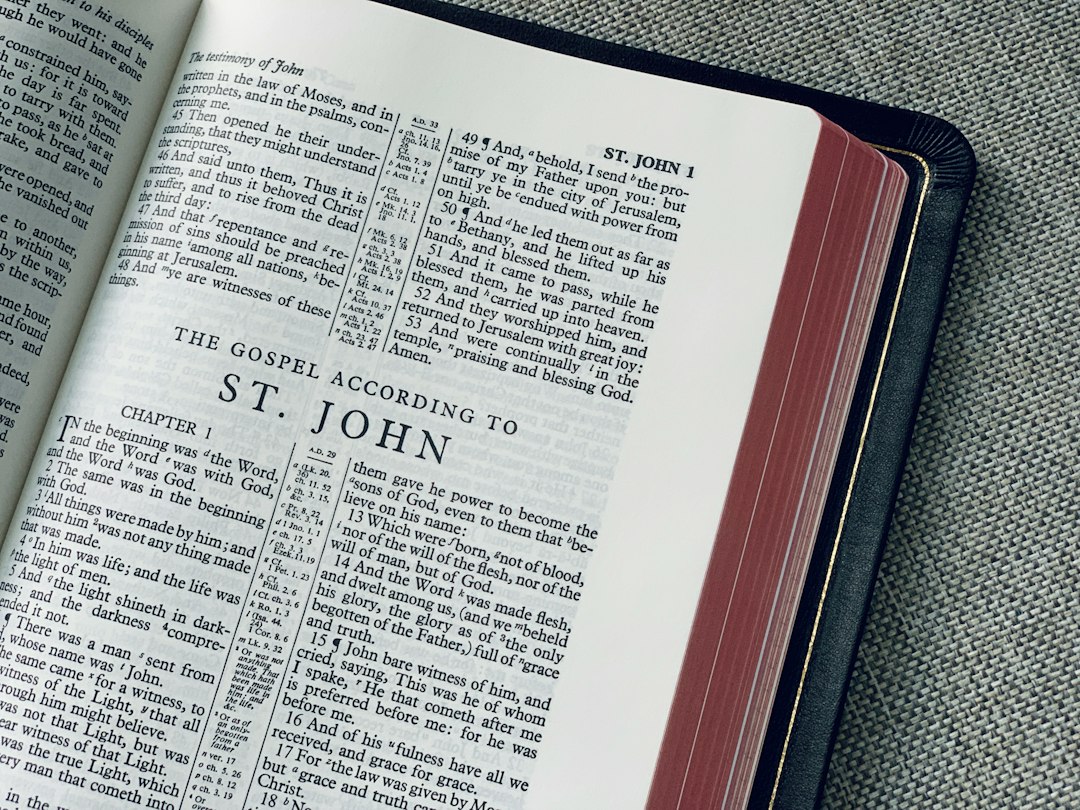
Here is an essay I wrote on the Trinity during my Master of Divinity program. Let me know if this helps you in any way! Introduction The Trinitarian doctrine is arguably one of the most controversial, yet critical, topics within the Christian faith. Of the multiple reasons it is proven to be controversial is the fact it is a challenging concept to articulate. The Christian faith is comprised of believers who hold two main views: Trinitarian doctrine and Oneness doctrine. The Oneness doctrine holds the view that there is one God who does not manifest himself in distinct persons but is one divine spirit that manifests himself within the Godhead at separate times. Inevitably, this introduces a concept called “Modalism.” Modalism is a concept where God only manifests himself in “modes” between the Father, Son and Spirit — one at a time. In contrast, the Trinitarian doctrine holds the idea that there is one God who manifests himself in three distinct, coequal, and co-eternal persons. All of which manifest in different ways and hold different functions and roles but are all of the same One essence and One divine entity. The three coequal persons, God - the Father, God - the Son, and God - the Holy Spirit are able to function at the same time while simultaneously still being one God. “The doctrine of the Trinity can thus be seen as an attempt to describe faithfully a God who, while remaining transcendent, also became incarnate in Christ – and, more than that, who now dwells within believers in the Holy Spirit.” In John’s gospel, there is an intricate unfurling and unveiling of the character, functions, and relationship of the trinity. The premise of this research is to magnify the revelation, distinct unity, and functionality of the trinity within the Gospel of John. Revealing the Trinity As it is often articulated when discussing the trinity, the Bible does not explicitly use the term “Trinity.” However, there are numerous moments where John, in his gospel, reveals God’s manifestation in a trinitarian union that carries out certain functions or roles. The term indicates the character and actions of God that reveal his Tri-unity that is critical to the accurate interpretation of Scripture. Initially, John begins by using the same phrase that is used in the book of Genesis. He states in John 1:1, “In the beginning was the Word, and the Word was with God, and the Word was God.” What is later stated is that the “Word” is a synonym for Jesus. We know this because in John 1:14, we see that it says, “The Word became flesh and made his dwelling among us. We have seen his glory, the glory of the one and only Son, who came from the Father, full of grace and truth.” Jesus was with God in the beginning as the world was created through him. What this reveals is that Jesus is able to operate in the same vein as Creator. “But the Word of God is substantial, endowed with an exalted and enduring nature, and is eternal with Himself, and is inseparable from Him, and can never fall away, but shall remain in an everlasting union.” John 1:2-3 goes on to state, “Through him all things were made; without him nothing was made that has been made.” This reveals to us through scripture that the Word, who is God, created all things. The verse that unifies Jesus within the Godhead is John 1:18 that states, “No one has ever seen God, but the one and only Son, who is himself God and is in closest relationship with the Father, has made him known.” Each of these verses point to the reality of Jesus being God. Thomas C. Oden explains, “The surest way to establish that the Father is God, the Son is God, and the Spirit is God is by a classical fourfold exegetical exercise that shows textually how in Scripture (a) each Person (Father, Son, Spirit) is distinguishably addressed by divine names; (b) each is assumed to have divine attributes; (c) each engages in actions that only God can accomplish; and (d) each is thought worthy of divine worship.” In John, there are various opportunities to recognize the unique connection and sameness of the Son and the Father, however, it can become a bit challenging to find an explicit acknowledgement of the Holy Spirit as God within the text. In John 3:5, there is an opportunity to identify a characteristic of the Holy Spirit that could only be done by God. John 3:5 states, “Truly, truly, I say to you, unless one is born of water and the Spirit, he cannot enter the kingdom of God.” Outside of being born of water and the Spirit, there is no cancelation or payment for sins. In order to enter the kingdom, there must be an acceptance of the payment for sins that only can be exonerated by accepting the Holy Spirit. The Holy Spirit allows for the payment of sins that can only be done by God. Distinction of Father, Son and Spirit As stated, the Trinity is one God who manifests himself in three, distinct, coequal and co-eternal persons. Despite their distinctness, they operate as one unit. Firstly, it is recognized that the the Father is God. John 1:18 states, “No one has ever seen God; the only God, who is at the Father's side, he has made him known.” God the Father is the unseen God. Secondly, John states in John 1:29, “The next day he saw Jesus coming toward him, and said, ‘Behold, the Lamb of God, who takes away the sin of the world!’” As earlier mention of the Spirit, only God is able to take away sin. Jesus is identified with sin remittance which would equate him as deity. Lastly, John recognizes the Holy Spirit In John 1:32 stating, “And John bore witness: “I saw the Spirit descend from heaven like a dove, and it remained on him.” The Spirit is explained as descending from heaven and remaining on Jesus. This indicates that the Spirit of God rested on Jesus as the same essence. “He [Holy Spirit] remained on Him, and did not pass Him by, as He might have done with men not able continuously to bear His glory.” Being fully God and fully flesh, the Spirit coming from heaven and remaining on Jesus would be of God. Again, they are distinct in person, but same in essence. The Spirit is also mentioned by Jesus in John 16:13-15, “When the Spirit of truth comes, he will guide you into all the truth, for he will not speak on his own authority, but whatever he hears he will speak, and he will declare to you the things that are to come. He will glorify me, for he will take what is mine and declare it to you. All that the Father has is mine; therefore I said that he will take what is mine and declare it to you.” The Spirit also has access through the relationships of that to the Father and to the Son—both of which are God. St. Augustine of Hippo states, “Father, Son and Spirit are not only spoken of in relationship: they are in relationship—the relationships that the Father establishes from eternity between Father, Son, and Spirit are intrinsic to their being.” Functionality of the Trinity in John’s Gospel The complexities of the Trinity are further expanded in the fact that each of the persons of the Godhead are in constant motion with each other. Throughout John’s gospel, Jesus is continuously referencing the Father and the Holy Spirit. In his reference of them, it is typically in the context of Jesus fulfilling a past, present or future mission. Each person of the Trinity has a role, and through their role, they work in conjunction to create the grand biblical narrative for restoration and bringing God’s creation back to himself. “…but every operation which extends from God to the Creation, and is named according to our variable conceptions of it, has its origin from the Father, and proceeds through the Son, and is perfected in the Holy Spirit.” In order for the Trinity to operate or function properly, there must be a unity of divine intellect. It would prove to be impossible to operate in unity if the Godhead is distinct in reasoning. There must be a united mind to make for a united Godhead. This assists … This is a public episode. If you would like to discuss this with other subscribers or get access to bonus episodes, visit omarljackson.substack.com
Embed this episode
No transcript yet.