Now more than ever, quality matters, but so does price. At Marshals, you don't have to choose. You could get the good stuff for less, because stuff that lasts. Because there's no point in tightening your belt. It's just going to break when you do.
Get the good stuff in store at Marshals today. Support comes from WISE, the smart checking account for home and abroad. Got a Canadian salary, property in the US? Sending money abroad? You're juggling multiple accounts, currencies, and a headache.
Manage it all the smart way with WISE. Save up to 65% on exchange fees and give your everyday money a boost with interest. Plus, switch your direct deposit to WISE for the monthly chance to double your paycheck. Be smart. Get WISE.
Canada residents only excluding Quebec. Up to 60 winners, odds depend on entries. Offer ends September 14, 2027. Learn more at YS.com. First off, Rebecca, why don't you go ahead and introduce yourself.
Tell me who you are and what you do. Yeah, OCO, go hinged out, don't let go, yet, lee, keila. Hi, my name is Rebecca Meigle. I'm a citizen of Cherokee Nation. And I am a writer and a journalist and the host of the podcast, First America.
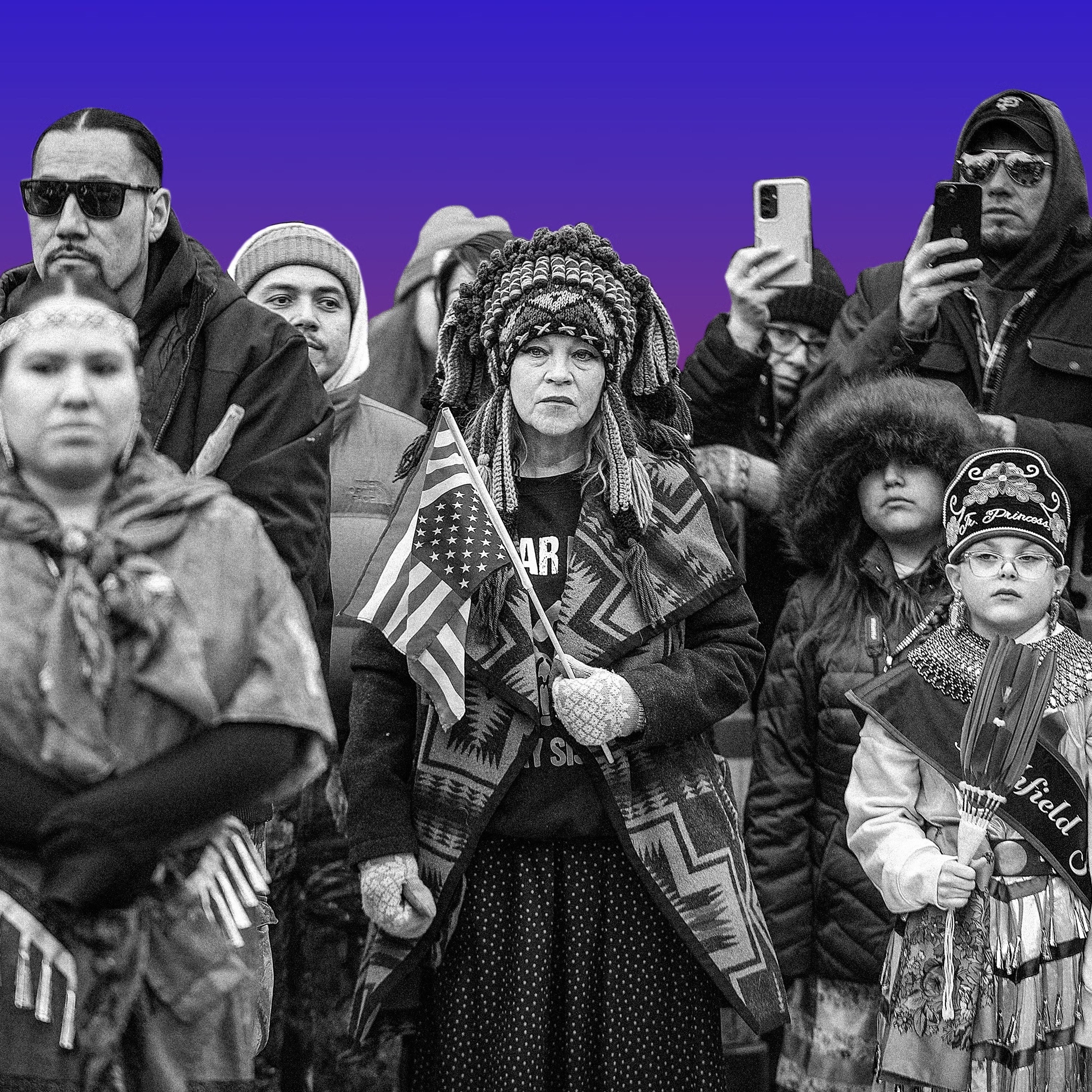
First America is not just an inversion of the Trumpy phrase America first, though it is that. It's Rebecca's attempt to understand why Native people have been written out of American history. In this moment, when we're about to celebrate a big 250th birthday, be inundated by stars and stripes and eagles and fireworks, Rebecca starts with a different symbol. The visual shorthand used by the founders is they tried to break away from England. For the founding generation, that symbol was Native people.
The figure of a Native person appeared in political cartoons. The founding generation put Native people on guns, on pamphlets, on ships. One of the biggest examples is when they actually stormed ships in the busted harbor to throw tea overboard, they put out a costume and they dressed up like Native Americans. They dressed up like they called themselves mohawks. Early Americans were working out what does it mean to be American?
What is our national identity? And they were in a tricky place, right? Because they're not English anymore. They're actually literally fighting a war to no longer be English. But they're not yet something else, right?
They're sort of in this in-between place. And playing Indian is kind of the bridge that gets them to this new American identity. An identity that we as a country are wrestling with now. This summer, we will tell ourselves a lot of stories about what it means to be an American. And I think the big argument of First America is that without us, actually the story is raw, is just straight up not what happened.
And so to get to the truth of our founding, to get to the truth of the origins of the United States, you have to include the Native part of the story. Today on the show, how America's original sin is written into who we are today. I'm Lizah Leary, sitting in for Mary Harris, and you're listening to What Next. Stick around. For most of the history of professional sports, there was a wall between the game and gambling.
And suddenly, it was everywhere. But that wasn't supposed to include the players themselves. Understood the big bet. Find us on CBC Listen or wherever you get your podcasts. Now more than ever, quality matters.
But so does Price. And Marshall's. You don't have to choose. You can get the good stuff for less. The stuff that lasts.
Because there's no point in tightening your belt. If it's just going to break when you do. Get the good stuff in store at Marshall's today. My Ragley Goldie says he plays for the love of the game. Yeah, gave up six goals last week.
Steve, maybe play to win, huh? Like with Bet365. I get paid to second my team goes at big with early payoff. And you cash out at any time before the game ends. Come on, Steve, Bet365.
The home of winning early must be 19 and older. Ontario only. Please play responsibly. If you were someone you know what concerns about gambling, visit connectcontario.ca or call 1-866-531-2600. Terms of addition apply.
I want to talk about the Declaration of Independence. The part that I think so many Americans are taught in school is though we hold these truths to be self-evident. Life, liberty, pursuit of happiness. But in the first episode of this show, you focus on a different part. I wonder if you could explain that to me.
Yeah, absolutely. So the part we all know is the part that, you know, Thomas Jefferson is pontificating about these light men ideals. It's the preamble. It's kind of the introduction. But when you look at the document, the document is actually just kind of a list of grievances against George III, the King of England.
But the simplest way I think of the think of the Declaration of Independence is kind of like a breakup letter. It's like our founding fathers are breaking up with the King of England. And it's that part of a breakup where you tell the person that you're breaking up with, everything that they did wrong. And so that list of grievances, there are a lot of historians that think that that list has an order and that it starts with smaller grievances and ends with the things that the founders and the founding generation were most angry about. And the last complaint, kind of the crescendo in this long list is about, quote, merciless Indian savages.
So alongside those beautiful lofty enlightenment ideals, native people are called savages, which was a way to say that we were actually less than human, that we actually weren't entitled to those basic human rights. One of the main reasons that colonists rebelled against the crown was actually that they wanted more indigenous land. They wanted to move further west into the continent of North America. And the King of England was telling them no. And that version of our origin doesn't fit nice into the light taxation without representation, independence, democracy, version of the story.
But it's as much a part of the origin of the United States as the rest of that. And when we leave that story out, we actually don't fully understand where we came from as a country. I think so much of the understanding of American mythology can be explained by a sort of history as written by the victors. It's a crude expression, but you understand where I'm going with this. And yet, this goes deeper than that.
It really does feel like this foundational American myth that governments and American organizations have really latched onto. And I wonder what you think gives it that emotional potency that seems to go beyond these other people in power who wrote down their version of what happened? I think the ultimate myth that we tell ourselves in the United States is that our founders created a democracy. And that's not the full story. Because those men also wanted an empire that actually wasn't that different than what England was doing.
They wanted to control land and people who actually didn't have elections, didn't have representation, wouldn't have accountability, didn't have any say in what that government would be. And so at the same time, they were building, while extremely limited, a representative democracy, they were also building out an empire. And that empire ruled by top down, tyrannical rule. And I think that's the part of the story that every side of the political spectrum gets wrong. I mean, you see even in the No Kings protests, that whole name of the protest is the idea that our founding fathers said, no to monarchy.
They said, no to tyrants. And they threw that off. And what is more accurate to say is that they didn't want to be colonial subjects themselves. Or they didn't want to be colonial subjects. But they still wanted to be an empire.
They just wanted to be the center of power of that empire. And they actually, so they call it an empire for liberty. But that's how they described it. We're experiencing the rise of authoritarianism in the United States. And people are looking around and saying, where did this come from?
How could this be happening? People are looking to Hungary and Germany and Russia. For example, the authoritarianism. And the truth is, is that part of our government, since the founding has been authoritarian, part of our government has governed people without their consent, without elections, without constitutional norms, without limits, without the kind of balance of power that we're all used to since the founding. And it's changed over time, right?
But that first group of people that were governed that way were indigenous people. And so much of what the current administration is doing isn't borrowing from right-wing leaders from other parts of the globe or other parts of history. It's actually just borrowing from this body of American law. That's all we've existed. And that's actually why it's been so hard to fight because it's already been baked into the system.
Did that surprise you? You've made a lot of pieces of work around indigenous history and the law and indigenous identity. And yet, when I listened to you on this show, it did seem like that interwoven authoritarian question was something that was a little new to you or maybe the scale of it was. Yeah, I think it's something I learned while I was doing this reporting, the project was a collaboration with some indigenous scholars. So a lot of that comes from a legal scholar named Maggie Blackhawk's work.
Basically, it goes like this. When our government set out to take indigenous land, to dispossess us, it had to build a government to do that. Like I think we don't think about that, but it had to build a government to colonize. It had to build a government to dispossess. After we were forced into shrinking reservations, we still had to be governed.
So we built a government that knew how to detain people, that knew how to detain families and you had to place people in concentration camps. And that expertise and that knowledge and those mechanisms, they didn't go away. The US kind of just applied it to different groups of people. So you see it being very consciously applied to foreign territories, colonies like Puerto Rico and Guam during colonization. You see it also applied to immigrants.
So a lot of this stuff gets baked into immigration law. And so you see in this moment, so many things that are happening actually go back to policies that were first created to dispossess indigenous people. It's like bombing Iran, bombing boats in the Caribbean, abducting the leader of Venezuela, deploying the military and the National Guard to US cities, even the way that Trump is using ICE and Border Patrol. I mean, we talk about why is the US border so militarized? Well, for the first century of our public, the border was a little war zone, right?
And so much of this stuff goes back to that history that we constantly leave out. And I think that that's one of the reasons as a country, we're really struggling to understand how we got here. Is that why you start this show in Minnesota with Renee Good's killing? You know, that was pure happenstance. And so what happened was I had traveled to Minnesota to interview a historian named Nick Fces, who's a citizen of the Lower Boral Institute tribe.
And so one of the things Nick and I had planned to do was to go to this fort that today is like, there's a replica fort, kids go there on school trips to learn about a fort in the military. And in 1860s that fort was a concentration camp for Dakota people during the Dakota wars. And a concentration camp was part of the bigger policy to basically force all Dakota people to leave the state of Minnesota. It was extremely violent campaign. And so we're there going, you know, at the fort and it's the day that Ice killed Renee Goode and Nick gets a call from his wife that Ice had just shot and killed someone.
And so we, you know, I was supposed to fly out that night. We kind of canceled our flights. And you know, I produced her and we decided to just stay and report on what was happening on the ground. And the next day we were back at Fort Seneling but for protests because on the Fort Seneling campus, it's kind of a big area, is Ice's headquarters in Minneapolis. And Ice is there because that area, the Fort Seneling area, is still federal land.
And it's federal land because it was once a military reservation. And so it's the same thing is happening in the same place, detaining people, rounding people up. But there's also that why there. And that's the thing that really surprised me, is that I think we think of history as sort of repeating itself as almost like this muscle memory, right? Of like, okay, our government has done this before, it'll do it again.
And what I learned is that when it comes to indigenous history, it's also the skeleton. It's like, it's the structure of how and why our government is able to do these things. We'll be right back after a quick break. Now more than ever, quality matters. But so does Price and Marshall's.
You don't have to choose. You can get the good stuff for less, the stuff that lasts because there's no point in tightening your belt. If it's just going to break when you do, get the good stuff in store at Marshall's today. At Capital One, we don't just use technology. We architect it.
Our teams have true end-to-end product ownership, shipping distributed systems at scale, right here in downtown Toronto. That's technology at Capital One. Search technology at Capital One Canada. I'm thinking about the time in which you are making and releasing this show. I mean, go back and look at the Trump executive order of restoring truth and sanity to American history, which basically meant removing plaques that reference the slave trade and things like that.
And I guess I wonder, do you worry that the Trump presidency has shifted the overton window so far that, okay, let's say he leaves office, those plaques go back up. There's a little more context for history. And people exhale thinking like, oh, well, we have a little more understanding now. And yet all the things you're talking about go unexamined. You know, it's interesting, like as a native person, I'm not, like my history not being included when Americans talk about their history isn't new, right?
So it's not like, it's not a problem of the Trump era. It's been my whole life. It's like, all I've ever known, you know? I mean, we're constantly left out of the story. And I think like when I started this journey, I thought what I was doing was trying to get, I thought the thing that people couldn't see was me, right?
Was like my community was Native Americans, was the native part of the story. And I thought that that was kind of the project and the service that I was doing was putting Native people back into the story. And as I got into the truth of the founding of our government, what I realized is that the thing that Americans can't see is America. And if we really want to guard against this type of government coming back, we have to get down to that foundation. And that's much scarier problem to face.
But I think it's one that we have to. And I'll say why is that I think that if we think defeating authoritarianism is gonna be an easy solution, I think it'll be like chopping the head off of a weed and it'll only grow back stronger. And I think we've already seen that between Trump one and Trump two, right? We all voted, we voted as hard as we can vote. You know, we won that election.
And then it just came back. It actually came back stronger. And so defeating this is gonna take more work than that. Is there something akin to the Canadian model of actually sort of reckoning with fundamental sin that America could do, should do with native nations? Yeah, it's interesting when you think about our government, you know, some, like one of the other foundational sins of the United States is human enslavement, right?
And like the two biggest. Right, right. And with human enslavement, you know, we get constitutional amendments and obviously the legacy of that policy is still with us, right? It's not like there's some magic bullet that's solved the problem entirely and just look at what's happening with the Voting Rights Act right now. But at least we have gone through some kind of constitutional process to say, this is wrong, this is outside of our democratic values, we shouldn't do that as a government.
With what our government did to indigenous people, we've never had that edit. Yeah. You know, we've never had that moment to say, you know what? Genocide, it's outside of our values as a democracy. Genocide is not democratic, we don't wanna do that.
And I'll give one example. This comes from the scholarship again of Maggie Blackhawk who's in a jibwe legal scholar. And she looked, she did a deep dive into Japanese internment camps and concentration camps during World War II. And what she found was that some of the first camps were run by the Bureau of Indian Affairs. And some of the first camps were actually located on reservations because the Bureau of Indian Affairs knew how to detain families.
They knew how to concentrate and detain families and our government consciously took what they knew how to do Native Americans and apply it to a different group of people. And so the stake of us never having had that edit as a government, they're high, they're really high. So I wanna go back to 2014, Tom Hasey Coates writes the case for operations. And it kicks off this series of conversations. And I also think is one of the things that starts to kick off this ferocious backlash.
And I wonder how to wrestle with the reaction that often comes from white America. You've told us that something we did was wrong and therefore we are bad. This is the five year old version of internalizing this. And therefore we're putting our fingers in our ears and we're not gonna listen to any of this. And we're gonna push back even harder.
And so the question is like, where does that pendulum settle? And how can we have those conversations and then reach a place where the pushback stops enough to let the message in? One of the surprising things that I found when I was doing this reporting was we have an episode about violence against indigenous people during the Revolutionary War. I make the argument that during the Revolutionary War, the US committed genocide, which I think recasts that war in a big way. And we need to change the way that we talk about the war.
That's one of the big, big claims that the podcast makes. And I thought I was gonna spend that episode convincing people, right? Just making the argument that genocide happened. And I came across this like public opinion research that happened in the 2010s, that actually the majority of Americans already agree that the US committed genocide. Like that where, you know, it's not everybody, but we're already kind of at a plurality.
And I think that where we're at as a country on native issues is that I think most people agree that what our government did to native people was wrong. Like I think most people see that. I think even people on the right. I think what most Americans think though, is that what their government did to native Americans doesn't affect them. And then it was long ago.
Exactly, exactly. And then it's this distant, tragic long ago, chapter of American history. And oh, that was very bad, but it happens just so long ago. You know, when we talk about colonization, we talk about how native people were changed by that. How are people changed?
You know, like I'm Cherokee. So we talk about how things like the Trail of Tears changed our tribe forever. And it's a two way street, you know, rounding Cherokee people up at gunpoint and putting us in open air stockades. There was a decade of the US government, where a few years about half of the federal budget was dedicated to ethnic cleansing. We're like the biggest projects that our federal government was taking on were things like the Postal Service and genocide, you know?
Like it's a two way street and it changed the United States government too. I am 50 years old. So, you know, when I was born was the sort of big wave of America 200. And here is America 250. And I think one of the foundational myths that I was brought up with was that America was a deeply flawed place.
But through effort and struggle, we were moving towards something better. I wonder how you feel about that story. Yeah, I think that that story, when you put native people into that story, it breaks apart. You know, there have been highs and lows in the story of Native America, but there's never been redemption, right? There's never been a big moment where as a country we came together and said, you know, how we behaved, what our government did is fundamentally outside of our democratic values.
And we're gonna do X-Vidi to make sure that doesn't happen again. What has happened is that Native people, you know, in self-determination era, like in these really important moments, you know, through the Indian Reorganization Act have fought for things and won things that have fixed the problems that the US government created. And I think in those, in actually those fights for Native people, I actually think there's a lot to be learned about what everyone should be doing right now. But I think that that that's been a process that Native people have often done, not completely alone, but a lot on our own. Yeah, and I think we haven't had that reckoning as a country.
Rebecca, thank you so much for talking with me. Yeah, well, thank you so much. This is a really, yeah, this is a really amazing conversation. Rebecca Nagel is the host of the new podcast series, First America. The first episode dropped today, and I recommend that you check it out.
And that is it for the show today. What Next is produced by Rob Gunther, Evan Campbell, Madeline Thames Ducharm, congratulations Madeline, and Patrick Ford. Paige Osburn is the senior supervising producer of What Next and What Next TVD. Mia Lobel is the executive producer of podcasts here at Slate. Ben Richmond is the senior director of podcast operations, and I'm Lizzie O'Leary.
If you wanna yell at me on Blue Sky, I'm at Lizzie O' Really. Thanks so much for listening. Talk to you soon. Now more than ever, quality matters. But so does Price and Marshall's.
You don't have to choose. You can get the good stuff for less, the stuff that lasts, because there's no point in tightening your belt. If it's just going to break when you do, get the good stuff in store at Marshall's today. At Capital One, we don't just use technology. We architect it.
Our teams have true end-to-end product ownership, shipping distributed systems at scale, right here in downtown Toronto. That's technology at Capital One. Search technology at Capital One Canada.