For most of the history of professional sports, there was a wall between the game and gambling. Then suddenly it was everywhere. Ontario is all in on sports. But that wasn't supposed to include the players themselves. Athletes are the perfect gamblers. Understood the big bet. Find us on CBC Listen or wherever you get your podcasts. Marshall's buyers travel far and wide, hustling for great deals on amazing gifts. So you don't have to. They've bagged this season's Italian leather handbags.
Handpicked the finest sweaters from the rest. Ooh, cashmere. Landed makeup palettes from the brands you love. Brushes, too. And hustled all those wishlist-topping toys. So flush. Our buyers have got you covered. Marshalls. We get the deals. You get the good stuff. When I sat down with Jill Lepore, I asked her to tell me a story. One that begins in the 1930s, in a moment when American democracy was fragile.
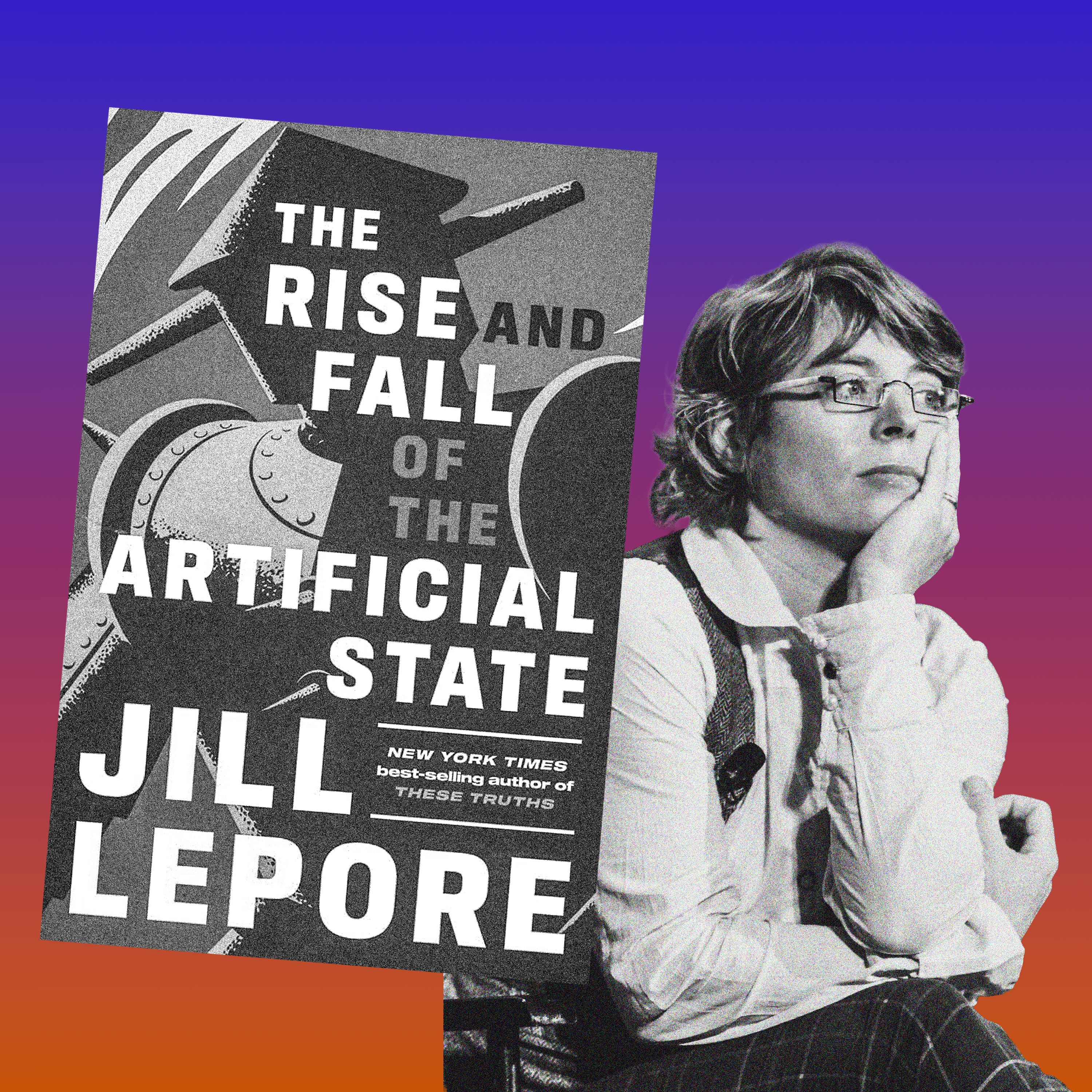
Two years before FDR's election in 1932, the country was really struggling with the Depression. There was a fair amount of support for fascism in the United States, the American Bund, and a lot of support for communism. Democracy is not working for us. Jill's a historian, a professor at Harvard. She's won the Pulitzer Prize and is a staff writer at The New Yorker. Her new book, The Rise and Fall of the Artificial State, is about how technology is corroding democracy. It comes out next week. This story I asked her to tell about the 30s holds some lessons for today.
There was a third movement that people have forgotten about called technocracy and with a capital T and under the banner of technocracy incorporated. And it was led in the United States by a guy named Howard Scott and in Canada by a guy named Joshua Haldeman. So technocracy, it sounds preposterous, except also it sounds creepily familiar. Technocrats believed that democracy was obsolete and not up to the task of dealing with technological and economic change in the modern world. And that therefore there should be no elections. There should be no politicians. Also shouldn't be any banks. There really shouldn't be any jobs. And that engineers and scientists would rule over everyone else.
Hundreds of thousands of Americans and Canadians joined this movement. They wore identical gray suits. They drove around in gray cars. They had these gray parades. They had huge, like tens of thousands of people would show up in stadiums for technocracy speeches. Technocracy would eventually fail, in part because when you don't believe in elections, it can be hard to come to power. FDR was elected in 1932 and ushered in the New Deal. The American technocracy leader, Howard Scott, was later revealed to be a fraud. His Canadian counterpart, Joshua Haldeman, eventually moved to South Africa in 1950 because he supported the apartheid system.
He self-publishes a lot of crazy white supremacist tracks, anti-Semitic tracks. He's opposed to vaccines. Anyway, Joshua Haldeman is important in my story because technocracy is important as an antecedent to modern Silicon Valley techno-libertarianism. But he's also important because it happens that he is Elon Musk's grandfather. Today on the show, Jill Lepore on how technology captured American life, politics, and democracy, and how we can take it back. I'm Lizzie O'Leary in for Mary Harris, and you're listening to What Next? Stick around.
Right now, Marshall's buyers are still hustling to get amazing new gifts into stores. Like this season's Italian leather handbags. They're in the bag. The latest designer perfumes. Perfection. And the cuddliest of cuddly toys. So, these gourmet chocolates just landed from Europe? Bellissimo. Marshall's, we get the deals. You gift the good stuff.
For most of the history of professional sports, there was a wall between the game and gambling. Then suddenly it was everywhere, but that wasn't supposed to include the players themselves. Understood the big bet. Find us on CBC Listen or wherever you get your podcasts. Introducing Pandora's Holiday Collection. This season, celebrate the ones you know by heart with a gift that says it all. Because the best gifts don't just look beautiful, they mean something too. From engraveable pieces to festive charms to lab-grown diamonds, our jewelry is made for the ones who inspire you, who've been through it all. Give a piece that says exactly what words can't. Pandora, more than a gift. Shop new styles in store or online at pandora.net.
Let's define the artificial state and explain to people what you mean, because it sounds like you're talking about AI, but your definition is much broader. And it seems to begin with this idea of kind of making people into data. Yeah. So I mean it to describe what is the sort of emerging successor, possible successor to the liberal nation state, right? The liberal nation state, like a democratic constitutional society, that's not that old. It's like really the late 18th century that we have this kind of system of government, government by the consent of the people. Like you count the people and you count their votes and they give their consent. The artificial state is government by machine in which our consent is not required, asked for, sought after, or in any way solicited. We are increasingly ruled by machines. And there are ways you can take a look at how that is.
in some ways already in place. It's also kind of a fantasy. It's a real fantasy of a certain number of Silicon Valley merchant princes. They don't believe in liberal democracy. They believe essentially in technocracy. But if you think about social media, which is where most people in the United States and around the world get their news, one way or the other.
There are more bots on every single social media platform than there are humans. Those bots can be owned by foreign actors. They could be owned by foreign governments. They could be owned by corporations, foreign corporations. They could be run by terrorists. They could be subversive bots by foreign actors. You have no way of knowing what they're about. They could be perfectly innocent just trying to increase traffic to someone's X page or whatever, or X account.
But our public sphere, a place where people come together to deliberate democratically, to learn about the world, to gain knowledge that is required of citizens to act responsibly in a democracy. It's not really a public sphere anymore, right? It's an artificial place. It's a largely virtual place and it is owned by corporations and governments have pretty much nothing to do with it. We're not setting the rules of social media. They're set by corporations in their terms of use. And I don't think that was, this is not like a dark sinister conspiracy. Like the artificial state is not like the deep state. Like it's not like some sinister conspiracy that I have imagined.
You can figure out, like, well, okay, it was more efficient to do things this way. Or, you know, when newspapers decided to go digital, it was like that was going to be a way to deal with that the internet existed and still have a circulation. Or, well, but then you don't have the whole paper of mass circulation or shared experience of reading the paper. Then you have individual stories that are sent to you and just to you. And then, well, then you maybe don't have stories. Maybe you have, like, summaries of those stories that are sent to you by someone who's amplifying a certain point. And then you no longer see the stories that might tell you something that you really need to know about because people with money want you to see only these stories. Like, it just kind of happened. Yeah, you're describing something that feels...
This is going to sound nerdy, but sort of akin to the tax code where like little aspects of it were created and sprung up in different ways. And now it's a coherent entity. But I think someone might listen to you and say, wait a minute, I'm not governed by a machine. I wonder if you could make that manifest in someone's daily life. Like how are they governed by a machine if they don't realize it? An example would be Twitter, right? So Twitter is founded in, I think, 2006. And it's just a goof, right? Like it's meant to be like, oh, what did you have for lunch? I had a tuna fish sandwich. It was good. It was tasty. Did you put chopped cucumbers in yours or do you rather have pickles? But if you fast forward to 2012, by then...
really, like for instance, every member of Congress at that point has a Twitter account. And Twitter has decided to market itself as the replacement for the town hall. So they call, you know, they call Twitter the town hall meeting in your pocket. And they print this like Twitter elections handbook, like a guide for candidates and office holders, how to use Twitter to run your campaign, to communicate with your constituents. And, you know, so increasingly Twitter is offering itself as a replacement for face-to-face democratic deliberation and face-to-face campaigning, right? And you're like, okay, well.
It may be innocent enough and maybe so. But meanwhile, at that time, and certainly over the following years, like to go from like 2012 to 2022 when Musk buys Twitter, something like fewer than, I think, 20% of Americans even has a Twitter account. And most people don't use their Twitter accounts. And above 90% of all posts on Twitter about politics are posted by fewer than 10% of Twitter users. And the people on Twitter who do post about politics, which is a tiny proportion of a tiny proportion.
are ideologically extreme and their posts have a radicalizing consequence. And so now you think, okay, you're a member of Congress and you're like, I wonder how I should vote about this housing bill. I guess I'll just look to Twitter. What are people saying on Twitter? And it's going to actually inform your views. Or maybe you'd put out a query on Twitter and get some ideas back. And that's not really representative anymore. I mean, that's a very skewed section of the electorate that you are consulting with the idea that you are doing your due diligence as a representative of the people.
But then you fast forward to now, again, there are more bots on X than there are humans. And people are still using Twitter as if it is a reliable source of information about public opinion. Not treating it as a sort of a billionaire's deranged play thing? I think people think it's both. I think people still you still hear like, what are people saying on X about that? Like as if that's like people as opposed to the strange and highly unrepresentative segment of the population that is on Twitter and where they are vastly outnumbered by bots who have political and financial interests. So it's sort of an external manifestation of how some of these things come to play in communications, right? Or in.
members of Congress trying to talk to people. You also write about a very internal version of it, which is really the rise of data and targeted advertising, both in the political sphere, but then also as it comes to underpin all of these big social media companies. Where do you see targeted ads as being so dangerous? You know, targeted ads go back to the 1950s when Eisenhower was kind of... fatally convinced by his campaign that they really needed to run their campaign using an ad company. And Adlai Stevenson famously called it the Corn Flakes campaign because it was like, do you want Crest or do you want Colgate? The political ads in the 1950s seemed to reduce the choice of electing a president to choosing a brand of toothpaste. And that was a fair criticism. And Stevenson was really upset about that. And he offered a very coherent criticism of it. And if you go back and look at, I once did a podcast episode looking at the records of the advertising company that Eisenhower retained. And it's pretty concerning the way that worked. But their tools were, of course, incredibly primitive. I think it's...
by the late 1950s, I once wrote a book about this company called the Simulmatics Corporation that was started, founded in 1958 by like a, like a madman, like a Madison Avenue ad guy and a political scientist and a computer scientist. And, uh, they built what they call the people machine. They said they wanted to use, uh, the techniques of a kind of scientific representative sampling of the population that good polling industries used, marry that to the strategies of advertising agencies to simulate the American electorate and provide advice to candidates about like, if then my book was called if then it was like, if you. They really, they were retained by the DNC, then by the Kennedy campaign. If you talk more about that, you're a Catholic, then voters, you know, Protestant voters and Jewish voters in Detroit will vote this way. You know, some of them will switch, this number of them will switch to Stevenson, this number of them will gain your support. If you do this, then that, if you do, they just kind of simulate the electorate and model it out. It's like, so they found this company to do that and they did so with great success, but.
We forget, for instance, that the Kennedy campaign, when it came out and the news stories were like a robot elected Kennedy. They denied ever use. They just they just lied and said we didn't hire them. We don't even know who these people are because it was so embarrassing, because it would have been so scandalous to admit in 1960 that you had used a mainframe computer to simulate the electorate and test out your messages. So I find the.
shock that people expressed at the time about where that might lead really revealing because almost everything that they said in the 1960s about things like the people machine the damage that it could potentially do to a democracy has since come to pass like their predictions were very very accurate um so i think it's worth revisiting that history and and it's also worth remembering that um they're they're we live in a time i think people are I feel like they're kind of flooding. They're like drowning in a sea of uncertainty. And what to hold on to as a kind of raft that's floating by are, you know, the manifestos of tech futurists who say, well, there'll be no poverty in five years. There'll be robots in your living room bringing you cups of tea.
that these people know better than the rest of us, that we don't actually understand the world. Like we need the technocracy movement because this stuff is just so far above us. But the ideas that these technologists have, like they're kind of shitty ideas from the past. Like technocracy was a terrible idea. It was a terrible idea. You talk about the rights language, particularly the tech rights language around AI as kind of a religious fervor. There are these manifestos. Mark Zuckerberg released one last week. But I guess the question I have is, do you believe that they are genuine? Like, do they believe this or are they?
kind of breathing life into a world that would be profitable for them. Is it that cynical or is there belief there? I think it's both. I think I would lean toward more of the cynicism, but I wouldn't discredit some sincerity to it. I think it is part of a long pattern and a culture in Silicon Valley that dates to the 1980s, when Apple first promised that the Macintosh in 1984 would save us from an Orwellian future, that the Macintosh, the personal computer, would aid and advance democracy. And to the 1990s, when libertarians convinced Congress that the internet should be a lawless place with no regulations and no rule for government.
And that that would aid democracy and would be emancipatory and liberating for humankind. So when Zuckerberg comes around in 2004 with Facebook's mission statement and its later mission statements, we're making the world a better place. We're connecting all of humanity. We have the future of civilization in our hands. All will be well. This will empower the people and democratize the world. That didn't come out of nowhere. That rhetoric had been in place since the 1980s. And it was part of how Silicon Valley sold its products to the American public and exported them to the world as an American export. These tools mean freedom.
It's a culture of belief that's part of, like in the 1960s, it was called the California ideology, which kind of married counterculturalism to libertarianism. And that's still the vibe. That remains the vibe. That's why you can wear a hoodie, but be a totalitarian. Like that's, they drink that water. And one of the things that's also sincere is as a cultural element of Silicon Valley is the rejection of all forms of knowledge that are different from those that can be derived through coding.
For instance, the study of history is renounced. Remember when the .com and then the early tech startups and the serial entrepreneurship of disruptive innovation, it was always like, whatever you do, don't study the past. Do you want to start Uber? Don't look at the history of taxis or don't collect information about urban traffic. All this social science, history, urban planning, just fucking do it. Just do it, man. Just do it. Just do it. That was an ethos and it is still an ethos. And so I think they don't know.
that their political ideas are crap and they've been discredited a century ago, that they've been tried and that they failed. They're so, I think, convinced of the novelty of their own. We're at the cusp of a new era in the human condition, which, okay, like we are, like I can see that, but the technology is new and the politics is very old. When we come back, how the artificial state might fall. Support comes from Wise, the smart checking account for home and abroad. Got a Canadian salary, property in the U.S., sending money abroad? You're juggling multiple accounts, currencies, and a headache. Manage it all the smart way with Wise. Save up to 65% on exchange fees and give your everyday money a boost with interest. Plus, switch your direct deposit to Wise for the monthly chance to double your paycheck. Be smart. Get Wise. Canada residents only, excluding Quebec. Up to 60 winners. Odds depend on entries. Offer ends September 14, 2027. Learn more at wise.com. My reggae goalie says he plays for the love of the game.
You gave up six goals last week, Steve. Maybe play to win, huh? Like with Bet365, I get paid the second my team goes up big with early payout and can cash out at any time before the game ends. Come on, Steve. Bet365, the home of winning early. Must be 19 and older, Ontario only. Please play responsibly. If you or someone you know is concerned about gambling, visit connexontario.ca or call 1-866-531-2600. Terms and conditions apply. I think one of the ways in this comes up in your book a lot is this profound misreading of science fiction, right? A lot of the second half of your book is looking at science fiction and perhaps aware members of Silicon Valley TechWrite read it wrong.
do they understand that they're reading it wrong? Like, how do they square this circle for themselves? Like, haha, look, I named all my things after evil parts of Tolkien. Like, that's where I have this big question mark hanging in the air. Yeah, I don't know. I mean, like, they're not one person. Like, Peter Thiel has a different view than Jeff Bezos. And, you know, they're not books people. Even Jeff Bezos, you know, they're really not books people. Like the stuff about Anthropic recently, you know, ripping the spines off all these books to get new data before AI slop corrupted what they could possibly collect online.
I like, it's just metaphorical to me of like the disdain for the kind of knowledge that is contained in books that can be extracted. And I think it's, I don't mean to be personal about it, but some of it is just dispositional. Everybody knows someone who would rather like call DoorDash. and get some tacos delivered. Then go to the corner taqueria and like order a taco and talk to the person behind the bar who's putting together your taco. But I think there's a point at which the dehumanization accumulates. And then people are like, wow, I really kind of do miss going to vote in person. Or I actually did like the bake sale when you had to drop out, you know, go in and do your ballot and like talk to that lady who staffs the table. Like there was fun. That was kind of fun. And like, it's nice to do my absentee voting because I'm on the road a lot. But like, I'm really just kind of interested here in thinking about what does it mean for a democracy when...
When we talk about a Supreme Court, we might be talking about Facebook Supreme Court. When we talk about a constitution, we might be talking about Claude's constitution. When we talk about the presidency, we might be talking about Sam Alton thinks we should have an AI president. The trappings of what makes our 18th century foundations that make being free in the world today in the United States possible are being very slowly dismantled with every click of our phones. There's a social piece that we can see. You can make a choice. But there's a political piece that I don't think people are specifically choosing.
And you see it in the backlash against data centers. I think that's really like you see the manifestation of the accumulation of, I do feel kind of dehumanized. I don't know why we need this. You know, like that, you hear that. I think you hear that in a different way than you heard it in 2012 or 2016 or 2020. So I want to get to data centers, but I want to ask you first, because I think there is a reading someone could take of this book that says, Jill doesn't like computers. And so I guess the question is like, is there a world that you can envision in which we have the internet, but it does not lead to the fall of a liberal democracy?
Absolutely. I think it's so cool we can talk to a machine. We can communicate with something that's not human. We haven't connected with people from other planets. I don't know what the dolphins are saying. People get these pads for their dogs to see if their dogs can communicate with them. We have teach sign language to apes.
But we've done it. It's a thing. We don't know how they're thinking, whether they're thinking, what is reasoning, what's entirely going on. And it's also terrifying. But I think that's tremendously exciting. But again, we're using it to decide which brand of cat litter would be better for me to buy. And for that reason, we have to build these massive data centers. Let's use this for scientific research and space exploration and the study of the oceans and the study of other planets and medical research and public health research. But why do we all have to buy this as a consumer good to do...
crap that's going to make people lose their jobs and destroy childhoods and have old people living with robots instead of with their families. That's a grumpy rant. I do think you hear that grumpy rant when people show up to the data center meetings. I don't mean to keep returning to that, but I think there's this kind of howl. I think that howl is accurate, and I do think that data centers are like a physical manifestation of this inchoate anger, discomfort, whatever, that people have been feeling. But I also think, and I heard you talk about this with Eli Patel,
Some of these networked mechanisms, even social media platforms, have allowed people new pathways that would not have been possible 30, 40 years ago for kinds of people that would not have been possible. I don't know what to do with that, because you are correct that those platforms are owned by a handful of merchant princes. but the platforms themselves do seem to have some value. Yeah. I mean, I certainly, I'm delighted that the internet exists. Like I don't have a, on the other hand, everybody I talked to says, like I did a piece for the New Yorker this week about the number of bots online. And the people I talked to in the bot management, bot detection industry all said, the internet is going to be all bots soon. Like we have, we will yield the internet back to the machines that it was built for so they can communicate with one another. We'll have to have like a.
Yeah, something like a very swanky first-class airport lounge that you've never been in, but only the humans get to go in, and there'll be this other kind of... I think it'll be just for the rich humans, though. I don't know. Yes, I will concede there's all kinds of wonders and marvels, forms of connection, forms of communication that have been made possible by these tools. I'm not an idiot. I don't know. Who thinks that? Who's going to say, God damn it? No. My point is that in the realm of liberal...
political democracy these tools have been manifestly bad manifestly universally malign and mostly not intentionally and certainly at first not intentionally at all and but i think we have arrived at a turning point in which liberal democracy is at stake and i throwing away liberal democracy so that you can have your agentic ai order you your favorite kind of pizza on a Tuesday because you always want it on a Tuesday and it's there when you get home from work. That's not worth it. So how does that take shape? How does the fall take shape? I feel like I've been saying, oh, the midterm sneaker issue is data centers. I've seen this in town hall meetings. I've seen it in the votes in Virginia a year ago.
How does that become a movement and the fall part of the rise and fall begin to look more concrete? So half the book that's about the fall is largely informed by science fiction, where something that I call the parable of the artificial state has been ubiquitous in science fiction since the 1860s. When people could first imagine like, oh yeah, we're building a lot of machines that are getting better and faster. Actually, we're building something that could maybe talk. And then what if we build them something that could think? And then actually, wouldn't they just eventually become smarter than we are? And then wouldn't they rule over us? And then wouldn't we all die? And that's the parable of the artificial state. But the reason the artificial state always fails in the stories is that the machines are powered by resources from the natural world and those are finite.
And without humans to monitor and protect them, they become used up. So in these stories, either humans eventually escape machine rule to the natural world and kind of have to start all over again, these weird kind of H.G. Wells-like tales, or else the machine stops because it doesn't have any more fuel. I think the data center piece is actually kind of interestingly on target with that parable because it's really about, it's partly about, do we want this? Wouldn't we, don't we feel like someone else is making all the decisions here? Why are we, we could be, we thought we needed housing. I'm like, we're building houses for machines. Like, well, why are we doing that? You have a quote in here from, from Sam Allman saying, if I weren't in on this, I'd be like, why do these fuckers get to decide what happens to me? That's the, that's the howl.
Why do these fuckers decide what happens? So the data center thing is on target with the parable of the artificial state because it really is about the natural world. People are like, there's only so much land. There's only so much water. There's only so much electricity. We're going to give up the farms and the forests and the parks and the national park and our electrical grid over to this. Maybe we do want to do that, but let's, I mean, this is the kind of really increasingly bipartisan call of like, let's at least study this for a little while. What would be the right number and size? What would be the right places? As opposed to...
we're the parts of the country where elected officials are corrupt enough to sign these NDAs and say, okay, yes, yes, you can have it. I'll take all the money. Like, there are other ways to make these decisions. You know, maybe we do put data centers. Maybe we decide we need them. Maybe we put them in space. Maybe we don't. You know, maybe we decide we're going to give over whole cities. We're going to like, all right, we're going to desert Houston because that should just be one big deal. I don't know what, like, you think the things that are happening now are preposterous. Wait till it could happen next unless people say, let's have a rational decision-making process here. It's as opposed to one that is just answering the stock market bubble and attempt to deliver to your venture capital commitments.
One of the things I've been thinking about a lot this summer is that America is a really young country. Like 250 years is not a long time. You're a historian. I wonder where you put us in our country's timeline. And are we at some fork in the road where there are multiple possible endings, just sort of depending on the public will of how to write them? You know, I am a...
deep admire of the Federalist Papers, which I teach all the time, and my favorite is The First Federalist by Alexander Hamilton. You remember, the Federalists wrote the Constitution, and they're like, shoot, Americans don't really want this. We have to convince them. Yeah, so we've got to write all these papers. 85 essays. They're manifestos. And Hamilton wrote, you know, in all of human history, humans have been ruled by force or by accident. You know, there could be an earthquake, and that changes the fate of a people. But mainly by armies, tyrants, and their soldiers.
And we are at a moment in the history of humankind when it falls to this country, to the United States, to decide the important question, whether any people can be ruled not by accident and force, but by reflection and choice, by reason and votes and deliberation, by our own consent. And on this question, your decision turns. Will this country adopt this constitution in 1787? and try, become a trial, a public trial, an experiment into the question of whether it's possible for humans to rule themselves with reflection and choice instead of by accident and force? Or are we just going to give up and vote this thing down and just go back to being kind of a crappy country ruled by the Articles of Confederation, which weren't really working? And it's a really beautiful essay. And it actually is quite a lot like some of the rhetoric you hear out of Silicon Valley. We are at a moment in time where we stand on a precipice where great decisions lie before us that involve the future of humankind. But I think the question offered is essentially the same.
Are we going to abandon the American experiment that's been going on now for 250 years in which for all of the flaws of this nation's history and all of its shortcomings, the genius of this country was from the start and remains, we rule ourselves. We are a nation, a government by the people, for the people, and of the people. And if we don't deter the handing over of the reins of government to machines owned by corporations that choose to rule us in whatever way the owners of those corporations see fit, then we will have said no to Alexander Hamilton's Federalist, number one. Jill Lepore, thank you so much for talking with me. Thank you. Jill Lepore is a Pulitzer Prize-winning author and historian and the David Woods Kemper Professor of American History at Harvard. Her book, The Rise and Fall of the Artificial State, is out next week. All right, that's the show for today. What Next is produced by Rob Gunther, Evan Campbell, Madeline Thames-Ducharme, and Patrick Ford. Paige Osborne is the senior supervising producer of What Next and What Next TVD. Mia Lobel is the executive producer of podcasts here at Slate. Ben Richmond is the senior director of podcast operations. I'm Lizzie O'Leary. You can find me on Blue Sky. I'm at Lizzie O'Reilly. Thanks so much for listening. Talk to you soon.
Right now, Marshall's buyers are still hustling to get amazing new gifts into stores. Like this season's Italian leather handbags. They're in the bag. The latest designer perfumes. Perfection. And the cuddliest of cuddly toys. So soft. Wait! These gourmet chocolates just landed from Europe? Bellissimo. Marshall's, we get the deals. You gift the good stuff. Right? At Capital One, we don't just use technology. We architect it. Our teams have true end-to-end product ownership. Shipping distributed systems at scale. Right here in downtown Toronto. That's technology at Capital One. Search technology at Capital One Canada.