Hey folks, this is Freddy. I'm Will. I'm Anthony from the hit Dungeons and Dragons podcast Dungeons and Daddies. That's us. What does it feel like to have a better laptop like the Dell XPS powered by Intel Core?
With a premium design that's thin and light, it feels smooth. Very smooth. What the response of touch screen it feels fast and precise. Hey, with long lasting battery life, it feels like nonstop energy with a laptop there can keep it up. Built for those who want better. The Dell XPS built for you.
Hi, this is Seth Myers from the Lonely Island and Seth Myers podcast. A searchlight picture presents Wild Horse Nine only in theaters November 6th. Wild Horse Nine is directed and written by my friend Mark McDonough, who made my favorite movie in Bruges. Don't miss this darkly comedic and deeply empathetic movie that critics are calling easily one of the best films of the year. Here's who is going to be in it. Malkovich, Kama John, Rockwell, Kama Sam,
who's Sammy, Kama Steve, Park Opposie, Tom Waits. See Wild Horse Nine only in theaters November 6th. Just a heads up here at the top of the show. Our language gets a little spicy in this episode. Okay, you've been warned.
All right girls, listen carefully. This is the rapping department. This man. Now the candy will pass by on this conveyor belt and continuing to the next room where the girls will pack it. Now you probably know this classic scene from I Love Lucy. And if you've never watched it,
your parents or your parents parents did. Lucy and Ethel are working at a chocolate factory. Their rapping pieces of chocolate as they move down the conveyor belt. The belt starts going faster and faster. Lucy and Ethel cannot handle the pace.
They're fumbling, they're eating chocolate. This whole thing is going totally haywire. And this losing game from 1952 shows up in Corey Doctor O's new book. And the human who is working with the machine is almost certainly the bottleneck. AKA Lucy and Ethel are the problem here.
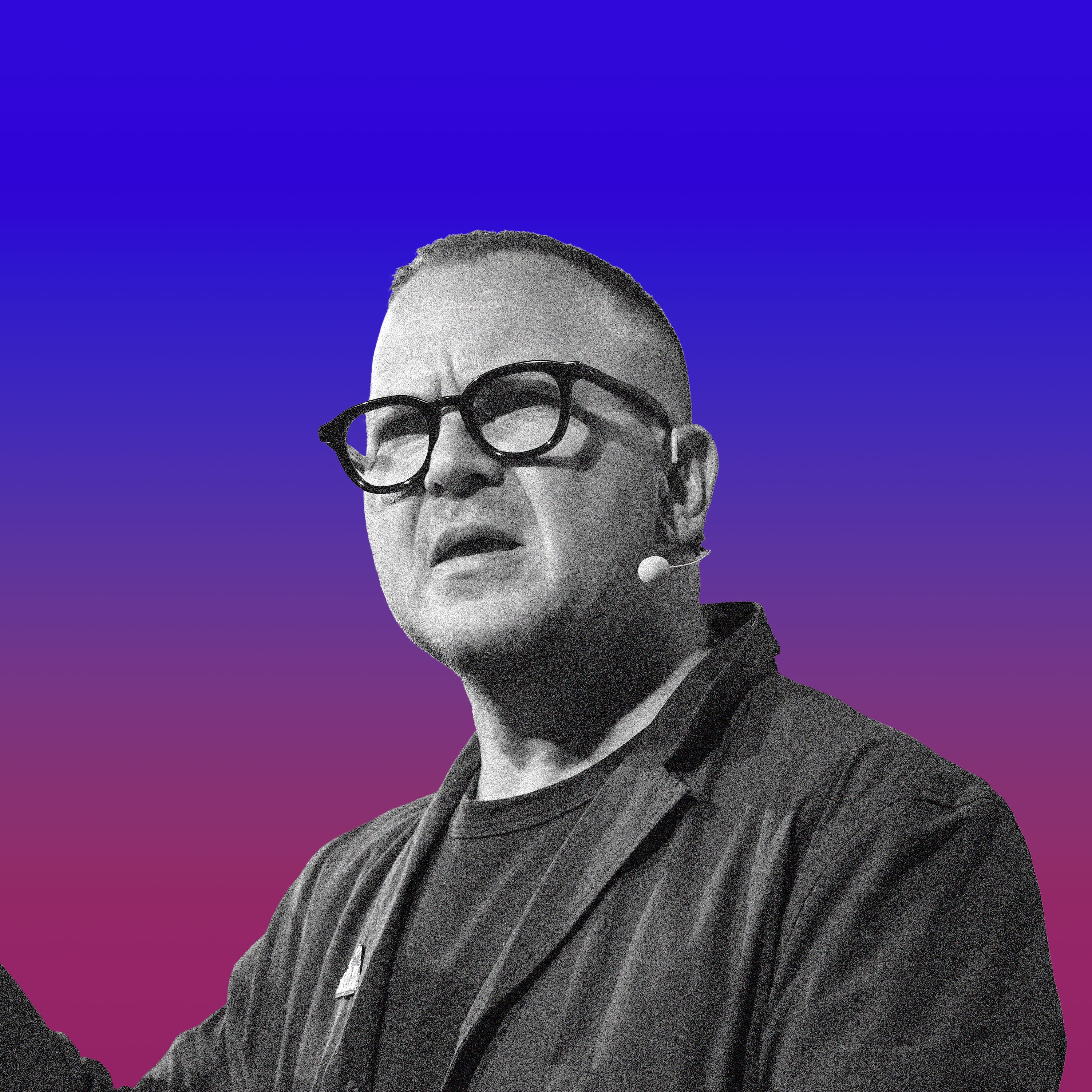
Doctor O is a journalist, a sci-fi author, and he coined the term in shittification. The idea that goods and services online degrade over time in the service of profit. Now Doctor O has written about AI. In his book, the reverse centaur's guide to life after AI. The human can't work as long or as fast or lift things as heavy or what have you.
And so when you pair the human and the machine, the human gets worked very hard. As opposed to the other way around when you pair the machine with the human and the humans in charge. And that brings us to reverse centaur. Yeah, so a centaur in automation theory is a person assisted by a machine. You know, riding a bicycle, you don't just look like a centaur.
You are one and some figure to sense, right? You're a human in control of a machine. The machine can do things you can't do, move faster than you. But it doesn't tell you what to do, right? The reverse...
My notes right now. Yeah, your notes, a spell checker, right? Lots of times that a human just can't pay attention in the same way or can't lift the same weight or can't run as fast or what have you. So we use a machine. The reverse centaur is the opposite.
It's when there's a thing the machine can't do. And so the human is directed by the machine to do the things that the machine needs the human to do. So the machine can do its functions. So Ethel and Lucy, they're the reverse centaur. I wouldn't call Cory's book a Polymic Against AI itself, exactly.
More one against the narrative around AI. The story that bosses tell each other, that this tech is inevitable, that growth is unstoppable, and that we all better get on board. Every arrangement of AI that is deployed in service to that narrative has to be a reverse centaur one, right? It has to be one where you're like firing nine tensi-a-workers, putting the remaining 10th in charge of marking the AI's homework, and then making them bear the blame when things go wrong. Which means that that's the destructive power of the bubble.
And so a material critique of it has to talk about why these growth stories keep getting thought out of these sort of evermore outlandish growth stories, and also what the problems are with this idea that we can just replace human software. Today on the show, Cory wants to stop the runaway AI train. Here's how he plans to do it. I'm Lizzie O'Leary, and you're listening to What Next TBD, a show about technology, power, and how the future will be determined. Stick around.
Broke showed her friend Aisha, CIBC investors' edge while at the carnival. Aisha thinks gut-wrenching ups and downs should be for roller crystals. And not her investments. Now, with CIBC investors' edge, she has all the tools to invest confidently. Now more than ever, quality matters. But so does Price.
And Marshals, you don't have to choose. You can get the good stuff for less. The stuff that lasts. Because there's no point in tightening your belts. If it's just going to break when you do.
Get the good stuff in store at Marshals today. So this book is also called, like, after AI? Just kind of a major promise. You and I have been doing this for a while. I've been doing this for 25 years.
Seen a lot of tech cycles. You've seen a lot of tech cycles. And I think a thing that links them all is just like attempt to grapple with them and understand them as they are happening, which is like sometimes successful and sometimes a total failure. True. This AI-related grappling feels different and bigger. And I kind of want to understand
why you think that is. My thesis is that it's because it affects professional class jobs. So it's like a class issue. But I'm wondering why you think it feels so medium urgent in a way that crypto maybe didn't. Well, there's a causal arrow question that I don't know which arrow which direction it runs.
But this is bigger. So is it bigger because of whatever that special jiu-jitsu is that's making it more ubiquitous? Or is it more ubiquitous because it's just because the dollar figures are larger? And like dollar figures are very big. When I wrote the book, it was a $700 billion bubble now it's a $1.4 trillion bubble. And so these are much, much bigger. And so I don't know if it's
bigger because the story is different or if the story is different because it's so much bigger. But I do think there's something to this idea that especially stuff that media people care about gets written about. I also think that the AI boosters had some very canny demos. So if you remember that in my view anyway, the basis for AI and the bubble is dysplacing high-wage labor, it's amazing how many of the stories we have about AI and the concerns we have about AI relate exclusively to some of the lowest wage labor we have. Taxi drivers, commercial illustrators, come on. Some very large sector of the economy. Well, and but also the most per caratized sector
of the economy. Is there the wage bill of every commercial illustrator in America? Give it to Sam Altman. It won't cover the kombucha bill for the engineers who oversee a single image model's training run. So the idea that this proves something about the market opportunity, it doesn't accept in a kind of emotional way. Even stuff like Deepfic Porn, one of the things I see in the book is that
well Deepfic Porn is horrible and they should feel bad about making it. If you go into the prospectus for one of these AI companies and you remove the line item for expected return on Deepfic Porn, their total expected revenue doesn't change. Right? That's not what the money is coming from. So actually, you're teeing me up for the part of your book that I wanted to read from. It's a chapter
called The Funny Math Gets Dangerous. Tech companies are spending hundreds of billions of dollars on AI and cram it into your every orifice with every hour that God sends in the desperate gambit to convince investors that they will conquer the AI market and in so doing continue to grow. So the audience is not you and me. Right. It's Wall Street. We're the convincers. Yeah, we all of these things
are the convincers. Because of the Ponzi scheme. Yeah. Well, I mean, every investment bubble has Ponzi vibes for sure. But it's true that in many cases, what you need is a kind of Greek chorus of people saying this is really big in order to get the people who do all the big capital allocation to say it's really big. And it is amazing the extent to which this is work. So I was in Toronto
yesterday like all the best Americans I'm Canadian. And I did a panel on digital sovereignty in Canada. It's an issue I'm really interested in my next book is about this called The Post-American Internet. I write when I'm anxious. Dude, it's a lot of writing. I know.
And I'll use AI to write them. So I'm like going in there thinking, well, you know, Trump just shut off the Microsoft 365 accounts of a bunch of public officials abroad that he doesn't like. Right. Like if he does it to like a government ministry, that country shuts down. Right. This is the digital
sovereignty risk. And we go into the pre meeting for the panel and the other panelists are like, well, what are we going to do about Canadian sovereign AI? I'm like, wait, what? Like if we shut off all the chatbots in Canada, what changes? Some kids have to do their own homework. Right. Like we
get less slopp, right. Even if you're using it for workplace automation, like what's the big deal? Whereas if you shut off Office 365 for Canada or, you know, John Deere tractors can be remotely brave. They don't have their software update. So or not just you can push a software update to them that permanently immobilizes them, which is what happened after a bunch of Russian soldiers looted some Ukrainian tractors. So, you know, Canada decides not to give Alberta to America.
Donald Trump breaks all the tractors in the prairies, right? That's like aim over it, right? So, you know, like that's the digital sovereignty risk. And they're just like, no, it's AI. And I'm like, hey, look, what that feels like a nice to have folks like, what are we talking about here? But even if
you're a company that's using AI to now replace your junior software engineers, that does feel like it's the risk. But the idea that the national risk is that we're going to get rid of the AI. And that like all the, I don't know, SMEs that are doing like multivariate analysis to figure out what fridge to put the milk in at their convenience store, are going to have to like go back to, you know, while asking it or whatever, it's just it's just it's not it's deeply unserious, right? To talk about the AI sovereignty risk. I mean, not not least because AI is the money losing us than the human race has ever done. And so Canada managed to roll out a sovereign AI. It would have successfully
launched itself into a phase of its economic development where it loses more money than it ever has. Right? Like, I still don't understand how this is contributing to the sovereignty picture. In the funny math chapter, you have a really good example using truck drivers. I wonder if you could explain that because I think these really tangible examples are helpful to people if they'll like big concepts are hard to get your fingers on. So you and I've been around a bit. You probably remember about
10 years ago, there's a lot of truck driver discourse because the Bureau of Labor Statistics category for commercial drivers, I forget what it's called. It's the long name. It's the number says that it's that like number one job in every state, right? The truck driver is the number one job in every state. And so you get these people just as like the AI is achieving lift off. And you know, I want to say
there is like another material basis for the AI bubble, which is that the software is interesting. There are 2.2 million heavy tractor trailer drivers. That's right. Based on 24 numbers continue. So the software is taking off all these dividends to scale are pouring in, right? They do the same
trick that they did to get more performance out of these existing machine learning techniques. And instead of getting diminishing returns to scale, they get flat returns to scale every time they do more of it, they get more out. So people are getting really excited and they go guess what? We could take trucks and we could give them their own lane and we could have AI coordinate among them to create like a constant flow where you wouldn't need a driver and we would offset all of the wage bill for those drivers and then the number one job in every state would go away. And that's a huge automation labor crisis. Can we believe how crazy this is going to be? So it turns out the
numbers deceptive in many ways. Well, first of all, this is a bad truck, right? It's not just a bad truck. It's an even shittier train, right? A thing with its own lane that is just a bunch of container cars together. It's just like a less fuel efficient train, right? We don't need that.
But also the DLS category encompasses everyone who drives heavy goods vehicles or commercial vehicles, including like florist vans. And so now we've got these florist vans that are being incorporated into this number that was being bandied about at the time. And you know, the number of people you need in the florist van, whether or not it's driving itself is one. Because you can't just like catapult the flowers onto someone's, you know, porture into someone's apartment. I guess the theory is a little robot could do it. But that's now we're setting facts on and on. Right? Where is that
robot? And how reliably does it work? So this idea that we're going to that we've invented the shitty train and that it's going to put everyone into work when in fact the number of workers you need to hold steady is silly enough. But then you actually get granular on the way that heavy goods vehicles drivers operate. And like illustrators, they're among the most emissory workers in America.
So they are basically gig workers. They are not paid for time when they're waiting. So if you're like waiting at the Port of Los Angeles for 16 hours, that's unpaid wages. They buy their trucks on higher purchase through these like installment sale agreements where if you miss a single payment, it's a full repossession. So you might have paid like $90,000 of the $95,000 in and you miss a payment, and then they take it back and sell it to a different driver and start all over again. So they're like
the worst treated workers in America whose wages have been eroded to the point of nothing. And so now we've got this thing where it's like, well, we're going to spend billions and billions of dollars and also have a national freak out about the coming robot apocalypse. Because we think maybe we can make a shitty train. And that might put some of the worst paid workers in America out of work. But this is this is the Byzantine premium, right? People
I think don't like to look dumb in front of other people. And so if AI is there and it's a thing they don't totally understand that someone says it's good. Yeah. Well, yeah. So economists call things that are hard to understand. They say they've got a Byzantine premium and they sometimes
trade up more than they would if you understood them. We all became very familiar with the Byzantine premium during the great financial crisis because we had these complex derivatives. And I was at a conference a little while ago and a fairly famous AI booster came up to me and said, you know, we've got the AI that's now 51% of the way to being human and conscious now human intelligence. And I'm like, really, what's a 52% intelligent AI look like and how is that different from a 51%? And he's like, it's just a benchmark. And I'm like, so I don't even know that we have a consensus
agreement of what human intelligence is. And he's like, well, if you don't know what it is, then how do you know I'm not making it? And I'm like, well, I don't know what the weather is in Paris. And I don't know what the weather is in Lisbon. That doesn't mean that they're the same thing.
But here we are. It is late June. As you yourself say, seven giant AI companies account for 35% of the US stock market. We are talking in a week where major tech stocks have freaked out and indexes have bounced around a little bit. We don't totally know where that's going.
How do you understand the way public markets are reacting to this now? And I guess the place we are in in this arc or bubble or like, where are we? Quarry Robin, I'm really good about this that we can see that crazy valuations, the AI companies, especially now the SpaceX IPO, as reflecting something that started to happen in the cryptocurrency era, where it's really just vibe space that the fundamentals have gone out the window, firms that lose money are getting crazy valuations and they don't just lose money. They also have bad unit economics. One of the comparisons you often.
But your Morgan Stanley is your Jippy Morgan's. They're all attached to them. They're buying in. And you know, there was a story at least in the web one days that, okay, the web is losing money, but every user of the web makes more money for the web and every use of the web makes more money for the web and every generation of the web is more profitable than the previous one. So we can see that eventually we're going to reach a point where we will go from no profitability, profitability and then growth. But AI is the opposite, right? Like every AI customer
loses money for the business. Most prolific customers lose the most money for them and every generation of AI loses more money than the one before. So there's this like great decoupling. And I think that the Musk IPO really shows just how sweaty it's all getting, because you really got to find bag holders for a bubble and Musk initially talked the SMP 500 and the NASDAQ 100 into allowing him to pull up. Only because everyone freaked out. But NASDAQ
hung in there, right? And so SpaceX debuts in the NASDAQ index. So if your retirement savings is an index fund, the manager, the fund manager had to go and buy a bunch of SpaceX. But they have no choice. They got an exemption to the rule against insiders selling their shares and then they restrict to the amount of company shares they floated so that those fund managers all had to buy the shares from insiders, from his buddies, right? From whatever, you know, Emiratis and from Deutsche
Bank and from everyone who gave him money for Twitter, everyone who gave him money for Grogax. And so this is his exit liquidity, right? We're the bag holders. When we come back, we often hear that AI can detect cancer. Is that actually true?
Hey folks, this is Freddy. I'm Will. I'm Anthony from the hit Dungeons and Dragons podcast Dungeons and Daddies. That's us. What does it feel like to have a better laptop like the Dell XPS powered by a premium design that's thin and light, if you're smooth. Very smooth.
What a responsive touch screen. It feels fast and precise. And with long lasting battery life, it feels like non-stop energy with a laptop there can keep them built for those who want better. The Dell XPS built for you. Our fantasy commission says for him, it's all about the friendships. Cute Kevin, but I disagree.
Like with about 365, I get paid the second my team goes up big with early pay out and can cash out at any time before the game ends. Oh, hard feelings Kevin. Just faster payouts from bed 365. The home of winning early must be 19 and older. Ontario only. Please play responsibly.
If you were someone you know is concerns about gambling visit connectcentrion.ca or call 1-866-531-2600 terms of conditions apply. I actually now want to talk about cancer. Okay. Because there's this part in the book where you say, look, this is not about AI taking your job. It's more that an AI salesman can convince your boss to fire you and then the AI will not be able to do your job. So you and I are uniquely qualified to talk about this. I've had cancer. You've had cancer.
Indeed. You seem to be doing well. I got my cancer free diagnosis four days ago. Five now. Okay. But companies love to say that AI can detect cancer. So I think who better to try to
puncture this a little bit than like we have some more little horns. Yeah. Yeah. So there's this example that you can use AI to find solid mass tumors and that maybe people can get rid of some radiologists talking through the example. Yeah. Sure. So, you know, if I imagine a sales call down at
the Kaiser Hospital in LA where I get my treatment where there's a sales guy in there talking to the CEO of the hospital system and they're like, look, you've got 10 radiologists on staff at $300,000 a piece that's $3 million in your wage bill. I'm going to sell you a chop up for another million dollars a year and it's going to sit on their shoulders and twice a day it's just going to whisper in their ear, take another look at that one because sometimes it can detect things that humans miss. That idea like this sounds great. I mean, you know, I don't want my premiums to go up but this seems great. If on the other hand, there was a pitch that was like, we've got the software that works so well that we can fire all the radiologists and they weren't lying and they were saying, let's get rid of all the radiologists that software do it'll be too cheap to meter. I can imagine a potential
cancer patient or someone who loves someone who says, look, the point of radiology is to fight cancer or not to pay the mortgage of radiologists. And so let's find softlining for those people. But I think that what the sales call actually consists of is something that that person wouldn't like even if they don't give a damn about the radiologist. I think the sales call is fire 9-10th of your radiologist. Save 2.7 million dollars a year on the wage bill. Split it between my boss,
Amalton and your shareholders or whoever you want to distribute it. Have the remaining radiologist mark the homework of the AI at a speed that no human being could ever pay attention to. Have the x-rays be more or less correct most of the time so that all they're doing is clicking okay over and over and become inured to it that automation blind us and then when people die of cancer we're going to blame them because it's their signature at the bottom at 30 kind of abilities. And it's the automation blindness because most of the time it's right. Yeah, I'm just like yeah, yeah, yeah. So we have
next round this podcast we have created you're literally wearing a poop. I am wearing a poop. We've created the world's most water bottle finding as motherfuckers the human race has ever seen because those people spend all day looking at different angles of water bottles and yet whenever a red team carries a fake bomb or gun through the checkpoint they miss it because you cannot remain attuned to things that don't happen. It's just not how human attention works. So why does AI feel so inevitable right now? Well, inevitableism is the kind of vulgar factorism of the tech sector, right? There
is no alternative. You know that they have always said this that there is only one way to configure these gadgets. It has to be the way that is optimal for us and non-optimal for you that kind of make it stick to you know in the old days we used to have this idea of moving fast and breaking everyone's things not just the things of people who couldn't fight back where you were allowed to like hack stuff and change how it worked and reverse engineer it and make mods for alternative firmware. And then for the last 25 years the period during which the digital volume copyright act has been enforced and as it's been expanding it's become more and more legal to do that kind of reverse engineering and modification and so now we have this thing where it's inevitable not because this is the only way that someone could make it work but because it's a felony to reverse engineer and change how it works so to felony contempt of business model. So I guess the question and the pushback question is like okay well how does one who if you object to this idea of the future have any control? Yeah well I have
good news and bad news. The bad news is that shopping is in politics and as much as it would be really nice if you could resolve all of the world's political problems just by shopping really carefully. I like shopping right it's fun you don't need to get anyone else to come along and do it with you it's quite solitary. Hell is other people you don't have to convince anyone else to come and shop with you. I think that would be very nice if you could just vote with your wallet you can't vote with your wallet. Billionaires love it when you try to vote with your wallet because they can vote with their
wallets because their wallets are better than all of our wallets but together but we can't vote with our wallets so we always get out voted. So the way that you do politics is by doing politics. So even like a boycott you know Montgomery Bus Boycott was not like a bunch of people waking up every morning for 380 days and deciding to walk to work right it was a cohesive movement where they had like meetings but those meetings were to organize carpools and also to put pressure on bosses that were leaning on workers who were late because they were in the carpools and to articulate a christessent of demands and to get the whole community behind them and while this is good news while it wasn't pain in the ass to have to do all of that work rather than just shopping on the other hand the residue of that effort was the backbone of the civil rights movement. But that is also a group of people who could very easily identify and see the material harm to them their family's society etc. This is much more diffuse. It is well okay I don't think there's any shortage of people
who are correctly worried about AI but maybe incorrectly. But maybe they're not bound together. Yeah and so that's the that's how you get a movement right is by like articulating a kind of agenda and a set of causal explanations for things that a lot of people are worried about but don't really understand what to do with. And so you know I've worked for the Electronic Frontier Foundation for 25 years now and and EFF we do a lot of community outreach we organize a lot of local groups if you go to EFF.org you can find ways to do that. There's also a lot of local politics intersection with this you know. Because of data centers. Because of data centers because of
AI usage in municipal politics. So you know flocked cameras automated decision-making you know your kids being taken away from you by CPS or flagged as disciplinary problems by their school because of AI or the cost deciding where to police or the local courts deciding who gets parole. And you know if there's one thing we learn from moms for Liberty it's that like the stupidest people in the world can take over unregarded local offices and completely up in the material conditions for people around them for the worse. Which means that people who aren't just total idiots could do stuff for the better. And you know a failure to involve yourself in this ends up resulting not just in data centers and like all the farmland being taken over by eminent domain for data centers and you know your all your water and energy being siphoned off and so on. It also determines
whether or not there's like flocked cameras that are used by chuds to kidnap your neighbors and send them to Salvador and slave labor camps. So you know this is like getting involved in local politics is good. And you can move the needle on local politics in a way that's much harder than moving state or federal politics. So there's a lot of opportunities to get involved there and then the last place to get involved is in your workplace. Right I was going to say you were a big advocate of unionization for disclosure. I am a WDA member. I'm unionized. But that also does seem like
a very old-fashioned answer to what feels like a modern problem. Well it's funny because we used to not have a lot of the problems that we have now. We used to have like ways of addressing them and then we stopped doing things like trust busting and organizing workers and unions and then the problems came back. And now we say maybe we should do trust busting unions. It's sort of like well those are very old-fashioned. But you know it's kind of like we used to not have a rat problem
because we had all this rat poison. And then these neoliberal economists from the Chicago school said you don't need the rat poison. And our rats are eating our faces off. And they're like why are you blaming us for the rat problem? This is the great forces of history creating the time of the rat making them more fecund than any time in history. And while the rats did buy and shut down all
the rat poison factories, that's just economically rational when you're not using rat poison. Rat poison is so old-fashioned. What would we use the rat poison for? I mean I don't think a union in 2026 is the same thing as a union in 1936. But I also think that it shares a lot of DNA with it.
And the problems that we have are not dissimilar to the problems we have then. And in fact like the material conditions are not a lot dissimilar. You know the origin of American antitrust law, which grows in lockstep with the union movement. The origin of American antitrust law was labor uprising. It was the Granger's right who were these very Luigi Mangioni-ish farmers who were very real-road barons and threatening to kill the whole Luigi Mangioni allegedly. And threatening
to kill the man sometimes in acting spectacular acts of violence on them. And so that was the circumstances under which John Sherman, brother of two comes to Sherman, a US Senator, passed the Sherman Act. So there were people who listened to watch this interview and say like yeah okay I agree with you. But like I find cloud very useful for double checking my taxes or you know one parent I know said like actually I dump the IKEA instructions into to act TPT and you know regurgitated in a way that makes more sense to me. What do you say to them?
Well I think that we might be able to have that stuff. I mean right now the reason you're getting all that stuff and it feels great to you is because the AI companies are selling you $100 bills for a dollar a piece. What do you mean? They're just losing gigantic amounts of money. You know there's this whole question about what mythos the mythos model was. I was speaking to a friend of mine who's
quite a well-known security expert who said you know and also big AI guy and he said you know what I think they've done is they figured out how to make an AI that can produce a $20,000 security audit for about $100,000. And that's why they don't want to release it to the public because they are going to lose a lot of money on it. And you may remember a couple of weeks ago they tried to clean up their balance sheets, preparatory to these IPOs that are being teed up and they said how would we charge everyone $5 for these hundred dollar bills and all their major customers were like that's too expensive. We are not getting $5 worth of value from these hundred dollars. Well we're now starting to see companies being these token crises where they're like wait we've used all our tokens. Yeah yeah and
they can buy more right but they're like well yeah these hundred dollar bills were a bargain at a dollar a piece but they're not at $5 a piece. So you might like Claude but you like Claude well enough to pay $1,000 for it. That's one question but the other question is like what do we do when the bottle's over? Like what what AI will we have because you know there's this bedrock of finance Stein's law that anything that can't go on forever eventually stops. They're either going to unload on normies and we're going to stop subsidizing them and then we'll all go broke or they won't find suckers and then they'll stop subsidizing them and the companies will fail. But one way or the other
that this selling hundred dollar bills at a dollar a piece just can't go on forever. You can't keep shoveling money into the money furnace. Before I let you go you're wearing your in-shitification pin. In-shitification just like has gone everywhere right? People understand what that goes. So to speak.
So to speak. What is the thing you want people to take away from this? That the bubble has a material basis and that material basis is not that AI is going to take your job. That material basis is that companies need a growth story and that stories about replacing workers are very attractive to financiers and to bosses and that the worst the bubble gets the worst the reckoning will be and that whatever you think about AI that this way of delivering AI is the worst way we can imagine we have to stop doing it really quickly because the only thing worse than a $1.4 trillion bubble is a $2.8 trillion bubble. Corey thank you for your time. Thank you.
Corey Doctorow is the author of The Reverse Centaur's Guide to Life After AI in addition to 30 other books and that is the show for today. What Next DVD is produced by Rob Gunther and Evan Campbell, Madeline Thames, Ducharm and Patrick Ford. Paige Osburn is the senior supervising producer of What Next and What Next DVD. Mia Lobel is the executive producer of Podcasts Here at Slate and Ben Richmond is the senior director of Podcast Operations. I'm Lizzie O'Leary, you can find me on Blue Sky. I'm at Lizzie O'Rilly. Thanks so much for listening. Talk to you soon.
My Reg Lee Goldie says he plays for the love of the game. Yeah gave up six goals last week. Steve, maybe play to win huh? Like with Beth 365. I get paid the second my team goes up big with early payout and can cash out at any time before the game ends. Come on Steve, Beth 365. The home of winning early. Must be 19 and older.
Ontario only. Please play responsibly. If you were someone you know what's concerned about gambling visit ConnectsMeterio.ca or call 1-866-531-2600. Terms of Conditions Apply. Hey it's Adam Wild and Jacks, hosts of the Adam Wild and Jacks Show. What does it feel like to
have a better laptop like the Dell XPS powered by Intel Core? With a premium design that's then in light it feels smooth. Very smooth. For a better feel in your hands and less weight on your shoulders. With a responsive touch screen it feels fast and precise. For better scrolling,
zooming and swiping so everything just flows. And with a long lasting battery life it feels like non-stop energy. For a better way to work without being near a charger charger charger. Feel for those who want better. The Dell XPS built for you.