For most of the history of professional sports, there was a wall between the game and gambling. Then suddenly it was everywhere. Ontario is all in on sports. But that wasn't supposed to include the players themselves. Athletes are the perfect gamblers. Understood the big bet. Find us on CBC Listen or wherever you get your podcasts.
Welcome back to Fresh Matters, where we discuss matters of freshness. I'm the grossier here with Kat from Metro. Kat, your produce is impeccable. We have high standards. Meat is custom cut on site to my very delight. Yep, it's important that we... And the baked goods? More like baked grates. Fresh in store every day. So at Metro you would say fresh. Matters? It does! Find fresh meals and deals at Metro!
Right now, two men named Jamarian Bird and Travis Roberts are sitting in jail, accused of first-degree murder. Jamarian Bird and Travis Roberts Jr. are accused of the death of 19-year-old Devin Powers Jr. in a 2025 shooting in McClinney. But Jamarian and Travis say they were defending themselves against a couple of strangers who came up on them carrying weapons and fired. One of these guys allegedly called Jamarian and Travis a couple of N-words. Oh, and one more thing. Jamarian and Travis, they're behind bars in Florida, the birthplace of Stand Your Ground.
In your opinion, should Jamarian Bird and Travis Roberts be in jail right now? No, absolutely not. Absolutely not. This is an example of where we can see the bright lines separating the way in which certain types of people are treated in criminal law. Caroline Light is an expert on Stand Your Ground. She's been following this case. Stand Your Ground laws were crafted with elegant precision to amplify pre-existing exclusions in our criminal legal system. Oh, you think it's intentional? Oh, I know it's intentional. Today on the show, this case in Florida is revealing who gets to defend themselves in this country and who doesn't.
I'm Mary Harris. You're listening to What Next. Stick around. Caroline Light, you are a professor at Harvard, and you've developed this very particular specialty. You're an expert not just in U.S. gun law, but particularly in stand-your-ground law. And before we get into everything in the show, I'm just kind of curious why. Like, what drew you to this topic in particular? I was born and raised in Virginia, in the southwestern part of Virginia, not the D.C. area. And I was raised by parents who are very proficient gun users. Mom, basically.
was a sharpshooter. She was very proficient. Do you shoot as well? No, I know how to. I have received some basic training, but I'm just, it's just not, it's not my vibe. I never got into it really. And my dad is former military. He was a, he was a Navy SEAL. And so he is also proficient in gun use and he hunted a bit while I was growing up. But the thing is, my parents didn't keep guns in the house. They were not used as.
tools of self-defense. They were either recreational or, in my dad's case, military objects. And so they didn't have any place in my upbringing. But there was all kinds of gun culture that I did grow up in where classmates were really into hunting. And so it's the culture I grew up with that I know enough about that culture, having experienced and witnessed it, that I could see the drastic change from back then when I was growing up in the 70s and 80s to now, to the past couple of decades, where there's been a seismic shift in the way Americans view firearms, not primarily as recreational tools, but as tools, essential tools.
of self-defense. Yeah, a lot of your focus on Stand Your Ground laws is about how they've been applied unevenly, basically from the beginning. From the very beginning. In other words, I know that my book is Stand Your Ground and I study Stand Your Ground laws, but as a historian, I go and I look into the past and I try to understand the precursors and the kind of legal genealogy that leads us to where we are now. And what I found is that a lot of this really isn't new. It's just been translated into a new cultural paradigm.
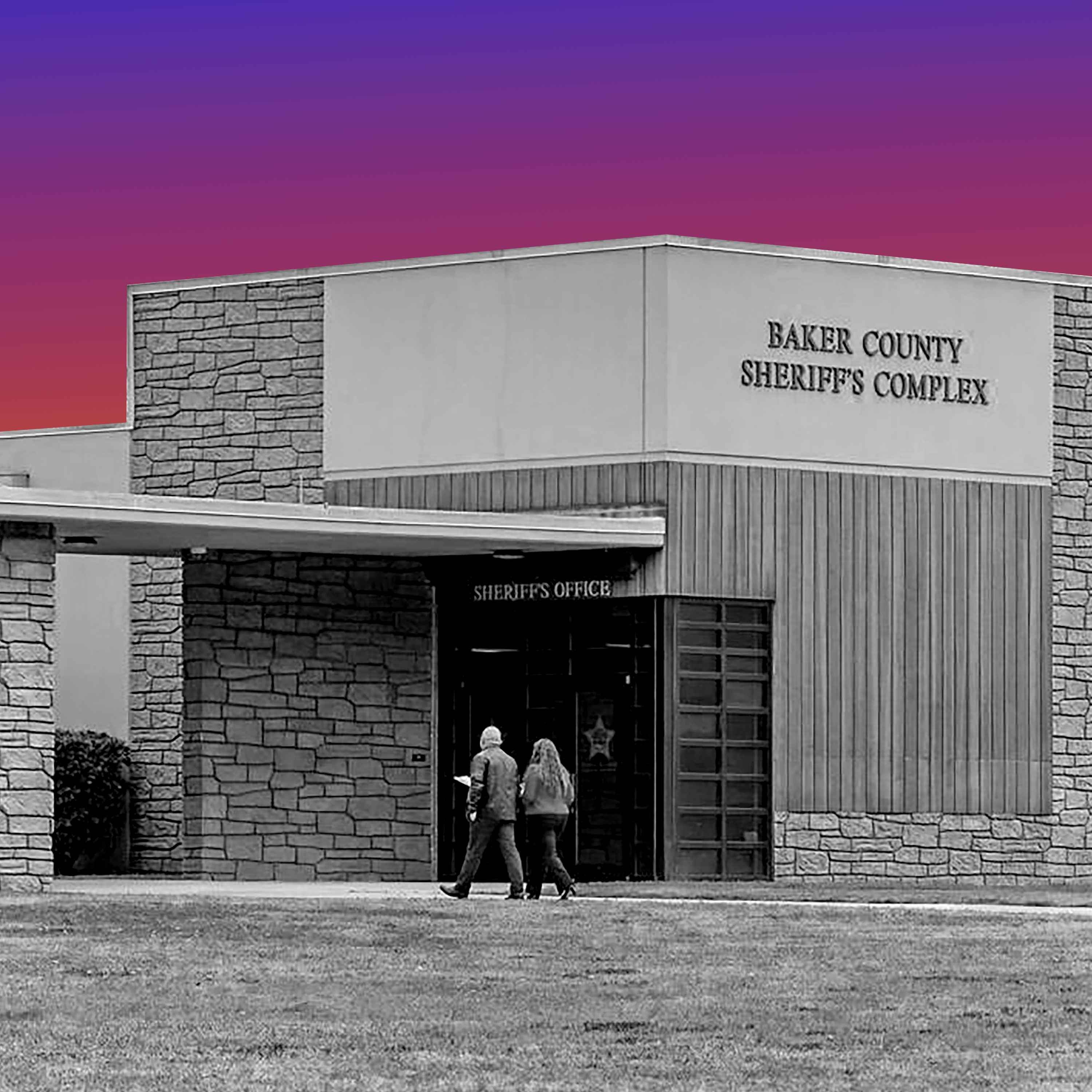
Yeah, recently you've been focused on one case in particular out of McElhinney, Florida. Am I pronouncing that correctly? McElhinney. McElhinney. McElhinney, Florida. This shooting, it happened about a year ago. I'm wondering if you can just tell me the story of what happened in McElhinney, Florida on the night of June 26, 2025. Right. So this is, I'll set the scene. McElhinney, Florida is in Baker County. It's just a few miles from the southernmost part of Georgia. And at the end of June 2025, two young men, Jamarian Bird and Travis Roberts, who are really good friends, they've been friends most of their life,
basically hanging out. And a couple of white teenagers approached them carrying firearms. Openly carrying firearms. Openly carrying firearms, which is legal in the state of Florida. So they weren't doing anything illegal. What was illegal is that at least we know one of them, Devin, also known as DJ Powers, aimed his shotgun at the young men.
And they saw that this guy, who they did not know, was aiming a shotgun at them. And then a shot was fired. Now, there is all kinds of conflicting information in the court records about who actually fired the shot. It could have been DJ Powers. It could have been his 14-year-old companion, who, witnesses say, was also armed. However, a shot rang out, and Jamarian and Travis, who are both well-trained legal gun owners, armed themselves and shot back. And they kept shooting as this...
young man DJ retained hold of his weapon and as he started to retreat. So they were firing in large part because the person who instigated the confrontation held on to his gun even as he was retreating. And I just want to be really explicit. You have these two black men on a porch outside a home and then these two white teenagers approaching armed people they do not know aiming a weapon towards them. The black men fire.
And then DJ, one of these white teenagers, he does end up dying. And the other teenager who's with him is injured. He's injured. He's shot. So the younger teen, who's 14 at the time, was shot in the leg and survived his injuries. DJ Powers, however, was shot through the neck. And he died from his injuries just a few days later. So it's like, I think it was three days before he died. He is the one who...
All the records, all the details, the witness testimony confirmed he was the one who pointed his weapon at Jamarian and Travis and instigated the confrontation. But he was the one who ended up dying. And anyone who doubts the racialized nature of the violence that occurred, you know, you can look at accounts from the record that say that, you know, one of the teenagers who was shot, the white teenagers, when the police arrived said, go get those N-words. So it's like you can tell that there is something happening here. And the county where the shooting occurred, you've noted, it's got a history of racialized violence. The county courthouse has a big mural where there are Ku Klux Klan members depicted on it. So there's a lot going into this. But you can see how the two black men who fired have a Stand Your Ground case in Florida, which has a Stand Your Ground law, right? Right. And Florida is the first Stand Your Ground state. So to be absolutely clear, Florida was the first state to pass a so-called Stand Your Ground law in 2005. And essentially, this is a law that removes the duty to retreat wherever you may legally be.
That means that if you reasonably, reasonably, reasonably perceive that you are facing a potentially deadly threat, you are allowed to meet force with force wherever you are. In other words, it's not confined to your home by the so-called castle doctrine. You could be in a public street as these young men were when this confrontation took place. So what happened when Jamarian Byrd and Travis Roberts went to court and tried to make a stand your ground case for themselves? Right. They were denied. They were promptly denied. And the denial is on a few different grounds. So one of the grounds on which they were denied is that they continued shooting at DJ Powers even when Powers was retreating. Finding that his targets were also armed, DJ Powers, who was 19, started to retreat. And Jamarian and Travis continued shooting at him in large part because he retained access to his firearm. He held onto it while he was retreating. I have to say the details of this case are a little bit messy to me. Advocates for the white victim in this case emphasize the fact that...
There were more than 40 shots fired on this evening. So if you were there, it must have felt like all of a sudden your street was a war zone, right? Absolutely. People in their homes had bullets flying through their homes. So this is a terrifying modern day shootout like the Wild West. It's a nightmare. But another thing that I just want to note that's really important about this case is that the investigation from the get-go was very problematic. How? One thing we find is that there's not a lot of...
careful due diligence in recovering the casings of the various bullets so that they could be definitively traced to specific weapons. There was not an effort on the part of investigators, for instance, to recover the firearm of the 14-year-old whose name is not released because he's a minor. There was not an investigation, a thorough investigation of either of the properties that were in play here. So specifically the home of DJ Powers was not fully investigated, nor were his family members immediately interviewed about their experience trying to convince him not to go out into the street armed. So it's like from my vantage point, I've seen this before in other cases and we can talk about that if time allows, but it feels very much like there was an effort on the part of investigators to ignore certain evidence that might lead to.
Jamarian and Travis being able to claim, stand your ground, and also the possibility that the 14-year-old could be charged with a felony for having been present and likely armed at an encounter that resulted in his friend's death. In your opinion, should Jamarian Bird and Travis Roberts be in jail right now? No, absolutely not. Absolutely not. They were charged with murder one. This is the other part of the judge's ruling in their hearing is that this is premeditated murder.
And this was what I wrote about in my article with my friends, Bob and David. We were shocked by the allegation that Jamarian and Travis somehow premeditated. a lethal encounter when they were the victims and the targets of this encounter. The allegation is that somewhere in the span of these 26 seconds, less than half a minute, Jamarian and Travis went from legally defending themselves to suddenly premeditating a murder. And that's basically what the judge has decided. So that to me is really shocking, especially if we compare it to other cases that have taken place in the very same location of Baker County, just a few miles away. Yeah, you compare this case to a case from 2018 with another victim named DJ, which is also like, what? What are the chances? What are the chances? But this is how history repeats itself, right? Yeah, but like in this 2018,
case, the victim, the DJ, is black. He's a black man. Yes. And in this case from last year, the victim is white. Yes. And the trajectories for the people who were shooting these men is very different. So do you want to tell briefly the story of the DJ from 2018 and explain how his case played out differently? Exactly. You summarized it basically that DJ Broaddus, a 31-year-old black man in McClenney, Florida, was killed on February 3rd, 2018 by his white ex-lover.
And I say X with hesitation because there's some pretty clear digital forensic evidence that the two were actually supposed to meet up, or at least in DJ's mind, they were meeting up for a sexual encounter. DJ was driving from Jacksonville out to McClenney to meet a man with whom he had had an intimate relationship for seven months. And the white man, Gar Frazier, shot DJ on the day that they were to meet on February 3rd, 2018. And two of the shots, he shot him four times, Mary. Two of those times happened while DJ was lying on the ground. He was unarmed.
And he was basically helpless when Gar stood over him and shot him twice in the head to kill him. And then there's evidence that DJ's phone was taken and completely disappeared. We've never found his phone. So clearly, at least by the evidence, Gar Frazier was trying to hide the evidence of an affair. He was closeted. No one knew that he was attracted to men, that he was having an intimate relationship with a black man, specifically in Baker County, Florida. And investigators in that case did everything they could.
again, to obfuscate any traces of premeditation. So we have these two cases in which it feels like the funhouse mirror of self-defense law is really clear. In one case, the killing gets dismissed by the so-called castle doctrine or self-defense law because the man was on his own property when he shot and killed DJ. But in the other case, in the other DJ case, the shooters who were not the instigators of the encounter are being held responsible and furthermore being accused of premeditation when all they did was fire back against what they perceived as a deadly threat. Yeah. I mean, notably Gar Frazier, this man who shot DJ Broaddus, he's white. He has relatives in law enforcement, whereas these people who are accused in this new case, they are black and they don't have those same allies that Gar Frazier did. And they really seem to be in a very different situation. It seems like the differences are so transparent. Like, but is that actually uncommon when it comes to these self-defense laws? So I don't think it's uncommon. Actually, I'm so glad you asked that. Thank you, Mary, because I find that this is actually more often than not the case. It's just that.
What's happened here in McLean, Florida, is so starkly available to us. We have the receipts through court documentation, through evidence. Empirical evidence proves that these two cases are representing the disproportionate effects of self-defense law, the exclusionary principles that are baked into our self-defense laws, not just in Florida, but I would say nationwide. It's just that typically it's very hard to excavate the receipts that prove that these things are so inequitable and so based in racial injustice. This is an example of where we can see.
the bright lines separating the way in which certain types of people are treated in criminal law. For most of the history of professional sports, there was a wall between the game and gambling. Then suddenly it was everywhere. But that wasn't supposed to include the players themselves. Athletes are the perfect gamblers.
understood the big bet find us on CBC listen or wherever you get your podcasts introducing Pandora's holiday collection this season celebrate the ones you know by heart with a gift that says it all because the best gifts don't just look beautiful they mean something too from engraveable pieces to festive charms to lab grown diamonds our jewelry is made for the ones who inspire you who've been through it all give a piece that says exactly what words can't Pandora more than a gift shop new styles in store or online at Pandora.net So let's go back, because I feel like you've done this whole history of Stand Your Ground. In 2017, you published a book called Stand Your Ground, A History of America's Love Affair with Lethal Self-Defense. Is it worth just stepping back and talking about where the whole idea of Stand Your Ground originated to understand how we've ended up in this inequitable place? Like, when did self-defense become a legal idea?
My book goes way back, way back to British comedy. We may not have that time. I don't want to. Yeah, I know we don't have time for that. But in a kind of nutshell, I just I referenced the Castle Doctrine. And I think most Americans are pretty familiar with this expression that man. You can defend your personal property. Yes, that you're allowed. Like if someone attacks you in your home, you are in theory allowed without having to retreat.
to fight back, to meet force with force. That's the castle doctrine. But what I find in my research and what I document in my book is that from the very get-go, and this goes back to early 1600s in English common law, and then what would become the United States, the colonies that would become the United States, the castle doctrine was already shot through with all kinds of exclusionary principles. One of them is a gendered principle that still haunts us today. Can you explain just like very briefly? Very briefly. It's that if you are using lethal force against an attacker in your home, it better not be a lawful cohabitant. In other words- Oh, like a husband?
or an abusive boyfriend or even an ex. So there's a gendered implication here where you can see time and time again through history and even today, the stay on your ground laws do not often apply to women who use force against their largest statistical threat, their own intimate partners who are usually men. Where does race enter the picture? So where race enters the picture is that... At the time that the castle doctrine became a thing in the 17th century, think of who had access to property at the time. Whose home was their castle? It was property white men. It wasn't indigenous people. They didn't have a right, a legal right to fight back when there were settlers encroaching on their land here in the colonies that would become the United States, right? It did not apply to human beings trafficked from the coast of Africa to serve as unfree labor in what would become a racial capitalist political economy of the United States, right? So certain people, and also poor people, any poor people of any race or creed or color.
were not able to defend themselves against encroachment and violence from wealthy white men. And we see a long tradition of that kind of reserving the right to defend oneself for people who are already empowered and who are already seen as possessing full rights in the eyes of our justice system, right? How did Stand Your Ground laws in particular supercharge the whole Kessel Doctrine idea? Ooh, love it. There was...
a duty to retreat at a certain point. There was an idea that you can defend yourself to a point, but if you can run away, that might work too. But I feel like Stand Your Ground is a rejection of that idea almost, right? In theory, it is. And I love the way you say it supercharges the inequities that are already baked into our self-defense law. The state of the ground laws were crafted with elegant precision to amplify pre-existing exclusions in our criminal legal system. Oh, you think it's intentional? Oh, I know it's intentional. I mean, all you got to do is look at who wrote these laws, who's been promoting these laws. It starts with the National Rifle Association, which became.
super radicalized in the 1970s around taking the Second Amendment and transforming it into a kind of unfettered right to keep and bear arms, but only, again, for super empowered folks. Notably, they did not want the Black Panther Party to have access to firearms. No, they didn't. So it's written through with all kinds of hypocrisies that we can see pretty clearly right now. But senior brown laws are crafted, again, with elegant precision to look like they include everybody, to look like a universal invitation to all law-abiding citizens to carry firearms and to use them whenever they reasonably perceive a threat. However, not all of us are included under that umbrella of so-called law-abiding citizen.
Is it just in the way that these laws end up being prosecuted in the way they interact with other laws that are on the books? Like, I'm just thinking, like, if I'm a woman, I am a woman. If I have a firearm, if I'm in my home, if I'm defending myself, why do you say that a stand your ground law applies less to me? Oh, OK. So the scenario is, let's say it's a stranger, a stranger breaking into your home and you have a firearm and you shoot that stranger. You are likely I'm not going to say it's for sure, but you are likely to be able to access the stand your ground law in that case. However, proportionally, empirically.
Your most likely statistical threat is not some stranger breaking into your home. More often than not, women are attacked by the men they know and love or loved. And so your largest statistical threat is not some random person breaking into your home. That's not to say that it doesn't occasionally happen. But the firearm used against that person who is your boyfriend or your ex or your husband or whatever, a lawful cohabitant of your castle, most states have an exception in their castle doctrine that says you cannot use lethal force. You must try to retreat to get away from the threat before you use lethal force in your own home.
So I think what you're saying is these laws don't account for who some groups of people may be more statistically likely to need to defend themselves from. Like if I'm a black person, I may more statistically need to defend myself from racialized violence. And so this law doesn't take that into account in any way. It doesn't make any kind of nod to that. No. The law presumes that racial injustice is not a thing. It presumes that gender injustice is not a thing. In other words, the law presumes...
that we're all equal and that there's some universal access. But the authors of the law would say it was neutral, wouldn't they? Absolutely. Of course they would. So the NRA, the American Legislative Executive Council, these are the two groups that helped craft the laws and then use them as model legislation across the country so that we now have the majority of states have stand your ground laws. The marketing of these laws has always circulated on this idea that we should all have a universal right to defend ourselves. And indeed, that's a really seductive promise for Americans in this day and age, that we all have that universal right. In practice, however.
There's nothing like that. Yeah. I mean, these standard ground laws, they've evolved. Like in Tennessee, there's now a law that makes it easier to legally shoot someone who's not actually threatening your life. They're just stealing from you. Yes. So there's different states have different caveats. That would be a state that has the capacity to defend property.
Originally, stand-your-ground laws were crafted about or centered on the idea of protecting human life. And that's a very appealing concept, the belief that we have the right to defend ourselves and others, including loved ones, from a lethal threat, right? But many of these laws have morphed over time to allow people to shoot and kill somebody in the process of a forcible felony, which might include a robbery. It might include someone stealing a bicycle out of your garage. In other words, it's kind of a get-out-of-jail-free card for people defending their property. So, again, celebrating property ownership over life.
Support comes from Wise, the smart checking account for home and abroad. Got a Canadian salary, property in the U.S., sending money abroad? You're juggling multiple accounts, currencies, and a headache. Manage it all the smart way with Wise. Save up to 65% on exchange fees and give your everyday money a boost with interest. Plus, switch your direct deposit to Wise for the monthly chance to double your paycheck. Be smart. Get Wise. Canada residents only, excluding Quebec. Up to 60 winners. Odds depend on entries. Offer ends September 14, 2027. Learn more at wise.com.
Hey, it's Kat Nat from Kat Nat Unfiltered. You know what matters most to us when cooking for our families? Freshness. That's why we always choose Metro. Their produce is hand-picked, their bread is baked in store, and their butchers custom-cut meat to our exact needs. Freshness is a thing that can make a simple meal simply amazing or turn an ordinary bite into an extraordinary night. At Metro, fresh matters because fresh changes everything. Find fresh meals and deals at your local Metro. What would it take to change the way these stand-your-ground laws are interpreted? And I ask that because I'm thinking a lot about what you said earlier, which is that you think,
You know, these laws have these baked in problems in how they think they're neutral, but they can't be neutral. I can't imagine a way to make the laws themselves better. Can you? No, not at all. Not at all. But like, in a way, I hate this question because I love solutions. I love being able to say, oh, here's how we solve the problem. In your perfect world, would stand your ground laws not exist? Absolutely. I mean, I think they're part of the problem. But as I learned when I did all this research, they are not the problem. They come from a much longer historical landscape of exclusionary application of so-called justice. I mean, I've read some scholars who think about stand your ground laws.
who said retreating has been historically viewed by some judges as like basically un-American. And that's part of how we got to this place. Would you agree with that? Oh, definitely. It's part of the history. I mean, that was early 20th century. I believe that case was 1920, where a judge very famously said that calm reflection cannot be expected in the face of an upturned knife. In that case, it was about knives. But by the early 20th century, we had some pretty serious firearm technology where we had multi-firing weapons that it was very hard to retreat from that. So I would say going back to the late 19th century, early 20th century, already our laws were starting to look with quite a lot of suspicion.
on the duty to retreat because our firearm technology made retreat, safe retreat, basically impossible. But other countries have the same, like, weapons technology. Do they have the same laws? No, no. Stand your ground laws are very American. We have a unique set of laws that enshrine this so-called need to defend yourself, shoot first, ask questions later. We really own that. So what's next in this Florida case with Jamarian Byrd and Travis Roberts? Their attorneys have filed an appeal.
to try to get the judge to revisit the case and to rethink the murder one charge so that we can get them out of prison. They've been there now for over 13 months, which is horrific. It's been devastating for the young men and their families. Do you plan to get involved in the case? Yes, I'm trying my best to do whatever I can to try to amplify the case, to spread the word on the injustices of Baker County. I've worked for a few years with my friend, Bob, the peace builder, Schley Huber, who's one of the co-authors on the piece, to keep our, quote, eyes on Baker County, to look at the ways in which history continues to repeat itself until we do better. There are many residents of the county who are...
horrified at the continued injustices that they're seeing that are very starkly repeated in their county. And so I do hope that I continue to work alongside advocates and, above all, on behalf of families who have been harmed by these kinds of disproportionately applied laws in the state of Florida and beyond. Caroline, I'm really grateful for your time and your insight. Thanks for coming on the show. Thank you, Mary. It's been a pleasure. Caroline Light is the author of Stand Your Ground, a history of America's love affair with lethal self-defense. She also teaches at Harvard. And you can find her writing at Slate.com.
And that's our show. What Next is produced by Rob Gunther, Evan Campbell, Patrick Fort, and Madeline Thames-Ducharm. Paige Osborne is the senior supervising producer of What Next and What Next TVD. Mia Lobel is the executive producer of podcasts here at Slate. Ben Richmond is the senior director of podcast operations. And I'm Mary Harris. You can go track me down on Blue Sky if you want. Follow me. I'm at Mary Harris. Thanks for listening. I'll catch you back here next time.
My right league goalie says he plays for the love of the game. You gave up six goals last week, Steve. Maybe play to win, huh? Like with Bet365, I get paid the second my team goes up big with early payout and can cash out at any time before the game ends. Come on, Steve. Bet365, the home of winning early. Must be 19 and older, Ontario only. Please play responsibly. If you or someone you know is concerned about gambling, visit ConnectOntario.ca or call 1-866-531-2600. Terms and conditions apply.
Welcome back to Fresh Matters, where we discuss matters of freshness. I'm the grossier here with Kat from Metro. Kat, your produce is impeccable. We have high standards. Meat is custom cut on site to my very delight. Yep, it's important that we... And the baked goods? More like baked grates. Fresh in store every day. So at Metro you would say fresh. Matters? It does! Find fresh meals and deals at Metro!