For most of the history of professional sports, there was a wall between the game and gambling. Then suddenly it was everywhere. Ontario is all in on sports. But that wasn't supposed to include the players themselves. Athletes are the perfect gamblers. Understood the big bet. Find us on CBC Listen or wherever you get your podcasts. At Capital One, we don't just use technology. We architect it. Our teams have true end-to-end product ownership.
Shipping distributed systems at scale right here in downtown Toronto. That's technology at Capital One. Search technology at Capital One Canada. When I've got free time to doom scroll on social media, lately my brain rot keeps getting interrupted by a really specific type of ad. I'm excited to dive into how peptides and hair recovery and growth can be a synergistic thing. I used to take over 100 pills a day and then we collapsed these into powders and pills and we got control. That's important to work for practitioners who know peptide protocols will understand hair growth and hair restoration.
Stop being bald, look younger, regrow your hair. Peptides. What are peptides? This word has been in my face for so long now, but I wasn't sure what it even meant. So I got in touch with Kate Nibbs from Wired, who's been doing tons of reporting on them. She told me peptides are all over her socials as well.
Like all the time, every single peptide, I'm seeing it. It's a near constant onslaught. And I will say it's kind of working. Like I've been intrigued, even though I'm doing all this research and should know better. I'm still like, okay. What kind of promises are they making you? Okay, so there's one peptide that is supposed to make you tan. And as an extremely pale person who doesn't like how sticky spray tans are, that one's very intriguing. There's the Wolverine stack. I see a lot of TikTok influencers like hyping that one up. And then of course, like GLP-1s are peptides. And I get like pelted with ads for GLP-1s.
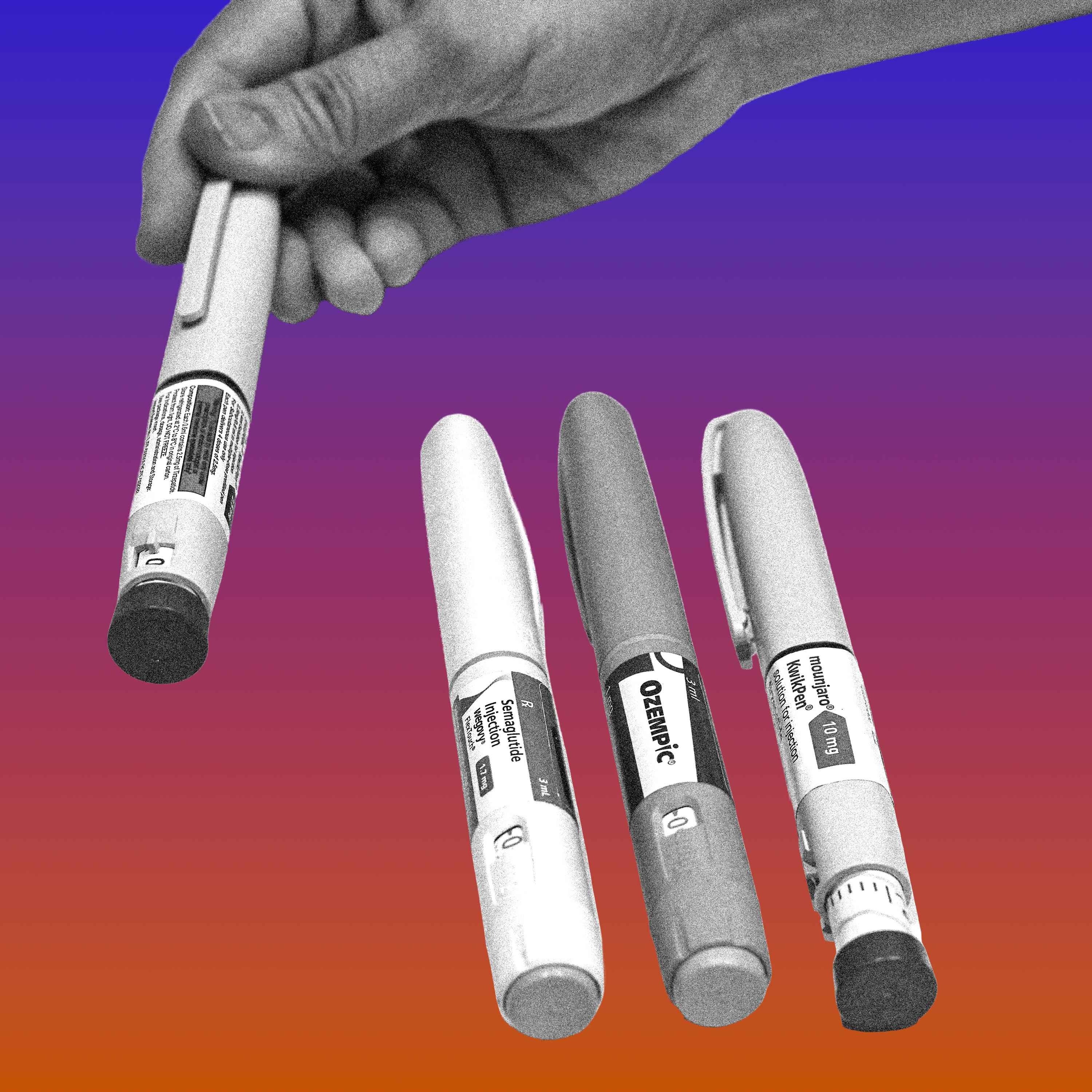
A peptide is a short chain of amino acids linked by peptide bonds. A lot of the peptides you see in ads, you inject into your body. Some of them are FDA approved for medicinal use, so like insulin or GLP-1s, but a lot of them are not. And that's where the trouble starts. The hype is excessive. And, you know, like it's all these things that everybody wants being offered in this way that seems obviously questionable. But, you know, the peptide boom is coming on the heels of the GLP-1 boom. GLP-1s are peptides and they have shown immense.
promise and help in ameliorating a number of conditions, you know, helping fix people's blood sugar, helping people lose weight. They are a genuinely really exciting medical breakthrough substance. And so the fact that now all of these other peptides are coming in and saying, hey, try me too. Like we have to understand the context in which this is happening and why it's probably sucking in people that might otherwise stay away from injecting unknown substances into their bodies. Yeah, I was going to say that because as peptides are having this moment, there is an industry that has sprung up to me this moment. Like if I, for example, had.
sizable social media following, what would it take for me to start my own telehealth business to then start selling my followers? I could do it right now. Honestly, you could do it right now. I could do it right now. Slate could get a hormones and peptides thing up and running if it wanted to. It's wild. There are now all of these companies that make it super easy for literally anyone to launch their own virtual telehealth clinics.
The industry is basically already setting the wheels in motion to be able to produce and sell like the wider spectrum of peptides that have are right now still gray market only, but are expected to be legal to compound in the near future. Half the TikTok influencers you see selling peptides are selling research grade peptides, which you're not supposed to take as a human. Like every website you go to, they're basically exploiting a loophole where it's legal to sell research chemicals and selling peptides that people are then injecting into their bodies. There's some enforcement actions, but there's so much happening that it's like a whack-a-mole situation. And I don't know how they're going to put that genie back in the bottle.
Peptides have a lot of backers inside the Trump administration, including Secretary of Health and Human Services Robert F. Kennedy Jr. Last week, an FDA panel provided initial approval to increase access to previously restricted peptides. And while a final vote isn't expected for a while, it sure looks like the doors of the peptide boom are wide open. Six of the seven peptides that were up for discussion were voted to approve. That doesn't mean that they're automatically legal. There's this whole sort of process that they have to go through, but it's a sign that it's very likely that they will be, which means that the wider virtual clinic telehealth industry will be selling them soon.
Today on the show, the truth about peptides and why it's easier than ever to find and use experimental drugs. I'm Rob Gunther, filling in for Mary Harris. You're listening to What Next. Stick around. Support comes from WISE, the smart checking account for home and abroad. Got a Canadian salary, property in the U.S., sending money abroad? You're juggling multiple accounts, currencies, and a headache. Manage it all the smart way with WISE. Save up to 65% on exchange fees and give your everyday money a boost with interest. Plus, switch your direct deposit to WISE for the monthly chance to double your paycheck. Be smart. Get WISE. Canada residents only, excluding Quebec. Up to 60 winners. Odds depend on entries. Offer ends September 14, 2027. Learn more at WISE.com.
For most of the history of professional sports, there was a wall between the game and gambling. Then suddenly, it was everywhere. But that wasn't supposed to include the players themselves. Understood the big bet. Find us on CBC Listen or wherever you get your podcasts. I finished a 5K in 94th place, right after a man wearing jeans. Then a volunteer gave me a medal. But I don't want participation trophies, unless they're from Bet365. With their daily prize matcher game, I win by matching gold coins, cherries, and more. Take that, denim man. Thanks, Bet365. Must be 19 or older, Ontario only. Please play responsibly. If you have questions or concerns about your gambling or the gambling of someone close to you, please go to connexontario.ca and see supply.
Kate, I want to just take a step back and do some groundwork for the rest of the conversation. What is a peptide? So the most basic definition of a peptide is just it's a short chain of amino acids. And what that means is it's a substance that when you put it in your body, it acts as a messenger. Insulin is a peptide. There are a number of hormones that are peptides, including the one that makes mothers bond with babies after childbirth. When we talk about peptides colloquially now, we're usually talking about this group of substances that isn't sold through traditional pharma.
like BPC-157, like melanotan-2, all of these different sort of like RFK Jr. Maha-approved substances. And they're in this like weird zone because a lot of them are naturally occurring, which means they can't be patented, which means that pharmaceutical companies have no incentive to develop them and take them down the traditional route of clinical trials and like the regulatory rigmarole that you have to go through. And so like the evangelists for these substances say, just because these can't be patented and can't be taken down. The pharmaceutical route doesn't mean they're useless. We should still have access to them. There's all of this anecdotal evidence and some clinical evidence for some of them that they help people. Let's make them available. What stood out to me from your answer is that this word has become a catch-all for like anything you want it to be. Like kind of how when you hear people talk about things that are not natural, you might hear, oh, this thing doesn't have chemicals or it's chemical-free. When that kind of ignores the fact that chemicals make up everything, right? We're kind of doing the same thing with this word peptide. Yes, total, total buzzword. Like I saw a peptide fro-yo the other day. We've gone too far.
So before the GLP-1 boom, how were peptides traditionally used in medicine? So insulin is like a prime example of a peptide that really has a lengthy history in traditional medicine. You know, growth hormones right now, I think they're generally seen as something like the purview of bodybuilders. But obviously, like they have a lot of traditional uses for people with growth disorders, for instance. So it's not like these are unknown to the medical community in any way. It's more just especially the type that people are pushing to be.
permitted to compound right now. And when you say compounding these chemicals, can you just tell me what that means? I've heard a lot about compounding pharmacies. What does that mean? So a compounding pharmacy is a pharmacy that will make a medication, like custom mix of medication. And they're way bigger than like peptides or GLP-1. So like if you had a...
you got an antibiotic prescription or something, but you were allergic to the dye in the name brand and generic antibiotics, your doctor could send it to a compounding pharmacy and the compounders could mix it without the dye. It's this very necessary industry that is supposed to exist to ensure that people get access to medications, even when the mass-produced traditional formats of the meds don't work for them for whatever reason, or if you needed a different dose. Something very interesting has happened with compounding and GLP-1s, which is, it was like... raining money on these compounding pharmacies because all of a sudden they were able, because some of the most popular GLP-1s were in shortage, they were able to compound them and sell them. And they were so much cheaper when they were compounded that people obviously preferred in many cases to take the version that cost a fraction of the name brand. And so they had this big boom. And these are all like legit, right? When you're talking about these pharmacies compounding these GLP-1s, this is like versions of the weight loss drugs that made GLP-1s and peptides extremely popular.
This is not like a pharmaceutical where they're taking a medication and stealing its patent. You're saying it's freely available, the recipe, and then you can just give it to consumers. So they were allowed to do that because they were the name brand medications like Ozempic, Wigobi, et cetera, were in shortage. They were able to do that then legally. So it was legal. Compounded meds are not FDA approved. So that is something for anyone considering exploring that world to keep in mind. That doesn't mean that they're bad. Like a lot of the compounding pharmacies adhere to really rigorous manufacturing standards and, you know, prioritize patient safety in a very diligent way. But it is.
It is different than receiving like fully FDA approved name brand med. So if I'm advertised a weight loss drug from some telehealth company I've never heard of and they send me a medication that's one of these compounded medications, that's not FDA approved, but I'm allowed to take it. It's not illegal. Yes. In some cases, like Eli Lilly and the other pharmaceutical companies are beefing with the compounding pharmacies and virtual platforms. Like that's not a concern to you as a consumer. You would be fine to take it. And in most cases, I mean, I'm not a doctor, so like this is not medical advice. But in most cases, the substance that you are sent by the compounding pharmacies is perfectly safe and effective.
So when people take insulin, I mean, that's generally safe. It's been around forever. The GLP-1 drugs seem to have gone through the rigorous type of research you're talking about. The way that influencers are taking peptides or peddling peptides or talking about peptides, is that safe? It's crazy. It's crazy. I mean, some of them, I guess, are safe because they're...
taking them and they're not dead or anything. It's very risky, I'll say. It's incredibly risky. And it's shocking to me that there's advertising that like the advertising these substances is happening seemingly unimpeded in such an aggressive way on major social platforms. Because, yeah, like I've poisoned my own algorithm, but now I'm getting all of these TikTok influencers trying to sell me the Barbie peptide, the one that makes you tan. They're all really tan. They're RFK junior colored. And I encourage anyone to Google that one because there are a lot of questions about its safety because it stimulates.
the development of your skin pigmentation, and there's a major chance that it can cause cancer. It's not something that you want to be playing around with. It's certainly not something... It's not. Although tell that to people who have been using tanning beds for the past few decades, right? I had this insane conversation recently with a man who advertises his peptides on TikTok, and he runs a gray market, a research-grade-only peptide company. And I was telling him, I would not feel comfortable taking that. I would like it to go through clinical testing for safety and efficacy.
And he went on this rant to me about how the FDA doesn't do a good job anyways. And how do I know what's safe to put in my body? And have I done clinical testing on the tampons that I use? Because how are they not? He was super defensive and super adamant that his research grade chemicals were actually totally fine, even though when you click on the website, it says not for human consumption.
Well, it speaks to the type of people that are peddling this. I mean, we're talking about influencers generally, but, you know, Joe Rogan is talking about how he's using these like the Wolverine type compound, right? RFK Jr., our Health and Human Services Secretary, he's promoting peptide use and suggested that he's used them. This is kind of across the Rubicon, right? It's definitely, I think the sort of podcasting Manosphere world has done a lot to bring these to the mainstream, you know.
RFK Jr. is in charge of health care in America. And he has been coming out and saying he's going to stop the suppression of these substances. There really has been this push. And it ties into what's happening with people just not trusting doctors and mainstream medication. There's this push to kind of position peptides as an alternative, as part of wellness culture, in a way that has been very effective and also weird and concerning from my view.
There's sometimes an artificial distinction between what's natural and what's unnatural. These are just substances that could be helpful or could be harmful and I think should be evaluated as medicines and as part of the medical tradition and not as some separate thing that they somehow are. It's not just random peptides that are peddling either. It's raw milk, right? We're seeing all sorts of other natural treatments that are being pushed by his Maha movement. Is this part of that? It seems weird to me that you would...
You'd be against pasteurization, but you'd be for injecting random compounded chemicals into your body. It's weird to me, too. I mean, raw milk is just like no one should drink it. What are you doing? Pasteurization exists, people. Peptides, as I was saying, why I think they should be seen as part of the medical lineage or whatever. Peptides have promise. I think that it would be a mistake to just dismiss this category because of the hype surrounding it.
There's a good chance 10 years from now we could all be microdosing BPC-157er. There will be a peptide that's developed that is just as blockbuster as GLP-1s have been. It is a genuinely interesting category of potential medications, potential healing substances. It's a shame that it's been positioned in this way where like the hype and marketing is vastly outpacing the evidence and science and that instead of being part of medicine, it's like this weird alt thing. It's not. We'll be right back.
For most of the history of professional sports, there was a wall between the game and gambling. Then suddenly it was everywhere. But that wasn't supposed to include the players themselves. Understood the big bet. Find us on CBC Listen or wherever you get your podcasts. Our fantasy commission says for him it's all about the friendships. Cute, Kevin. But I disagree. Like with Bet365. I get paid the second my team goes up big with early payout and can cash out at any time before the game ends. No hard feelings, Kevin. Just faster payouts from Bet365.
The home of winning early. Must be 19 and older. Ontario only. Please play responsibly. If you or someone you know is concerned about gambling, visit connexontario.ca or call 1-866-531-2600. Terms and conditions apply. Like, okay, so you've laid out this Wild West landscape. There is the promise versus the snake oil. If you're trying to navigate that landscape, how would you go about trying to figure out which one is legit?
I mean, I'm trying to right now. You know, I have like a busted knee and I love to run. I've been debating like dipping my toes into the Wolverine stack, etc. And I've held off because it is at this moment, I think, just too much of a Wild West. If I found a doctor who I really trusted and had some lengthy conversations with who suggested that I use one of these peptides, I would certainly like take their medical advice. But the scary thing about what's happening right now is we don't we're not seeing that kind of conversation happening on a.
population level. And what we're seeing, I'm sure there are smart doctors. I mean, get in touch with me after listening to this and you're a type of literate doctor. But what we're seeing happen is just people find out about this through social media from influencers who don't have medical degrees, but who have like a vested financial interest in selling you these products. And we also have like a population that has gotten used to the concept of buying injectable meds, like which is also why this is sort of something that only could have happened after the GLP-1 boom. And so we're in like a perfect storm where people are getting pelted with ads about these life-changing substances. They're not super.
averse or scared of injecting themselves and they're really easy to get. And no one's really telling you no. Like there's no FDA warning on those commercials being like, hey, this is not proven, right? I mean, like it's just sort of, it looks too good to be true and we're not seeing the flip side of that. If you're being advertised a miracle drug, there's rarely like the other side presented. Yeah, I know. I'm like, where's the list of scary side effects sung really quickly at the end of the commercial? That's not happening here. Yeah, so it's concerning. I do still think, again, like...
This is an area that has a lot of promise, but how it's being unrolled to the American public might end up causing more health problems than offering solutions. previous to the Biden administration, all of these peptides were allowed to be compounded. Then the Biden administration comes in, they said there's not enough research, and so they prohibited the use of that. And now we're on the cusp of undoing that prohibition. Is that correct? That is correct. And the compounding pharmacy industry has an argument that I do think is semi-compelling, that there's this huge gray market flourishing already, and it's a sort of harm reduction strategy to allow these substances to at least be...
you know, manufactured by legitimate compounders to offer people a safer route if they choose to experiment with peptides versus only the gray market. I, in general, think prohibitions don't work super well. So I do see the value in that argument. But at the same time, it's like... I don't know. Does that mean that they should just allow... Yeah, that could be for anything. Is that the argument for why actually compounders should just be allowed to sell fentanyl to anyone? There's some room for debate. Well, the idea, I guess, is that you at least, if something bad happens, you'd be able to trace a supply chain back to the source or something like that, right? Instead of just being like, I got this from some guy. I don't know what it is. Totally. And the compounders are held to standards and they have to source their ingredients pharmaceutical grade. The gray market stuff, there's actually been...
Like some of the gray market stuff actually has fentanyl in it because apparently Chinese fentanyl suppliers have switched to producing peptides too. Like the gray market, there are some, you know, gray market sellers that are certainly better than others. And like people have been taking their peptides from them and have been having great results, whatever. Like the gray market is not a monolith, but the gray market has some bad stuff in it. It's making me think about like, you know, do you remember when there were all those contaminated eye drops that were causing blindness across the country? And these were products that were...
shipped from overseas and they kind of had like some sort of an FDA stamp. But at the end of the day, it's not like the FDA is out there inspecting every bottle of eyedrops that comes into the United States. And it's just making me think that like we should have some sort of a record of where these things are coming from, what's going into them. So when problems do happen, we can at least try to figure out what's going on. Yeah. And like, I mean, if a family member or friend was dead set on trying a peptide, I would certainly rather them get it from a compounding pharmacy than the gray market. So what's interesting to me about your reporting is that we're a long way off from these peptides officially being given the green light. But you're talking about all of these companies that are basically taking it as a given that it's going to happen and they're ramping up production already.
Yeah. I mean, and in some cases, it's fully selling them already because there's I think there's a growing understanding in some pockets of the telehealth and concierge health worlds that, yeah, they might not be a greenlit already. But is the FDA actually going to do enforcement actions against people selling them? There's yeah, there's this idea that they might as well just be a first mover because the risk of actually getting in trouble seems low during this administration. I'm trying to think about RFK, right? He's our head, you know, influencer secretary. Do you differentiate what he's doing?
from a position of authority versus what these online influencers or people like Joe Rogan are doing? Well, Joe Rogan's a little bit of an anomaly in how, like, he's not just your run-of-the-roll influencer. Commands a gigantic audience. Yeah, yeah. So as far as, you know, he's sort of like, you know, sergeant or something in the Maha movement. I do...
I do think that they're all part of the same push. But what some influencer with 500,000 followers in Florida is saying doesn't carry as much weight as what the person in charge of health and human services does or Joe Rogan, for that matter. Yeah. Yeah. I guess Joe Rogan and RFK, they're in their own sort of class. But like you're describing this landscape of people really trying to take advantage of the regulatory environment to make money over anything else. Right. And I guess like how I would view RFK and Joe Rogan as like true believers in this movement. And I'm watching those two clear a path.
for all the people behind them that are really just interested in making book. Yes, that is definitely what is happening. I think you look at either of those men for a second and you can tell that they really like that. There is going to certainly be probably a much larger second wave of... entrepreneurs who don't care at all either way what these substances do or don't do and just recognize the financial opportunity. And we're probably just seeing that, actually, because, you know, it was a fight to get back to where we are now. So the leaders of like the peptide revolution do tend to be true believers. Like they really they really do see these as.
promising medical substances that have been suppressed from the population. I don't think that they, I don't think that they're actually just in this to make money. They really, they really believe. But yeah, the wave of mercenaries is, pure mercenaries is soon to follow. Or there's also that element of like, I just want it to be true so badly that you're ignoring the consequences, right? Like I had some anecdotal experience with a peptide. I want to spread the good news. And you know, you're just, you're not really thinking that far ahead of what could happen down the road.
Yeah. And the placebo effect is like insanely powerful. So in some of these cases, maybe there was nothing that could be clinically measured that improved, but someone really did feel better. So, and then it's like, okay, well, if it made you feel better. And it speaks also to this market that exists. Like it's one thing to have people pushing it at the influencer level, at the government level, but like there is an insatiable appetite for people wanting to cure what ails them. And our healthcare system, our pharmaceutical system doesn't always respond to people's needs.
Yeah, I mean, I don't think that this would be happening if we had a perfectly functioning healthcare system that offered enough solutions for people's problems. And so, again, this is why I don't think you can have a conversation, an honest conversation about peptides that dismisses them outright for that reason, too. Kate Nibbs, thank you so much. Thanks so much for having me. Kate Nibbs is a senior writer at Wired. And that's the show. What Next is produced by Evan Campbell, Madeline Thames-Sucharme, and Patrick Ford.
Paige Osborne is the senior supervising producer of What Next and What Next TBD. Mia Lobel is the executive producer of podcasts here at Slate. Ben Richmond is the senior director of podcast operations. And I'm Rob Gunther. You can find me on Blue Sky. I'm at 1RobGunther. Thanks for listening. Talk to you soon.
My rec league goalie says he plays for the love of the game. You gave up six goals last week, Steve. Maybe play to win, huh? Like with Bet365, I get paid the second my team goes up big with early payout and can cash out at any time before the game ends. Come on, Steve. Bet365, the home of winning early. Must be 19 and older. Ontario only. Please play responsibly. If you or someone you know is concerned about gambling, visit connexontario.ca or call 1-866-531-2600. Terms and conditions apply.