Support comes from WISE, the smart checking account for home and abroad. Got a Canadian salary, property in the U.S., sending money abroad? You're juggling multiple accounts, currencies, and a headache. Manage it all the smart way with WISE. Save up to 65% on exchange fees and give your everyday money a boost with interest. Plus, switch your direct deposit to WISE for the monthly chance to double your paycheck. Be smart.
Get Wise. Canada residents only, excluding Quebec. Up to 60 winners. Odds depend on entries. Offer ends September 14, 2027. Learn more at wise.com. Marshall's buyers travel far and wide, hustling for great deals on amazing gifts. So you don't have to. They've bagged this season's Italian leather handbags. Dishonor. Handpicked the finest sweaters from the rest. Ooh, cashmere. Landed makeup palettes from the brands you love. Brushes, too. And hustled all those wishlist-topping toys. So plush. Our buyers have got you covered. Marshall's. We get the deals. You get the good stuff. Hey, it's Mary.
If you are a listener to this show, you know we are living in this pay-to-play world right now. When I say that, I mean, you look all around you at how the country's working. And it's a little upsetting, right? Money opens doors. Money gets you access in Washington. I mean, just the other week, President Trump held a midterm convention in Texas where even members of his own party were asked to pay $25,000 just to get in the door. It sucks, right? But you know what isn't pay-to-play? This show. Every weekday, we're here, in your feed, giving you the information you need, the conversations you want, for free.
And I'm saying this because you know this, but our work does cost money. And every now and again, we ask you to join us, become a Slate Plus member, because we want you to support this work, work you rely on every day. For the next few weeks, you're going to hear me asking you to do just that. Because in this pay-to-play world, I know you want to support people you trust, information you value. Slate's turning 30 this year, and for three decades, we've been doing rigorous journalism that's actually fun to spend time with. And joining makes you part of our community. It also helps keep the lights on.
This isn't pay to play. This is an invitation to you to join a community that's there when you need it. Day in, day out. So this is my ask. Through October 16th, we are running a special 50% promotion for Slate Plus membership. That means if you go on over to slate.com slash whatnextplus and enter the code whatnext50, that is whatnext50, you're going to be able to access a year of all of Slate's content, including ad-free listening to this very show for just 59 bucks. Plus, you'll be supporting Slate's independent journalism in a moment where independent journalism really needs you.
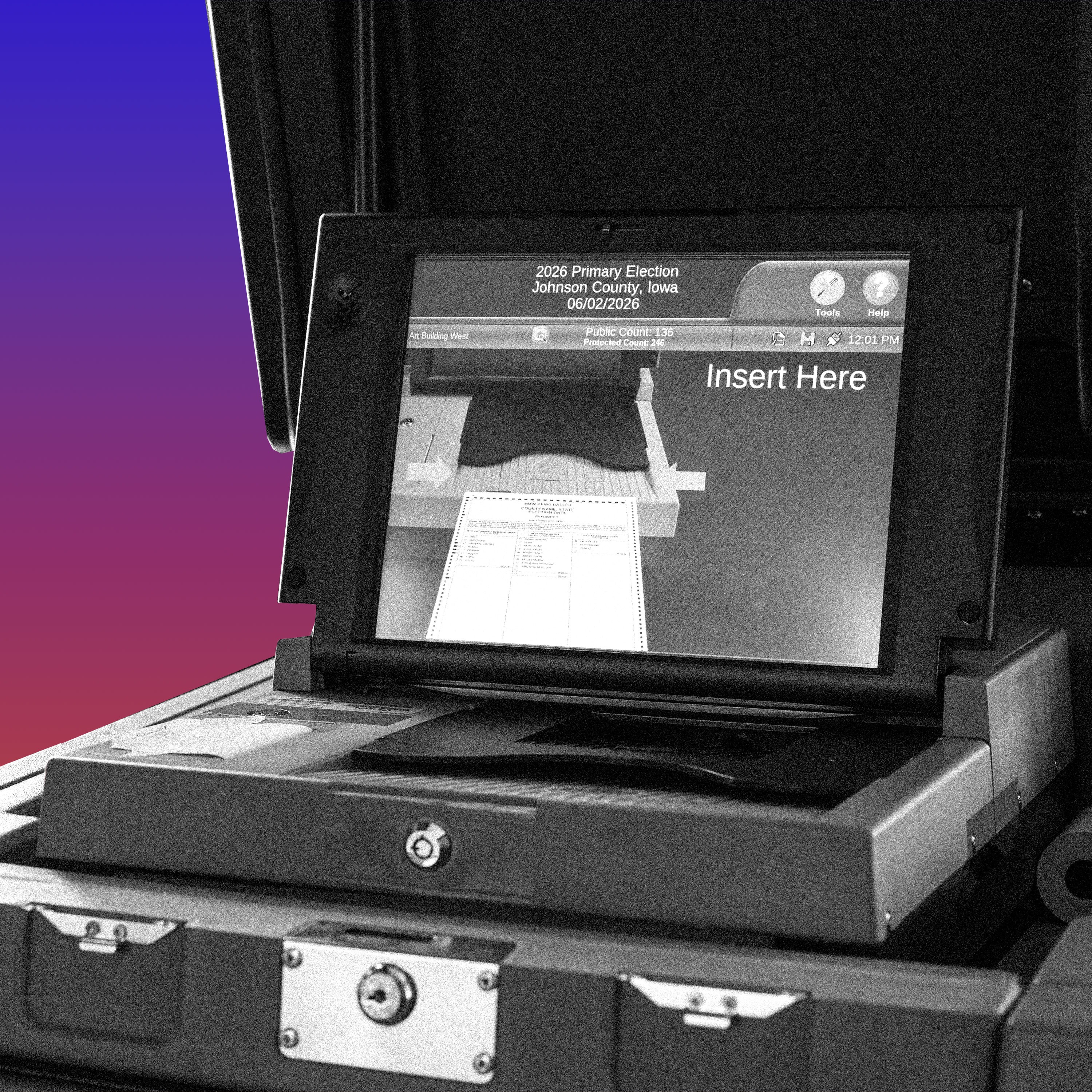
So here's that URL again, slate.com slash whatnextplus, where you enter whatnext50 at checkout. Join us. We need you. You need us. Here's the show. When I got Ari Berman from Mother Jones on the line, he was feeling a palpable sense of relief. Ari's the guy I go to when I want to know who's going to be able to vote. So earlier this week, when the Supreme Court put a stop to the Trump administration's plans to use the Postal Service to screen mail-in ballots, I knew he'd have something to say.
I feel like I need an Ari Bourbon thermometer in my life, which is like, where is Ari on voting? Well, if you ask my wife, I'm pretty much a 10 on everything. But I would say the temperature is being dialed down a little bit when it comes to the rules of voting. I think the Trump administration would like it to be a 10. I think they would like you to think that there is a constitutional crisis around the corner. They want us to panic. They want us to panic. And I think a lot of the rhetoric is designed to get people to panic and to not show up. I guess we should start here.
The Postal Service was about to do something that's really not its job, right? Yes, I think that's the best way to summarize it. And I'll just add, it got blocked by a lower court who did a lot of work to block this in a timely manner, and it was affirmed by the Supreme Court. So I think we should give the Supreme Court credit when once in a blue moon it does something good on voting rights, but really they were just responding to what a lower court was already doing. Yeah, writing for Slate election law expert Rick Hassan said there are like two ways to view this decision. The first way is you can lament that the scheme got as far as it did, or you could celebrate that the plan got defeated.
Which side are you on? I think it's both. The job of the Postal Service is to deliver the mail, not determine who does and does not get a mail ballot. So this would have radically upended mail voting. I think it would have made mail voting essentially impossible in states that run all mail elections. But I think there was also just a practical matter that even if you agreed with what they were trying to do, there was just no way to implement it. And in fact- You can't assemble the plane while you're flying it. No, and I believe the system was designed to fail. And they created a rushed, harried, and ultimately dysfunctional and non-working process so that mail would not be delivered.
And the interesting thing about the Supreme Court's ruling was they could have just blocked this for the midterms and said, like Justice Kavanaugh said, it was too close to the election to implement it. Instead, a majority of justices, which means there was at least two GOP appointees that signed on, said that the Trump administration was unlikely to succeed at the merits. Meaning like the whole idea of getting the USPS involved is bad. It's unconstitutional. And that they're basically signaling the Trump administration, don't bring this back before us. You know what's interesting to me about this?
plan to have the USPS get involved in voting and the fact that it got rejected at the court, it all kind of emerged from this executive order that came out at the end of March. But getting the USPS involved in voting was not the only thing in that order. You know what I mean? Like, there's more here. This isn't over, basically. Yeah, there's more they're doing behind the scenes. I mean, it's a very convoluted executive order. There's another part of the order that basically says the Department of Homeland Security should develop lists of voters it deems citizens. And that's also not what the Department of Homeland Security is supposed to be doing.
This is why your guard is still up, huh? Yeah. I mean, my guard is still up because I believe the Trump administration is still intent on interfering in the midterms. They have lots of other plans, whether it's going to be investigating election officials, announcing new prosecutions, seizing ballots, declaring new emergency actions to try to take over the voting process. I mean, this is far from over. Today on the show, we're just weeks away from going to the polls. How safe is your vote? I'm Mary Harris. You're listening to What Next. Stick around.
For most of the history of professional sports, there was a wall between the game and gambling. Then suddenly it was everywhere, but that wasn't supposed to include the players themselves. Understood the big bet. Find us on CBC Listen or wherever you get your podcasts. Introducing Pandora's Holiday Collection. This season, celebrate the ones you know by heart with a gift that says it all. Because the best gifts don't just look beautiful, they mean something too. From engraveable pieces to festive charms to lab-grown diamonds, our jewelry is made for the ones who inspire you, who've been through it all. Give a piece that says exactly what words can't. Pandora, more than a gift. Shop new styles in store or online at pandora.net.
Hey, it's Kat Nat from Kat Nat Unfiltered. You know what matters most to us when cooking for our family's freshness. That's why we always choose Metro. Their produce is hand-picked, their bread is baked in store, and their butchers custom-cut meat to our exact needs. Freshness is the thing that can make a simple meal simply amazing or turn an ordinary bite into an extraordinary night. At Metro, fresh matters because fresh changes everything. Find fresh meals and deals at your local Metro.
So let's talk a little bit about the Supreme Court ruling, just because I do think it's really important, and it's important to analyze how it got to the place it was. Maybe we should start with what we know about exactly what kind of election-related system the Postal Service was building before the Supreme Court came in and said, no, no, no, no, seriously, guys, you can't be doing that. Well, the basic thing they were requiring was for states to submit. voter information through an online portal that was going to be run by the Postal Service that had not yet been unveiled. And they were going to require new things that states had to produce to be able to send ballots by mail, namely new barcodes, new envelopes. This is all stuff that states were not prepared for and that states said would be very difficult, if not impossible, to do weeks before the midterm election. And what was so different about this plan was the way it works now is states set their rules in conjunction with federal law.
for mail voting. And the Postal Service sends those ballots. That's how it works. Right. It just moves through them. Exactly. All they are is an administrative process. This would completely change them to the arbiter of mail ballots. The Postal Service is setting the rules for mail voting. They are setting the requirements for mail voting. And they are telling states whether or not they will accept mail ballots from states. And I want to just highlight a couple of the things we learned in the last month or so about how this new system could have worked and where things could have gotten tied up, because I think it's important to think about the details. A whistleblower came forward to Senator Richard Blumenthal and basically said, hey, I'm involved in creating this portal.
And by the way, like if one ballot looks iffy. Actually, that could mean we reject the whole batch of ballots. So that's like 10,000 ballots at a time. You hear that and you're like, OK, that's a lot of people who did nothing wrong, who might not be able to vote for one reason or another. Then you have people like the Leon County clerk in Florida who was like, hey, like I hear about this new portal. Why don't I submit my envelope and see what happens? And what happened was the envelope got rejected because some words were 0.236 inches apart, even though they were supposed to be like 0.25 inches apart. And you could just see like, oh, my gosh.
through hanging chads in Florida and was like, how did that? You're like, oh my God, we're like supercharging that now. Exactly. I mean, what people said is this was going to be healthcare.gov on steroids. I mean, just the portal itself, the fact that the basic thing where you had to enter information so that voters would get mail ballots was not unveiled. I mean, it just wasn't even working. They kept saying it would be. They're like, it's got to be unveiled. They kept saying it was. And basically what the whistleblower said and what people behind the scenes of the Postal Service said was it's not ready and it's not going to be ready because you need months, if not years, to create something like this, to make it usable, to make it secure, all of those things. And they were trying to do it basically in a matter.
of weeks. And so this was a bureaucratic nightmare on multiple fronts from the fact that there was a non-existent portal to these insane rules where if your envelope spacing was 0.0014 off, your ballot would be rejected to the time it would take to scan ballots. I mean, basically someone did a study that it would take California 43 years to send out their mail ballots based on how long it would take for the postal service to scan every one of these ballots, not to mention that. Places like California send out millions of mail ballots. So if you're rejecting one out of every 10,000, imagine what happens if you're rejecting one out of millions. And so this was just going to be a bureaucratic nightmare. That's why you even had Republican election officials speak out against it. Yeah, this is a really important point. Like when this got to the Supreme Court, there was this funny thing where...
Trump supporting state attorneys general were like supporting the president in trying to get the USPS involved. But then the local election officers were like, actually, this might probably not work for us. Yeah. And there was the lieutenant governor of Utah and then six Republican secretaries of state from some very conservative places like North and South Dakota who were telling them this can't be implemented from the midterms. And listen, I follow a lot of these voting related disputes before the courts. And it's very, very rare that you have Republican election officials lined up in a public way against the Trump administration.
when it comes to election-related disputes. They usually side with the administration or they stay quiet. And here they were very vocal. And I'm sure that had an impact on a John Roberts, on an Amy Coney Barrett, on a Neil Gorsuch, even to some extent Brett Kavanaugh for the midterms, understanding that this was a bipartisan problem, that yes, the basic theory behind the case was that more Democrats would be affected than Republicans, but a lot of Republicans were going to be affected too. I mean, I think that's the point that's missed.
How angry are your own voters going to be if you're an elderly voter in Florida or a rural voter in Arizona who's voted by mail every cycle and then you suddenly don't get your mail ballot because the spacing is 0.0014% off? I mean, I think that I believe that would have made a lot of Republicans angry at the end of the day as well. So what was the logic of like a Justice Alito or Justice Clarence Thomas who wanted to let the Trump administration implement this system that didn't seem to actually be up and running yet? They seem to basically buy the administration's argument that this was somehow going to stop voter fraud, even though they didn't actually present any evidence of the kind of fraud that they were claiming would be stopped and that this was broadly within the Postal Service's power and that if there were delays, it was because of litigation against it. So the privileged allegations of fraud over people saying actual people will be disenfranchised. Yeah, I mean, Alito basically said like, yes, we understand people can be disenfranchised, but this principle that the Postal Service has this authority is more important than that.
disenfranchisement, which was pretty remarkable. I mean, this again, this was another case that should have been 9-0 in terms of the merits of it. And I'm glad it wasn't 5-4 because you can imagine a universe in which it was more closely divided. It seemed closer to 6-3, at least for 2026, 7-2, however you want to categorize it. The fact that only Alito and Thomas were willing to go public with the idea that this should be in effect for the midterms, I think kind of showed you how radical the administration's argument was. Because even with birthright citizenship, which is...
So clearly in the Constitution, the Trump administration managed to get four votes for that argument. And the fact that they only got two public votes for this just showed you how weak their case was. It's interesting because this ruling came at a time where we're getting very close to the midterms themselves. And it feels to me like the Trump administration has been trying to tinker with the November elections in a whole lot of ways to make them swing their way. It's been very chaotic.
It's unclear to me how well things are working, even when they are working for the administration. Like, OK, let's go back to the first salvo here, which I would say would be gerrymandering, right? Changing the maps, which the Supreme Court allowed to move forward in many cases. Even there, it's kind of interesting to me. I'm not sure it's going to work out the way the Republicans thought it might. I say that because I look at like, for instance, in North Carolina, you have Don Davis, who's a Democrat. Basically, he's been characterized as the most vulnerable Democrat in the House because North Carolina did what Donald Trump wanted, tried to eliminate his seat, essentially. But the more time goes on.
the more likely it looks that maybe Don Davis is going to actually stay in his seat. You know what I mean? Like we have this funny two-step happening where the Supreme Court rejects the USPS thing, but like even when they're allowing stuff, maybe it's not working out as intended. Fair? Yeah. I mean, I think the gerrymandering was the most effective part of their election rigging strategy in terms of the fact that it did happen and it was allowed to go through. And they also got a number of favorable rulings in state courts in places like for the Virginia map being blocked, the Florida map allowed to be go through with the seeming double standards in both federal court and state court. But at the end of the day,
they're probably going to pick up half as many seats as they thought they were. If you just look at Texas, Florida, North Carolina, even Alabama, the seat they gerrymandered could be competitive because it's really hard to gerrymander effectively when... Trump plus 20 districts are competitive. I mean, because that's what they were drawing. They were drawing districts in a lot of places that favored Trump by 10 to 20 points. And yeah, the 20 point districts, maybe they're safe in, but this is a cycle where a district that voted for Trump by 10 points is no longer safe. It is effectively creating chaos though. Like if you look at what's happening, for instance, in Missouri, like this is, I guess, the counter argument here, which is even though there's been so much dispute about the maps in Missouri, and I do feel like it creates a question in voters' minds, no matter how those maps...
turn out, right? Do you want to explain what's happened there and what you think of this? Yeah, I mean, it's so convoluted because basically the way it should have worked originally was that Missouri passed a new map to eliminate one of the Democratic seats held by a Black representative, Emanuel Cleaver, from Kansas City. And then opponents gathered signatures to force a referendum. And that should have blocked the map while the referendum was considered. The problem was is that a number of courts allowed the Republicans to block the maps until the 11th hour, where the Missouri Supreme Court stepped in and said, no, you can't.
block the map while the referendum is considered. But the Missouri Supreme Court, while it made the right decision, could have stepped in months earlier and told the state this. Before the primary. I mean, because the Missouri Supreme Court, before they initially ruled against Republicans, had ruled for Republicans in a number of different ways approving these kind of lines. And so it took a long time for the courts to get it right. And it set up a very chaotic process where the courts ruled so late that it made it difficult to implement. That said, you basically had a rogue federal judge try to override the Missouri Supreme Court.
And the U.S. Supreme Court stepped in very quickly to rectify that. And what that told me is that when it comes to November, if we have rogue federal judges or rogue officials try to change established rules about the election, the Supreme Court's going to step in and stop it. And so I actually read both from the Missouri decision by the Supreme Court and the Postal Services decision that the Trump administration is going to have a really hard time rigging the midterms and doing this kind of extra legal type of activity. Because in Missouri, we do have people where it's like the primary is one map and now the general is a different map, but I guess it's the same cast of characters, right? Yeah, and they also, they went back to the map that was the map in 2022. And so, and the map in 2024. And so basically what they did is they put the established map back in fact. That should have happened from the very beginning. And so while, yes, they changed maps, all they did was go back to the map that should have been used all along. We'll be back after a quick break.
Support comes from WISE, the smart checking account for home and abroad. Got a Canadian salary, property in the U.S., sending money abroad? You're juggling multiple accounts, currencies, and a headache. Manage it all the smart way with WISE. Save up to 65% on exchange fees and give your everyday money a boost with interest.
Plus, switch your direct deposit to Wise for the monthly chance to double your paycheck. Be smart. Get Wise. Canada residents only, excluding Quebec. Up to 60 winners. Odds depend on entries. Offer ends September 14, 2027. Learn more at wise.com. Right now, Marshall's buyers are still hustling to get amazing new gifts into stores. Like this season's Italian leather handbags. They're in the bag. The latest designer perfumes. Perfection. And the cuddliest of cuddly toys. So soft. Wait! These gourmet chocolates just landed from Europe? Bellissimo. Marshall's. We get the deals. You gift the good stuff. Right up to the list.
Part of what I think is clear from this conversation is how local actors can really change things for better and for worse when it comes to election law. Because something that's been on my mind thinking about November is places like North Carolina and Georgia where you have state elections boards, where people are involved with them who... are election deniers or want to restrict different kinds of voting. Like we talked about Don Davis, how he's, you know, one of the most threatened Democratic congresspeople in the country. We talked about the USPS ruling, but the state election board in North Carolina is acting independently of the feds. It's doing its own thing. And, you know, earlier in September, they added their own restrictions to the mail ballot. Do you know what I mean? So it's like they're all of these things happening at the same time. And when we talk about how the election in November might be different, we have to think about like.
what Trump can control and his administration and also like what these local folks are doing. Yeah. And the places we should be most worried about is where there's Trump enablers at the local level. Because I mean, Trump just swooping in and radically changing state election laws, radically usurping the powers of state election officials, that's going to be blocked and found to be unconstitutional. Trump doing it with the support of local officials. That's going to be harder to challenge. And that's going to then rely on state courts and federal courts. And in some state courts, they may block it. And in some state courts, like in North Carolina, where I would say there's a very MAGA-aligned state Supreme Court, this is going to go to the federal courts. And the closer the election is, the more nervous I'll become.
Trump's not going to succeed in throwing out millions of votes. But if there's an election that comes down to a few hundred votes, for example, that's where you could see these local officials. That's where you could see the influence of the Justice Department, other actors start to get involved in a way that they could try to overturn the election. That's the scenario in which you can imagine there being a contested House of Representatives. If there's one or two seats, that would determine the margin. I don't believe that's what we're headed towards in most places. I don't believe the House of Representatives is going to be decided by one or two seats. I think the question is, do Democrats win by 5, 10, 15?
20 seats at this point. The Senate, we'll see what happens. Some of the state ride races, we'll see what happens. We'll see how invested Trump is at the end of the day in elections in which he's not on the ballot. I'm very curious about that because I see a situation in which Trump puts up a big stink, but he also just blames the Republican losses on somebody else and just washes his hand of the whole thing. That's such a good point because I feel like we all have in our minds kind of the idea of Trump in 2020 calling the elections officials in Georgia and being like, find me 10,000 votes, essentially 11,000 votes.
But that was for him. Yeah, that was for him. He was like very invested in that. And it's a real question. Like, is he going to call the North Carolina, you know, election board? Is he going to call the Georgia elections where people or is it just sort of like, yeah, those Republicans, they kind of stink.
I think that's very possible that he just decides that he's done with it all and that he's going to find someone else to blame for this and that he's going to get ready to find a new villain to do battle with a Democratic House. It also just, I think, depends how close the results are in a lot of these places. If it's, like I said, really close, I think you'll see more pressure on Trump to lean on people or to have somehow weaponize DOJ, DHS, et cetera. But I think a lot of the rhetoric of the administration right now is self-suppression. They want to make voting seem scary and dangerous so that people don't show up because they know there's a huge enthusiasm gap between Republicans and Democrats right now. And so I think a lot of it is rhetorical so that Democrats don't show up. And I think people should just ignore it and understand that states are run at the local levels and that local officials by and large are invested in making the voting process as smooth as possible. And Trump can say a lot of scary and dangerous things about what the election should look like. But ultimately, none of the elections are run directly by Donald Trump or the Trump administration.
And I think that's an important thing for people to remember. When I think of the real impact that Donald Trump might have on the election in November, I think... you're right that it's important to focus on what he can control. Like he can exert control to some extent on the information environment. And I think that's like undervalued as something that he can control and does control very well. But then there are also certain levers inside the executive branch. Like you look at the Department of Homeland Security, at the Department of Justice. These are places where he has a lot of interest in controlling. He's been very clear about like he wants those people to be loyal to him. And we see like just a few days ago, the Department of Justice sent threatening letters to 30 top election officials across the country. What does that do? What can that do? Or is it more just...
Like you've said this, is this just more, you know, the elections officials can say like, nice letter. I don't have to do anything about it. I think that's what they're doing. Interesting. I mean, I think they're saying, we got your letter. Thank you. We got your letter. We're moving on. And in fact, you know, you saw, for example, when one of these letters was sent not too long ago, the attorney general of Idaho said, stop threatening your friends in Idaho. They're basically asking for access to election records. They're getting tired of it. And Republican election officials are getting tired of it, that they feel like they're constantly being threatened just for doing their job. Clearly, they're trying to bully people into conforming, though. And it's very possible we're going to see charges against election officials unveiled.
In the coming months, the department has lifted, for example, prohibitions on the Department of Justice charging people in the run up to the election. So, I mean, they could do things to try to scare people into conforming. So far, it hasn't worked, though. So far, it hasn't worked in terms of states handing over their voter rolls. So far, it hasn't worked in terms of states adopting the rules for mail ballots, for example, that the Trump administration wants. What about the Department of Homeland Security? Because you see Mark Wayne Mullen asking the Department of Justice to investigate.
voting machines talking, you know, there's this sort of murmur about sending ice to the polls. Are you worried about any of those things like somehow Department of Homeland Security seizing voting machines or threatening people who are trying to vote? As of now, it's a lot of threats and it's a lot of empty threats like we won't give you money if you don't do what we want you to do. And so far, states just kind of are saying, fine, don't give us the money, but we're not just going to go along with this. But yeah, I mean, certainly I'm worried about seizing voting machines. I think we should be worried about ice at the polls, although I believe that would also spark a counter mobilization.
against administration. Yeah, I think about that a lot. Like, I mean, I think about what happened in Minneapolis, like people pushed back and basically the administration left with its tail between its legs. Now there was a lot of cost to all of that. And I don't know how that would translate to an election where it's like a different calendar. It's a different timetable. It looks different. You know what I mean? Do you have any hints about what that would look like? It could work both ways. It could keep some people from showing up and it could motivate some people who weren't going to show up to show up because they're so pissed off about it. I don't think we know, but I don't believe that.
ICE would be able to just rampage around the polls in most jurisdictions. I think there's already been a lot of work behind the scenes with local law enforcement to make them aware of this. There's prohibitions on what ICE and other agencies can do at polling places. My whole thing with elections is don't give Trump any more power than he already has. Don't just make up magical powers the president has that he doesn't actually possess when it comes to voting. There's lots of laws on the books about what you can and can't do with regards to elections, and specifically what you can and can't do at voting places, outside polling places, things like that. And that's why I think it's a lot of empty rhetoric in terms of the administration saying, we're going to do this, we're going to do that.
They might try some things, but I think that they will be stopped pretty quickly from doing it. And if they do things like send ice to the polls, there's going to be pushback against it. If they do things like cease ballots, there's going to be emergency restraining orders against it. The fact that they've telegraphed so much of what they want to do makes it easier to stop. Because now there's been months and months and months of work behind the scenes from a bipartisan coalition of people trying to figure out the steps administration might take and what to do to stop it. And that's why I think that...
Ultimately, it's going to be hard for the administration to pull this off. I also think that, to your earlier point, as Trump becomes more unpopular, his ability to be a successful dictator significantly decreases because he's a weak autocrat, not a strong autocrat right now. And people know that, and that makes it easier for them to stand up to him. I wanted to ask you about one more possibility for shenanigans here. It's something I read about in the New Republic. It involves Congress. And I think about it because Congress is a place where Donald Trump does not...
exert control so much as influence. And so to me, it's a little unclear how possible this scenario is. But the New Republic published a piece by a Bush-appointed judge, Michael Ludig, where he basically said, listen, something to pay attention to as you're thinking about all of the concerns about this midterm is that even if everything is pulled off the way it should be, you may need to worry about January 3rd, not just November 3rd, because January 3rd is when these new members of Congress, Senate would be seated. And there's a possibility that someone like a Mike Johnson could try to not do that. We've seen him do this with Representative Grijalva, right, from Arizona, where he refused to see her for, I think, 50 days. You know, there's a possibility that he replaces the clerk of the house who, you know, would be the person who presents the names and just like puts in place something where he takes a firm stand against actually having things turn over, which sounds ridiculous. But then as someone who lived through January 6th and what happened with Representative Grijalva, I'm like, huh, maybe not so crazy.
Yeah, I mean, that I think is the most realistic doomsday scenario, but I think it's also fairly unrealistic because a lot of things would have to happen. People come to Congress with certifications, meaning that if their elections are certified on the state level, I think it's going to be very difficult, if not impossible, for whoever Mike Johnson designates as the clerk to not accept that certification because there's clear evidence that that person was then duly elected. But if they get into a situation in which there's not certification, let's say a state like North Carolina, where there's a dispute over a race and the state doesn't certify the election and there's dueling certificates and then you have a Mike Johnson loyal clerk, that's possible.
that you wouldn't seat somebody. But again, we're talking about an election that would have to be one or two seats. This is not going to work if Democrats have a big margin going into the seating. It only works if it's like one or two pivotal contests. There was a race in Iowa that was decided by six votes.
Imagine that's the race that then decides control of Congress. Then you can imagine this being more likely. But Mike Johnson doesn't have unilateral power. He's not even Speaker of the House when this is decided. I think that's an important thing for people to know because I've started looking into this. And this is a scenario that I am more concerned about than some of the others because the House does have a lot of leeway over its own procedures and the power of the courts over the House are more ambiguous than they are, for example, over how elections are certified or what you can do at polling places or things like that. So it's possible.
But a lot of things would have to go wrong to get to that point. You know what this conversation has made me want to do? What? Go out and vote. That's the simplest way to put all this bullshit to bed. To be totally honest with you, all people need to do is show up and vote. And a lot of this noise just goes away. And we are getting very close to the point where people can actually do that. People in certain places can already vote by mail. People are very soon in certain places, they're going to be able to vote early. And I would just say, do it as early as possible. Set it and forget it, says Ari Berman. Yeah, exactly. And then, you know, hopefully we can start talking about something else.
Ari, I'm so grateful for your time and for running through all of the scenarios that are running through my brain. I'm grateful for you. Always great to talk to you. Thanks, Mary. Ari Berman is the national voting rights correspondent for Mother Jones. And that's our show. What Next is produced by Evan Campbell, Madeline Thames Ducharme, and Patrick Fort. Paige Osborne is the senior supervising producer of What Next and What Next DVD. Mia Lobel is the executive producer of podcasts here at Slate. Ben Richmond is the senior director of podcast operations. And I'm Mary Harris. Go check me down on Blue Sky. I'm at Mary Harris. Thanks for listening. Catch you back here next time.
At Capital One, we don't just use technology, we architect it. Our teams have true end-to-end product ownership, shipping distributed systems at scale right here in downtown Toronto. That's technology at Capital One. Search technology at Capital One Canada. Our fantasy commish says for him it's all about the friendships. Cute, Kevin, but I disagree. Like with Bat365, I get paid the second my team goes up big with early payout and can cash out at any time before the game ends. No hard feelings, Kevin.
Just faster payouts from Bet365. The home of winning early. Must be 19 and older. Ontario only. Please play responsibly. If you or someone you know is concerned about gambling, visit ConnexOntario.ca or call 1-866-531-2600. Terms and conditions apply.