
EPISODE · Aug 11, 2025 · 15 MIN
What Really Happens After You Apply? 💼
from This Is Grief Too with Laverne McKinnon · host Laverne McKinnon
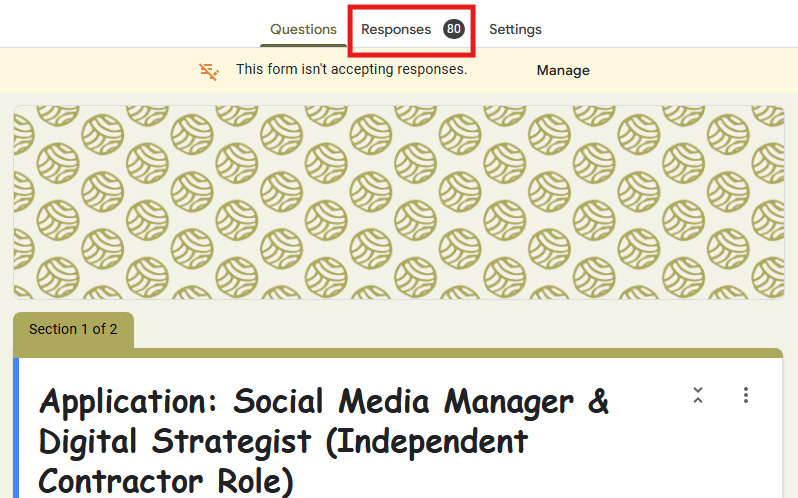
This is a free preview of a paid episode. To hear more, visit thisisgrieftoo.substack.com Wondering why you're not landing job interviews? I recently hired a social media manager and digital strategist as an independent contractor. I reviewed more than 80 applications, interviewed 8 candidates, and ultimately selected someone who was a strong values and skills match for my business. Along the way, I saw patterns: small but avoidable mistakes that knocked people out of the running, and thoughtful choices that made others stand out. Whether you’re job-hunting, freelancing, or just curious about what really happens behind the scenes, here’s what I learned from the other side of the table. The Setup I originally posted the job on LinkedIn with a link to a Google form and a full job description. I kept it up for about a week. I chose not to use other job sites because I didn’t want to deal with the hassle of learning the back end of a different platform. I was also hoping people in my LinkedIn network would share the post and that I’d get a few solid referrals. Within 48 hours of the initial post, I got one direct email from someone who knew me, one referral from a colleague, and one blind application. A good start, but I wanted to be more thorough. So I widened the search by creating a “real” job post on LinkedIn. What I didn’t realize is that LinkedIn charges ninety dollars per day to post. They gave me three days free, but as a small business owner, I wasn’t going to spend ninety dollars a day just to keep the listing active. Luckily, within two days of the “real” job posting, I had eighty applications. That felt like plenty. What I Found From Reviewing 80 Applications Honestly, I was super excited to dive into the applications. I was especially thrilled to see submissions from all over the world—Bangladesh, France, India, Mexico, Nepal, Nigeria, Pakistan, the Philippines, Poland, and the United States. Most of the applications came in during the first 24 hours. After 72 hours, a few stragglers trickled in and while I did skim the late ones, I’ll admit I had already mentally moved forward. Timing matters. Out of the eighty applicants, I narrowed the list by half and shared those files with my brand manager. She helped me get even more honest about what I actually needed and held me accountable to the criteria we set at the start. We eventually set up eight interviews. It felt like a lot, but I wanted to give anyone who seemed like a genuine match a real chance. Here’s what helped applicants stand out during the review process: 🟢 Clear portfolios that included a case study: The strongest candidates didn’t just drop links. They walked me through the work. A few shared mini case studies that showed how they helped a client overcome a challenge, what they contributed, and what the outcome was. That level of detail made it easier for me to picture what they’d be like as a collaborator. 🟢 Design sensibility: Because this was a social media and digital strategy role, I was paying close attention to layout, visuals, tone, and clarity. While I recognize people can adapt their style to the client, I wanted to make sure their inherent sensibility aligned for me. 🟢 Answering the questions in the application: It was evident which people took the time to answer thoughtfully while a handful gave responses that felt rushed or vague. And here’s what raised flags: 🔴 Links to portfolios that didn’t work: About a quarter of applicants had portfolio links that didn’t work, or applicants asked me to email them for access to their portfolios. I did take the extra step for the few people whose resumes intrigued me, but ultimately I felt like they should have the ability to provide a link without me taking an extra step. 🔴 25 percent weren’t actually qualified: There are some companies that say in their job posting: “Apply even if you’re not a perfect fit.” I get that they want to help people move beyond imposter syndrome so they can find the best candidates. But when someone’s experience was too far off from what I needed, it just created noise. 🔴 AI-generated portfolios that missed the mark: I use AI myself, so I both appreciate the efficiency it creates and I recognize the telltale signs. Four of the applicants appeared to have quickly assembled portfolios using AI tools without any real direction or originality. The result? Work that didn’t make sense, had factual mistakes, or just didn’t align with the role. 🔴 Hourly rates far outside my posted range: I included an hourly rate range in the job description and asked candidates to share their typical rate to make sure we were on the same page. About ten applicants listed rates way outside my budget. I didn’t move forward with them or review their materials in depth. From there, it was time to meet the people behind the resumes and portfolios to see how they showed up in real-time. What I Learned From the Interviews We scheduled thirty-minute Zoom interviews with the eight candidates. The structure was simple: about twenty minutes of questions from me and my colleague, followed by ten minutes for them to ask us anything. Here’s what I noticed that made a difference: 🟢 Rapport matters: This is a remote role, and we’ll be spending time together on Zoom. If someone had warm, open energy or at least felt grounded and present it helped us connect quickly. When someone came on screen with a sour expression or low energy, it took more effort to build trust. 🟢 Preparation is a form of respect: One candidate showed up with a short slide deck. She walked us through her process, how she collaborates with clients, and even pitched a few quick ideas based on our job description. It was simple, but it showed initiative and made it easier to imagine working together. 🟢 Use your questions to showcase your skills and preferences: One candidate asked about our best practices for communications. They shared that they like to use slack rather than email to check in on project status and priorities. That kind of question not only showed she was thinking ahead, it gave us a preview of what collaboration would feel like. And here’s what raised flags: 🔴 Interviewing from public places: One person Zoomed in from a loud café. It made it hard to hear, and it signaled a lack of care. For a remote role, you’ve got to treat the interview space as part of your professional presence. 🔴 Generic or scripted questions: We always left time for the candidates to ask us questions, and it was easy to tell who was genuinely curious versus who had Googled “top 10 questions to ask in an interview.” One person asked about professional development opportunities which is fine, but it felt disconnected from a part-time, remote independent contractor role. 🔴 Time zone confusion: One person didn’t realize we were in different time zones and we had to reschedule late into the process. It wasn’t the end of the world, but for a remote-first role, that kind of detail matters. Choosing just one person wasn’t easy. Most of the candidates we interviewed were thoughtful, prepared, and brought a wide range of strengths. Why We Hired the Person We Hired The person we eventually hired didn’t check every single box on the job description. In fact, she was missing one key piece of experience. But the rest of her application, and the fact that she came in as a referral, made us curious to meet her. And when we did, she knocked it out of the ballpark. We had immediate rapport. She was specifically excited about the role because of the nature of my work and where I am in my social media journey. She saw an opportunity to grow with me and to shine. We talked openly about the experience gap, and she shared an example of how she had taught herself something similar in the past. She also spoke clearly about what sets her up for success and what makes her grumpy. That kind of insight is gold. In the end, the deciding factor was the learning curve. The other finalists were missing skills that would take more time to develop, and for this particular role, I needed someone who could hit the ground running. Final Thoughts So if you have ever wondered what really happens behind the scenes, now you know. It’s such thoughtful, messy, human work on both sides. Here’s how I was diligent on my side: * Be kind and responsive. It was important to keep the process human and treat people like people and not robots. * Be clear about what I needed before the interviews began. I get that it takes a lot of time and energy to apply so my clarity was important for all of us involved to find the right match. * Follow-up. Everyone I interacted with was professional and simply wanted to know the outcome. I responded to each person individually via email. Things to know when you’re applying: * If you have at least eighty percent of the skills, apply. Be honest about your gaps and be specific about how you would approach them. * On the flip side, don’t apply just for the heck of it or because “you never know.” Be intentional so you don’t burn out. * Bring your unique energy and presence. It truly matters. * Take the time to prepare thoughtful questions. Your curiosity is part of your pitch. * Apply even if you don’t have a referral. Most of the candidates we interviewed were not referrals and they came really close. Behind every job post is a real person trying to solve a real problem. Behind every application is someone raising their hand. Knowing what happens behind the scenes doesn’t fix a stressful process, but it can make it feel a little less personal and a little more navigate-able. This space isn’t just about reading—it’s about growing. Join the Moonshot Mentor community of paid subscribers and receive journal prompts that help you reflect, process, and move forward with clarity. Journal Prompts Here are three journal prompts for paid Moonshot Mentor subscribers. If you are job-seeking or thinking about your next move, these questions can help you get clear about what you want and how you want to show up in the process.
Embed this episode
Ready to play
What Really Happens After You Apply? 💼
No transcript for this episode yet
Similar Episodes
No similar episodes found.
Similar Podcasts
No similar podcasts found.