This episode is brought to you by Accenture. When you're advertising operations, Fallout of Sync, everything else follows. Spotify and Accenture are working together to reinvent the rhythm of ad sales, using automation, analytics, and smarter workflows to simplify campaign delivery and access better data across the business. The result?
Less time spent on operations, more time connecting brands with the moments and fandoms that matter most. Learn more at accenture.com slash Spotify. Welcome to CechFile, your weekly tech podcast exploring, all the technology changing the way we live, work, and play on your host, Jeff Parsons, with me as Shivali Best, and joining us this week is James Andrews, who is the money editor at Mira Online. This week we're going to be discussing Bitcoin.
Yes, Bitcoin, digital currency, cryptocurrency. It is all the rage. It's going up, it's going down. We're going to try and dig into a little bit about what it is.
Maybe you've heard of it. Maybe you haven't. We're going to try and cover it for you a little bit, get into some of the technology behind it, whether or not it's something you should be looking to invest in or just to kind of demystify it a little bit. So with that, I think I'll bounce over to Shivali first, who can just give us a bit of a primer on some of the background.
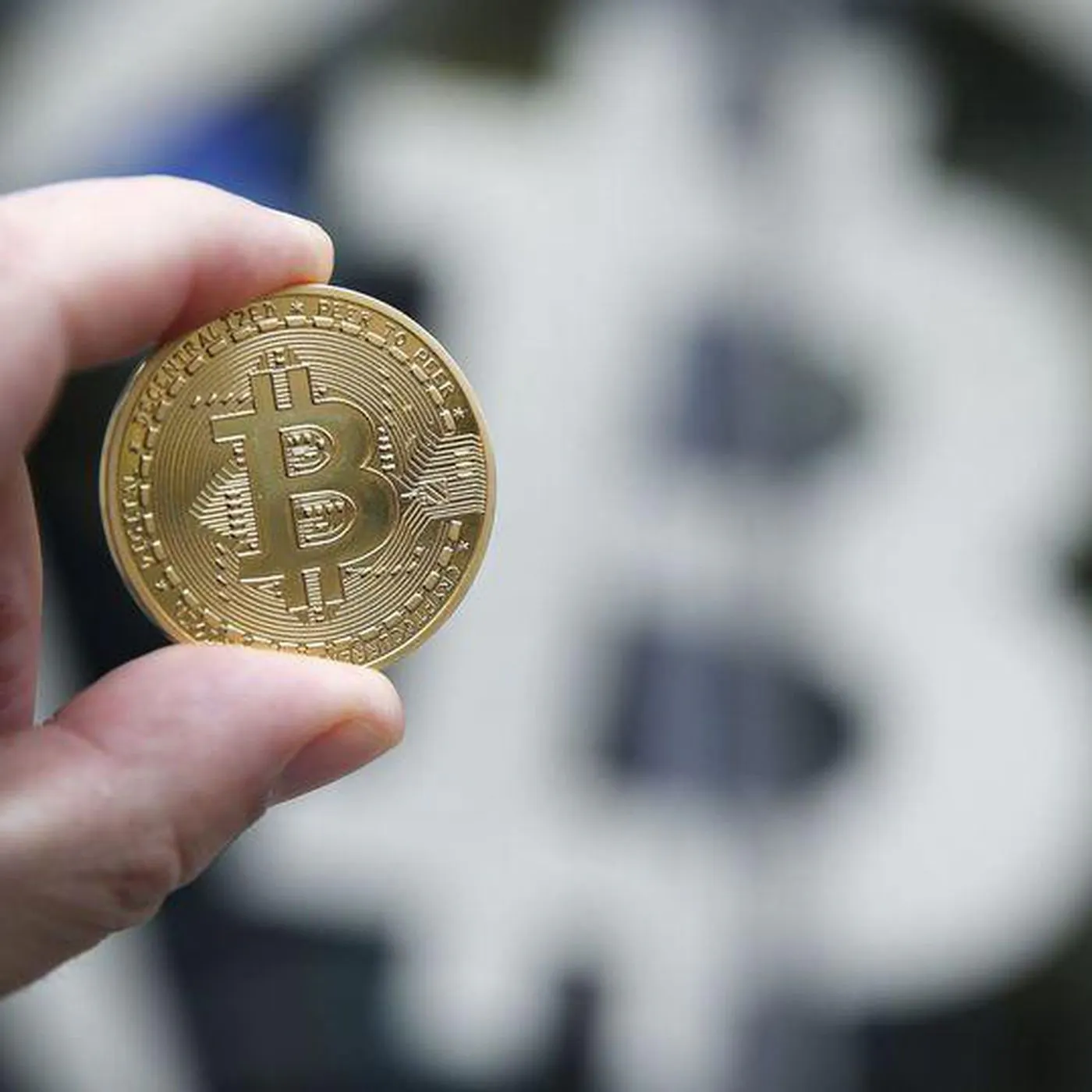
So Shivali? Yeah, so for those of you who don't know, Bitcoin was the first digital currency ever created in 2009. Although that's not to say that it wasn't the first attempt. So in the 90s, several people tried to make cryptocurrencies.
There was Fluz, beans, Digi Cash to name some of them, but all of these failed. And that was mostly because they were controlled by companies. But in early 2009, a man under the name of Satoshi Nakamoto introduced Bitcoin, which he described as a peer-to-peer electronic cash system. And unlike previous attempts, Bitcoin was decentralized.
And that means there was no servers and no controlling authority. And we should always say it's well, Satoshi is a student, isn't it? Yes, we don't actually know who it was. Satoshi is a white paper, wasn't it?
Yeah, it could be a group. It could be one person. Right, right. My favorite is Trump.
I really hope it's not Trump. That's giving Trump a lot more credit, maybe than maybe we should. He's the president. Well, yeah.
So instead of using servers, Bitcoin operates through a blockchain. So James, do you mind talking us through what a blockchain is? Yeah, I think the keys to the whole... there are lots of cryptocurrencies.
I think blockchain is the key to the whole... what is a real cryptocurrency? What is it? I mean a lot of people claim Ripple, which is the biggest game in the last year, isn't a real cryptocurrency because it's not really run properly through blockchain.
Blockchain is basically a way of sharing data. It's something where you can have an awful lot of people can be given access to the data. But they can't actually change it. So it's not copied, certainly.
It can be distributed, not copied. Fundamentally, it's a way of keeping track. And so once you've got a situation where you have thousands of computers across the world, all working off the same YouTube data, all unable to basically constantly verify it, constantly work it out. It means that you can't take it out.
You can't knock it over because it's on thousands of computers constantly being updated, checked. And that's almost like a central bank of Bitcoin, so rather than having a big bottle of gold. So no one's controlling at all. Everyone can see what's going on.
It's just completely open. So you can constantly check that your Bitcoin is a real Bitcoin, the real Bitcoin is a real Bitcoin, the no one else has found that Bitcoin. And if you want to sell it, people can check again. That is definitely correct.
And so that lets you, anyone really with access to the blockchain, check currencies and update lists. It's fundamentally the list of who's got the Bitcoin. It's sort of the core principle of it, isn't it? It's the technology, the platform on which all crypto currencies are kind of filled with.
Yeah, not just cryptos. You can use blockchain for many things. Some of the actual coins are more about using space. So you can store stuff in the cloud and you pay for access.
And the way that you can pay Google or Amazon or Dropbox for access, there's something cool. I think it's here, which is a blockchain version of this. So that you go on blockchain and use that distribution list for who's got space and who's working that way. You can do it with lots of things other than money, but Bitcoin is the most famous of the things that use blockchain.
Right. It can be used for many things. Okay. Cool.
Now, that does make sense. It's difficult to conceive something that way. It's hard to actually picture. It's really hard to see it.
It's all just digital. It's like a Google doc where you've got like 10,000 people editing it. So everyone can see it instantly. But nobody controls it.
No one controls it. Right. It is quite tricky to hit your head around. But it's a pretty amazing piece of technology.
I have to say now, guys, have either of you got any Bitcoin? I do not know. I started writing about it about five years ago when it first got to, it started approaching the price of gold. And everyone was like, this is a digital thing that doesn't have worth money.
And that's when it starts writing about everyone's Bitcoin. I did it by 100 dollars. That's a lot. And so I didn't.
And obviously that was in retrospect silly. Yeah. Jeff, you've bought some Bitcoin. Sort of.
Which I think lends me the most credibility in this route. I haven't used to. So a fraction of a Bitcoin is called a Satoshi. So I am the proud owner of, I believe it's around 0.1867 Satoshi, some of that.
So that fraction of a Bitcoin. What that equates to is last year, last December, I thought it's all picking up. I mean, everyone is starting to get on board. Why not pick a sum up for myself?
So I splashed out the grand total of 25 quid and bought myself some Bitcoin. Hey, big spender. Hey, big spender. You've done that in 2009.
I would be, if I'd done that into that, I'd be driving the Lambo to work. I'd be holidaying in the Bahamas. I'm actually working. I probably wouldn't be working.
Actually, so that was my plan. Why not? I'll get some Bitcoin. A couple of years from now, I'll be living the life.
Did not turn out that way, guys. It's a total price. Yeah. Almost immediately I was at a loss.
So. It was your fault. Maybe as soon as I jumped on it, they went right. Okay, for the journalist to get in on it now, it's really time that it's going to.
Can we be in through the hype cycle? I don't think so. The way I bought it is through. I mean, I'll paint the picture for the listeners.
The way I bought it is through an app. And the app is called Coinbase. And you sort of sign up. You verify your identity and you are given a wallet and an account on the blockchain.
And you're given a picture of one. Yeah. Did you see the other list of 50 cent to TMS? I said, it reminded him that TMZ, TMZ.
He, as a gimmick, about five to six years ago, decided that you could buy his album with Bitcoin, got about 700 Bitcoins from Bitcoin completely for what's happened. And then someone at TMZ realized and worked out about eight million now. Oh my gosh. So his reaction was cool.
I mean, what a fluke. Amazing. Are you getting on board early? Let's get to it.
Although I'm intrigued to know whether he'll have his password because almost everyone I know who got involved early, who heard about it when they were at uni or saw something and went, hey, this looks like fun. That's mine's arm. Has since forgotten their passwords. Well, do you hear about the guy who stored his on hard drive and then put it in the landfill and it's now worth millions?
He's asking them to dig up the landfill. Yeah. It's like gold hunting, isn't it? Yeah.
It's like buried treasure. Literally buried treasure. Buried digital treasure. Buried digital treasure.
That's amazing. Yeah, it is being portrayed now as one of the biggest investment opportunities, but it does fluctuate massively. Why does that happen, James? Yes, James.
Why does that happen? Yes, James. Talk about money, not tech, just like. But, so one of the other reasons I didn't buy Bitcoin when I first came across it, which was about 40 years after everyone else, but about 40 years ago now.
So, it's impossible to value Bitcoin's new, blockchain's new, it's potentially really, really useful. But, there's no, when you look at a company stock, you can say, a phone's got a lot of products coming out this year, it's got some new service plans, it's really, really profitable. So, if I buy a phone, I can see that more people are buying phones, I'm going big in Africa as Africa goes straight to the mobile. I think that it's going to be worth more money in a year's time, or in a week's time.
And then you get updates from a phone saying, hi, our trading's doing this. Right. And this is where our money's going and they have a problem, they have a profit warning. You can basically analyze it and look at, I think that it's going to be worth more money next year.
Bitcoin is no way of doing that. Of course, because you're right, so if you were a traditional investment, you would invest in a company that is producing something that is beneficial to society, and people are paying for that, and which is they can pay you out dividends, and their stock increases or goes down if they have a bad year. So, it's a real physical, in a manner of speaking, investment in part of society. This is purely digital, there's nothing to, the only thing to push it up and down is the demand for it.
Just speculation. Yeah, and that is the big thing is it's, I think someone called it the world's first faith-based currency. Someone else called it the perfect speculative material, because there's no way of doing it. Obviously, in theory, you get to a point that if the entire world's using it, because you can only have, we should probably say this now, when it was set up, it was designed that there could only have a B21 million Bitcoin sound.
Right, it's fine. If it baked into the whole design, which means if everyone was using it, they didn't need to be worth an astonishing amount each, because they'd have to cover it. If you want to move £100 million in Bitcoin, then you need to have Bitcoin to be worth £100 million, and considering people keep losing their landfills and miles, it probably wouldn't be if that 100 million was any small percentage of the Bitcoin total, so you could actually shift it. But yeah, so in theory, you can automatically, but equally, it's got nothing kind, it's got nothing backing here, and that's why it's risky, you can't value it.
So originally, the 21 million was owned by no one. No, it was on Satoshi. I like to think of it as a, so thinking back to school, you can write, quadratic equations have two answers. You get like, that's always been the way, so you set up a question, the question has two answers.
As I understand it, Satoshi set up a question, a very, very hard maths question, which had 21 million answers. So in order to be a proper Bitcoin, you had to answer the question and quite a correct answer to that question, that someone else hadn't already found. And that's how I understand the maths. I'm sure people will be writing an emailing and tweeting and saying that's not how it works.
But as I understand it, that's how it works. You set up a question, there are 21 million possible answers, but all you're doing is setting up the question and limits on it. And so no one only did it exist, they had to be found. So if you buy Bitcoin now, who were you buying them from?
Someone who mined it originally. So mining is basically you're using very powerful computers to answer the question that Satoshi sat set. And once you find an answer, you check on the blockchain to make sure no one's already found that one. If no one has, you get to give them the ownership of that Bitcoin, that answer.
And I'm all right. And saying that the answers get progressively harder and therefore need more computing power to get to that answer. So mining now is not the same mining Bitcoin now, it's not the same as mining Bitcoin a few years ago, because people have got on it more bitcoins of the finite amount have been mined or created. So you need more and more, so you see these sort of these farms of processors mining Bitcoin.
So to strip the maths down very basically, if you're doing multiples of three, and your question is, I want multiples of three that are less than 10 billion, and those are the answers I'll take, it's pretty easy to find first ones, because when you're getting into, oh, here's, sorry, to hand gesture, which is useless in the podcast. But the listeners, James, just raise his hand in the air. When you get to the really high end, not only you're trying to find a model of three in the billions, you're also trying to find a model of three in the billions that no one else has found yet, and that gets harder and harder. They worked in out that a single transaction on the blockchain at the moment uses the same electricity as a house for a month.
In fact, more electricity was spent mining Bitcoin last year. So last year more electricity was spent mining Bitcoin than was used in Ireland. Really? Wow.
Bitcoin takes the same electricity as Ireland. It's because, yeah, you're right, the computer wants to try to find really obscure answers right now, the start is much easier. Yeah, actually, that's a great island. That's quite nicely in a way, and to sort of the legalities of Bitcoin, and it's, I mean, we're talking about it in terms of personal investments, you can make a little bit of money out of it, but the other thing is that this is a form of currency that has no regulation, no centralized banking system, no international monetary fund that can effectively guarantee the investment.
So what it does is it strips out the ability for, say, another financial crisis to happen because people aren't getting into debt, everything they don't have, but also it allows direct payment. You can see it's a peer to peer, isn't it? Yeah. I mean, you can actually print out your Bitcoin and sell it to a working apartment.
That's the thing that you can do. Yeah. If you've got actual Bitcoin, I think you have a fraction of the Bitcoin rather than a whole Bitcoin. So I can't go down to the pub and try and flog somebody.
You might be able to. You might be able to, but once you start going fractional, you're not talking about blockchain, you're talking about someone who owns bitcoins and block chain threats, splintering their bitcoins into smaller bits because the Bitcoin is the discrete unit. Right. So as I understand it, and I'm very happy with the correct tier, and actual Bitcoin, I know this refactors, my writers did this, can be printed out and kept on a piece of paper, which you can then go to a pub and flog someone.
Wow. Good to know. That's what I'll be doing. That's what I'll be doing.
But I've seen that some countries have started imposing regulations to try and clamp down on this trading, which happens over exchanges, which are kind of digital marketplaces, I suppose, where bitcoins can be bought and sold. And the reason that these governments, China, Vietnam, South Korea, most recently are trying to get a handle on it is because it's decentralized. There's no way of controlling or taxing or having anything to do with those attacks. Is there any attacks on Bitcoin?
The joy that is. So if you sell a Bitcoin out of profit in the UK, that counts exactly the same as if you bought a share, it'd be a value in your sold out share, or a house that you weren't living in or a classic car, or any of these things. It counts as a capital game tax. If you mine Bitcoin, that counts as a trade, which means you get normal income tax and a national insurance guitar on it.
People aren't doing it because it's really quite hard to track it. If you're not just turning to real money, it gets your bank account. Not real money. So you can't control the blockchain and what happens on the blockchain.
But if you want to turn that into something that's not blockchain, the second that happens, it's just currency in a bank account, which you've made from either investing or from mining an account. So where do you think the financial institutions stand on Bitcoin? Because I've seen it first, you know, rubbishing it from some... The bank thing that's interested, but they're interested in technology rather than the currencies themselves.
And this is really interesting way of doing things, looking at blockchain, looking at how you can distribute work, how you can distribute space, what you can do on it. And I think how can we make this work in other financial institutions? Could you do it for a legal documents, if you were trying to buy a house or get divorced or whatever else you have, all the lawyers, exactly the same document at the same time, make it all check it and make your reference to it and do that constantly. It's got huge potential.
The currency side of things, I think they're just looking at and waiting to see what happens. And when it gets turned into real money, they're like, okay, we can tax that, that's an income or that's... So the key point is that the tech underlying it is important and useful, and this is a huge basis, but the currency is... It's one of the biggest people specifically.
I have a specific problem with Bitcoin, Bitcoin was the first, and it was revolutionary. It's also the worst, well maybe not the worst, but it's a very bad version of cryptocurrency, because it's like having an app for one computer. It's amazing that it's got this visual interface, and that's definitely the future, and it's something you can have at home. But you wouldn't buy one now, if you were going to do anything else and collect it, because there are much better computers.
Bitcoin's forked four or five times, Litecoin, which should really quite well be able to... Hold on back up, I've forged. Oh, let's explain that. You want to make a tea?
Oh, no, I don't want that. As far as I know, forking is when a currency is born out of the blockchain process. So if blockchain is the platform, Bitcoin is one of the currencies existing on that platform, and a fresh set of developers or a fresh team take the blockchain technology, which is available to everybody as its open source, and use that to create a new currency, an offshoot, a fork, whereby all the previous transactions are still maintained, but it, like a road, it goes off in a different direction. And therefore, it trades separately to the original cryptocurrency.
Is that right? As far as I understand it. So Bitcoin's because of the way the blockchain's built, you can only add one megabyte of data to it every ten minutes. So obviously people are trading a lot, that makes it really, really slow.
So we've been through this incredibly energy consumption. So it's slow to trade, it's energy consumption, and they can only have to be 21 million of them. So what they did Litecoin was one of the first Litecoins bliss off from Bitcoin, and it took all people who had bitcoins in the Bitcoin set up and said, we're going to do it, so fix some of the speed problems. Bitcoin Cash again split off last year, saying, look, this is too slow, it's not useful to trade day to day, so we're going to create something that's like four times faster or five times faster.
Bitcoin Gold split off after Bitcoin Cash, in which Bitcoin Gold was, I think, designed more investment coin rather than a trading coin, and Bitcoin still exists. But the thing about the Bitcoin is that it's the original model, it's the first one, it's the model T, it's the after one. So there are an awful lot of coins that have taken the idea of blockchain and tried to fix problems that they found of Bitcoin, which is why Bitcoin, I don't think, is this is a little long term solution. So Bitcoin has sort of become like the short form, has it?
Yeah, it's what we used to just say, Bitcoin, people know what you're talking about. There's so many now that you hear about Ripple and Ethereum, and you mentioned a few of the other ones there. How do people know which one if they do want to invest? So if you bought Ethereum at the start of last year and Bitcoin at the start of last year, the Bitcoin went from about $900 to top out at about $18, $19,000 to increase by factor of $20.
Ethereum crushed that, it went from $6 to close to $1,000, it was like thousands of percent, and it wasn't the only big danger, I think. Ripple went up to something insane, like 30,000 percent. It was went from like a fraction of a penny to about $3, but because it's so low that it was. And so I was thinking that without knowing, there's lots of theories to why they pick up, lots of theories, but lots of good coins don't get, don't pick up, average coins do pick up.
I think do some research, do some reading, find out why, what makes that coin different to the others. And I would argue pick something that's relatively cheap now, pro-tune, where I could quit in each of them, and you can get hundreds of some of the coins without money. And just see what happens, and you can, most people argue you put most of your money in the big ones, so Ether and Bitcoin and Ripple are the three biggest by market capitalization. That means how much they're worth, if you have them all up.
And then say, those are the three big ones, so those ones are going to be the, most people's money are, but they'll also say, take $100, take $20, and throw it at a bunch of small ones. I mean, I, things like, it would have been so much more helpful to me if we recorded this one last time in December. So, you say that if you pull, the last year would have been more interesting. I suppose, because it was up and down.
I had a quick look, right? Bite, Verge, and see a coin at all, have got capitalizations, every billion, which means there's some money in them, and I bought really cheap purchase prices. So, I don't know if they can know up lots or not, but I said, if you look at what Rickled it, maybe. It's always going to be a risk, though, isn't it?
The technical term. So, there's actually, right, so one of the big, fun things on cryptocurrency Twitter, which isn't actually a type of tortoise, which is watching people argue with each other. This, you've got a very big split between the guys with the computer science degree, so one's another tech, and see there's a magical tech thing, and the guys who come from the investing site, so the money, the economists, and the people on that side. Because all the big guys on the tech side are kind of going, this is new, this is amazing, this is nothing can stop this, this is really, I think it's like John Caffrey where it said something like Bitcoin can't crash.
Oh, John Caffrey, don't. Well, no, I know he's a mental, but he's not taking him as a borometre, but he like, the idea that he couldn't crash was built into the idea of like, no, because it's all just open shores and you can't crash. Because what we're doing is people are buying things with money, and that behaves to a whole different set of rules, and it doesn't matter what the thing you're buying with money is, is a thing that you buy with money, and we've been doing that for several thousand years now. So the technical term is a greater full asset, because logically, if you look at a price or something, you can't value it, because there's no income coming from it, and there's no product being produced at the end of the day.
It's, you pay the price of the market, things is right now, so the best intelligence of the entire market says it's worth this. And so when you buy that price, what you need is to someone else with equally zero information, because there's no other information to buy it for more, so they're all they're looking for a greater full, which is the idea of, right? So it's not the only thing that's like that stamp, you can say it's exactly the same thing, a classic car, a piece of art, a fine burgundy wine. There are many, many things that fall into this class, but it does mean that you're guessing.
The value is what someone is willing to pay for it. Which is true of all things, something that's useful in, like a house you can rent out for a certain amount of money, so you know that this house can produce this much income, and can be sold for this much on the value of the house much change for the income, is at least solid. With the Bitcoin, it offers any crypto, they offer things that other stuff can't do, so privacy or in the case of seared space, either it's a way of distributing other things, it offers something, but the question is what is that worth, is someone I'm just not going to pay for that? And that's just speculative, it's a technical term, just speculating what's investing.
Well, I don't know what to say from, no it's really interesting, it's really interesting to talk about it, and I can say from a personal experience, so far my Bitcoin adventure has not been profitable. Will you be jumping on the bandwagon anytime soon? I might do what you said in investing, some of the smaller ones, not much money, like 25 quid, but just to see what happens, it's exciting. So I have a bit of skin in the game.
Yeah, I might add enough, so I'm going to get involved. Well, my favourite story in the whole crypto thing is when, back in 2013, when Bitcoin first started in the news, you had doggy coin, and doggy coin was a joke currency based around the meme of the doggy looking up, and the coin actually has a picture of the meme dog from like the four or five years ago. And it was done basically as a joke to make a point, and we speak to the owner of it now, it's a market capitalisation as well over a billion recently. And he's just looking at going, this was literally a joke.
And so he says he's got a team of developers who are maintaining it, but he says there's been no updates to the software for two years. There's been no, this was literally a joke, and he says he hasn't made any money out of it, because he even did it as a joke, so he just didn't hold any money. And he says when my coin is worth 1.5 billion, it's not any more, it's not very hundred million now. But when my coin is worth it, there's a problem going on here with people who don't understand.
Yeah, I just want to give you the jumping on the bandwagon, isn't it? They seem to go up, they buy and it's like you need to think about. That's what I did. Yep.
They work out so well for me. The problem is people like you, Jack. Exactly. So, what's the solution to you?
Well, that's right guys, so I make the mistakes, so you don't have to. That's probably a good spot to maybe wrap it up on a crazy meme coin. We just discussed an awful lot about it. We tried to peel back some of the letters.
It's been really interesting, I think we've carried on talking about this for quite a while, because there's so much information about the technology, the financial side of it as well. Maybe we'll revisit this in a future podcast, I don't know. If you have any suggestions for future podcasts, if there's anything you want to hear us, chat about, put our expertise to. Just give us a suggestion, you can find us on Twitter.
We're obviously covering everything here at the Mirror Online, so we're at Mirror.co.uk. It's just a laugh for me to say thanks very much to James for joining us. My problem is great, thanks again, Shavali. Thank you for stepping in.
Great, so thanks a lot for listening and we will talk to you again soon. Thanks for joining us, we'll see you in a few minutes. We'll see you in a few minutes. Thanks for joining us.
Bye!