
EPISODE · Dec 5, 2019 · 1H 19M
What Thucydides can Teach Us About Hong Kong and China: a Critical Response
from The Institute of World Politics · host The Institute of World Politics
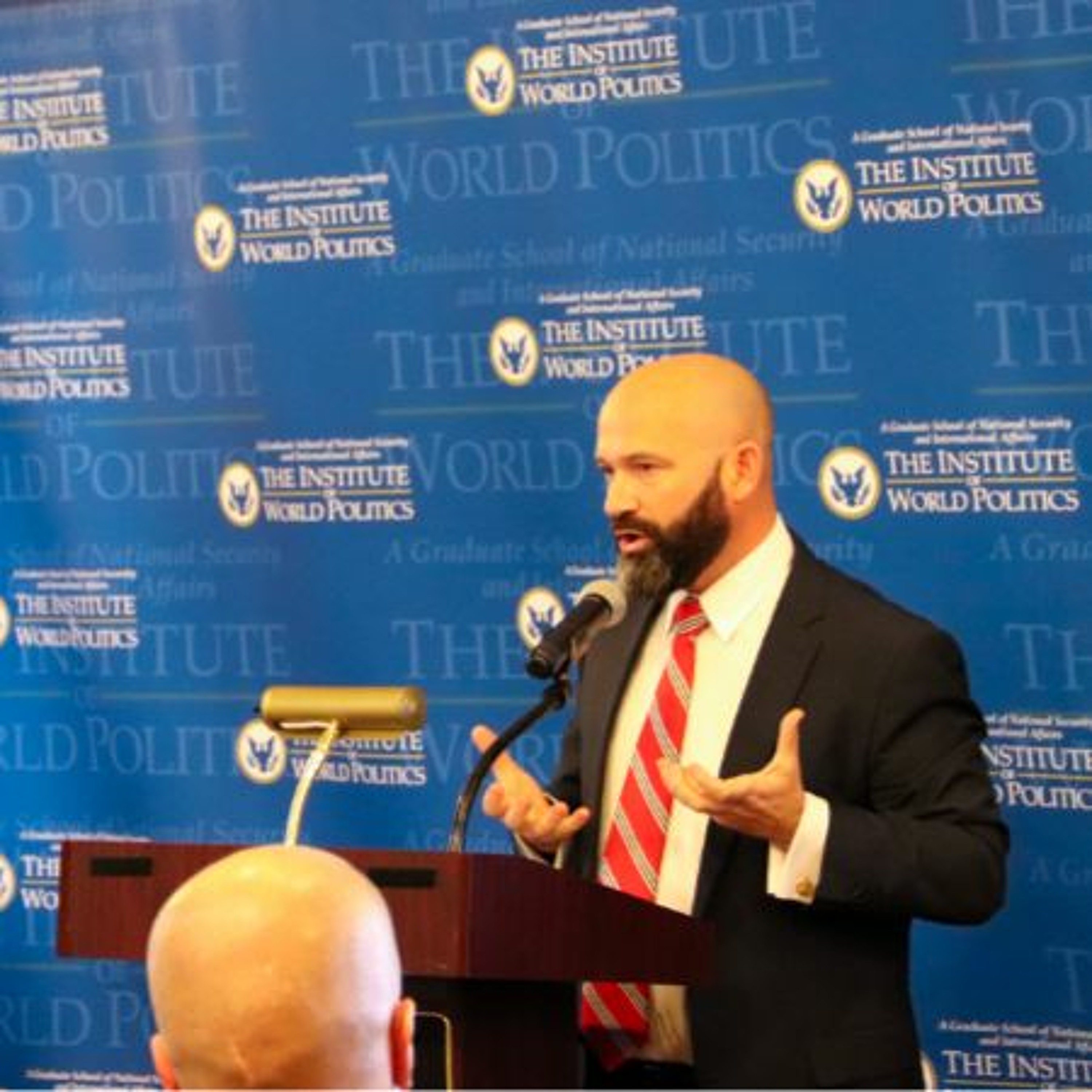
About the Lecture: In 2017, Graham Allison, founding dean of the Harvard Kennedy School and former assistant secretary of defense, published “Destined For War: Can America and China Escape Thucydides’s Trap?” Allison’s Thucydides’s Trap rapidly became an influential statement on the challenge that a rising China poses to the international order created and lead by the United States. To help understand the dangers that China’s rapid economic, technological, and military growth poses to both countries, Allison draws on the classic statement on great power war — Thucydides’ History of the Peloponnesian War — to argue that the “structural stress caused when a rising power threatens to upend a ruling one” makes even “ordinary flashpoints” likely to trigger large-scale conflict.” Allison is certainly right about the growth of China. And he is right to look to Thucydides for help. But Allison reduces Thucydides’ magisterial work to an instrument of realpolitik. Using Thucydides’ account of the siege of Plataea as a guide to China’s contemporary treatment of Hong Kong, we can see another, deeper and richer, lesson in Thucydides’ History, one that must not be forgotten by those who wish, in the face of Chinese authoritarianism, to preserve the fragile but precious gift of freedom at the heart of Western civilization. About the Speaker: Bernard J. Dobski is an Associate Professor of Political Science at Assumption College and is currently a Visiting Scholar for 2019-2020 at the Heritage Foundation. He is the co-editor of two volumes on Shakespeare’s political thought. His articles and essays on the political wisdom of Thucydides, Xenophon, Shakespeare, and Mark Twain appear in the Review of Politics, Interpretation, Society, and Philosophy & Literature. He has also published on foreign policy, military strategy, sovereignty, and nationalism.
Embed this episode
NOW PLAYING
What Thucydides can Teach Us About Hong Kong and China: a Critical Response
No transcript for this episode yet
Similar Episodes
No similar episodes found.
Similar Podcasts
No similar podcasts found.