
EPISODE · May 25, 2026 · 1H 3M
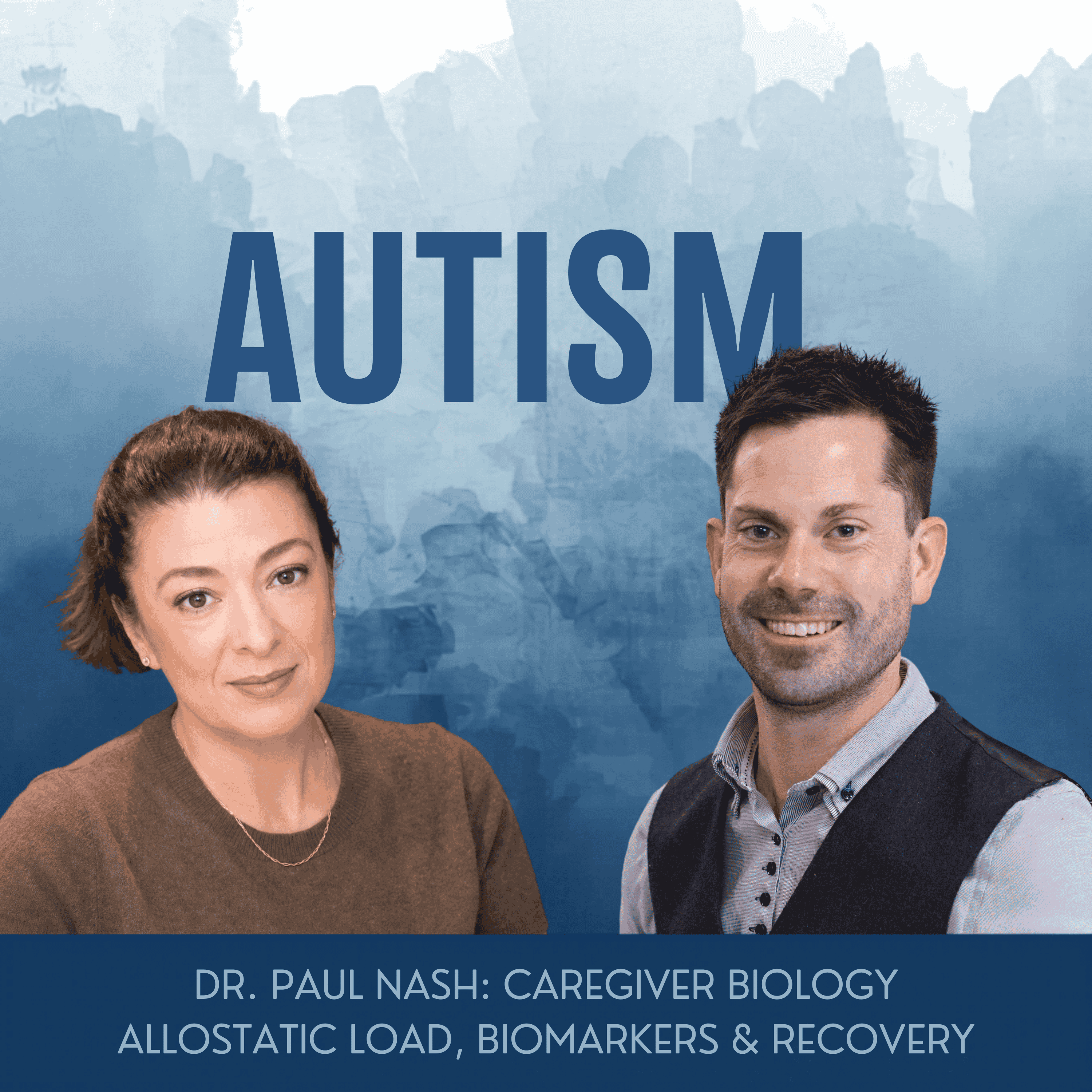
What Years of Caregiving Does to Your Body and Simple Things You Can Do Today | Dr. Paul Nash, USC Gerontologist
For every autism mom, dad, grandma, and caregiver who has been told to "just reduce your stress" by a doctor who has clearly never watched their child have a meltdown at 2 a.m., this episode is for you. In this episode of Biohacking Autism, Nadia Elkhatib sits down with Dr. Paul Nash, USC gerontologist and co-author of Critical Questions for Ageing Societies, on the biology of autism caregiving and what is measurable, modifiable, and reversible.Most autism parents have spent so many years tracking their child's biology that their own goes unmeasured. Paul makes the case that caregiver health is not a luxury, it is strategic. Your longevity is your child's safety net.Topics covered: the biology of long-term caregiving, allostatic load and the 60-second micro-break protocol, the caregiver biomarkers worth tracking now and what can wait, the four coping strategies and the one that consistently predicts long-term resilience, why self-grace is a biological intervention not a soft concept, how stigma shows up in your bloodwork, what the HIV aging cohort taught researchers about long-term resilience, isolation versus loneliness and the minimum effective dose of connection, four crisis-mode quick wins for the days when you can't meditate or supplement or follow another protocol, and the closing reframe every caregiver needs to hear: you're not failing, you're adapting.From Dr. Paul Nash, on the biology of long-term caregiving:The biology of long-term caregiving doesn't care whether you are caring for a spouse, a parent, or a child, but it leaves fingerprints on you. And gerontologists are becoming more interested in what those fingerprints look like, especially in autism parents. But more importantly, what changes those fingerprints?Connect with Dr. Paul NashUSC Leonard Davis School of Gerontology: https://gero.usc.edu/faculty/paul-nash-phd/LinkedIn: https://www.linkedin.com/in/paul-nash-03676564/Connect with Biohacking AutismWebsite and full show notes: https://biohackautism.comFind the show on Apple Podcasts, Spotify, YouTube, and Amazon Music.SubscribeNew episodes weekly. Subscribe on your favorite podcast app and on YouTube at Biohacking Autism for more real solutions for people with autism and the ones who love them.Products and Resources MentionedCritical Questions for Ageing Societies (Dr. Paul Nash's book) - https://amzn.to/4djlCClPurpose: Dr. Paul Nash's co-authored book on aging societies, demographics, and ageism. Provides the broader research context for the conversation."How do family caregivers of older adults cope with relationship strain?" (Meyer et al., 2023, with Dr. Paul Nash) - https://www.tandfonline.com/doi/full/10.1080/13607863.2023.2247353Purpose: The 2023 peer-reviewed paper that mapped the four core coping strategies (problem-focused, emotion-focused, avoidant, and meaning-focused) discussed in this episode. Open access.Medical DisclaimerThis episode is for educational and informational purposes only. It is not medical advice. Always consult with a qualified healthcare provider before making changes to your health protocol or your child's protocol. Ketamine is discussed in this episode in the context of treatment-resistant depression and is a regulated medication that requires direct medical supervision. Discuss biomarker testing and any new health protocol with a clinician who understands your full medical context before acting.Biohacking Autism with Nadia Elkhatib explores real solutions for autism anxiety, sleep challenges, gut health, MCAS, neuroinflammation, nervous system dysregulation, and caregiver health. Topics include autism caregiver health, biology of long-term caregiving, allostatic load, autism mom burnout, caregiver biomarkers, emotion-focused coping, caregiver isolation, autism gut-brain axis, microbially derived metabolites, microbiota transplant therapy, autism diagnostic biomarkers, functional medicine for autism, peptides for autism, autism parent burnout, longevity for caregivers, and integrative health strategies for autism families. New episodes weekly. Visit biohackautism.com.
Embed this episode
Ready to play
What Years of Caregiving Does to Your Body and Simple Things You Can Do Today | Dr. Paul Nash, USC Gerontologist
No transcript for this episode yet
Similar Episodes
No similar episodes found.
Similar Podcasts
No similar podcasts found.