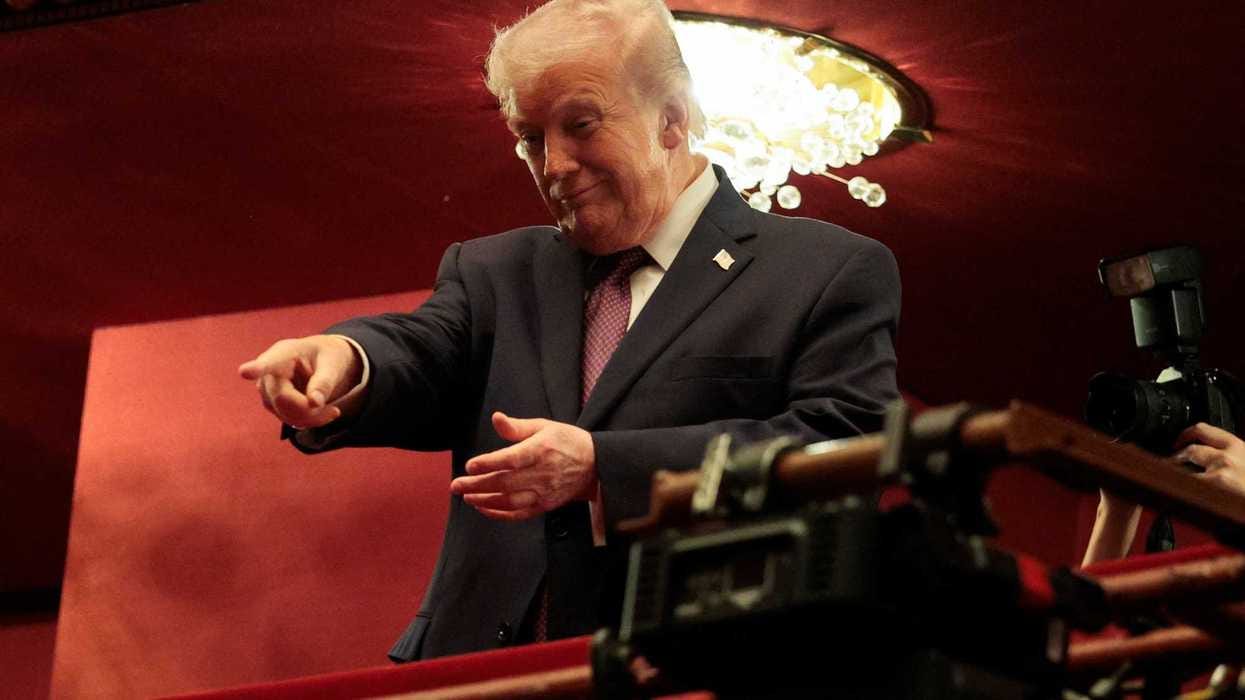
What’s really behind the Kennedy Center’s 'collapse’
from Systemic Error Podcast Hosted by Paulo Santos
What happened AlterNet argues that the Kennedy Center’s reported financial collapse followed President Donald Trump’s takeover, not a preexisting fiscal catastrophe. Citing Washington Post reporting based on 15 years of confidential board records and tax filings, it says the center was solvent before Trump removed professional staff, asserted control over programming, and watched revenue, donations, and bookings fall. The Post reportedly found that the center then exhausted its available bank borrowing, used donor-restricted funds intended to remain unspent, and wrote off unpaid pledges. Trump claimed the institution had already been losing hundreds of millions of dollars, while his board warned of bankruptcy; AlterNet says that account minimizes the administration’s own decisions, including cutting development staff and spending National Opera endowment money. The power is not mysterious The decisive actor was not an amorphous arts audience, disloyal donors, or an institution spontaneously forgetting how to function. Trump took control of the Kennedy Center, displaced its professional management, and imposed political authority over artistic decisions. His board then controlled the institution’s response to the resulting financial pressure. That is institutional power in its plainest form: the ability to remove personnel, redirect programming, spend protected resources, borrow money, and define the official explanation afterward. Audiences and donors could withdraw support, but they did not control the center. They reacted to decisions made above them. First capture, then blame The central misdirection is chronological. Trump described the Kennedy Center as a failing institution he inherited, while the records cited by the Post reportedly place its most severe deterioration after his intervention. That does not eliminate every earlier financial weakness; AlterNet acknowledges genuine areas of dispute. But it makes the sequence unavoidable. An administration cannot seize managerial control, remove revenue-producing expertise, alienate patrons, exhaust credit, consume restricted funds, and then treat the resulting distress as proof that the institution was doomed before it arrived. This is blame-first governance: announce failure, impose disruption, and use the disruption as retroactive evidence for the original accusation. Manufactured necessity A financial emergency can become political permission. If the Kennedy Center is portrayed as irreparably insolvent, drastic action—including the possible razing described by AlterNet—can be presented as reluctant housekeeping rather than the culmination of choices made by those now declaring the emergency. The available reporting does not establish that the damage was deliberately engineered to justify destruction. It does establish a more limited and still damning pattern: the people exercising control are blaming conditions that reportedly worsened under their control, while discounting their own role in producing them. That maneuver converts accountability into inevitability. Management decisions disappear; “collapse” becomes something that merely happened. The allegation outruns the evidence AlterNet places the Kennedy Center alongside several episodes in which Trump or his allies advanced accusations that the reporting says were not sustained by evidence. These include demands for a “Grand Conspiracy” prosecution that two prosecutors reportedly declined to pursue, Senator Eric Schmitt’s mistaken insinuation about Jack Smith attending an Atlanta basketball game, and a Federal Reserve watchdog’s finding of no criminal wrongdoing by former chair Jerome Powell in the bank’s headquarters renovation. The cases are distinct, and none proves the others. Their shared political function, as presented by AlterNet, is to make accusation itself do the work: stigmatize the target, authorize intervention, and force everyone else to spend time disproving a premise that was never adequately established. The Kennedy Center’s books matter precisely because records resist that performance. They assign dates to decline, decisions to officials, and consequences to management. Ruin as political narrative The larger pattern is institutional capture followed by historical revision. Professional authority is displaced, political loyalists gain control, operational damage follows, and the new leadership cites that damage as evidence that the institution deserved takeover or demolition. This is not confusion about who was responsible. It is a struggle over whether responsibility will remain visible. Once chronology is stripped away, power can present its own consequences as inherited facts—and turn preventable damage into an argument for still more power. Thanks to Alter Net Source: What’s really behind the Kennedy Center’s ‘collapse’ This is a public episode. If you would like to discuss this with other subscribers or get access to bonus episodes, visit paulstsmith.substack.com
Embed this episode
No transcript yet.