
EPISODE · May 27, 2026 · 11 MIN
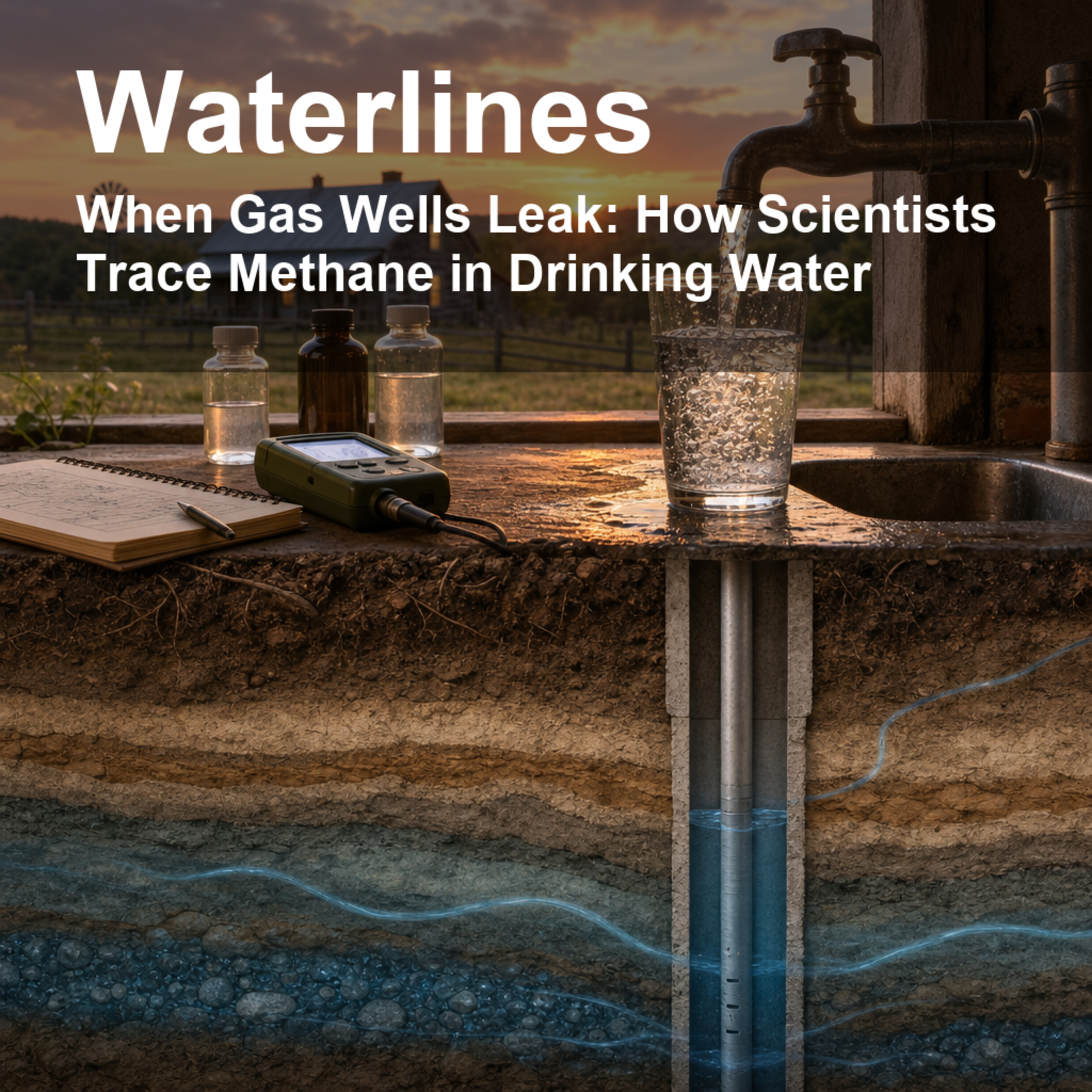
When Gas Wells Leak: How Scientists Trace Methane in Drinking Water
from Waterlines: How Water Shapes Our World · host jaywen
A glass of well water can look perfectly clear and still carry a hidden question: where did that gas bubble come from? This episode matters beyond one paper because millions of people rely on private wells, and energy development, rural water safety, climate concerns, and public trust often meet at the kitchen tap. We follow scientists as they sort out methane migration near shale-gas sites using chemical “fingerprints,” well-construction records, and a lot of cautious field detective work.The episode explains why methane in water is not usually treated like a classic poison, but can still create real hazards in confined spaces and can change water chemistry. We walk through four high-profile case studies: Dimock, Pennsylvania; Parker-Hood County, Texas; Pavillion, Wyoming; and Sugar Run, Pennsylvania. The key lesson is practical: many documented methane incidents were linked not to cracks racing up from deep hydraulic fracturing zones, but to imperfect well construction, especially uncemented or poorly cemented spaces that let gas from intermediate rock layers move upward toward aquifers.We also talk about uncertainty. In some places, methane was tied to gas-well activity; in others, natural gas already in shallow formations was the better explanation; and at Pavillion, the review found no significant methane impact in domestic wells. The paper shows why baseline water testing, isotope measurements, noble gases, pressure tests, and transparent records matter when communities, regulators, and companies disagree.Full paper citation: Hammond, P. A., Wen, T., Brantley, S. L., & Engelder, T. (2020). Gas well integrity and methane migration: evaluation of published evidence during shale-gas development in the USA. Hydrogeology Journal, 28, 1481–1502. https://doi.org/10.1007/s10040-020-02116-yDisclosure: This Waterlines episode package is designed for AI-generated voices; the hosts in the script are AI-generated voices, not recordings of the paper’s authors.
Embed this episode
NOW PLAYING
When Gas Wells Leak: How Scientists Trace Methane in Drinking Water
No transcript for this episode yet
Similar Episodes
No similar episodes found.
Similar Podcasts
No similar podcasts found.