
EPISODE · Jan 13, 2026 · 12 MIN
When Khamenei Dies, the Middle East Burns
from Tatsu’s Newsletter Podcast · host Tatsu Ikeda
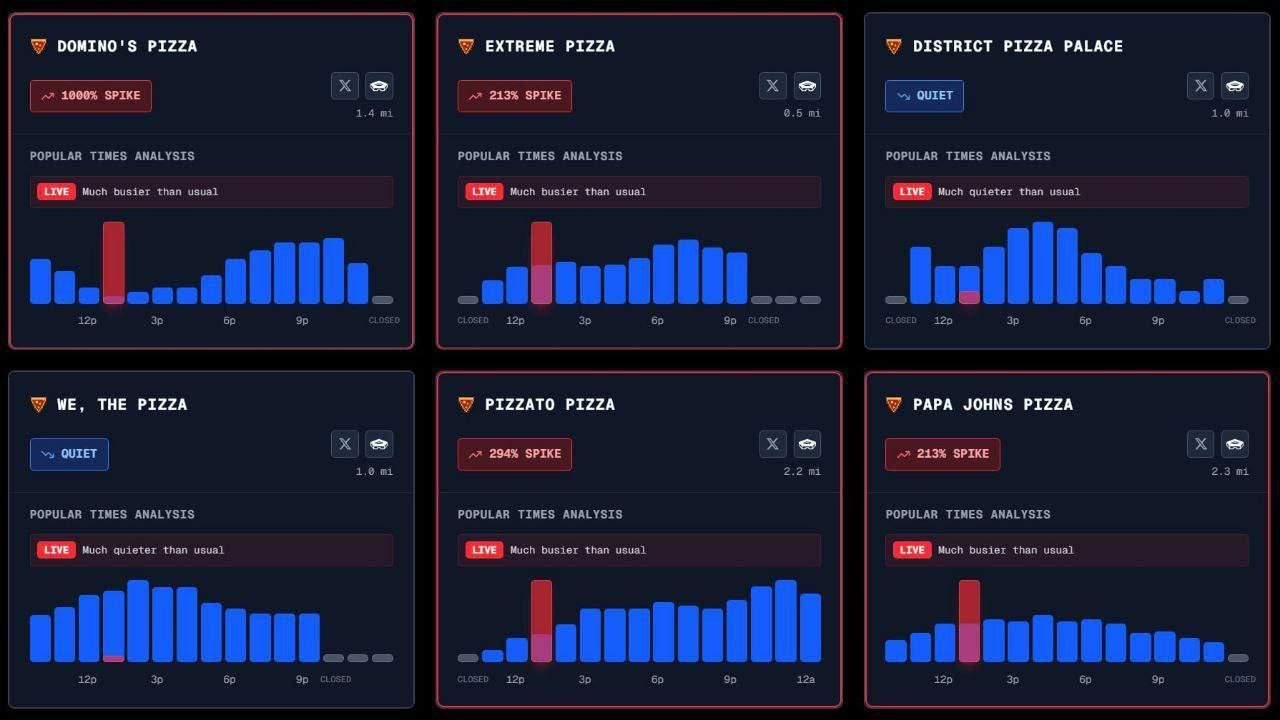
January 13, 2026The Islamic Republic of Iran is navigating the most acute threat to its existence since the Iran-Iraq War. But the story of what is happening in Iranian streets right now cannot be understood without understanding what came before: the "Twelve-Day War" of June 2025, the systematic destruction of Iran's deterrent capabilities, the deliberate weaponization of economic pressure, and the strange theater of exile politics playing out on Western television.The convergence of hyperinflation, a shattered "resistance economy," and the psychological aftershocks of the June 2025 conflict has catalyzed a nationwide uprising that fundamentally differs in scale, demographic composition, and objective from previous unrest. As of mid-January 2026, the situation has escalated from economic grievances to an explicit revolutionary movement aimed at the decapitation of the clerical regime.This is not 2019. This is not 2022. This is something new.I. The June 2025 Inflection PointWhat Actually Happened in the Twelve-Day WarIn June 2025, I wrote an article titled "Why Netanyahu, Trump, EU Lost Rising Lion Already." arguing that Israel had committed a strategic error by attacking Iran. The math, I argued, favored Iran: 3,000+ missiles versus 340 jets, hypersonic weapons against 1990s-era interceptors, 1.6 million square kilometers of dispersal space against 20,770 square kilometers of concentrated targets.[1]I was wrong. Or rather, I was right about the math but wrong about what the math meant.What I failed to anticipate was the scale of the American contribution. Operation Rising Lion was the Israeli strike. But running parallel to it was Operation Midnight Hammer, a massive American assault on Iranian nuclear and missile infrastructure that changed everything.The damage was catastrophic. B-2 Spirit stealth bombers flying from Whiteman Air Force Base, refueled mid-air over the Arabian Sea, dropped twelve 30,000-pound GBU-57 Massive Ordnance Penetrators on the Fordow facility buried deep beneath a mountain near Qom. The tunnel entrances and ventilation shafts were destroyed, likely rendering the facility inoperable, though the deepest centrifuges may have survived.[2] Natanz, the primary enrichment facility, suffered severe structural damage. The Isfahan uranium conversion facility was hit by Tomahawk cruise missiles, degrading Iran's ability to process yellowcake into gas.But the missiles were the real target.The Planetary Mixer ProblemIsraeli Defense Forces estimates indicate that one-half to two-thirds of Iran's missile launchers were destroyed during the June 2025 conflict.[3] But the most important damage was not to the missiles themselves. It was to the machines that make them.Iran's advanced ballistic missiles, the Sejjil and Fattah systems that represented their most potent deterrent, use solid fuel. Solid-fuel missiles can be launched quickly, within minutes rather than the hours required to fuel liquid-propellant systems. This rapid launch capability made them survivable against preemptive strikes.The production of solid rocket fuel requires specialized equipment called "planetary mixers," massive industrial machines that blend the fuel components under precise conditions. These mixers existed at the Khojir and Parchin production complexes outside Tehran.They no longer exist. (If you believe IDF estimates.)The destruction of the planetary mixers created a multi-year bottleneck. Iran can rebuild the facilities. They cannot easily replace the mixers. The specialized equipment must be imported, likely from China, and the new American tariff regime has made that nearly impossible. Iran's missile production capacity, the foundation of their entire deterrent strategy, has been set back by years.[4]What I Got RightIn my June 2025 analysis, I wrote that Iran's strategy relied on strategic patience and the assumption that they could outlast democratic societies with shorter political time horizons. That part was correct.What I underestimated was the willingness of the Trump administration to simply ignore the political constraints I assumed would limit American action. When I wrote that "Israel cannot destroy Iran's most critical infrastructure," I was thinking of Israeli capabilities alone. The B-2 changed that calculation.The war did not end with Iranian victory. It ended with a ceasefire that left Iran's deterrent shattered, its economy reeling, and its population watching their government fail to deliver on forty-five years of revolutionary promises.Seven months later, that population is in the streets.II. The Economic CollapseThe Trigger: Rial Free FallThe proximate cause of the current unrest was the collapse of the Iranian Rial to record lows against the US dollar in late 2025, compounded by the abrupt removal of state subsidies on essential goods in late December. Unlike the 2019 protests, which were triggered by a singular policy shock (gasoline prices), or the 2022 uprising sparked by the death of Mahsa Amini, the 2026 crisis is rooted in total systemic failure of the state's economic social contract.[5]By late December 2025, the currency devaluation had rendered the purchasing power of the average Iranian household negligible. Small-scale protests initially erupted in the bazaar districts of Tehran and Hamadan, historically the conservative economic backbone of the clergy. Merchants, unable to price goods due to currency volatility, marched on Imam Khomeini Square demanding intervention.The regime's inability to stabilize the currency transformed economic pleas into political rage.Was the Collapse Engineered?The question of whether the Rial's collapse was deliberately engineered by Western powers deserves serious analysis rather than reflexive dismissal as conspiracy theory.The evidence for intentional destabilization is substantial. The Trump administration's "maximum pressure" campaign, initiated during the first term and dramatically escalated in the second, systematically targeted every mechanism Iran used to access foreign currency. SWIFT banking access was cut. Oil exports were sanctioned. The "dark fleet" of tankers shipping Iranian crude to China was tracked and interdicted with increasing effectiveness.Then came the June 2025 war, which destroyed not just military infrastructure but economic confidence. Foreign investment, already minimal, evaporated entirely. The insurance premiums for any commercial activity involving Iran became prohibitive. Supply chains that had survived decades of sanctions finally fractured.The January 12, 2026 executive order imposing 25% tariffs on any country doing business with Iran represented the final escalation. This was not a sanction on Iran. It was a sanction on anyone who traded with Iran. China, which imports approximately 1.5 million barrels per day of Iranian crude and exports over $500 billion in goods to the United States annually, faced an impossible choice: $20 billion in Iranian trade versus $500 billion in American trade.[6]Beijing's response has been telling silence. Chinese state-owned refineries are quietly receiving instructions to cease Iranian purchases. The economic lifeline is being severed.So was the Rial collapse engineered? The honest answer is: yes and no. The underlying economic weaknesses were real, the product of decades of mismanagement, corruption, and revolutionary ideology substituting for sound economic policy. But the timing and severity of the collapse were absolutely shaped by deliberate American policy designed to maximize pressure at the moment of maximum Iranian vulnerability.The 25% tariff order was not economics. It was warfare by other means.The Cost of the Internet BlackoutThe regime has imposed a near-total internet blackout to mask the scale of the violence. This blackout is estimated to cost the Iranian economy over $200 million per week, further exacerbating the economic grievances driving the unrest.[7]The Trump administration's previous decision to cut funding for internet circumvention tools, VPNs and Starlink access, has complicated the opposition's ability to communicate. This was a curious decision, seemingly counterproductive to stated American goals of supporting Iranian protestors. The opposition has been forced to rely on private funding channels, fragmenting coordination that might otherwise have unified disparate protest movements.III. The Protests ThemselvesThe Velocity of EscalationThe velocity of escalation has been unprecedented. Operational data indicates a rapid shift from localized gatherings to synchronized nationwide insurrection within a 96-hour window.In late December 2025, protests began in Tehran and Hamadan. Businessmen and merchants marched from Lalezar Street, clashing with security forces at the Istanbul intersection. The initial slogans were economic: "Death to high prices."By January 2-6, protests spread to the periphery. In Zahedan, the capital of Sistan and Baluchistan province, Sunni cleric Molavi Abdol Hamid delivered a sermon declaring peaceful protest a "legal and legitimate right," sparking massive rallies among the Baluch minority. Unrest spread to Zabol and the Kurdish city of Sanandaj.[8]January 7-8 marked the tipping point. Protest activity doubled in intensity. Monitors recorded 156 distinct protest instances across 27 of Iran's 31 provinces on January 8 alone.[9] The demographic composition shifted to include the urban poor, university students, and the bazaar class, creating a "cross-class coalition" that the regime has historically feared most.The Casualty ForensicsThe regime's response has followed the "Iron Fist" doctrine, but with notable signs of strain on the security apparatus.Preliminary figures from HRANA, the Human Rights Activists News Agency, indicate over 500 civilian deaths in less than three weeks. More than 10,000 have been arrested. But the most significant number is this: 114 security force personnel, members of the IRGC, Basij, and Law Enforcement Command, have been killed.[10]This ratio of security force casualties is a critical indicator. During the 2019 "Aban" protests, security force deaths were minimal despite killing between 321 (Amnesty International estimate) and 1,500 (Reuters estimate) civilians. During the 2022 Mahsa Amini protests, approximately 70 security personnel died while killing around 551 civilians.The 2026 protests show a fundamentally different pattern. With over 114 regime personnel killed, the data suggests the protesters are more militant, better organized, or armed than in previous cycles. This high attrition rate degrades the morale of the Basij, who are the regime's primary tool for street-level repression.Something has changed.What Makes This Different1979 Comparison: The current uprising mirrors the 1979 revolution in its cross-class composition (merchants plus students plus workers) and the paralysis of the economy through informal strikes. The bazaar's participation is particularly significant. When the merchants who funded the mosque turn against the mosque, the clerical regime loses its financial base.2009 Comparison: The Green Movement was a reformist movement seeking to fix the system. The 2026 uprising is a revolutionary movement seeking to destroy the system. The slogans tell the story: "Death to Khamenei" leaves no room for reform.2019 Comparison: The "Aban" protests were violent but short-lived, suppressed within three days. The 2026 protests have already lasted weeks, showing greater resilience and geographic spread.The Religious DivideNot all Iranians oppose the regime. The protests have exposed a sectarian fault line that Western coverage largely ignores.Pro-regime channels report 25+ mosques burned in Tehran alone. Footage shows protesters torching the Al-Rasool Mosque near Shahid Tehrani Moghaddam Square while crowds chant anti-clerical slogans. For secular Iranians, these are symbols of oppression. For religious Iranians, they are houses of God."They want to protest, ok, but for them to come and want to set fire to the House of God... These weren't 'the people' who did this," one Tehran shopkeeper told pro-regime media, his voice shaking. "By God, by Hazrat Abbas, my own child was terrified."The regime is mobilizing its base in response. Footage shows pro-government motorcycle convoys, likely Basij volunteers, parading through Tehran's Enghelab Street heading to mosques where supporters gather. These are not paid actors. They are Iranians who genuinely believe the protesters are "vandals" and "saboteurs" destroying their faith.This is not a unified uprising against a universally hated regime. It is a society tearing itself apart along religious lines. The mosque burnings galvanize the regime's base even as they energize secular protesters. Both sides see the other as existential threats. Both are correct.IV. The External ActorsThe Venezuela PrecedentThe January 3, 2026 US military raid in Caracas, codenamed Operation Absolute Resolve, which resulted in the capture of President Nicolas Maduro, has become a central psychological lever in the Trump administration's strategy toward Iran. The administration is explicitly using this event to signal to the Iranian leadership that "decapitation" is a viable option.[11]The operation was not a conventional invasion but a hyper-targeted extraction raid. US Special Operations Forces inserted into downtown Caracas at 02:00 local time. Electronic warfare blinded local air defenses. Cyber operations disrupted regime communications. Precision strikes created "localized chaos" while the extraction team penetrated the presidential compound.Senator Lindsey Graham has delivered the message explicitly: "Trump is gonna kill you."[12]But Tehran is not Caracas. Iran's capital lies deep inland, surrounded by the Alborz mountains, requiring 1,000+ kilometers of flight over hostile territory. The air defense network, while degraded, remains operational with Bavar-373, S-300 PMU2, and Tor-M1 systems. The IRGC Intelligence Organization is a capable counterintelligence force that has penetrated American assets before.The "Venezuela Option" is primarily psychological warfare, designed to encourage defections within the IRGC by signaling that loyalty to Khamenei is a death sentence. Whether it will work is another question entirely.Reza Pahlavi: The Exile ClownThe son of the late Shah has emerged as a figure of interest to Western media, issuing declarations and granting interviews from his comfortable exile. His January 2026 statement calling for the "seizure of cities" and labeling security forces as "legitimate targets" represents an attempt to transform organic unrest into an organized revolution under his leadership.[13]There is a word for someone who calls for armed insurrection from the safety of a foreign country while others die in the streets: provocateur.Pahlavi has no organization inside Iran. He has no military capability. He has no logistical network to support the protesters he exhorts to martyrdom. What he has is access to Western television studios and a surname that evokes his father's regime, which was itself so brutal and incompetent that it created the conditions for the 1979 revolution.The Iranian opposition, such as it exists, is fragmented among dozens of factions with incompatible visions: monarchists, MEK cultists, secular liberals, ethnic separatists, and the vast majority who simply want economic relief without any coherent political program. Pahlavi represents none of them while claiming to speak for all of them.His calls for violence from safety would be comic if people were not dying in response.The Pentagon's Tell (Pizza)The "Pizza Index" deserves mention, not because it is a sophisticated intelligence metric but because it illustrates how open-source observers can track American military intentions with surprising accuracy.The index tracks Google Maps "popular times" data for pizza delivery shops within 2.5 miles of the Pentagon. The theory is simple: when the Pentagon shifts to 24-hour crisis operations, staff working overnight order food. Delivery data spikes.Before Operation Absolute Resolve captured Maduro, the index rose 700%. On January 12, 2026, the day of the 25% tariff announcement, Domino's locations near the Pentagon showed a 1,000% spike above normal traffic.[14]Someone is working late. The logistics tail is fully activated. Munitions stocks are being pre-positioned. Whatever happens next in Iran, the American military is preparing for it.The Pentagon's tell: Google Maps "popular times" data for pizza shops within 2.5 miles of the Pentagon on January 12, 2026. Domino's shows a 1,000% spike above normal. Before Operation Absolute Resolve captured Maduro, the index rose 700%. Someone is working late.V. The Strategic AssessmentWhat Happens If the Regime Falls?The question that Western analysts seem allergic to asking is: what comes after?The Islamic Republic has governed Iran for forty-five years. Its institutions, corrupt and brutal as they are, represent the only governing structure the country has. The IRGC is not merely a military force; it controls an estimated 20-40% of the Iranian economy through construction companies, import-export businesses, and telecommunications. The clerical establishment administers religious endowments (bonyads) that own vast real estate holdings and employ millions.If the regime collapses, what replaces these structures?The optimistic scenario imagines a democratic transition, perhaps led by technocrats who managed to survive within the system, implementing gradual reforms while maintaining basic services. This scenario requires ignoring everything we know about revolutionary transitions and power vacuums.The pessimistic scenario looks more like Libya: fragmentation along ethnic and regional lines, with Kurdish, Azerbaijani, Baluch, and Arab populations pursuing varying degrees of autonomy while competing power centers fight over the corpse of the state. The IRGC does not disappear if the Supreme Leader falls. Its commanders become warlords.The realistic scenario is probably somewhere between: a prolonged period of instability, economic collapse worse than what preceded the revolution, ethnic violence, and eventually some form of authoritarian reconsolidation under different branding.None of these scenarios involve Reza Pahlavi ruling from the Golestan Palace.The China FactorBeijing's response to the 25% tariff threat has been the decisive variable. China imports approximately 1.5 million barrels per day of Iranian crude, mostly via the "dark fleet" to independent "teapot" refineries in Shandong province. This trade was worth $15-20 billion annually. Chinese exports to the United States are worth $500 billion.[15]The calculation is not complicated. China will likely capitulate quietly, ordering state-owned and independent refiners to cease Iranian purchases. The economic lifeline that allowed Iran to survive previous sanctions rounds is being severed.Russia cannot replace China as an economic partner. Moscow is militarily exhausted in Ukraine and economically isolated itself. Russia can offer diplomatic cover, with Foreign Minister Lavrov condemning American "interference," but material support is beyond Russian capacity.[16]Iran is being systematically isolated in a way that previous "maximum pressure" campaigns never achieved.The Regime's OptionsWhat can Khamenei do?Option 1: Escalate externally. Launch remaining missile assets at Israel or American bases in the region, hoping to trigger a broader conflict that rallies nationalist sentiment. This is the "Samson Option," and it carries the risk of complete regime destruction via American retaliation.Option 2: Escalate internally. Tiananmen Square-style mass repression, accepting thousands of civilian casualties to crush the protests definitively. This worked in 2019 (temporarily) but the scale of current protests makes it uncertain whether security forces can execute such an operation without fragmenting.Option 3: Controlled concession. Sacrifice visible figures (perhaps President Pezeshkian, who is already marginalized), offer economic reforms, hope the protests lose momentum. The problem: the protesters are not demanding reforms. They are demanding the end of the system.Option 4: Wait. Hope that protest fatigue, internal divisions, and the coming Nowruz holiday season fragment the opposition. This is the traditional regime response, and it has worked before. Whether it can work when the economy has completely collapsed is unclear.The 86-year-old Supreme Leader has no good options. His January 9 speech calling protesters "vandals" and "mercenaries" signals a refusal to compromise, doubling down on the strategy of force that has preserved the regime for forty-five years.[17]But force requires forces willing to use it. With 114 security personnel already dead and morale degrading, the question becomes: will the Basij keep shooting?VI. What I Got Wrong, What I Got RightIn June 2025, I argued that Israel had committed a strategic error by attacking Iran. I wrote: "Netanyahu turned Israel's tactical brilliance into strategic suicide."Seven months later, Iran's deterrent is shattered, its economy is collapsing, its population is in revolt, and American military planners are working through the night preparing options for whatever comes next.Was I wrong?The math I cited was accurate. Iran did have missile advantages. Israel's interceptors were limited. Geography favored defense in depth. All of this was true.What I failed to account for was the scale of American participation, the willingness of the Trump administration to use tools (like the GBU-57 bunker buster and the 25% universal tariff) that previous administrations had kept in reserve, and the cumulative psychological impact on an Iranian population that had been promised their military could deter American aggression.The promise was broken. The missiles that were supposed to make Iran untouchable were destroyed on the ground. The economy that was supposed to be "resistance" proof collapsed anyway. The alliances that were supposed to provide strategic depth, Hezbollah, the Houthis, the Iraqi militias, proved unable to save their patron.Iran's people watched all of this happen. Then they took to the streets.I was right that the war would not end with a clear Israeli victory. What I failed to anticipate was that it would end with an Iranian defeat so comprehensive that it would trigger internal revolution seven months later.VII. Will the Regime Fall?The honest answer: probably not. But possibly yes.The case for collapse:The current crisis has elements that previous uprisings lacked. This is a cross-class coalition: bazaar merchants who funded the mosques, university students who provide ideological energy, and the urban poor who provide mass. This is the 1979 formula. The regime knows it.The security force casualty ratio tells a story. In 2019, regime forces killed hundreds with minimal losses. In 2026, they have lost 114+ personnel in less than three weeks. This suggests the protesters are more militant, better organized, or armed. The Basij signed up to beat unarmed demonstrators, not to die in street fighting.The economic collapse is total. Previous protests were triggered by policy shocks, a gasoline price hike, a morality police killing. This one is triggered by systemic failure. There is no policy concession that fixes a worthless currency and empty shelves.The deterrent mythology is shattered. For forty-five years, the regime promised Iranians that their missiles made them untouchable. The population watched those missiles get destroyed on the ground in June. They watched their Cuban allies die defending Maduro while Russia and China issued statements. The promise of protection was exposed as fantasy.The case for survival:But crisis is not collapse. For a regime to actually fall, you need one of three things: security forces that stop shooting, elites that fracture, or an opposition organized enough to seize power.None of these conditions are met.The security forces are taking casualties, but they are still shooting. The Army (Artesh) has not refused orders. The IRGC leadership has not fractured publicly. The regime retains the capacity for mass violence, and nothing suggests they will hesitate to use it.The opposition is fragmented beyond utility. There is no leadership inside Iran capable of coordinating a revolutionary seizure of power. Reza Pahlavi issues declarations from comfortable exile, calling for others to die in streets he will never walk. He has no organization, no logistics, no military capacity. He is a Twitter account with a surname.The regime has survived before. 2009, 2019, 2022. Each time through pure brutality, each time at cost, but each time successfully. The institutional knowledge of how to crush uprisings is extensive.The most likely outcomes, in order:1. Brutal crackdown, regime survives weakened. The Basij keep shooting. Thousands die. The protests exhaust themselves. The regime emerges intact but delegitimized, ruling by fear alone over a population that hates it.2. Prolonged instability, neither side wins. The protests continue at lower intensity. The economy remains broken. The regime controls the cities by day, loses the streets by night. A failed state that hasn't formally failed.3. Khamenei dies, succession crisis. The 86-year-old Supreme Leader cannot live forever. His death would trigger elite competition that could fracture the regime in ways the street protests cannot.4. External lash-out. The regime launches remaining missiles at Israel or American bases, gambling that nationalist rally-around-the-flag will save them. This ends either with regime consolidation or American decapitation strike.5. Revolutionary collapse. The security forces stop shooting. The elites defect. The regime falls. This is possible. It is not the base case.The Theological Time BombBut here is what the short-term analysis misses: the Islamic Republic has a structural flaw that makes its eventual collapse inevitable.The entire system rests on velayat-e faqih, "Guardianship of the Jurist," Khomeini's radical innovation claiming that a senior Islamic scholar can exercise divine political authority until the return of the 12th Imam. This was not traditional Shia theology. Most senior clerics rejected it. Grand Ayatollah Sistani in Najaf, the most senior Shia cleric alive, explicitly rejects it to this day.Velayat-e faqih is a one-man ideology. It worked for Khomeini because he had revolutionary charisma and religious credentials. Khamenei was a last-minute compromise choice in 1989, elevated despite not being a Grand Ayatollah. They had to hastily upgrade his religious rank. He has spent 35 years borrowing against Khomeini's legacy.The problem: How do you transfer "unique divine authority"? If the Assembly of Experts chooses the next Supreme Leader, the authority clearly comes from them, not God. If Khamenei's son Mojtaba inherits the position, the "Islamic Republic" is exposed as hereditary monarchy with a turban. Either way, the theological justification collapses.Khamenei has not designated a successor. This is not stupidity. It is the dictator's dilemma: designating an heir creates a rival power center. People start hedging, building relationships with the successor, plotting to accelerate the transition. Khomeini tried this with Montazeri in the 1980s, then had to remove him. Khamenei learned: better to keep everyone uncertain.The result: an 86-year-old Supreme Leader with no succession plan, presiding over IRGC factions that have been positioning for years. When his heart stops, they fight.The Dual Succession CrisisThe timing could not be worse. Grand Ayatollah Sistani in Najaf is 95 or 96 years old. He has no successor either. He is the only figure restraining Iraq's Shia militias (Hashd al-Shaabi) from going full warlord.Both men could die within the same 2-3 year window.When Sistani goes, the Iraqi militias lose their moderating voice. These groups are currently split between Iranian loyalists and Iraqi nationalists. Without Sistani's authority, they either become fully Iranian proxies or fragment into competing warlord factions.If both die simultaneously, the entire Shia crescent collapses at once: Iran in succession crisis, Iraq in militia chaos, Hezbollah already gutted, Syria already a corpse. The regional order built over 45 years disintegrates in months.The TimelineThe Islamic Republic, as Khomeini designed it, ends this decade. My estimate:Khamenei's death comes within 1-4 years. He is 86. Actuarial tables are undefeated.The succession crisis begins immediately. IRGC factions have been positioning for years. With no designated heir, everyone believes they have a shot.Regime transformation or collapse follows within 2-5 years from today. Either one faction wins and a weakened regime limps forward under new branding, or fragmentation turns IRGC commanders into regional warlords.The wildcard is American intervention. If Trump pulls the "Venezuela option," the timeline accelerates to months.The Islamic Republic is in the worst crisis of its existence. That does not mean it will end tomorrow. It means it will end.The Islamic Republic faces a perfect storm: internal revolution, economic asphyxiation, and external military decapitation held in reserve. The US strategy of "super-maximum pressure," leveraging the 25% tariff to isolate Iran completely while holding the "Venezuela Option" over Khamenei's head, has pushed the regime into a corner from which there is no obvious escape.The coming weeks will determine whether the regime collapses from within or lashes out in a final, catastrophic regional war.What the coming weeks will not determine is what comes after. That question, the hardest question, remains unanswered by the policymakers ordering pizza at midnight.Notes[1] Ikeda, Tatsu. "Why Netanyahu, Trump, EU Lost Rising Lion Already." Tatsu Ikeda Substack, June 18, 2025. Analysis of the initial Israeli-Iranian conflict and strategic miscalculations.[2] "United States strikes on Iranian nuclear sites." Wikipedia, accessed January 12, 2026. Comprehensive documentation of Operation Midnight Hammer including B-2 strike packages and battle damage assessment.[3] "Iran Update Special Report, June 19, 2025, Evening Edition." Institute for the Study of War, accessed January 12, 2026. IDF assessment of Iranian launcher destruction during the Twelve-Day War.[4] "AP report: Iran begins rebuilding missile sites, but key component is missing." PBS News, accessed January 12, 2026. Analysis of planetary mixer destruction and implications for Iranian solid-fuel missile production.[5] "Iran: What challenges face the country in 2026?" House of Commons Library, accessed January 12, 2026. Overview of economic triggers for the 2026 protests including Rial collapse and subsidy removal.[6] "Trump says Iran's trade partners to face 25% tariffs from U.S." CTV News, accessed January 12, 2026. Details of the January 12, 2026 executive order and its implications for Chinese-Iranian trade.[7] "Rights group decries Iran internet blackout amid nationwide protest." JURIST, accessed January 12, 2026. Economic cost analysis of Iran's internet shutdown.[8] "Iran Update, January 6, 2026." Institute for the Study of War, accessed January 12, 2026. Documentation of protest spread to Zahedan and peripheral regions.[9] "Iran Update, January 8, 2026." Institute for the Study of War, accessed January 12, 2026. Record of 156 protest instances across 27 provinces.[10] "At least 544 killed, over 10,600 arrested as Iran protests enter 15th day." ANI News, accessed January 12, 2026. Casualty figures including security force deaths.[11] "The Maduro Raid: A Military Victory with No Viable Endgame." CSIS, accessed January 12, 2026. Analysis of Operation Absolute Resolve and its psychological impact on Tehran.[12] "Graham warns Iranian ayatollah: 'Trump is gonna kill you.'" Fox News, accessed January 12, 2026. Direct quote from Senator Graham regarding administration messaging to Iran.[13] "'Seize and hold the cities': 5 takeaways from Reza Pahlavi's declaration amid Iran protests." Times of India, accessed January 12, 2026. Details of Pahlavi's January 2026 statement calling for armed uprising.[14] Open source intelligence compilation from Telegram monitoring channels, January 2026. Pizza Index methodology based on Google Maps popular times data for food delivery establishments near Pentagon.[15] "China-Iran trade plunges 24% as sanctions bite and Beijing shifts oil suppliers." IntelliNews, accessed January 12, 2026. Analysis of Chinese-Iranian trade volumes and tariff pressure calculations.[16] "Trump says countries doing business with Iran face 25% tariff." China Daily Asia, accessed January 12, 2026. Russian diplomatic response and limited capacity for material support.[17] "Iranian Protests Escalate as Regime Shuts Down Internet Access." Foundation for Defense of Democracies, accessed January 12, 2026. Khamenei's January 9 speech characterizing protesters as vandals and mercenaries. This is a public episode. If you'd like to discuss this with other subscribers or get access to bonus episodes, visit tatsuikeda.substack.com/subscribe
Embed this episode
Ready to play
When Khamenei Dies, the Middle East Burns
No transcript for this episode yet
Similar Episodes
No similar episodes found.
Similar Podcasts
No similar podcasts found.