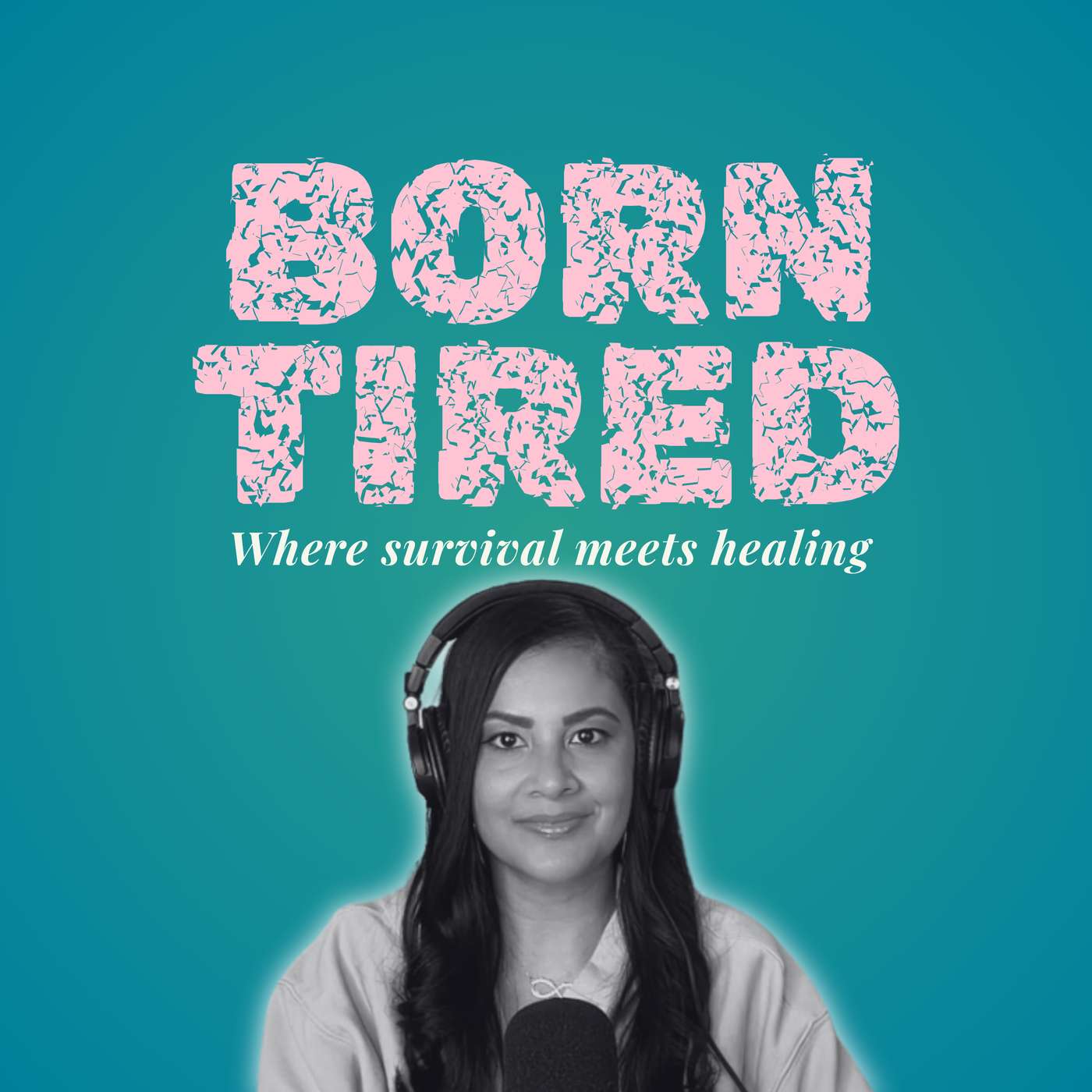
Where Survival Meets Healing
from Born Tired: Where Survival Meets Healing Hosted by Eirene Torres
There are moments when I look back at the last few years and realize how much I’ve changed without fully noticing it. Not necessarily in the ways people can see from the outside, but in the way I understand myself, the things I no longer feel responsible for, and the parts of me I’ve slowly learned to accept. For a long time, I thought healing would eventually turn me into someone who was no longer affected by her past. Someone who could look back at everything that happened and feel completely detached from it. I don’t believe that anymore. In this final episode of Born Tired: Where Survival Meets Healing, I reflect on the journey that brought me here, the unexpected ways sharing my story helped me find my voice, and what it means to begin imagining a life beyond survival. When I went no contact with my family in December of 2022, I thought making that decision would finally bring some sense of freedom. Instead, I found myself grieving in ways I hadn’t anticipated. There was anger, sadness, confusion, and a loneliness I struggled to explain. I was grieving the family I had, the family I kept hoping we might become, and the childhood I had spent so many years trying to understand. Even with the love and support of my husband and children, there were parts of that experience they couldn’t fully understand. I think that’s one of the complicated things about family estrangement. We can know a decision is necessary for our well-being and still feel heartbroken that making it became necessary in the first place. For the next two years, I spent a lot of time trying to make sense of everything. Therapy, meditation, journaling, and sitting with memories I had spent much of my life avoiding became part of that process. I allowed myself to feel anger about things I had previously minimized and grieve relationships I had spent years hoping would change. Then, in October of 2024, I started sharing some of my thoughts on Threads. I wasn’t trying to build an audience or create something bigger. I simply needed somewhere to put the things I had been carrying. What I didn’t expect was how many people would recognize themselves in what I was sharing. Strangers from different countries, cultures, and backgrounds began responding with their own experiences of childhood trauma, family dysfunction, estrangement, and grief. People I had never met were describing emotions I understood immediately. For so much of my life, my experiences had existed in environments where they were minimized, denied, justified, or never spoken about. Suddenly, people were telling me they understood. I didn’t have to convince them that what happened mattered or explain why walking away from my family could be both necessary and devastating. I think that was when I began understanding how powerful it can be to have our experiences witnessed by people who have lived through something similar. Eventually, I started sharing more on Instagram, creating reels and writing about the things I was learning through healing. But even as I became more comfortable sharing my thoughts, being seen still frightened me. I had spent much of my childhood learning how to read a room, anticipate other people’s emotions, and recognize when it was safer to stay quiet. Those survival responses followed me into adulthood, and putting my experiences into the world felt incredibly vulnerable. Then, on a random Tuesday in September of 2025, I told my husband I wanted to start a podcast. I didn’t have a detailed plan or fully understand what creating one would require. I just had this feeling that it was something I needed to do. Creating this podcast has been one of the most emotionally demanding experiences of my life. Every week, I sat down to write about memories, relationships, and experiences that shaped me. Some were things I had already spent years processing in therapy. Others were memories I hadn’t revisited in a long time or experiences I had convinced myself no longer affected me. There were episodes I cried while writing and others I had to step away from before I could continue. I found myself returning to parts of my childhood I had spent years trying to understand, and then doing something that would have been unimaginable to an earlier version of myself. I spoke about them out loud and allowed other people to hear them. One of the things this experience taught me was that telling my story didn’t require sharing every painful detail of my life. There are things I’ve chosen to keep private, not because I’m ashamed of them, but because I no longer believe I have to make every experience available to everyone in order for my story to be valid. For much of my life, I felt responsible for explaining myself clearly enough that other people would finally understand what happened. Creating this podcast helped me recognize that I could be honest about my experiences while still having boundaries around what I wanted to share. My story belongs to me, and I get to decide how much of it I tell. Something unexpected also happened after I finished recording these episodes. I often felt lighter. I wasn’t changing what happened or erasing the memories, but there was something about speaking them aloud that changed the way I carried them. Experiences that had lived privately inside me for years were no longer things I felt obligated to keep hidden. When listeners began reaching out to share their own stories, I started realizing that the experiences that once made me feel isolated had become the very things connecting me to other people. The voice I had spent so much of my life being afraid to use had become a bridge. In this episode, I reflect on how my understanding of trauma and healing has changed. I used to believe that eventually I would reach a point where my childhood no longer affected me. That I would become someone who didn’t get triggered, overwhelmed, or caught off guard by old memories. I imagined healing as a destination where everything that happened would finally feel resolved. But there are still things that hurt. There are memories that surprise me and moments when I recognize another way my childhood influenced the person I became. The difference is that I no longer see those experiences as evidence that I haven’t healed. I also talk about the survival responses I once believed were simply part of my personality. My hypervigilance, perfectionism, overthinking, independence, and need to anticipate everything that might go wrong developed in circumstances where paying attention helped me feel safer. For years, I saw those behaviors as things I needed to fix. Therapy helped me understand why they existed, and eventually I began developing compassion for the younger version of myself who learned to navigate life that way. I don’t have to hate the parts of myself that helped me survive in order to recognize that they don’t need to direct every part of my life anymore. Another important part of this conversation is the relationship between speaking our truth, setting boundaries, and learning to trust ourselves. For years, I wanted acknowledgment from people who had hurt me. I wanted them to understand the impact of their behavior, take accountability, and recognize the things I had spent so much of my life trying to explain. Eventually, I realized I could spend the rest of my life waiting for someone else to validate experiences I already knew were real. Healing helped me understand that I didn’t need everyone to agree with my perspective in order to believe myself. I could accept that some people might misunderstand me, question my decisions, or prefer a version of the story that allowed everything to remain unchanged. As I come to the end of this podcast, I’ve also been thinking about what comes after spending so much of my life focused on survival and healing. For years, so much of my energy went toward understan...
Embed this episode
No transcript yet.