NPR. This is the indicator from Planet Money, I'm Whelan Wong. On this Labor Day Monday, we're naturally thinking about the American workforce, with so much economic uncertainty in the air, from AI to tariffs, it can be hard to know just what the future holds for our careers or the broader labor market. Luckily, the Bureau of Labor Statistics has something of a crystal ball in what's called the Occupational Outlook Handbook. Today on the show, we're re-airing one of our favorite episodes all about this obscure government report.
After the break, Darren Wood and I get to the bottom of whether we can actually predict what jobs are future-proofed. This week on sources and methods President Trump's diesel deal with Russia, would it help with shipping costs and would it even be legal? The United States produces more diesel than it consumes. There's no real need to bring more diesel into this country. Plus we dig into claims from Ukraine that the US cut access to crucial military satellites.
Listen now to sources and methods from NPR. Hey, how are you feeling right now? Exhausted from the summer? Overwhelmed with the new school year? Restless?
Inksious? LifeKit is here to help. Consider us your mental health accountability buddy, with episodes on everything from navigating social anxiety to unlearning perfectionism. Listen to the LifeKit podcast in the NPR app or wherever you get your podcasts. The other day we heard from a listener.
My name is Asa Hesse-Motsamoto and I work as an application security engineer. That means Asa keeps our app safe from hackers and viruses and he also moonlights as a teaching assistant at Georgia Tech. He's used to fielding questions about job prospects. Fair. In this new AI-vide coding world.
You have career changers, students, and your graduates. And I try as best as I'm able to provide sort of empirically backed guidance. Asa says he finds one section of the BLS website quite useful for those hard numbers. As the BLS' occupational outlook handbook. There he can look up jobs like the one he does.
Information security analyst. He sees things like its median wage. $125,000. And you can see where these jobs are most plentiful. Virginia and California.
He can also see the projected job growth to the year 2034. 29% growth. That's a lot of analysts. Yes. His job is safe.
Well, this lodged a question in Asa's mind. How is that done? How is that estimate made? And has there been any follow-up to determine how accurate these estimations projections have aligned with the real world data once time catches up? So at the top of the BLS' list for future job growth is nurse practitioner, solar, photovoltaic installer, and wind turbine service technician.
Ooh, you did that once for a day. For an episode, remember? You put on your steel-toed boots. You climbed up a windmill? It was the height of the Statue of Liberty.
Oh my gosh. And where I didn't go was the bottom of the BLS list, which is rolls like tell-out or desktop publisher, billow-de-count collectors. Those jobs are projected to decrease. Sarah Mattson is an economist at the BLS. Sarah does the work looking at trends in the labor market.
But you know, she's not like a psychic. If I could make every exact prediction in a crystal ball, I would not be working here. I would have won the lottery by now. Sarah says the way the Bureau calculates job growth starts at looking at overall trends in the US. Factors such as the general aging of the population and general population changes up like that.
Then Sarah's colleagues extrapolate the historical trends for jobs within the different industries, like maybe home health and personal care aides growing at a faster rate than say physicians and surgeons. But there's no amount of historical data that can project trends that don't yet exist in the historical data. AI, of course, is a great example of that. So that's where my team comes in and we apply our research to those initial estimates to kind of move them as we see appropriate for the emerging trends. So for our listener, Ace's job information security analyst, that's expected to grow.
The BLS writes cyber attacks have grown in frequency and these analysts will be needed. Bad for the world, but good for the cybersecurity students. Yeah, the BLS is bullish on both scams and cybersecurity students. But that gets us to ace the second question. How reliable have the BLS projections been?
Economist Maxime Masinkoff has written a paper answering this very question. Maxime recently moved from academia to AI. He now works for enthropic. With all the developments in AI, I got really curious about will this job still be around? And how good would advice be based on these kinds of job forecasts?
Maxime's research began by looking just after World War II. That's when millions of young veterans had returned home from Europe in the Pacific. The US government wanted to help them decide what careers to pursue. So it made the first occupational outlook report in 1946. It had a really wide circulation.
The circulation in the US approached that of a New York Times bestseller. And that popularity remains. It's the most visited section of the BLS website today. The report has been updated every few years since and it highlights trends that might affect jobs, like when the US highway system was being built out from the 1950s. This huge construction projects would unearth a lot of artifacts.
And so the BLS predicted that demand for archaeologists would go up. In the 50s and 60s, the handbook predicted more veterinarians as more people moved to the suburbs. They'd have a lot more space and they'd be more likely to have a pet dog. Even trends for men having longer hair in the 1970s. The prediction for decreased demand for farmers.
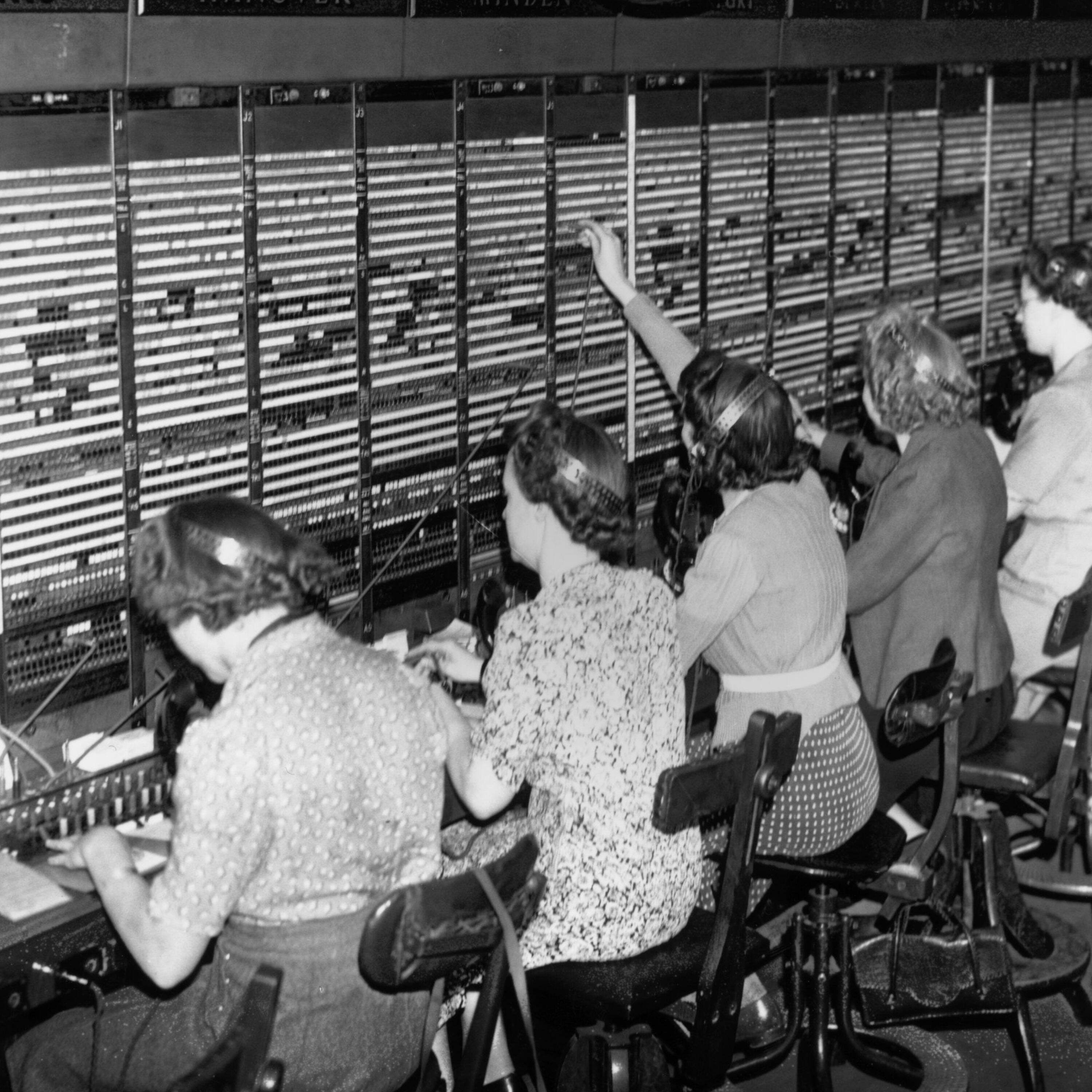
People didn't need to get their hair cut as often. Some assessments haven't aged as well. Like in the 1940s, the report offered a fairly benign outlook for telegraph operators. It said the downward trend of employment expected in the occupation over the long run will probably not be sharp enough to cause heavy prolonged layoffs. That sounds like a missed prediction for me.
So Maxime tallied up the overall scoreboard. He elected all of the projections from the 1940s through to the 1990s and then he checked them against how the jobs actually did down the line. These predictions are really strongly correlated with the employment trajectories. If you choose a job that the outlook was really optimistic about, there would be much higher growth in the occupation in the next 10 or 20 years. When Maxime found that the top third of jobs that were projected to grow the fastest did grow a lot.
They rose by 57% over two decades. The bottom third of projected jobs actually grew by only 12%. How much of the second record could have just been done by looking at how fast jobs are growing now and then assuming that they'll continue growing at the same rate. Maxime found that existing job trends did account for a lot of that forecasting power. Right.
So if warehousing jobs are growing a lot less decade, they're likely to continue growing next decade. That might be due to the continued rise of online shopping. These things at least historically have just unfolded slowly. That's it. Maxime says the BLS did add value.
When you compare them head to head, the occupational outlook wins out a little bit. So if you had to just choose one source, you would still go with the BLS. The BLS does its own backwards looking assessments of how accurate its projections have been. And Sarah Mattson from the agency says that the most recent evaluation shows that the BLS correctly projected whether an occupational group would grow or shrink almost 70% of the time. And that's all available on our website for anyone to take a look at.
People like our listener, Asa, has some motto. As we heard, he was wondering if he could rely on the BLS projections when talking to the next generation of cybersecurity analysts. Well, he can rest assured. The BLS has a pretty good track record. We told Asa what we learned.
And actually have an answer for you. Great. Yeah. We explained that the BLS takes long-term job trends and extends them. And it boosts these up and down depending on new technological or social changes and evaluations afterwards show they're reasonably accurate.
So what are your thoughts? I mean, I'm pretty impressed that it's that accurate given how far out of the cast and how even looking back at the last few years, things have changed. That's incredible. That's really incredible. Do you want us to take your question?
Email us in the end. This episode was produced by Corey Bridges with Engineering by Jimmy Keeley, the fact that he's here. He can edit the show and the indicator is a production of India. This election season, let the NPR Politics Podcast save your time and your sanity. It will help you understand key races, which polls you can safely ignore and what might happen if power shifts in Congress.
Our short daily episodes come out every afternoon so you can spend less time scrolling through each chaotic news cycle. Make NPR Politics your hub for midterm election coverage, follow our podcast on the NPR app or wherever you get your podcast. On the next through line from NPR. I was surprised that this man every single day takes a chair and goes to the troubles and degrees of his house and he starts to tell stories to his children, to his mother, to his wife. He's been passed four seasons of ceasefire in Gaza with NPR's NS Baba.