
EPISODE · Nov 22, 2023 · 6 MIN
“Which Spaces Can Be Involved in the Spread of Odontogenic Infection?” QR #73 + PODCAST EXCLUSIVE
from Dr. Gallagher's Podcast · host Brendan Gallagher, DDS
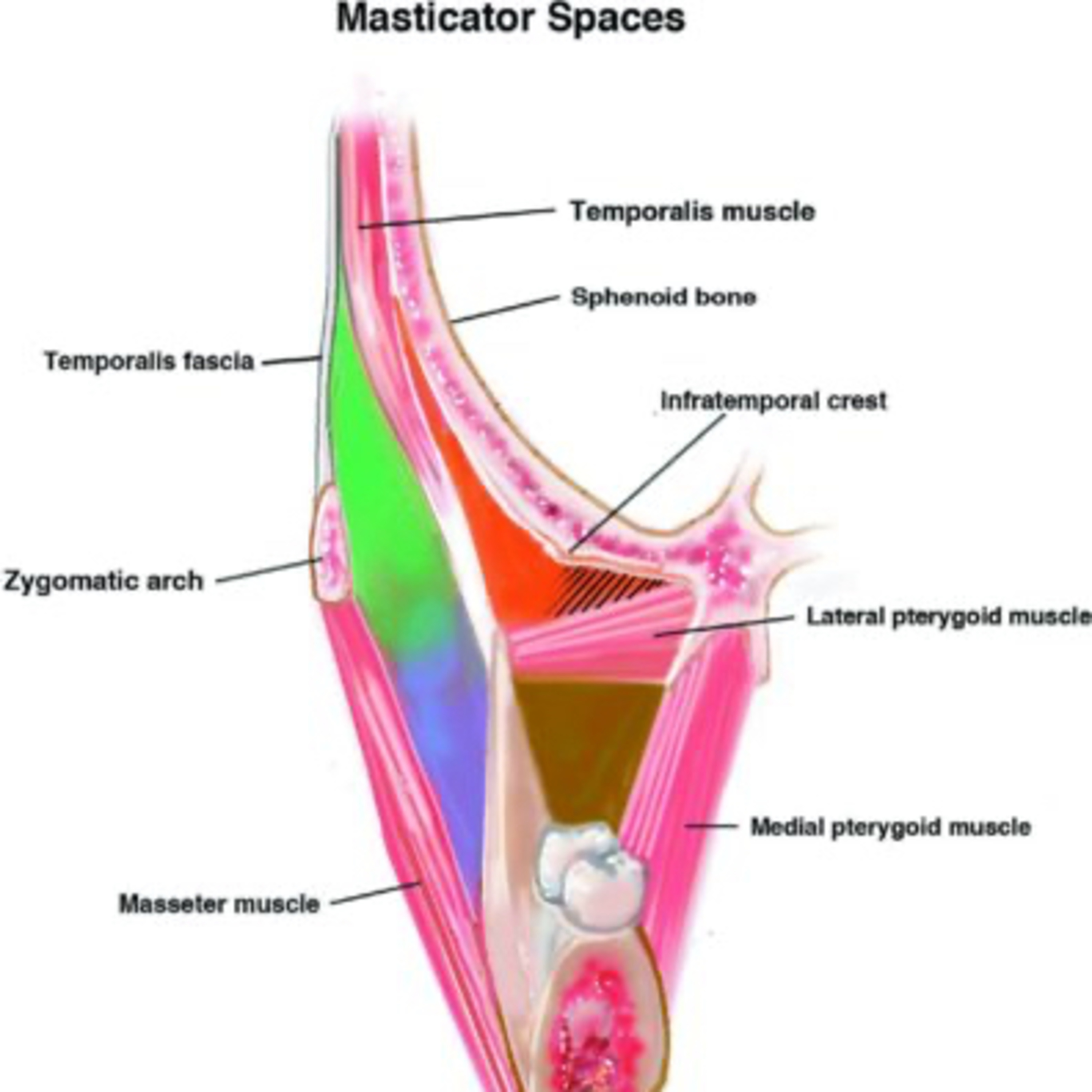
11.22.23 Quick Read #73 - #infection #fascialspaces #doctorgallagher #oralsurgery #oralsurgeon #dentist #dentistry #dental Odontogenic infections can spread through various facial spaces, which are anatomical areas where infections can propagate due to the interconnected nature of the facial tissues. These spaces include: 1. Buccal Space: Located between the buccinator muscle and the skin, this space can be affected by infections from the maxillary and mandibular teeth. 2. Masticator Space: This is a broader space that includes several smaller spaces. It is associated with the muscles of mastication. 3. Parapharyngeal Space: Situated lateral to the pharynx, infections here can potentially spread from the teeth, tonsils, or other nearby structures. 4. Retropharyngeal Space: This space is located behind the pharynx and can be a pathway for the spread of infection from the pharynx to more distant body parts. 5. Superficial Temporal Space: Found near the temporal region of the skull, this space is related to the superficial temporal fascia. 6. Deep Temporal Space: Deeper compared to the superficial temporal space, this area is adjacent to the deep temporal fascia and can be involved in the spread of infections from the upper molars. 7. Infratemporal Space: This is a complex space located below the temporal fossa and deep to the ramus of the mandible. Infections here can arise from the molars. These spaces are interconnected, and infections can spread from the initial site (often a tooth) to adjacent spaces, potentially leading to serious complications if not treated promptly. References: 1. Flynn, T. R. (2022). Odontogenic Orofacial Space Infections. In StatPearls [Internet]. Treasure Island (FL): StatPearls Publishing. Retrieved from https://lnkd.in/ejQ-RHpf . 2. Jadhav, A. B., Shah, N., & Logani, A. (2018). Fascial space odontogenic infections: Ultrasonography as an alternative diagnostic tool. Journal of Indian Academy of Oral Medicine and Radiology, 30(1), 18. Retrieved from https://lnkd.in/euTfJuTA . 3. Kim, S. H., Lee, S. H., Choi, S. C., Huh, K. H., Yi, W. J., Heo, M. S., … & Choi, S. C. (2013). Odontogenic Infection Pathway to the Parapharyngeal Space: CT Imaging. Journal of Korean Dental Science, 6(1), 6-12. Retrieved from https://lnkd.in/edRRTufR . 4. Heim, N., Faron, A., Wiedemeyer, V., Reich, R., & Martini, M. (2013). Deep facial infections of odontogenic origin: CT assessment of pathways of space involvement. Acta Radiologica, 54(8), 855-860. Retrieved from https://lnkd.in/eXc4kjSG . 5. ChatGPT. 2023.
Embed this episode
Ready to play
“Which Spaces Can Be Involved in the Spread of Odontogenic Infection?” QR #73 + PODCAST EXCLUSIVE
No transcript for this episode yet
Similar Episodes
No similar episodes found.
Similar Podcasts
No similar podcasts found.