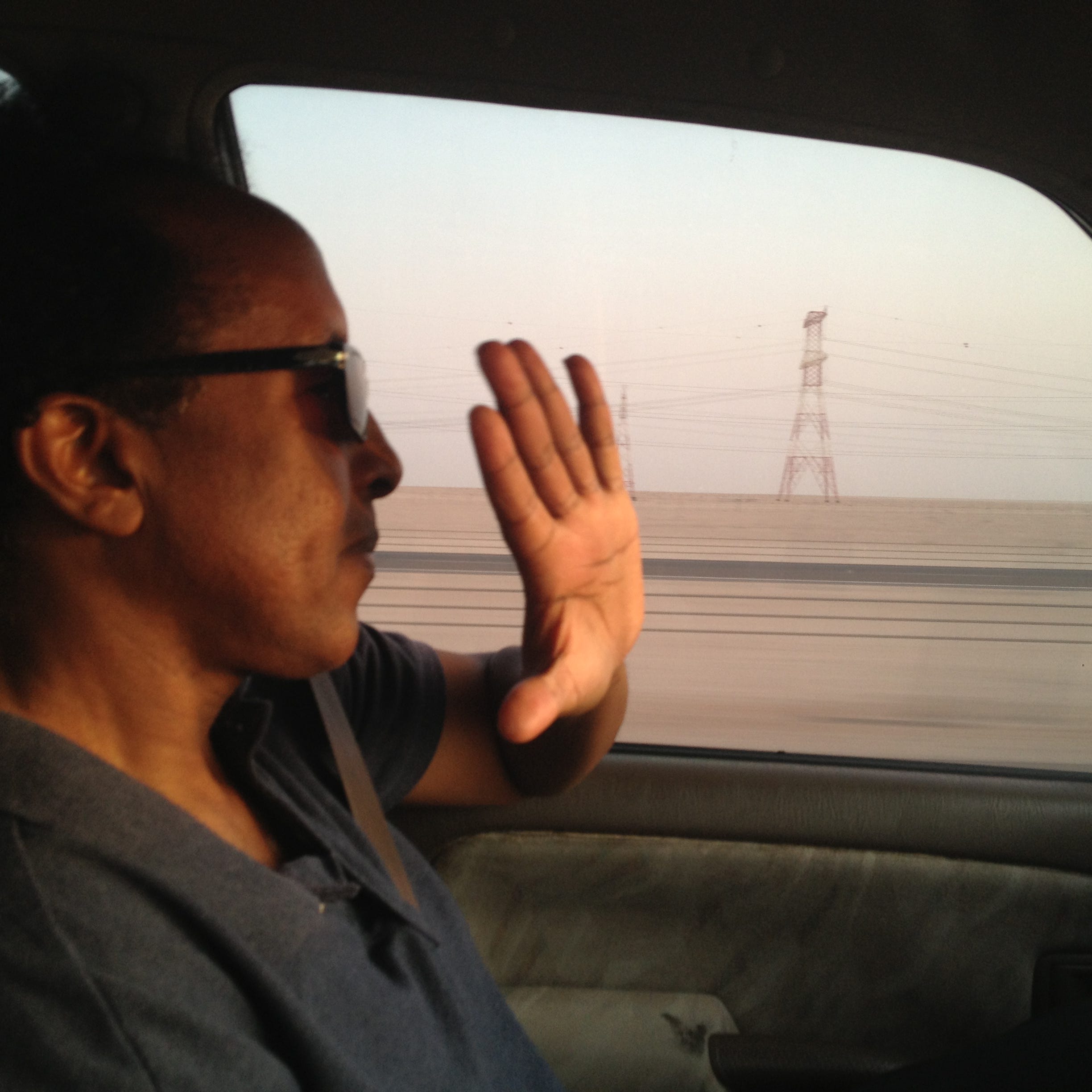
While we debate the Ai algorithm in Somalia
from Somali Waa kuma Podcast Hosted by MI
AI, Somalia & Me: A Nerd’s Perspective from 40,000 Feet MI’s 5 Minutes of Fame | Week 26 in advance I was on the road again this week, this time on a 14 hour flight. Sealed in that aluminium tube, I watched three films: one about DeepMind, one about Vitalik Buterin and Ethereum, and since I was flying Emirates, Lawrence of Arabia for good measure. A quick note on the clip above: it’s a collage stitched from the films and footage mentioned in this post, DeepMind, Ethereum, Lawrence of Arabia, and the DQN Pong agent, layered together to give a feel for the ideas rather than a single narrative. You’ll notice some sections run silent. That’s deliberate: a small nod to AI etiquette, the same instinct that makes you mute your phone in a quiet carriage. Not every clip needs a voice to make its point. Worth noting too: while AI is being welcomed with curiosity here in Somalia, the collage also includes footage of US university students booing when former Google CEO Eric Schmidt brought up AI during his University of Arizona commencement address last month, a useful reminder that enthusiasm for this technology is far from universal, even in the places that built it. (Reference: Multiple commencement speakers booed for AI comments during graduation speeches) Before I get to the films, I want to pick up a thread from last week’s post about trust, language, and what a society’s communication habits reveal about its worldview. That thread leads straight into what I want to say about Somalia’s AI Summit. A brief history of AI, from someone who was there I have been fiddling with technology since 1981 at Monash University. I still remember the wonder of an IBM PS/2 keyboard, a colour monitor, and clicking icons for the first time, a real step up from staring at green text scrolling on a VAX or ICL terminal. Years later I was staying late in my Lygon Street office in Melbourne for one more round of a computer game, long before mobile phones existed. The curiosity never faded: Atari, Tetris, the odd game on the train from Southern Cross Station. So when I read about ChatGPT in November 2023, I booked a flight to Silicon Valley. Old fashioned nerd behaviour, but some of us are built that way. I’ve attached a clip of a DQN AI agent learning to play Atari Pong by watching the screen frame by frame, the same approach DeepMind used to reach superhuman performance on Atari games. From digital ping pong to where we are now: that is the arc. Why this time feels different I have ridden the Gartner Hype Cycle many times: the internet, mobile, cloud. Each time I declared “this is the game changer,” and each time I was partly right and partly humbled. I am saying it again with AI, but this time the implications reach further than the technology itself, which is exactly why I am writing this. That reach is the point. The same companies racing to build these systems are now the ones sounding the alarm about them. Anthropic, the maker of Claude, recently warned that AI may soon be able to improve itself without human help, what researchers call recursive self-improvement, and called for a global “brake pedal” before that point arrives. Australia (and the UK last week), for its part, has already legislated against the harms of unchecked technology, banning under-16s from social media outright as of December 2025, the first country in the world to do so. These are not academic worries; they are policy choices made by the very governments and companies that built and profited from these tools. While the world’s most powerful AI labs warn their own creators to slow down, and while a wealthy democracy legislates to protect its children from platforms it once championed, the handful of families who still control Somalia’s telecom and financial sectors remain fixated on quarterly margins, unable to see the wood for the trees. A nation cannot leap into an AI-driven future while its own information and money still flow through a monopoly’s narrow gate. Somalia’s AI Summit It lifted my spirits to see my wantoks discussing cutting-edge technology at the Somali AI Summit. What stood out most was the Education Minister’s opening remarks, which pointed to something I believe deeply: AI is not only a technology story, it is an education story, a governance story, and a nation-building story. I digress, and seek your indulgence and forgiveness, but the irony is too sharp to leave unsaid: Somali intellectuals gather for an AI summit while the existential cracks beneath them go undiscussed. One tribal chief courts recognition from a single isolated patron, mistaking a handshake for sovereignty. Another administration has perfected the art of obedience, asking "how high" before any foreign capital has bothered to say "jump." A third busies itself felling the last forests and shipping the charcoal abroad, content so long as it impresses the clansmen back home. We debate algorithms while the trees, the borders, and the dignity of the state quietly disappear. A word to Somali tech and education leaders: technology is not neutral, no matter what the billionaires who own it claim. We should use AI while also strengthening our school curricula from the ground up. Adding an extra year at university to prepare a student is too late; an extra year at primary school would do far more. One more thing: those casually dressed, t-shirt wearing people in the AI clips I have shared are serious, deeply respected scientists. I mention this not to diminish the suits at the Somali summit, but to encourage them widen the circle. My concrete suggestion to the organisers is enable online participation next time, and connect Somali universities and those in the diaspora directly to the event. Invite the Somali kids and nerds on skateboards, the TikTok generation to this event; one of them may be the next scientist coding on Lido beach for a colony in another galaxy. Knowledge shared is knowledge multiplied. The summit should not be a room, it should be a network. As the saying goes, attributed to the Chinese though perhaps belonging to no one and everyone: we live in interesting times. More next week. Stay curious, stay skeptical, and keep asking questions. Comments and feedback as always welcome. This is a public episode. If you would like to discuss this with other subscribers or get access to bonus episodes, visit somalia.substack.com
Embed this episode
No transcript yet.