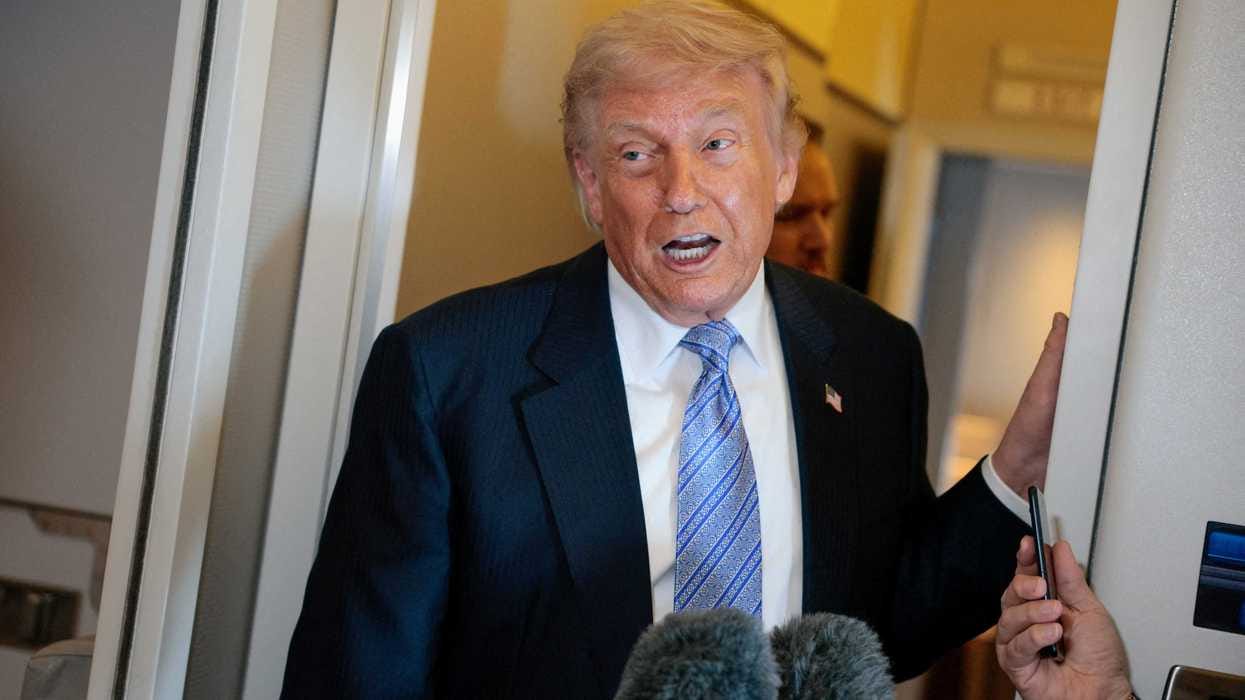
White House leak loop: ‘Weaponization’ plot to spin Trump’s classified files
from Systemic Error Podcast Hosted by Paulo Santos
What happened AlterNet reports that the Trump White House released records from the investigation into Donald Trump’s retention of classified documents and obstruction of their retrieval, then watched allied media recast largely known or minor details as evidence of government “weaponization.” Citing New York Times reporter Charlie Savage, AlterNet says the cycle began with an Oct. 2 White House briefing, continued through the publication of the files the following Monday, and reached Trump in the Oval Office by Wednesday through a question from a reporter affiliated with Mike Lindell. The documents reportedly concerned investigators’ internal discussion of probable cause for searching Mar-a-Lago, plans to conduct the search while Trump and his family were absent, and the collection of Susie Wiles’s phone logs. AlterNet also accuses Trump adviser John Solomon of selectively publicizing official documents, but the material presented here does not establish what Solomon personally released or what role he played in this particular episode. The power sits in the White House This was not a spontaneous media controversy. According to the account, the White House selected the records, convened reporters, framed the subject as “weaponization,” and published the material. Trump’s allies then supplied the alarmist interpretation, after which a friendly outlet carried that interpretation back into the Oval Office for presidential endorsement. The decisive actor was therefore the administration, not the reporter who eventually asked the question. The White House controlled access to the documents and the institutional authority surrounding their release. Allied media provided distribution and validation, but the executive branch supplied the raw material and the preferred frame. A publicity loop disguised as discovery The sequence converted an official release into the appearance of an independently emerging scandal. Government officials introduced documents under a politically loaded label. Supportive outlets amplified decontextualized claims. A friendly reporter then presented those claims to the president as a newsworthy question, allowing him to condemn the investigation using the same “weaponization” language. That loop matters because repetition can manufacture apparent corroboration. The White House points to media coverage generated from its own release; allied media point to the president’s response as proof of significance. No new evidentiary foundation is created. The same claim merely changes hands. The framing shifts attention from conduct to investigators The records came from an investigation into Trump’s retention of classified documents while out of office and alleged obstruction of efforts to recover them. Yet the promoted narrative centers the investigative process—search planning, probable-cause discussions and phone-log collection—as the supposed scandal. That is the misdirection. Routine or previously reported investigative details become objects of outrage, while the conduct that prompted the investigation recedes from view. The people exercising coercive power are portrayed as faceless persecutors; the former officeholder whose actions produced the inquiry is recast as its passive victim. The reporting has its own evidentiary gap AlterNet’s broader account describes a recognizable propaganda mechanism, but its treatment of Solomon outruns the evidence included in the article. It labels him a participant in the operation and invokes his history in Trump’s election-denial network, yet the quoted reporting does not connect him concretely to this document release. That weakness is not trivial. Commentary about coordinated manipulation must identify who selected the records, who distributed which claims and how those actions were connected. Otherwise, an article condemning insinuation risks leaning on insinuation itself. Government power becomes campaign material The larger pattern is the conversion of state resources into partisan narrative production. Official access gives selected claims a veneer of governmental legitimacy; ideologically aligned outlets supply circulation; staged questions return the message to the official who benefits from it. The consequence is not merely bad information. It is an accountability system forced to argue on terrain chosen by the person under scrutiny. The underlying conduct becomes secondary, investigative procedure becomes the accused, and executive power is used to manufacture the appearance that propaganda arrived from somewhere else. Thanks to Alter Net Source: White House leak loop: ‘Weaponization’ plot to spin Trump’s classified files This is a public episode. If you would like to discuss this with other subscribers or get access to bonus episodes, visit paulstsmith.substack.com
Embed this episode
No transcript yet.