
EPISODE · Aug 10, 2025 · 26 MIN
Who Gave the Toaster Root Access to the Physical World? (WHY2025)
from Chaos Computer Club - recent audio-only feed · host Piet De Vaere
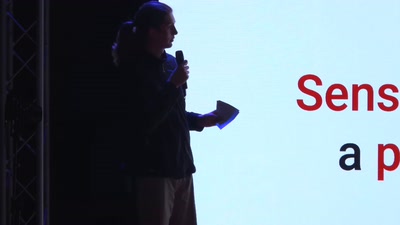
Smart devices are deeply embedded in the physical world: they can see, hear, and control things around us, often with zero real limits. When they’re hacked, it’s not just your data on the line; it’s your safety, privacy, and environment. In this talk, I’ll share some new ideas for putting a layer of access control between these devices and the real world, so we stop giving them a blank check. These days, “smart” devices aren’t just watching and listening: they can act on the physical world, often with zero meaningful limits. They unlock doors, adjust thermostats, steer vacuums, and record what’s going on around us 24/7. When these devices get compromised, and many do, it’s not just boring data on the line. It’s your safety, privacy, and physical space. The problem? We’ve handed out root access to the physical world like candy. Any device can sense or actuate whenever it wants. There's no layered control, no boundaries between software and the real world. If malware gets in, it gets full access to your home, office, or anything else the device is wired into. In this talk, I’ll show how we can fix that by treating _sensing and actuation as privileges_,not defaults. Instead of giving every device free rein over what it can hear or control, we can build mechanisms that require software to explicitly request, and be granted, access to the physical world. That access can be temporary, conditional, or denied altogether. We'll look at how to physically separate sensors and actuators from the software stack so that even if a device is compromised, it can’t automatically reach into your environment. We'll also explore approaches that enforce forgetfulness: ensuring that standby devices like smart speakers can’t quietly hoard data or leak it when compromised. If nothing relevant to the device's task happened, nothing should be remembered. The goal is simple: to take back control from black-box devices and start designing systems where physical-world access isn’t assumed, it’s earned. Licensed to the public under https://creativecommons.org/licenses/by/4.0/ about this event: https://program.why2025.org/why2025/talk/AUF93C/
What this episode covers
Smart devices are deeply embedded in the physical world: they can see, hear, and control things around us, often with zero real limits. When they’re hacked, it’s not just your data on the line; it’s your safety, privacy, and environment. In this talk, I’ll share some new ideas for putting a layer of access control between these devices and the real world, so we stop giving them a blank check. These days, “smart” devices aren’t just watching and listening: they can act on the physical world, often with zero meaningful limits. They unlock doors, adjust thermostats, steer vacuums, and record what’s going on around us 24/7. When these devices get compromised, and many do, it’s not just boring data on the line. It’s your safety, privacy, and physical space. The problem? We’ve handed out root access to the physical world like candy. Any device can sense or actuate whenever it wants. There's no layered control, no boundaries between software and the real world. If malware gets in, it gets full access to your home, office, or anything else the device is wired into. In this talk, I’ll show how we can fix that by treating _sensing and actuation as privileges_,not defaults. Instead of giving every device free rein over what it can hear or control, we can build mechanisms that require software to explicitly request, and be granted, access to the physical world. That access can be temporary, conditional, or denied altogether. We'll look at how to physically separate sensors and actuators from the software stack so that even if a device is compromised, it can’t automatically reach into your environment. We'll also explore approaches that enforce forgetfulness: ensuring that standby devices like smart speakers can’t quietly hoard data or leak it when compromised. If nothing relevant to the device's task happened, nothing should be remembered. The goal is simple: to take back control from black-box devices and start designing systems where physical-world access isn’t assumed, it’s earned. Licensed to the public under https://creativecommons.org/licenses/by/4.0/ about this event: https://program.why2025.org/why2025/talk/AUF93C/
NOW PLAYING
Who Gave the Toaster Root Access to the Physical World? (WHY2025)
No transcript for this episode yet
Similar Episodes
Mar 26, 2026 ·1m
Feb 8, 2026 ·4m
Jan 30, 2026 ·6m
Jan 2, 2026 ·47m