Who gets the windfall? Unions push for a larger share of extraordinary profits. episode artwork

EPISODE · May 9, 2026 · 6 MIN

Who gets the windfall? Unions push for a larger share of extraordinary profits.

from Korea JoongAng Daily - Daily News from Korea · host HWANG JEONG-IL

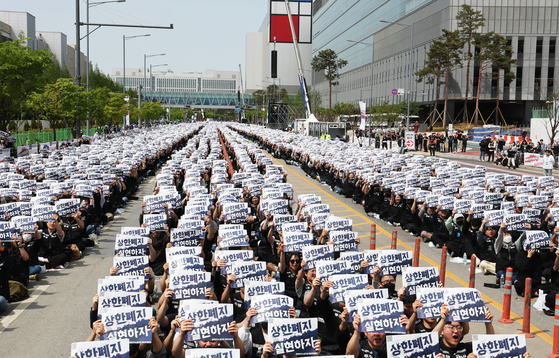
This article is by Hwang Jeong-il and read by an artificial voice. What began as a dispute over semiconductor bonuses is metastasizing into something far larger — to a full-scale reckoning over how corporate Korea distributes wealth. From automobiles and shipbuilding to steelmaking, labor groups are pressing a common demand for a greater share of extraordinary profits, and at the center lies a combustible question: Should employee compensation be tethered directly to operating profit? In industries where capital intensity and cyclic volatility define survival, compensation is more than a labor issue. It is, fundamentally, a question of capital allocation. What first appeared to be an isolated corporate dispute is now emerging as a referendum on the country's industrial order. Below, the controversy is distilled into key questions and answers. Q. How did this spread across industries? Executives and labor analysts point to a familiar accelerant: relative deprivation. Frustration escalated after SK hynix's compensation structure became public, sharpening discontent among Samsung Electronics employees over widening disparities in payouts. The backlash soon spread beyond semiconductors into autos, shipbuilding and steel. The ripple effects are now extending even further. Subcontractor unions tied to Samsung and SK hynix, alongside workers at Chinese production facilities, have begun advancing similar demands. Korea's labor structure magnifies the phenomenon. Enterprise unions wield considerable leverage, and once a major company establishes a precedent, pressure quickly builds across adjacent industries. Is operating profit the right benchmark for bonuses? Critics argue that operating profit offers an incomplete measure of a manufacturer's true financial capacity. Operating income reflects earnings generated from core business activities before financial expenses, taxes and large-scale capital investments are deducted. In heavy manufacturing sectors, those omitted costs are anything but incidental. Semiconductor fabs, shipyards and steel mills require relentless spending on facilities, financing, maintenance and research. Linking bonuses too closely to operating profit can therefore create payouts driven less by individual contribution than by industry cycles. In fact, many global manufacturers employ a different framework. Taiwan's TSMC and MediaTek, alongside U.S. automakers such as General Motors, typically base bonus pools on pretax income rather than operating profit. Even then, compensation is differentiated through individual performance evaluations. The industry believes the bonus pool generally accounts for roughly 1 to 3 percent of pretax earnings. Why are shareholders resisting? Because every additional won directed toward bonuses reduces the pool available for shareholder returns. Investors remain focused on free cash flow — the surplus cash left after capital expenditures and operating costs are paid. That figure ultimately supports dividends, buybacks and long-term financial stability. Samsung Electronics, for example, allocates half of its free cash flow to shareholder returns. Yet in capital-intensive sectors such as manufacturing and biotech contract production, surplus cash is already strained by continuous investment demands involving factories, advanced equipment and escalating research and development costs. Larger bonus payouts may only tighten those constraints further. Isn't it reasonable for workers to share in excess profits? Most major global corporations already incorporate company performance into compensation structures, though generally with greater nuance than Korea's common "percentage of base salary" approach. U.S. automakers often rely on collectively bargained formulas. One widely used structure awards workers $1,000 per employee for every $1 billion in pretax profit generated that year, with final payouts adjusted according to tenure and hours worked. Big Tech companies operate differentl...

This article is by Hwang Jeong-il and read by an artificial voice. What began as a dispute over semiconductor bonuses is metastasizing into something far larger — to a full-scale reckoning over how corporate Korea distributes wealth. From automobiles and shipbuilding to steelmaking, labor groups are pressing a common demand for a greater share of extraordinary profits, and at the center lies a combustible question: Should employee compensation be tethered directly to operating profit? In industries where capital intensity and cyclic volatility define survival, compensation is more than a labor issue. It is, fundamentally, a question of capital allocation. What first appeared to be an isolated corporate dispute is now emerging as a referendum on the country's industrial order. Below, the controversy is distilled into key questions and answers. Q. How did this spread across industries? Executives and labor analysts point to a familiar accelerant: relative deprivation. Frustration escalated after SK hynix's compensation structure became public, sharpening discontent among Samsung Electronics employees over widening disparities in payouts. The backlash soon spread beyond semiconductors into autos, shipbuilding and steel. The ripple effects are now extending even further. Subcontractor unions tied to Samsung and SK hynix, alongside workers at Chinese production facilities, have begun advancing similar demands. Korea's labor structure magnifies the phenomenon. Enterprise unions wield considerable leverage, and once a major company establishes a precedent, pressure quickly builds across adjacent industries. Is operating profit the right benchmark for bonuses? Critics argue that operating profit offers an incomplete measure of a manufacturer's true financial capacity. Operating income reflects earnings generated from core business activities before financial expenses, taxes and large-scale capital investments are deducted. In heavy manufacturing sectors, those omitted costs are anything but incidental. Semiconductor fabs, shipyards and steel mills require relentless spending on facilities, financing, maintenance and research. Linking bonuses too closely to operating profit can therefore create payouts driven less by individual contribution than by industry cycles. In fact, many global manufacturers employ a different framework. Taiwan's TSMC and MediaTek, alongside U.S. automakers such as General Motors, typically base bonus pools on pretax income rather than operating profit. Even then, compensation is differentiated through individual performance evaluations. The industry believes the bonus pool generally accounts for roughly 1 to 3 percent of pretax earnings. Why are shareholders resisting? Because every additional won directed toward bonuses reduces the pool available for shareholder returns. Investors remain focused on free cash flow — the surplus cash left after capital expenditures and operating costs are paid. That figure ultimately supports dividends, buybacks and long-term financial stability. Samsung Electronics, for example, allocates half of its free cash flow to shareholder returns. Yet in capital-intensive sectors such as manufacturing and biotech contract production, surplus cash is already strained by continuous investment demands involving factories, advanced equipment and escalating research and development costs. Larger bonus payouts may only tighten those constraints further. Isn't it reasonable for workers to share in excess profits? Most major global corporations already incorporate company performance into compensation structures, though generally with greater nuance than Korea's common "percentage of base salary" approach. U.S. automakers often rely on collectively bargained formulas. One widely used structure awards workers $1,000 per employee for every $1 billion in pretax profit generated that year, with final payouts adjusted according to tenure and hours worked. Big Tech companies operate differentl...

NOW PLAYING

Who gets the windfall? Unions push for a larger share of extraordinary profits.

0:00 6:48

No transcript for this episode yet

We transcribe on demand. Request one and we'll notify you when it's ready — usually under 10 minutes.

No similar episodes found.

No similar podcasts found.

Frequently Asked Questions

How long is this episode of Korea JoongAng Daily - Daily News from Korea?

This episode is 6 minutes long.

When was this Korea JoongAng Daily - Daily News from Korea episode published?

This episode was published on May 9, 2026.

What is this episode about?

This article is by Hwang Jeong-il and read by an artificial voice. What began as a dispute over semiconductor bonuses is metastasizing into something far larger — to a full-scale reckoning over how corporate Korea distributes wealth. From...

Can I download this Korea JoongAng Daily - Daily News from Korea episode?

Yes, you can download this episode by clicking the download button on the episode player, or subscribe to the podcast in your preferred podcast app for automatic downloads.
URL copied to clipboard!