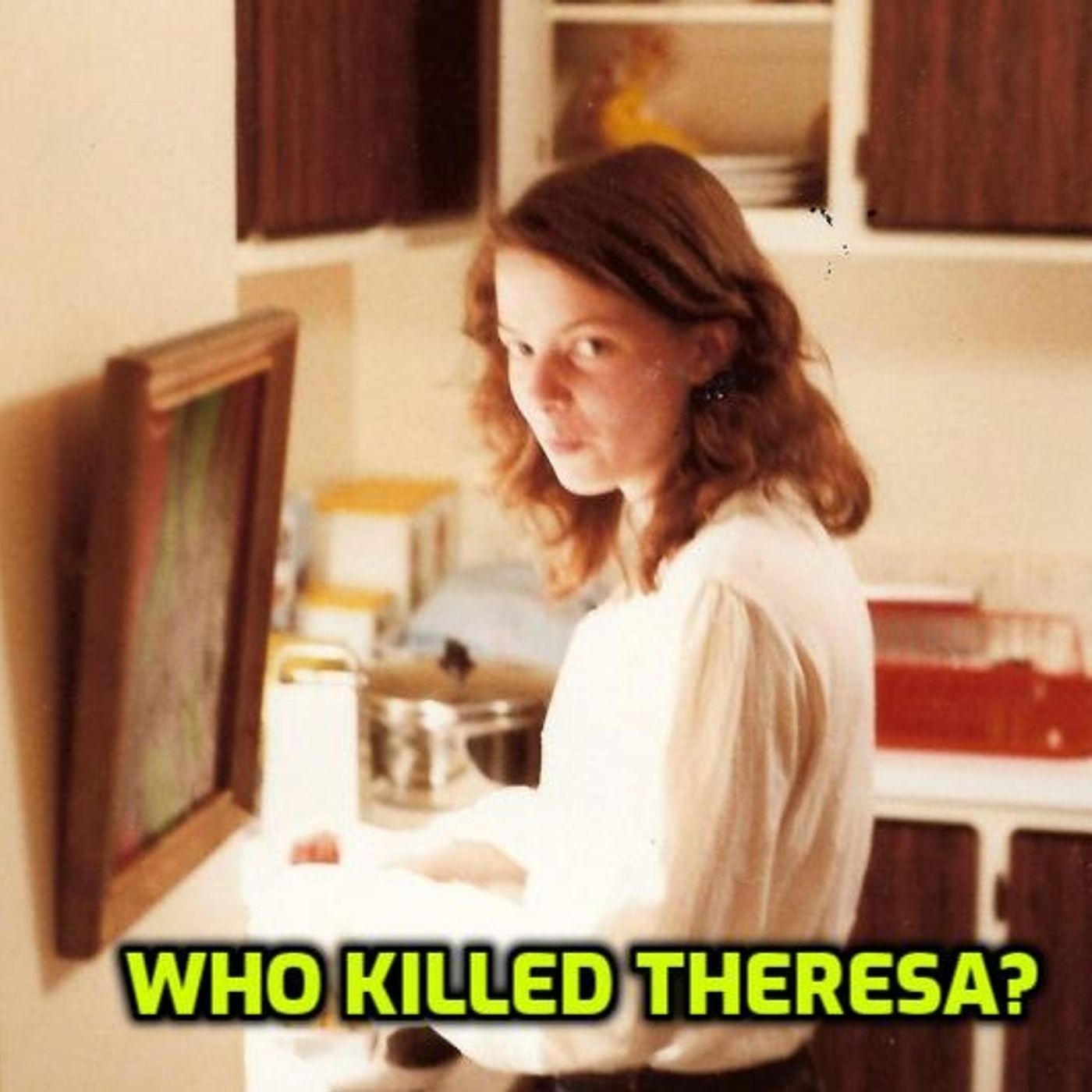
Hello, I'm John Allor. Before you listen to this episode, a couple of things. These are podcasts from the first season of Who Killed Theresa. They haven't been heard in over four years.
They're raw. It took me a while to develop a style. A lot of people like them that way. Unvarnished.
Others commented that it was amateurish. Nonetheless, here they are, I'm edited. I haven't gone back and listened to them. I haven't cleaned them up.
Thanks for listening. And once again, life isn't fair, justice is blind and dysfunctional, and some cops aren't smart and dedicated, like on television. This is Who Killed Theresa. Welcome to the podcast.
This is Who Killed Theresa, and I'm your host, John Allor. This is a podcast about unsolved murders in Quebec, Canada, in the era of 1975 to 1981. It's a program where life isn't fair, justice is blind and dysfunctional, and some cops aren't smart and dedicated like they are on television. And in this podcast, we'll touch on a number of unsolved murders, including the cases of Sharon Pryor, Lee's Shulket, Louise Cameron, Jocelyn Hool, Chantel Trumbay, Jo Ann Dorion, Hello Monast, Catherine Hox, Denise Bazzignet, Menon Jubei, Lise en Blei, Teresa Allor, Nicole Goudreau, Tammy Leakey, and two unidentified bodies of young women.
And off the mark, I want to address something that I kind of didn't want to, but I feel compelled to. When I started this about a month ago, I expected about maybe 100 listeners. I didn't expect 20,000 listeners with an average completion rate of 65% or something like that. It's a little, I didn't think it would be that successful.
But because of that, maybe I need to address something or recalibrate something. This was created specifically for three people. And then maybe another 100 people secondarily in the Quebec and Canada region. And anybody else who would listen to after that, it was really kind of, it was really kind of gravy.
And I am not a professional at this. I don't pretend or want to be. This is not a slick show in any way. It's just a guy talking.
And if that's or into you, well, there's a solution, you can just turn it off. Podcasts like Snap Judgment or Radio Lab, where they have a sound effect for every single idea that's introduced. I don't particularly like that. In fact, it distracts me from absorbing the knowledge that's being put forth.
Don't have theme music. I don't want it. I don't need it. The only other sound other than my voice, you'll hear is occasionally my squeaky chair.
And even that was deliberate. Initially, I thought maybe I should get a different chair. And I was like, no, that's my chair. Leave it in there.
You'll occasionally hear an airplane outside my window. You'll occasionally hear my cat. I don't care. It doesn't distract me.
I don't see why I should distract you. I'm not here to entertain anybody. I'm not a journalist. I admire cereal.
I'm not trying to be the podcast cereal or criminal or any of them. I'm trying to do my own thing, which is to give some context to a very complex series of cases that I feel need continued exposure. It is just another form for me to express and give some meaning to these unsolved cases. I've documented it all on my website.
If it's confusing to you, I'm sorry. But if you want a very linear chronological picture of the information, it's all there on my website. It's been there for over 15 years. Again, I'm not an entertainer.
And if you want to be entertained, go listen to that. Go listen to somebody with the resources of NPR or American Public Media or the CBC. I have no desire to be famous. Or if I did, I would be talking about Charles Manson or the Zodiac.
I'm not. I'm talking about some very obscure information. And it's some people are really going to get it and some people are really going to hate it. And I'm all right with that.
I don't have a problem with that. So for those of you who are listening from the United States and the UK and I see now Sweden, I see Australia, you are welcome to come along for the ride. But I'm really, I will try to give you as much context as possible from an outsider from Canada, an outsider from Quebec, which is in itself of the police culture, societal nature of Quebec is very complex and very confusing. I'll try to unpack that for you, but I'm not always going to be successful and you're sometimes going to be confused.
So there, I've said that. Let's move on. What I'd like to do now is I think it would be helpful saying that to maybe summarize some of the information, the seven cases we've discussed so far and my feelings about why they may be related. But before I do that, I want to relate to you a conversation I had with Mark Lapin, who's the head of the Certé de Gévex Cold Case Bureau in Quebec, and I've talked about him before.
I haven't spoke to Mark in about six months, primarily because I know he was in a very bad motorcycle accident, I didn't want to disturb him. But I felt after six months, nevertheless, it was time to get back in touch. So I did, I called him up and I had a couple of questions for him. Specifically, I wanted to thank him because I noticed that on the Certé de Gévex Cold Case website, they've expanded.
They've added a lot more cases, so clearly, they feel that they have the capacity to deal with these. And in particular, they added two cases that I've been discussing for years, the murder of Jocelyn Huul April 77 from Montreal in the case of Chantel Trump-Lay, who will be discussed a little bit. Both these cases we haven't gotten into yet in detail, we will be patient. I have my reasons for doing that.
Again, telling it in a linear fashion is one way, but I'm telling it the way I'm telling it to provide the context that I think is necessary for what I think is what's going on in that era. At the same time as congratulating Mark Leppin, I also encouraged him to add the other cases, primarily the case of Luis Camarain and Denis Baziné and Menon du Bay, who still are not there. He expressed to me that his desire to get all the cases up there and what's holding him back is family authorization. And I think that's just an excuse in my mind.
I can't speak for the Camarain or Menon du Bay cases, but I do know in the case of Denis Baziné that that family is quite anxious for that case. To be on that side and to obtain as much exposure as possible. So whatever is causing them to lag there, they need to get on the stick and get moving on it. We also talked about my sister's wallet.
You may recall initially it was recovered. Police had it. It was returned to my family, my father. It sat in one of those metal filing cabinets for decades.
My father eventually gave it to me. I felt it was of importance that the police had it against. Certainly in the era since her murder, we reached a narrow forensic breakthroughs and I thought it should be tested for DNA. So about 15 years ago it was tested for DNA and they got a partial match of male DNA at that time.
However, they could not at that time rule out my family's DNA. It's very possible that my father handled the wallet. It's an absolute certainty that I handled the wallet without gloves at that time, stupidly. So I consented last spring for the Quebec police to take a blood sample of me so that they could rule out any family member from that partial DNA sample that they obtained.
So last spring I went in, they took my blood, which that was either I can tell you at the time I was a little paranoid about these things. I was like I can't believe I'm sitting in a room with these two starts to think of back officers and I'm allowing them to take my blood and I, despite the fact that it looks like a brand new hermetically sealed needle, what do I know they're capable of anything? They could just eliminate their problem right now. They're squeaky wheel headache and inject me with something but you know that's me at my most paranoid.
It worked out fine. They did the analysis and they were able to exclude me but the sample is still partial and the way they expressed it to me is there have been no major advances in DNA testing for them to identify more specifically who that partial sample belongs to. Again I always bring this up when I speak to them. How's it going on the investigation?
Are you continuing to investigate these cases collectively or are you looking at them one by one? They always kind of give me the typical pitter patter that we do not eliminate this is a theory although it could be very possible that only one perpetrator is what they're really saying is anything is possible which is to say nothing. I get it that's fine. They did say that they did link what he called linkage analysis.
I've never heard him talk about that before which you said included looking at these cases through geographic profiling and through the modus operandi both of the possible offender but also of they do a victimology analysis of all the victims. So at this point that I figured I'd give my pitch my elevator speech to him about why a geographic component that he may not have thought of before about why I think these might be linked having to do with the the highway we were discussing last time highway 112 and why I felt that was so important and I began it by saying something that is true you know a lot of families whenever anyone brings up the Hells Angels or Bikers and dares to suggest that the victim may have met their end by this you know element of subculture. Victims understandably tend to get very very offended by this and I think it's because of a lack of understanding. I do know that in the case of Sharon Pryor who we talked about the investigative journalist in Quebec Claude Poireier at one time suggested Bikers had something to do with Sharon's death and the family got very very offended at that.
It's it's been brought up to me before with Theresa. I've gotten very very offended by it and the offenses taken because we think what they're suggesting is that these victims were part of the environment of this culture and what we're saying is look and our loved ones did not hang out with the biker element. What in the name of God are you suggesting? But I don't think that's what they're suggesting.
I think it's a lack of tact and their ability to express what they ultimately are or trying to express which is these victims were in the wrong place at the wrong time and met in the crosshairs of this subculture. So with that we went over the Sharon Pryor case again and I said you know I said I think it's interesting that Sharon lived on congregation in Point St. Charles and just a block north of congregation was the location of a biker bunker and I deliberately said biker bunker because I know it wasn't a biker bunker and he immediately corrected me and he said that John it wasn't a biker bunker it was a location where some bikers lived and that was good enough for me because he just confirmed to me what I wasn't sure was true that some bikers actually lived just north of Sharon Pryor. So then I said to him here's what here's what I want to say if they were living right there you know maybe maybe they they killed Sharon and that their corridor that they would have used was this highway 112 and that there's all these cases that are that are have these interesting connections to highway 112 and maybe it has something to do with you had bikers just north of Sharon and then all the way in in Lennoxville where Theresa lived we know that there was in fact a biker bunker in Lennoxville that's a well-established fact so maybe between those two locations where we know bikers where there was activity involving bikers where a number of victims got caught in the crosshairs.
Any listened attentively as he always does. But then he said to me, but John you know Sharon Pryor was was found in Long Gay north of the Jacques Cartier Bridge so the offender clearly didn't use the 112 Victoria Bridge he drove north up through Montreal then east across the Jacques Cartier Bridge to the Long Gay dump site and I said well Mark it is equally probable that the offender drove across the Victoria Bridge and then drove north the Long Gay dump site either is true Mark. I'm not saying you're right and I'm wrong I'm saying you have a 50% chance really in all probability that one or the other happened. I didn't really see the logic in this argument but there you have it.
So I wanted to delve a little more into this this theory that I have suggested and so I'm going to post a map on my on my website about this. Just look at the Long Gay area or excuse me just look at this Point St. Charles area where Sharon disappeared from. It is an area that is surrounded by rail yards we know we have these these bikers living in her environment and the other thing we know that where you get rail yards you also get ports and sure enough the port of Montreal is is in that environment it is just a little bit north of the rail yards a little bit north of the highway 112 route.
So what I'm suggesting to you is this it's well known in that era that the Montreal mafia, the Italian mob would import the drugs through the ports and the bikers were responsible for the distribution and they're in this scenario on this map they're right there. So off the boat through the bikers bikers take 112 they take it up to the bike of the bunker in Sorrelle Quebec or the bunker in Lennox voca back from there it is distributed to the colleges to the high school I'm talking Alexander Gulte high school in in Lennox ville. After you won't know what the hell I'm talking about with that a few will know exactly what I'm talking about. So that's an interesting dynamic of all of this.
In order to elaborate a little more on the the highway 112 hypothesis let's recap these seven murders. So in shorter order in a three and a half year span we have we have the following. April 75 Sharon Pryor strangled and severely beaten. March 77 Louise Camara strangled.
September 77 Helen Monast strangled. October 77 Denise Besine strangled. January 78 men on to bay we we don't know precisely how she died and and do they could be an outlier here although we don't know we don't know but there is some suggestion that she may have been killed by a family member. Lise en Blais June 1978 strangled and beaten and then finally Terezel or strangled November 78.
So commonality is the method of death strangulation here and then let's look at another thing that we really haven't gotten into but where they disappeared from and where they were found. So prior from an urban point St. Charles Montreal area she's found in a field in Long Gay next to a bee colony, keepers colony, the apiary I guess trees a field so it's kind of wooded area. Louise Camara disappears from this urban area again Sherbrooke Quebec from the streets of Sherbrooke Quebec she's found in the woods near Manfred adjacent to Lake Manfred Magog just south of the town of Manfred.
Helen Monast disappears from the little town of Shumbly. He's found within yards of where she disappeared in that little town but worth noting where she's found is in a park under within a grove of pine trees. Denny's Bazziné is found off a highway exit ramp down down the slope in a field adjacent to a field not in the field but just adjacent to it again she disappeared from downtown Montreal urban found in sort of a rural area. Manon to bay disappears from the town of Sherbrooke is found in the woods just south of Sherbrooke.
Lee's on bay is very different she disappears or is attacked in the backyard of her very urban environment her home in the east end of Montreal but tantalizing in all this is is Blais's purse her purse is not found it's never recovered it's missing and a purse is recovered at the dump site of Louise Camara the same site where clothing of Teresa lore may have been found so the purse is the operative there and then finally Teresa Lord it may have disappeared from the town of Lennoxville or may have disappeared from the town of Compton but most definitely found under a group of a cluster of trees adjacent to water and next to a field so some some some very compelling stuff in all of that and so the last thing that I think is worth dropping in here is again finally this highway 112 thing and the connection there and what that has to do is geographically how close these victims are to highway 112 so from from one end to the other from the point where Sharon prior disappears to the point where Louise Camara disappears my St. Charles to Sherbrooke that's a it's 100 miles and both are highway 112 prior disappears from congregation which is less than a half mile from highway 112 Helen Monast's body is found less than two tenths of a mile from highway 112. Chamon de Val where Louise Camara was found and the that purse was found and they have belonged to the Lise en Blais and the clothing of Teresa Lord is three miles from highway 112 but we know for a fact that that is where a body was found and then finally Louise Camara is last seen on King Street in Sherbrooke which is highway 112 it's the same thing so that's the the argument for saying that maybe there's there's some significance in this corridor that links some of these cases now I don't want to rule out other possibilities so we begin with this cluster of seven unsolved murders and as I say there's there's many others with the exception of these own Blais we haven't even touched all the ones on the island of Montreal we'll get to them I'm telling this deliberately and it's also of note that it's quite possible that this seven case cluster that some of them are not connected that they may in fact be connected to to some of the other clusters certainly you know most obviously when I look at the case of Sharon Pryor it could be connected to a couple of other scenarios the the trick is finding out which ones connect to which and I'm not trying to be at atees with all this and saying we'll get to that and all that I apologize for that but I'm trying trying to tell it in the best way that I know how and again I've said this before telling it linearly or chronologically has one value but I've already done that if you need it that way it's on my website but this you're telling it by police jurisdiction would be informative but I don't think of very much value I don't I don't think a serial offender respects police jurisdiction boundaries and if anything these cases from this era show us what goes wrong when agencies wear blinders so I certainly don't want to do it that way but the reason I'm doing it this way is I believe it's more than one offender that was responsible for all of these crimes I think there's a there's a phenomenon going on here which has been referred to as homicidal copycatting and it's documented in a book by Michael Arntfeld which I just actually received this week and I've been quite eager to read for a while it's called Murder City the untold story of Canada's serial killer capital from 1959 to 1984 and that can you guess what the capital is some are saying Vancouver you're wrong it's London Ontario and you know London Ontario right now you're kind of going wha? it's cannot be um no apparently it was um Arntfeld documents uh um a pattern of homicidal copycatting um that he he he believes was related to six serial killers at that time um and there's a number of phenomena going on that would explain this and a lot of it has to do with I mean I have a completely read the book I've read some of it um police agency apathy um certainly if nobody's making any great attempt to solve these crimes uh very quickly other offenders will will take you know that is a suggestion that you can get away with murder and then better yet why not um make your murder look like it was perpetrated by the other guy who murdered somebody who was unsolved that way um you know you you you are clearing your tracks and um and that so that is what Arntfeld suggests in this book and that is what I believe was going on in in Quebec in the 1975-81 era for a number of reasons I think that that time in Quebec uh it's been described as the wild wild west an era of confusion where um you didn't really know you know who was wearing I've heard expressed this the way the white hat the black hat you didn't quite know um the lines were blurred between good and bad um and there's a there's a variety I think of cultural phenomena going on at that time that contributed to this the first of bring up is um had to do with the biker gangs in that era they were going through a it was a tumultuous era where they were going through a period of consolidation initially you had a lot of uh wiker gangs in that Quebec region with very colorful names like Satan's Choice and the black spiders and eventually they they all got kind of distilled down into eventually what became the hell's angels um and eventually the rockers or the rock machine sometimes they're referred to so it's very chaotic um a lot of allegiances uh sort of being forged or or being betrayed um a lot of that stuff going on in conjunction with that uh you had um don't forget in 1976 uh an election in which the partit de quebecois came into power for the first time the the the party that most wanted um to separate from the rest of Canada prior to that you had relative certainty um between either governance from the conservative party or the liberal party of Canada and then thrown into that in 76 you had this great unknown of basically a series of French intellectuals who were suddenly um elected into power and were asked to govern and they had absolutely no experience in this kind of thing you had individuals heading ministries of education and transportation and health um who were accustomed to you know they were philosophers and teachers basically and it took them a while to to kind of get their legs on how to govern but again this contributed to a period of of relative chaos and confusion and fear you certainly had all the English as soon as they came into power everyone knows that sunlight left to Toronto a number of English businesses left for fear and then i'll drop in one one further element coupled with this at that time was a consolidation of kebec police forces up into that time you had a lot of small rural and urban communities with their own police forces and the decision was made that this was bad for business they needed some uniformity and that a lot of these agencies were going to be dissolved and would come under the umbrella of the start to take a back that would be just one governing police force that certainly happened in the case of Lennoxville right around 78 79 maybe maybe there's a little later 80 um Lennoxville lost its police force and fell under the jurisdiction of the start to take a back so again you you had all of this you know you had new people in charge in police undoubtedly it was very confusing and very chaotic for the people and beyond that you had um you know the start to take a back and the police agencies reporting up to the provincial ministers of public security and justice who themselves were just getting their sea legs in governance so i think this created a perfect storm this chaos this confusion in which these crimes um although i wouldn't i wouldn't say they went unnoticed they went very noticed but nobody either had the the will um or the time or the expertise to do anything about them i want to spend the remainder of our time today um the second half of the podcast switching gears and i want to talk about an article that came out last week in Bloomberg news came out on February 8th and it's called serial killers should fear this algorithm and it focuses on a 61 year old retired investigative journalist named thomas hargrove now hargrove in his time so reporter in washington dc investigative journalist and he became to be known as kind of a stats numbers guy um a lot of his colleagues referred to him as the billy bean of murder um you were called billy bean being the great open-air manager who used statistics in all the way in order to build um the the optimal baseball team uh so so one of the things that hargrove focused on was he noticed that there'd been a series of 14 unsolved murders of women in gary indiana and all the women were between 20 and 50 years of age and they all died of strangulation um and he started to use statistics in order to to form associations and um eventually his work led to the arrest of darren bond for the murders of some of these women but the the how he was able to do that is um he got a hold um through his research he was researching at one of the university libraries in uh in mazurri and he got a hold of the fbi's uniform crime report um and attached to the uniform crime report was something called the supplementary homicide report um and what was unique about that was it was just much richer detailed information um for instance it included line by line um detail of every murder ever reported to the fbi in 2002 and that alone accounted for 16 000 murders and it was categorized by age race sex method of killing the police agency the circumstances of death and any known offenders so this this rich repository of information um and he began to wonder from that could an algorithm be created that could spot a serial killer could you spot trans and unsolve murders um and with that he this this intrigue and curiosity was was born from from what is commonly known as um linkage blindness which is um the failure for a lot of police agencies to commit dot to to connect the dots in in a lot of cases it's certainly something that I have experienced in my great frustration um and through his research he found that um in uh between the period of 1980 and 2010 a third of all American homicides were never cleared and more disturbing than that was that the clearance rate was going down in the 1960s you had a 90 percent homicide clearance rate by 2010 you only 60 percent of homicides were being cleared and now some of this you can attribute to sort of the wave of violence that struck the country in the um certainly in the 70s and 80s and then later in the crack era but what hargrove pointed out was this was happening despite advances um in database technologies and advances in in dna and forensics of data and um hargrove says and I quote I think there are a great many uncaught serial killers out there I think most cities have at least a few which is a an astonishing um admission and I to explain some of that why that would be going on I just want to read a little bit from from the um article um this is from the article serial killer should fear this algorithm the police have never been great at leveraging the power of their own statistics police culture is notably paper-based scattered and siloed and departments aren't always receptive to technological innovation in the 1990s the FBI created another voluntary reporting database this one specifically for violent and sexual crimes called the violent criminal apprehension program or VICAP it never succeeded primarily because it's voluntary making it easy for police departments to ignore most law enforcement agencies don't have a real solid understanding of what the purpose of VICAP is says Gregory Cooper ran the program for three years the frustration is I've got a car but no one's putting any gas in hard-growth calls VICAP an experiment that was never properly funded and most police departments never really bought into the idea now something very similar um has gone on for years in in Canada Canada has a complementary database I believe managed and maintained by the RCMP called VICLAS which is the violent crime linkage system um I well recall uh and it might have been 2004 or 2005 when I'd finally made some good relationships with the start to take it back I urged them repeatedly to to enter the information of the Menon du Bay, Louise Cameron, Theresa Lorre cases into to VICLAS and they were reluctant to do it for a long time eventually they begrudgingly did it which at the time I felt was an accomplishment um I don't think so um so much anymore uh now today I kind of shifted my my belief and I think um their reluctance to enter the information into VICLAS was based on the fact that I believe they knew that no one was using it and therefore it was a completely wasted effort because it was a it was an underutilized tool so when we look at that um that metric a third of all homicides being left unsolved how does how does Canada stack up to that well recall we we dealt with this in a earlier episode and similar the um stats can in Canada Center for Justice Statistics published a report um believe it was in 2005 or 2006 specifically about Canadian homicide um and the years they used were 1976 to 2005 um Canada's clearance rate is um much much better than that of the states it's it's almost 24 higher um I'm doing my math right they have an 83.9 average clearance rate of homicide but the devil's in the details remember we went into that that may be the average but who is the lowest of the low um well the lowest is the the Montreal police um at clearance rate at 65% so just as bad as um the state's LaValle at 67% along gay police at 74% um and the surot take it back slightly better um just under the national average at 80%.
So um with this you may ask yourself well can such a database um be created for for Canada this sounds fantastic and I had the same question so I got in touch with um Mr. Hargrove I reached out to him he he runs something called a website called the murder accountability project and if you go to that website um you can access his database using the uniform climb report it kind of geographically plots out this out for you you can search by various regions by by your city by your state etc and I noticed um that a Canadian was on his board of directors and I figured the easiest way to get in touch with um with Thomas Hargrove was to reach out to the Canadian obviously um and so I did and he immediately wrote me back um but what I failed to notice was the guy who was on his board who was a Canadian is Michael Arnefield the author of Murder City about the the copycat killings in um in London Ontario which I was kind of astonished by that and he immediately wrote me back um and copied uh Tom Hargrove on this and I'll just read to you a little bit of what he said and this is about creating a similar database for Canada he says you're actually the second Canadian to broach the idea of a Canadian iteration however as I explained previously the key stumbling block is the restricted public access to all supplementary homicide report data collected in Canada through the Canadian Centre for Justice Statistics the Division of Stats Camp. This is where the data regarding relationship between victim and offender and apparent motive or circumstance sex related drug related is housed. Criminologists have previously filed access to information requests to get this data in one fell swoop and been denied on the grounds ostensibly that it violates Canada's doctrine error privacy laws as these victims suspects might be indirectly identified.
The alternative is to file a request with every single police agency in Canada which would take years. We've discussed the possibility of a separate tab with basic clearance rates by a Canadian city but it could never be as detailed of that that we have with the um with the Murder Accountability Project that Tom has built. So um yeah um disappointing there I don't think clearance rate by city is quite as useful as the rich database that Hargrove created and anyway StatsCan is already reporting on that we already have that information but this has led to some correspondence between Hargrove and Artfield and myself they're a little bit busy now the two of them responding obviously this article has created a whole lot of interest and that's keeping their focus right now but we um we agreed to well that way I agreed to as I said let me at least give you the respect of reading your book and once I'm finished let's get in touch again and see if there's any way any commonalities where we can work together on something because I think that'd be that'd be really cool and really productive. So that's the program for this period I hope you enjoyed it as always um things that I referenced this episode I'll put some links up on the website which is at www.terisaallore.com that's T-H-E-R-E-S-A-A-L-L-O-R-E there's also an email uh threesallore.com where you can write me about anything show suggestions um things you like things you don't like tips they're always great and I'm also on Twitter you can find me at justiceguy that's at j-u-s-t-u-s-g-u-y so thank you so much for tuning in um and uh as soon as I rattle my brain for how to plod forward um I will give you a little more content and we'll go from there have a great day