
EPISODE · May 17, 2025 · 14 MIN
Why Are You Always Prone to Extreme Stress?
from Inner drive
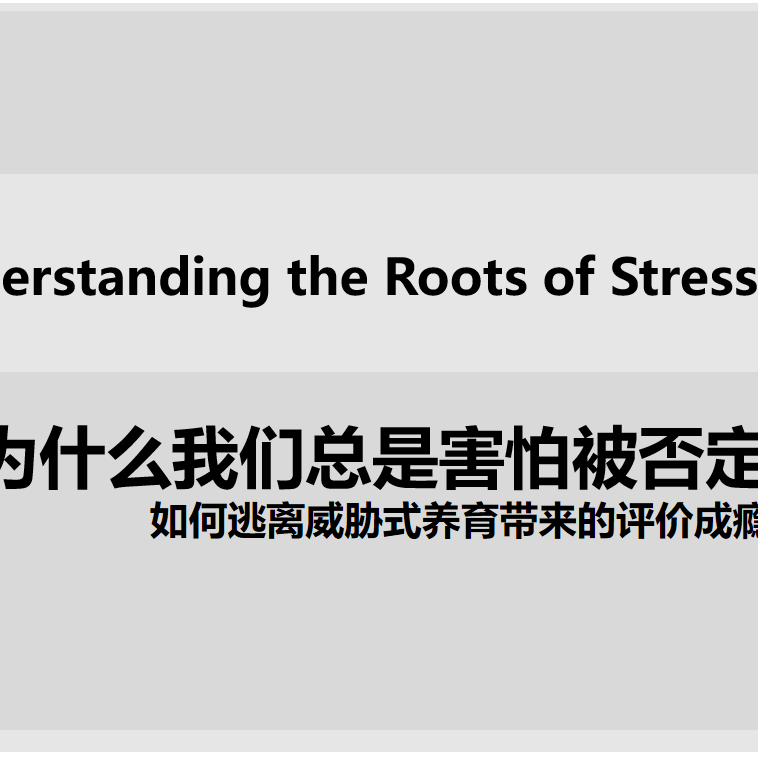
Do you often have moments like this?Hands sweating after checking a presentation 20 times before reporting, restlessness when your leader doesn’t reply promptly in a work chat, or overthinking a friend’s “I’ve been busy lately” as “Did I do something wrong?” These high-pressure feelings that spill into work and relationships mean your brain is processing two layers of signals:Layer 1: Realistic Assessment(For example, project mistakes possibly affecting performance reviews, or miscommunication causing misunderstandings)Layer 2: Emotional Replay(The deep childhood fear from criticism: “Not being loved = life-threatening danger”)Neuroscience shows that the amygdala in the human brain records strong childhood emotions as “survival alarms.” When parents threaten “withdrawing love” — like “Stop crying or I’ll leave you here” or “No one will love you if you fail the exam” — a child’s brain connects “negative evaluation” to “safety threats.” This instinct, evolved to get parental attention, becomes an “over-alert mode” in adulthood: Even a colleague’s neutral comment like “This plan can be improved” makes the amygdala signal “Danger! Fight or run!”2. How Threat-Based Parenting Forms an “Evaluation Addiction” Neural PathwayThese hidden “emotional blackmail” memories from childhood keep changing how you think:1. “Conditional Love” Creates a “Self-Worth Calculator”When parents link love (like “Taking you for treats,” “Playing with you”) to “obedience/excellence,” children learn: “My value depends on meeting others’ expectations.” As adults, this shows as strict rules: “I must score 120% before submitting work” or “I need everyone’s approval to be good enough.”2. “Disaster Predictions” Train a “Negative Filter” in the BrainExtreme words like “Your life is over if you don’t get into a top high school” or “No one will marry you if you act like this” make the brain always look for “potential rejections.” Brain scans show people raised with threats react three times more strongly to criticism in the prefrontal cortex, creating a habit of focusing only on negatives.3. “Emotional Withdrawal” Triggers “Abandonment Fear”Psychology’s “attachment theory” says parents threatening to leave often break “secure attachment.” As adults, they fall into a cycle of “over-giving + over-fearing” in relationships: wanting closeness but always watching for “negative signs,” misunderstanding normal talks as “signs of a breakup.”3. How to Rebuild Your “Stress-Evaluation” Response as an Adult1. Start the “Dual Reality Check”When anxious, use pen and paper for these three questions:✅ Fact Check: What specific thing is the criticism about? Is there proof?(Example: “The plan lacks creativity” vs. “My leader thinks I’m bad at my job”)✅ Consequence Check: What’s the worst realistic impact on my life/work?(Example: Revising the plan = 3 extra hours, not “losing all opportunities”)✅ Memory Check: Does this feeling remind me of a childhood threat?(Tell the difference between “now” and “childhood memories”)2. Rewire Your Brain via “Safety Anchoring”Spend 5 minutes daily recalling a time you were accepted despite flaws (e.g., a friend saying “It’s okay, we’ll fix it together” after a mistake). Describe the scene, their voice, and your feelings to build a new brain path: “Negative feedback ≠ being abandoned.” Studies show 21 days of practice reduces the amygdala’s overreaction to criticism.3. Build a “Self-Companionship” BeliefExistential psychology says: Your value comes from “being you,” not from being judged. Try this before bed: “Even if I did nothing today or got no praise, I still deserve my own kindness.” This “unconditional” self-talk slowly changes the habit of relying on others for self-worth.4. More Important Than “Not Fearing Criticism”: Allow Yourself to “Move Forward with Alarms”Don’t blame yourself for being sensitive — that “over-alertness” once protected you as a child. Growing up isn’t about no fear, but telling your inner child: “I can protect you now. We don’t need to be perfect to feel safe.”When you hear two voices in stress — the childhood “Run, or you’ll lose everything” and the adult “I’m here; we can go slow” — you start changing from “controlled by past habits” to “being your own mental guardian.” Remember: The steadiest love in the world is in how you treat yourself.
NOW PLAYING
Why Are You Always Prone to Extreme Stress?
No transcript for this episode yet
Similar Episodes
Apr 29, 2026 ·78m
Oct 3, 2025 ·28m
Sep 16, 2025 ·29m
Sep 16, 2025 ·47m
Sep 12, 2025 ·37m
Sep 11, 2025 ·40m