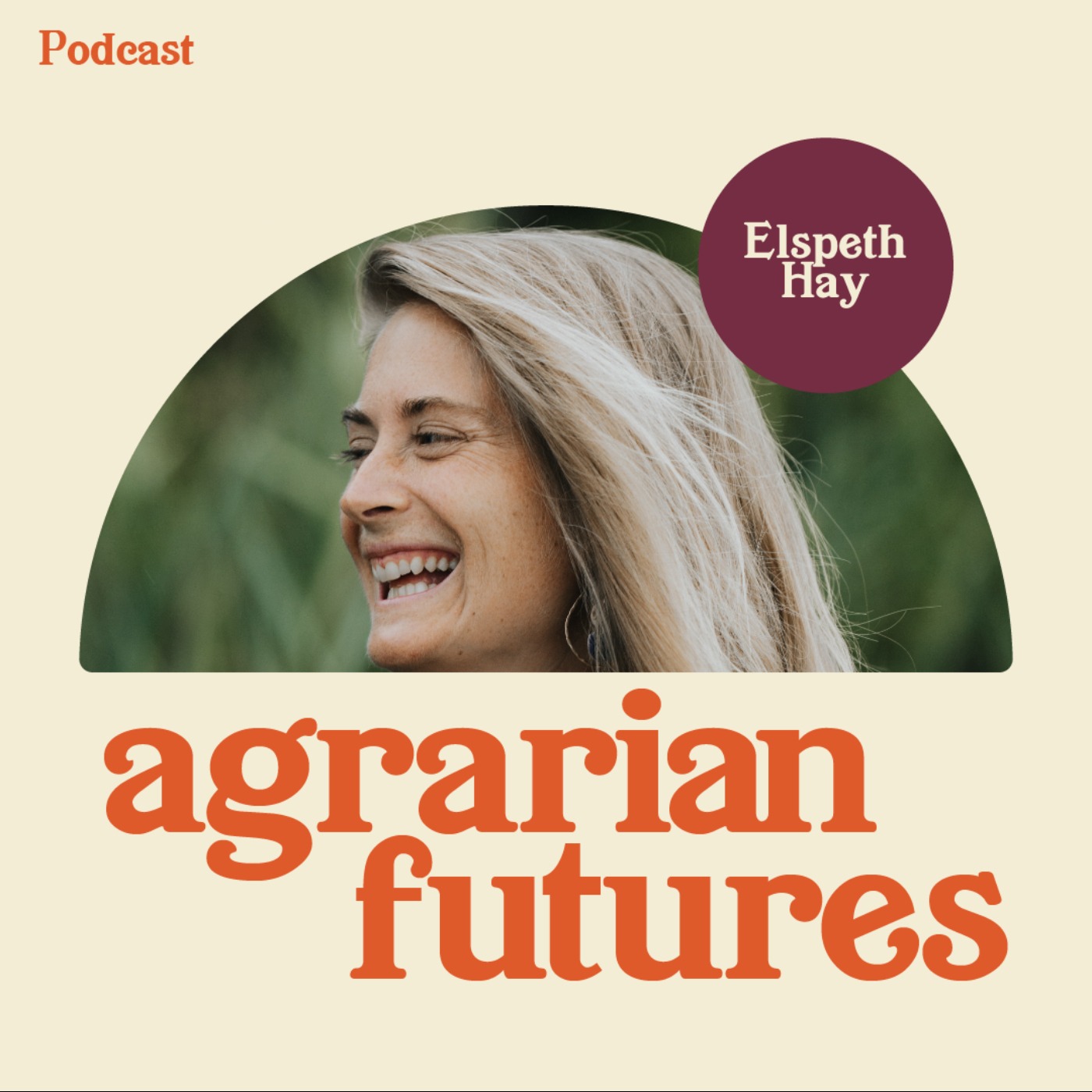
Why Aren't We Eating Acorns? with Elspeth Hay episode artwork

EPISODE · Feb 12, 2026 · 42 MIN

Why Aren't We Eating Acorns? with Elspeth Hay

from Agrarian Futures · host Agrarian Futures

I’m willing to bet that most of our listeners - like us - have traditionally seen acorns as food for squirrels, not people. But as Elspeth Hay points out in this conversation, that assumption says more about our food system than it does about the acorn.For much of human history, acorns were a staple. They fed communities across North America, Europe, North Africa, and Asia - and in some cases - still do. They were managed, processed, stored, and celebrated. So how did we go from acorns as everyday food to acorns as woodland debris? In her fantastic book Feed Us with Trees, Elspeth traces how enclosure, industrial agriculture, and a narrow definition of “real farming” pushed perennial forest foods to the margins of our imagination.In this episode, we dive into: • Why acorns were once reliable staple crops, not novelty ingredients • The myth that we can only feed ourselves with annual row crops • How the loss of commons reshaped our relationship to forests and food • What Indigenous land management, including fire, meant for food abundance • The false divide between farming and foraging • How pigs, oaks, and people once formed integrated food systems • What it would take to bring acorns and other perennial tree foods back into our dietsMore about Elspeth:Elspeth Hay is the creator and host of the Local Food Report, a weekly feature that has aired on the Cape and Islands NPR station since 2008, and the author of Feed Us with Trees: Nuts and the Future of Food.Deeply immersed in her own local-food system, she writes and reports for print, radio, and online media with a focus on food and the environment. You can learn more about her work at elspethhay.com.Agrarian Futures is produced by Alexandre Miller, who also wrote our theme song. This episode was edited by Drew O’Doherty.

I'm willing to bet that most of our listeners - like us - have traditionally seen acorns as food for squirrels, not people. But as Elspeth Hay [https://elspethhay.com/] points out in this conversation, that assumption says more about our food system than it does about the acorn. For much of human history, acorns were a staple. They fed communities across North America, Europe, North Africa, and Asia - and in some cases - still do. They were managed, processed, stored, and celebrated. So how did we go from acorns as everyday food to acorns as woodland debris? In her fantastic book Feed Us with Trees, Elspeth traces how enclosure, industrial agriculture, and a narrow definition of "real farming" pushed perennial forest foods to the margins of our imagination. In this episode, we dive into: • Why acorns were once reliable staple crops, not novelty ingredients • The myth that we can only feed ourselves with annual row crops • How the loss of commons reshaped our relationship to forests and food • What Indigenous land management, including fire, meant for food abundance • The false divide between farming and foraging • How pigs, oaks, and people once formed integrated food systems • What it would take to bring acorns and other perennial tree foods back into our diets More about Elspeth [https://elspethhay.com/]: Elspeth Hay is the creator and host of the Local Food Report, a weekly feature that has aired on the Cape and Islands NPR station since 2008, and the author of Feed Us with Trees: Nuts and the Future of Food [https://elspethhay.com/]. Deeply immersed in her own local-food system, she writes and reports for print, radio, and online media with a focus on food and the environment. You can learn more about her work at elspethhay.com. Agrarian Futures is produced by Alexandre Miller, who also wrote our theme song. This episode was edited by Drew O'Doherty.

NOW PLAYING

Why Aren't We Eating Acorns? with Elspeth Hay

0:00 42:38

No transcript for this episode yet

We transcribe on demand. Request one and we'll notify you when it's ready — usually under 10 minutes.

Soft, Earthen Futures Storywork Studio Soft, Earthen Futures is a podcast about imagining and crafting a more whole world. We explore what it means to stand at the threshold between what has been and what is trying to emerge, tending to that in-between space, listening for what the earth is dreaming through us, and giving those visions form. This show is for wild-hearted creatives, entrepreneurs, and visionaries. Hosted by founder, story doula, and eco-somatic depth guide, Daje Aloh. What Needs to Get Done – Right Now Its-all-here This is the moment where futures are forged. Where men rise by doing what others delay.So I ask: What needs to get done—right now? The tastylive network tastytrade The tastylive network teaches investors innovative, simple ways to trade stocks, options, and futures, take advantage of market volatility and build a successful portfolio. Tom Sosnoff leads an irreverent and playful band of floor traders who are showing America a new way to quickly find low risk, high return strategies in bullish, bearish and sideways markets. Ray Dalio Academy of Achievement Ray Dalio is the founder and owner of Bridgewater Associates, the world's largest and richest hedge fund. The firm manages approximately $130 billion in global investments for institutional clients including foreign governments and central banks, pension funds, university endowments and charitable foundations. The son of a jazz musician, Dalio began investing at the age of 12 when he bought shares of Northeast Airlines for $300, tripling his investment when the airline merged with another company. After completing his education at Long Island University and Harvard Business School, Dalio worked on the floor of the New York Stock Exchange and invested in commodity futures. In 1975, at age 26, he founded Bridgewater Associates in his two-bedroom Manhattan apartment. As the firm expanded, he wrote a 100-page essay, 'Principles,' to share his management philosophy with his employees. Dalio believes his team must be 'radically truthful and transparent' to achieve excellence. 'We need to kn

Frequently Asked Questions

How long is this episode of Agrarian Futures?

This episode is 42 minutes long.

When was this Agrarian Futures episode published?

This episode was published on February 12, 2026.

What is this episode about?

I’m willing to bet that most of our listeners - like us - have traditionally seen acorns as food for squirrels, not people. But as Elspeth Hay points out in this conversation, that assumption says more about our food system than it does about the...

Can I download this Agrarian Futures episode?

Yes, you can download this episode by clicking the download button on the episode player, or subscribe to the podcast in your preferred podcast app for automatic downloads.
URL copied to clipboard!