
EPISODE · Aug 26, 2025 · 35 MIN
Why Attachment Styles Hit Different When You’re Neurodivergent
from The Optimization Toolbox with Jenna Redfield · host Jenna Redfield
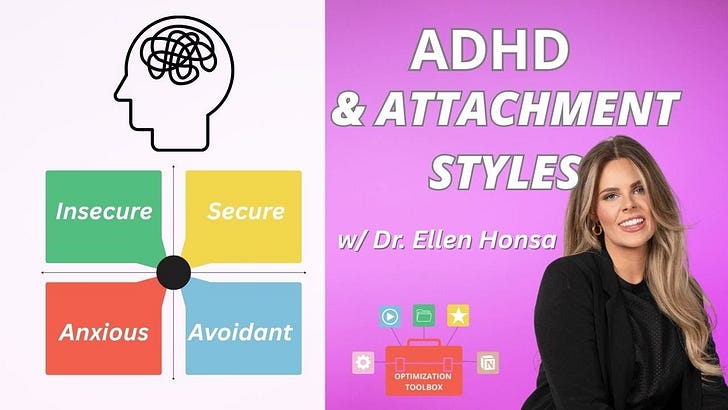
✨ Big Update: I’m Splitting This Newsletter into TwoOver the past year, I’ve realized something important: my content actually lives in two different lanes.* Neurodivergence + Systems + Digital Organization → This is what The Optimization Toolbox will continue to focus on: ADHD, Notion, content systems, and the behind-the-scenes tools that help us get organized and stay consistent.* Marketing + Personal Branding + Video Strategy → This is the focus of my brand-new Substack: The Red Thread Report.You’re welcome to subscribe to one or both depending on what you’re most interested in:* 🧠 The Optimization Toolbox (this one) → Digital systems, Notion, ADHD-friendly tools* 🎥 The Red Thread Report → Marketing, video strategy, personal brandingI wanted to kick things off by sharing this update here so you know what’s changing — and what’s staying the same. The Optimization Toolbox will remain the place where I write and share podcasts about Notion, Neurodivergence, and building systems. But when I talk about video, messaging, or marketing strategy, that content will now live inside The Red Thread Report.The Optimization Toolbox by Jenna Redfield is a reader-supported publication. To receive new posts and support my work, consider becoming a free or paid subscriber.Most of the time, The Optimization Toolbox is where I share tools and systems for neurodivergence, Notion, digital organization, and creating structures that make life easier. That’s the heart of this newsletter — and it will stay that way moving forward.But every so often, I come across a topic that doesn’t fit neatly into productivity or organization — yet feels too important not to explore. Usually it’s because I go searching for answers myself and can’t find anything that goes deep enough.That’s exactly what happened with attachment styles.When I started digging into how attachment theory intersects with ADHD and autism, I couldn’t find much beyond surface-level psychology posts. Nothing that answered the questions I had as a neurodivergent person trying to make sense of my own patterns in relationships and self-esteem.So I decided to create the conversation I was looking for.This episode with Dr. Ellen Hansa is for anyone who’s ever wondered how being neurodivergent shapes their attachment style — and why relationships, belonging, and even self-compassion can feel so much more complicated than they “should.”Why This Conversation MattersWe live in a culture that loves quick-fix advice: “Set boundaries.” “Practice self-care.” “Communicate better.”But what happens when you’ve done all the things and you still end up in the same cycle — anxious when someone doesn’t text back, shutting down when things get too vulnerable, or people-pleasing your way into exhaustion?That’s where attachment styles matter. They help us see that these aren’t random bad habits. They’re predictable nervous system responses built over years of reinforcement.And when you layer on neurodivergence, it gets even more complicated:* Kids with ADHD are often criticized or labeled as “bad,” leading to anxious or avoidant attachment.* Autistic kids may grow up feeling othered, excluded, or misunderstood — which can mirror disorganized attachment dynamics.* Trauma can look like ADHD. ADHD can look like trauma. The overlap can be confusing unless you dig deeper.This isn’t about labeling yourself. It’s about having a framework for understanding why you might keep ending up in the same patterns.If you haven’t heard it yet, I actually recorded a full episode about my diagnosis journey — you can listen to it belowA Quick Walkthrough of the Four Attachment StylesBefore we dive deeper, it helps to understand the basics. Psychologists typically identify four main attachment styles — patterns that shape how we relate to others and ourselves:1. Secure AttachmentThis is the “gold standard.” People with secure attachment feel comfortable giving and receiving support. They can handle conflict without internalizing it as rejection. Secure attachment doesn’t mean being perfect — it means being resilient and able to bounce back when relationships hit bumps.2. Anxious AttachmentPeople with anxious attachment often fear abandonment. A late text reply can feel like rejection. They may people-please, overgive, or constantly seek reassurance. On the outside, they often look like high achievers — but underneath, they carry a deep fear of being left behind.3. Avoidant AttachmentAvoidant attachment looks like independence but often hides discomfort with vulnerability. These are the people who shut down or “ghost” when things get too close. It’s not that they don’t care — it’s that connection has historically felt unsafe, so pulling away feels protective.4. Disorganized AttachmentThe rarest but often the most difficult, disorganized attachment combines anxious and avoidant patterns. It’s the push-pull dynamic: “I want closeness, but I’m also terrified of it.” This often develops when caregivers were both a source of love and of fear, creating inner conflict.What Stood Out in This EpisodeHere are a few moments that stuck with me from my conversation with Dr. Hansa:* Attachment styles as survival strategies. What once helped you get love, safety, or protection as a child may be sabotaging you now.* Secure attachment isn’t about being less sensitive. It’s about finding people who can hold your intensity without making you feel wrong for it.* ADHD vs trauma. The two can look nearly identical on the surface — but trauma-based symptoms often improve when safety is restored, while ADHD is lifelong and consistent across contexts.* Proprioceptive interventions. Small daily movements (walking, weighted blankets, stretching) help regulate your nervous system so you don’t swing between overdrive and burnout.* Body doubling. Sometimes the best hack isn’t a productivity app — it’s another human being in the room.Why I’m Talking About This HereThe Optimization Toolbox isn’t just about apps, Notion dashboards, or time-blocking hacks. It’s about understanding the systems behind the systems.You can have the best task manager in the world, but if your nervous system is locked in an anxious or avoidant cycle, it’s going to bleed into your work, your relationships, and your self-worth.That’s why conversations like this matter. Because optimizing your life doesn’t start with a better calendar. It starts with understanding your wiring.And if you’re neurodivergent, it’s not about fixing yourself. It’s about giving yourself permission to see your patterns clearly — and learning the tools that actually work for your brain and body.Final ThoughtHere’s the truth: you’re not broken.Attachment styles aren’t flaws. They’re echoes of the strategies you once needed to survive. The work isn’t to erase them. It’s to recognize them, understand them, and slowly rewrite the story.That’s why I believe talking about attachment styles — especially at the intersection of ADHD and autism — is so important. Because once you see the pattern, you can finally begin to change it.👉 Listen to the full episode with Dr. Ellen Hansa above.🔗 Dr. Ellen Hansa Links* Private Practice: Priority Mental Health* Instagram: @DrEllenHansa🌍 Availability* In-person: Minneapolis, MN (central office)* Virtual & In-home therapy: Available throughout Minnesota* PsyPact License: Can provide testing and therapy virtually in 46 U.S. statesMake sure to check out my new Substack! https://redthreadstudio.substack.com Get full access to Red Thread Toolbox by Jenna Redfield at jennaredfield.substack.com/subscribe
Embed this episode
NOW PLAYING
Why Attachment Styles Hit Different When You’re Neurodivergent
No transcript for this episode yet
Similar Episodes
No similar episodes found.
Similar Podcasts
No similar podcasts found.